
Voces Digital French Series
Product by Voces Digital
Facts checked: Not yet checked
Our take (not a Learning Standard rating). This label applies to learning-science judgments throughout this overview.
Our take (not a Learning Standard rating)
While pending formal evaluation, Voces Digital French Series appears to support language acquisition through direct instruction and thematic vocabulary building. It integrates cultural context, which learning science shows improves engagement. However, without adaptive spacing algorithms to enforce retrieval practice, long-term retention relies heavily on how the teacher structures review.
Pros
- Integrates cultural contexts directly into language lessons, providing cognitive schema for better vocabulary encoding.
- Uses a mastery-based progression system to ensure foundational grammar rules are understood before advancing to complex syntax.
- Provides thematic grouping of vocabulary, which helps reduce cognitive load during initial foreign language acquisition.
Cons
- Lacks an automated spaced repetition system to optimize long-term vocabulary retention across units.
- Relies heavily on direct instruction, requiring significant teacher mediation to prevent passive consumption of material.
- Gamification elements risk distracting from core linguistic processing if not closely monitored by the educator.
What Do We Know About Voces Digital French Series?
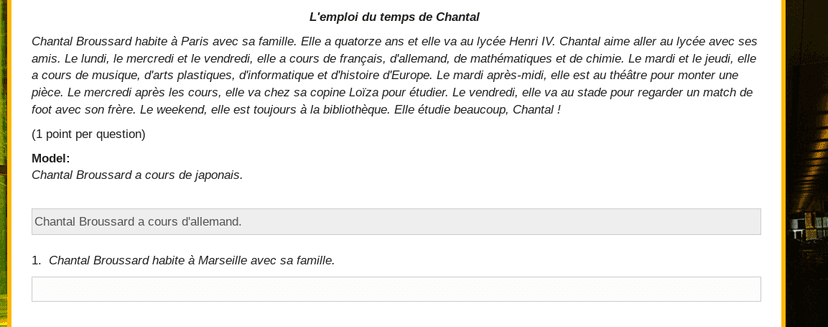
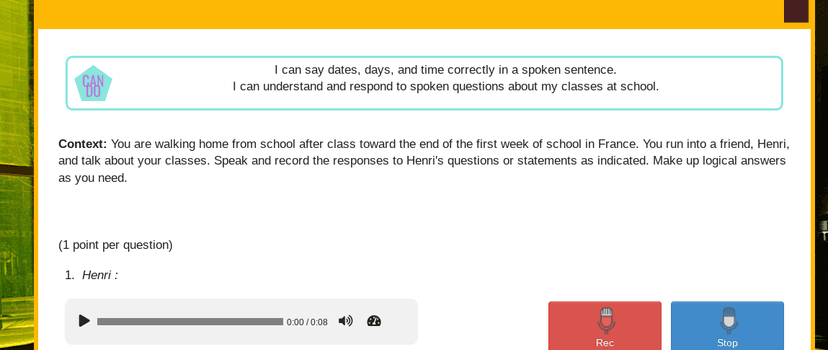
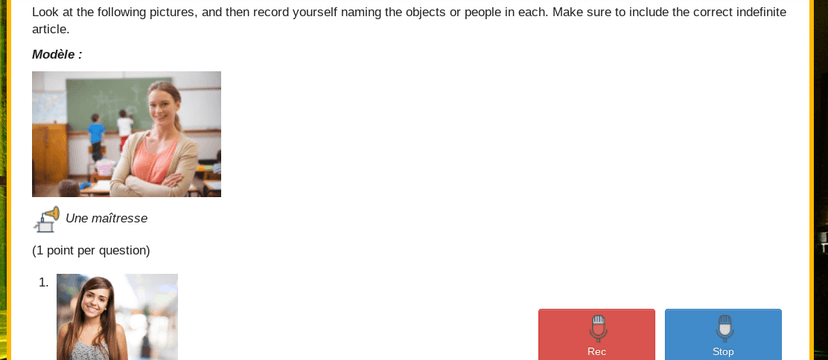
Voces Digital French Series is an effective classroom tool when guided by a teacher, but it is not a standalone self-study app for your child. Because it relies heavily on direct instruction and blended learning models, its success depends entirely on how the curriculum is implemented in the classroom. The platform groups vocabulary and grammar into thematic units embedded within authentic cultural contexts. Learning science shows that tying abstract language concepts to concrete cultural schemas improves information encoding and recall. Your child will encounter gamified practice exercises meant to reinforce these lessons. However, without built-in spaced repetition algorithms, a proven method for long-term memory retention, your child must actively review past material rather than relying on the software to surface older vocabulary automatically. Because The Learning Standard has not yet formally evaluated this platform, parents should look for observable improvements in their child's ability to produce French sentences independently, rather than just completing in-app gamified tasks. The program acts primarily as a digital textbook replacement tailored for classroom teachers rather than an AI-driven tutor for independent learning.
How Does Voces Digital French Series Work?
Voces Digital French Series uses a blended learning and direct instruction approach organized into thematic, mastery-based modules. Students progress through units that introduce vocabulary and grammar rules alongside cultural readings and videos. The platform requires students to demonstrate competency in specific linguistic structures before moving forward, leveraging a mastery-based learning model. Practice is facilitated through gamified exercises and digital worksheets where students input translations or conjugate verbs. Rather than using an adaptive algorithm to feed students individualized content, the program provides a linear, teacher-directed pathway. Teachers assign specific thematic modules, and students complete the direct instruction reading or listening components before attempting the practice sets. Formative assessments are built into the chapters to measure immediate recall, though teachers remain responsible for scheduling periodic reviews.
Strengths and tradeoffs of Voces Digital French Series
The biggest strength of the Voces Digital French Series is its integration of rich cultural schema to contextualize vocabulary, while its biggest weakness is the absence of automated spaced retrieval practice. Contextualized Learning: By embedding French grammar and vocabulary within authentic cultural scenarios, the platform reduces the cognitive load of rote memorization. Students anchor new words to cultural narratives, which learning science demonstrates is highly effective for deep encoding. Mastery Progression: The curriculum mandates that students achieve competency in foundational rules before tackling complex syntax, preventing cumulative knowledge gaps. Lack of Spaced Repetition: The platform structures learning in thematic blocks. Once a module is finished, the software does not systematically reintroduce older vocabulary at optimal intervals. Without this spacing effect, students are vulnerable to the forgetting curve. Reliance on Direct Instruction: The heavy use of direct instruction means students spend significant time reading or listening to explanations. This can lead to passive learning unless the teacher actively forces frequent retrieval practice and productive language output in the physical classroom.
Who Might Benefit From Voces Digital French Series?
Best for middle and high school French teachers who need a comprehensive, culturally rich digital curriculum to supplement classroom instruction. The platform targets students in 7th through 12th grade learning French as a second language. It is strictly designed for a blended classroom environment rather than individual at-home self-study. It requires a teacher subscription to unlock student licenses, making it ideal for school districts moving away from traditional physical textbooks toward mastery-based digital platforms.
Data Transparency
Meets Data Transparency Standard
Voces Digital French Series meets our data transparency standard at Level 2 of 3 (Parent control). Level 3 needs the policy to document an API for retrieving their own data and a named export format.
26 of 35 checks passed
Evaluated October 2026
Voces Digital →Level 1 · Basic protections
Does not sell data or target ads at students, limits sharing, and lets parents see and delete their child's data.
Level 2 · Parent control (meets the standard)
Families can get their data out, know who processes it, and know how long it is kept.
Level 3 · Direct data access
Families or schools can pull their own data through an API, in a stated format.
Not documented: an API for retrieving their own data, a named export format
View all 35 checks
Parent Access7/8
Does the policy mention parents specifically?
“If you are a parent and you wish to access, review or have your child’s personal information deleted please contact the teacher or school to make this request.”
Can parents view their child's data?
“If you are a parent and you wish to access, review or have your child’s personal information deleted please contact the teacher or school to make this request.”
Can parents modify their child's data?
The policy lets parents access, review and delete their child's data through the school, but does not give parents a right to correct it (corrections are given to teachers, schools and students).
Can parents delete their child's account?
“If you are a parent and you wish to access, review or have your child’s personal information deleted please contact the teacher or school to make this request.”
Is there a dedicated Children's Privacy section?
“Guidelines for Children Under 13 (COPPA)”
Does it reference COPPA compliance?
“The certification Seal posted on this page indicates Voces Digital has established COPPA compliant privacy practices and has agreed to submit to PRIVO’s oversight and consumer dispute resolution process.”
Does it reference FERPA compliance?
“Voces Digital acts a school official under the Family Education Rights and Privacy Act(FERPA) when providing its service to the school.”
Is parental consent required for child accounts?
“As Voces is used in an educational setting, a teacher or school must enter into an agreement they have the authority of the school to provide consent on behalf of a parent before providing student data or adding students to the platform.”
Data Portability3/5
Can users access their personal data?
“At any time you may contact help@vocesdigital.com to request information about the data we have, correct any data, or request that the data be erased.”
Can users download/export their data?
“A teacher or school may download data before it is deleted.”
Is there a self-service data access tool?
“A teacher or school may download data before it is deleted.”
Is a specific data format mentioned for export?
The policy does not name an export format.
Is there an API for data access?
The policy describes only LMS integration access and no API for users or schools to retrieve their data.
Data Minimization3/6
Is data collection itemized?
“What student information do we actively collect?** - First and Last Name (or initials) - User ID”
Can the app be used without a real name?
The policy collects students' first and last names (or initials), including names read from LMS rosters.
Can the app be used without an email?
“No contact information is collected from students.”
Does it state collection is limited to what is necessary?
“We collect as little information about our users as possible to provide access and support.”
Is IP address anonymized or truncated?
The policy says it collects IP addresses but does not say they are anonymized or truncated.
Is location tracking explicitly excluded?
The policy lists location data within its definition of personal information and does not rule out location tracking.
Third-Party Protection6/7
Does it explicitly state no selling of data?
“We will never sell any teacher or student data.”
Are third-party providers named?
“Quantum Services Group - Server Hosting”
Are providers contractually restricted?
“Any companies that could have access to personal information will have signed privacy agreements with Voces.”
No-targeted-advertising commitment?
“Students will not be subject to any behavioral advertising or profiling. We do not sell or disclose student data for commercial purposes.”
Is AI/ML data sharing addressed?
The policy does not address AI or machine learning.
Child-specific sharing restriction?
“We do not distribute any personally identifiable information about students to third parties.”
Cookies/tracking limited or opt-out?
“You may disable the function of Cookies by choosing the browser’s configuration.”
Deletion & Retention5/5
Can users delete their account?
“Upon request, we will delete your personal information from our systems within a 3 business days. A teacher may also delete student data as desired.”
Self-service deletion mechanism?
“A teacher may also delete student data as desired.”
Specific data retention timeline?
“We will store your personal information, in a form which permits us to identify you, for a maximum of 90 days after the teacher's subscription expires and 30 days after a class is deleted.”
Auto-deletion of inactive accounts?
“We will store your personal information, in a form which permits us to identify you, for a maximum of 90 days after the teacher's subscription expires and 30 days after a class is deleted. This process is automated nightly to ensure that data is not kept longer than necessary.”
Post-deletion handling described?
“Backups of all data are kept for seven days.”
Advertising2/4
Advertising model explicitly disclosed?
“Voces will never advertise to a student.”
Free from third-party advertisements?
The policy says Voces will never advertise to students, but it lists Google Ads/Doubleclick as an ad network and does not say the product has no third-party ads.
Children excluded from ad targeting?
“Students will not be subject to any behavioral advertising or profiling.”
Ad-free option available?
The policy lists an ad network and does not say there is an ad-free product or option, beyond saying it will not advertise to students.
Meets Data Transparency Standard
The reviewed policy met our data transparency standard. This result describes the policy disclosures we assessed. Actual practices and legal compliance were not verified.
About this evaluation: Based on automated analysis of Voces Digital against 35 policy-disclosure questions, including questions adapted from the Common Sense Privacy Program's published evaluation questions. TLS is not affiliated with Common Sense Media, and this is not a Common Sense rating. Quoted text is copied from the policy; unquoted notes are our summary. Results describe what the policy documents, not the company's actual practices. Privacy policies can change: this review reflects the version we analyzed and does not determine legal compliance.
Sources and review method
TLS combines product information and editorial analysis to explain how Voces Digital French Series works, its tradeoffs, and the questions to ask before choosing it. Product features, an instructional rationale and evidence of learning outcomes are different kinds of information.
Formal Learning Standard assessment: not yet completed. Data Transparency findings are reported separately and do not establish learning effectiveness. Read our methodology.
Frequently Asked Questions About Voces Digital French Series
Is Voces Digital French Series free?
No. Voces Digital French Series requires a paid subscription. Pricing starts at $100 per teacher, with additional student licenses costing $100 for a block of 10 students. Bulk pricing is available at $1000 for one teacher and 150 students.
Is Voces Digital French Series good for middle and high school students?
Yes, it is specifically designed for 7th through 12th-grade students. The thematic content and cultural contexts are age-appropriate and align with standard secondary education foreign language curricula.
What does Voces Digital French Series teach?
It teaches French vocabulary, grammar syntax, reading comprehension, and Francophone culture. The curriculum is structured to build progressive linguistic proficiency, transitioning students from basic vocabulary acquisition to complex sentence construction.
Voces Digital French Series vs Duolingo: Which is better?
Voces Digital French Series is a comprehensive classroom curriculum requiring teacher guidance, while Duolingo is a supplementary self-study app. Voces provides deeper grammar instruction and cultural context, whereas Duolingo relies heavily on gamified spaced repetition for isolated vocabulary translation.
Has The Learning Standard evaluated Voces Digital French Series?
TLS has not yet completed a Learning Standard evaluation of how well Voces Digital French Series teaches. Its privacy policy has been reviewed for Data Transparency and reaches Level 2, Parent control.
Is Voces Digital French Series COPPA compliant?
The reviewed privacy policy references COPPA. A policy reference alone does not establish COPPA compliance. Policy review note: The policy states its practices are COPPA compliant under PRIVO certification.
Is Voces Digital French Series FERPA compliant?
The reviewed privacy policy references FERPA. A policy reference alone does not establish FERPA compliance. Policy review note: The policy says Voces acts as a school official under FERPA.
Does Voces Digital French Series have a children's privacy policy?
The reviewed policy includes a dedicated children's privacy section. Policy review note: The policy has a section headed for children under 13 and COPPA.
Does Voces Digital French Series sell student data?
The reviewed policy states that the app does not sell data. This is a policy statement; actual data practices were not verified. Policy review note: The policy states Voces never sells user data.
Can you delete your data from Voces Digital French Series?
The reviewed privacy policy describes account deletion. We have not tested the deletion process. Policy review note: Users can ask to have their data deleted.
Follow TLS Research
Subscribe to future TLS research updates: app reviews, findings, and what the evidence shows.
Screenshots

Take Action
For Voces Digital French Series
If you represent Voces Digital and have a correction or new evidence, send the relevant source so we can review and update this page.
Submit a correctionDetails
- Pricing
- Voces subscriptions are priced per teacher starting at $100 with additional student licenses available to add at $100 for 10 students. We also offer an option for $1000 per teacher with 150 students. A teacher or student license gives the user access to all of our available levels or titles.
- Platforms
- Web Browser, iOS (Apple mobile), iPadOS (Apple tablet), Android (Google mobile), Tizen (Samsung mobile), Windows (Microsoft), macOS (Apple), Chrome OS (Google)
- Grade Levels
- 7th Grade, 8th Grade, 9th Grade, 10th Grade, 11th Grade, 12th Grade
- Website
- Visit site