
TestOut Digital Literacy Pro (Integrated with CompTIA LTI 1.3)
Product by CompTIA
Facts checked: Not yet checked
Our take (not a Learning Standard rating). This label applies to learning-science judgments throughout this overview.
Our take (not a Learning Standard rating)
TestOut Digital Literacy Pro utilizes experiential learning to build technology skills, simulating real-world digital environments which strongly supports cognitive transfer. However, because The Learning Standard has not yet evaluated this specific platform, we cannot definitively verify its long-term impact on your child's knowledge retention or practical application.
Pros
- Simulates real-world operating systems and software to support direct skill transfer.
- Uses experiential learning principles to move students beyond passive video consumption.
- Integrates directly with school learning management systems for seamless progress tracking.
- Scaffolds digital literacy concepts from basic navigation to practical applications.
Cons
- Lacks independent efficacy data verified by The Learning Standard.
- Requires a school or district volume license, making it inaccessible for household purchase.
- Heavy reliance on simulated environments can frustrate students on low-bandwidth connections.
- Self-paced formats demand high executive functioning and self-regulation from the learner.
What Do We Know About TestOut Digital Literacy Pro (Integrated with CompTIA LTI 1.3)?
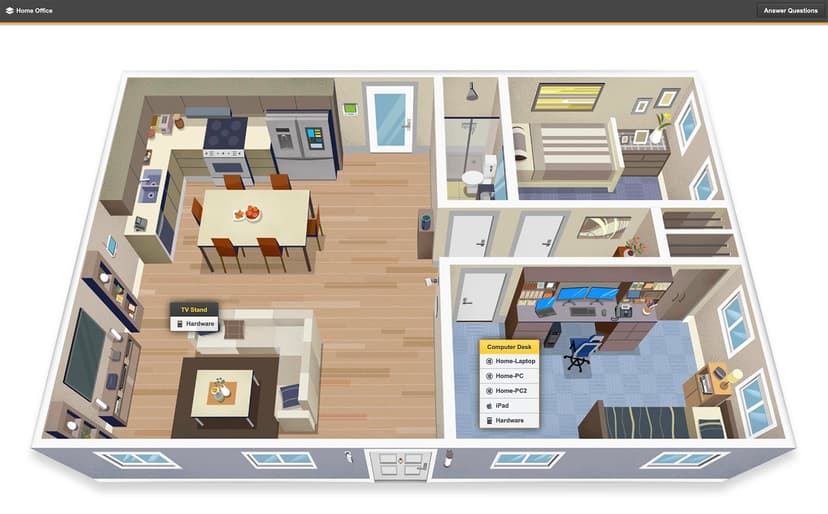
TestOut Digital Literacy Pro is pending evaluation, but its reliance on experiential simulations suggests a strong framework for teaching practical technology skills. Your child will not just read about computers; they will interact with simulated environments that mimic actual operating systems, browsers, and software applications. This active participation forces the brain to encode information more deeply than passive reading. Because the platform uses a self-paced structure, your child will need to manage their time effectively and exercise self-regulation to complete modules. It is important to note that you cannot buy this app directly for your home. It is sold via volume-based subscriptions to schools and districts. If your child's school uses this program, you can expect them to encounter hands-on tasks that build immediate confidence in digital navigation, internet safety, and basic software usage. Check with your child's teacher to see how performance data is tracked and whether the school supplements these digital simulations with in-person instructional support.
How Does TestOut Digital Literacy Pro (Integrated with CompTIA LTI 1.3) Work?
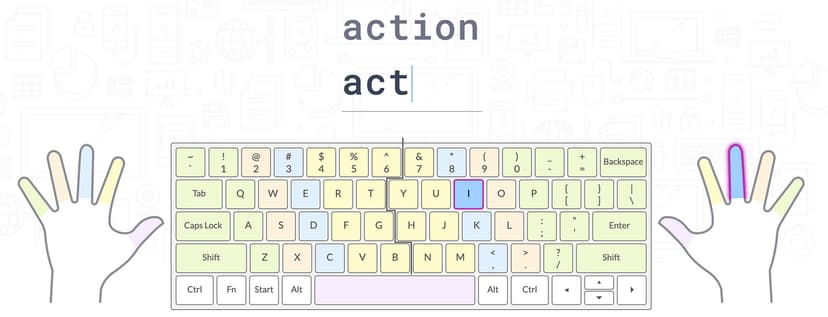
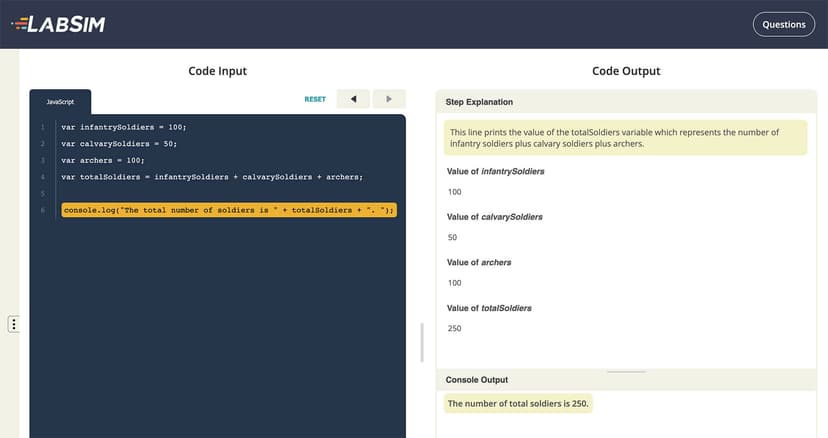
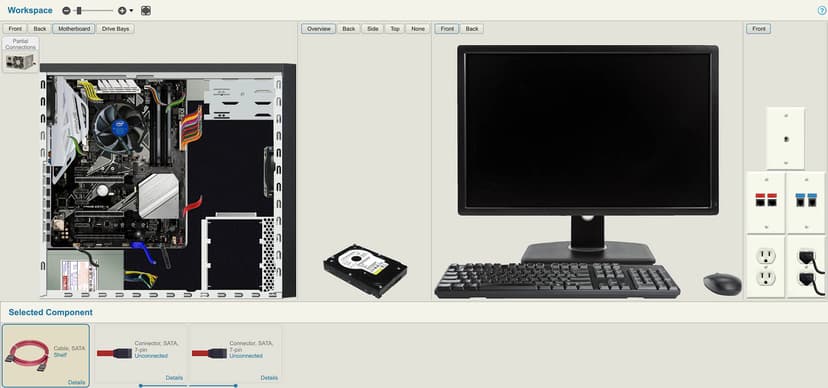
TestOut Digital Literacy Pro uses experiential learning and simulated environments to teach digital literacy skills. Instead of just watching videos about how a computer works, your child is dropped into a safe, virtual desktop where they must click the correct menus, troubleshoot errors, and configure settings. This approach leverages the learning science concept of situated cognition, where knowledge is embedded in the physical and social context in which it will be used. The platform guides learners step-by-step through modules covering hardware, software, online safety, and communication. As students progress, the scaffolding is slowly removed, forcing them to rely on retrieval practice to remember previous steps. Teachers monitor this progress through their school's learning management system, using the integration to seamlessly assign grades, review areas where students struggle, and identify exactly which technical tasks require further classroom intervention.
Strengths and tradeoffs of TestOut Digital Literacy Pro (Integrated with CompTIA LTI 1.3)
The biggest strength of TestOut Digital Literacy Pro is its use of realistic software simulations, while its biggest weakness is the heavy cognitive load and self-pacing required for an open online course environment. Simulated learning environments drastically improve skill transfer because learners practice in the exact context they will eventually work in, minimizing the gap between theory and application. By forcing students to actively troubleshoot simulated digital problems, the program uses desirable difficulties to strengthen memory encoding. However, unstructured digital formats often lack the immediate, personalized feedback found in human tutoring. If a student misunderstands a foundational concept, the automated system may not adapt its explanations effectively. Furthermore, volume-based licensing means the tool relies heavily on a school's implementation strategy. Without a teacher actively monitoring the data and intervening when a student stalls, the experiential learning model can lead to frustration rather than mastery.
Who Might Benefit From TestOut Digital Literacy Pro (Integrated with CompTIA LTI 1.3)?
Best for middle and high school students taking structured career and technical education courses through their school. Because it requires a district license and integrates directly with institutional learning management systems, it is designed for classroom use rather than independent homeschooling. It serves learners who need hands-on, experiential practice to build confidence in foundational information technology skills, internet safety, and modern software applications before moving into advanced computer science or professional environments. Teachers looking for scalable, interactive lab replacements will find the strongest use case here.
Data Transparency
Does Not Meet Data Transparency Standard
TestOut Digital Literacy Pro (Integrated with CompTIA LTI 1.3) does not meet our data transparency standard. Its privacy policy does not document basic protections, including a statement that it does not sell data, a commitment against targeted advertising and contractual limits on service providers.
17 of 35 checks passed
Level 1 · Basic protections
Does not sell data or target ads at students, limits sharing, and lets parents see and delete their child's data.
Not documented: a statement that it does not sell data, a commitment against targeted advertising, contractual limits on service providers
Level 2 · Parent control (meets the standard)
Families can get their data out, know who processes it, and know how long it is kept.
Not documented: a data retention timeline, named service providers
Level 3 · Direct data access
Families or schools can pull their own data through an API, in a stated format.
Not documented: an API for retrieving their own data, a named export format
View all 35 checks
Parent Access6/8
Does the policy mention parents specifically?
“CompTIA requires a parent or legal guardian to consent to the collection, use, and disclosure of your child’s personal information.”
Can parents view their child's data?
“If you would like to review any information about your child, please contact the program director of the program, class, or event your child participated in.”
Can parents modify their child's data?
The policy lets parents review, revoke consent and delete their child's information, but does not say they can correct or modify it.
Can parents delete their child's account?
“At any time, a parent or guardian may revoke consent and notify CompTIA to immediately remove your child’s information from its systems.”
Is there a dedicated Children's Privacy section?
“Notwithstanding anything to the contrary in this Privacy Notice, we do not use cookies or track any users identified to us as being 17 or under. Please see our [COPPA Statement](https://www.comptia.org/en-us/legal/privacy/coppa-statement/) regarding our handling of any personal information from children under the age of 13.”
Does it reference COPPA compliance?
“The PRIVO COPPA safe harbor certification Seal posted on this page indicates CompTIA has established COPPA compliant privacy practices and has agreed to submit to PRIVO’s oversight and consumer dispute resolution process.”
Does it reference FERPA compliance?
The policy does not mention FERPA.
Is parental consent required for child accounts?
“CompTIA will not collect, use, or disclose personal information of children under the age of 13 without the express consent of the child’s parent(s) or legal guardian(s) consent.”
Data Portability3/5
Can users access their personal data?
“You may request access to your personal information by logging into your account (if you have one) or by contacting us at the address provided below.”
Can users download/export their data?
“This includes the right to (a) request access to your personal information; (b) request that we correct inaccurate personal information we hold about you; (c) request that we delete any personal information we hold about you; (d) restrict or object (i.e., withdraw consent) to the processing of personal information we hold about you in some circumstances; and/or (e) receive any personal information we hold about you in a structured and commonly used format.”
Is there a self-service data access tool?
“If you have an account with us, you may access certain personal information (such as profile and transaction information) directly through your account after logging in to the Services, and may update and correct certain profile information as well.”
Is a specific data format mentioned for export?
The policy only says "structured and commonly used format" and does not name a specific format.
Is there an API for data access?
The policy does not mention an API for data access.
Data Minimization1/6
Is data collection itemized?
“The following chart lists the types of information that we may collect from you and how we use that information.”
Can the app be used without a real name?
The policy says student first and last names are collected, including names supplied by schools.
Can the app be used without an email?
The policy says student email addresses are collected when available, including emails supplied by schools.
Does it state collection is limited to what is necessary?
The policy limits only payment information to what is necessary and does not say collection in general is limited to what is necessary.
Is IP address anonymized or truncated?
The policy says IP addresses are collected and does not say they are anonymized or truncated.
Is location tracking explicitly excluded?
The policy says it collects geo-location and device location information.
Third-Party Protection2/7
Does it explicitly state no selling of data?
The policy only denies selling under Nevada law's definition, while elsewhere it describes sharing data for targeted advertising that users may opt out of as a "Do Not Sell or Share" right.
Are third-party providers named?
The policy names service providers only by category, not by name.
Are providers contractually restricted?
The policy mentions standard contractual clauses only for cross-border transfers and does not say providers are contractually limited in how they use data.
No-targeted-advertising commitment?
The policy excludes only users identified as 17 or under from tracking, while it runs behavior-based advertising for other users.
Is AI/ML data sharing addressed?
The policy does not address sharing data with AI or machine learning systems.
Child-specific sharing restriction?
“CompTIA does not share or distribute any personally identifiable information about participants or their families with external organizations.”
Cookies/tracking limited or opt-out?
“If we implement third party targeted advertising cookies or other tools that require an opt-out right under applicable privacy laws, we will provide an opt-out option, and endeavor to process “Global Privacy Control” (GPC) signals from web browsers by automatically opting-out such visitors from such third party tools”
Deletion & Retention3/5
Can users delete their account?
“You may ask us to stop using all or some of your personal information, to limit our use of it, or to erase or delete all or some of it under certain circumstances.”
Self-service deletion mechanism?
“Most of our Services allow you to modify or delete your account profile.”
Specific data retention timeline?
The policy keeps data only as long as needed for its purposes and gives no specific time period.
Auto-deletion of inactive accounts?
The policy does not mention automatic deletion of inactive accounts.
Post-deletion handling described?
“Most of our Services allow you to modify or delete your account profile. Note that we may keep historical information in our backup files as permitted by law.”
Advertising2/4
Advertising model explicitly disclosed?
“Except as otherwise noted in Section 10, we participate in behavior-based advertising, which means that a third party uses technology (e.g., a cookie) to collect information about your use of our websites so that it can provide advertising about products and services tailored to your interests on our websites or on other websites.”
Free from third-party advertisements?
The policy says advertisers or partners may serve ads to users.
Children excluded from ad targeting?
“Notwithstanding anything to the contrary in this Privacy Notice, we do not use cookies or track any users identified to us as being 17 or under.”
Ad-free option available?
The policy offers an opt-out from targeted advertising but no ad-free option.
What This Means
The policy review did not meet our data transparency standard. The checks above show the documented findings and unknowns. A missing statement does not establish how the app handles data in practice.
About this evaluation: Based on automated analysis of Privacy Policy, COPPA Statement and Privacy Policy against 35 policy-disclosure questions, including questions adapted from the Common Sense Privacy Program's published evaluation questions. TLS is not affiliated with Common Sense Media, and this is not a Common Sense rating. Quoted text is copied from the policy; unquoted notes are our summary. Results describe what the policy documents, not the company's actual practices. Privacy policies can change: this review reflects the version we analyzed and does not determine legal compliance.
Sources and review method
TLS combines product information and editorial analysis to explain how TestOut Digital Literacy Pro (Integrated with CompTIA LTI 1.3) works, its tradeoffs, and the questions to ask before choosing it. Product features, an instructional rationale and evidence of learning outcomes are different kinds of information.
Formal Learning Standard assessment: not yet completed. Data Transparency findings are reported separately and do not establish learning effectiveness. Read our methodology.
Frequently Asked Questions About TestOut Digital Literacy Pro (Integrated with CompTIA LTI 1.3)
Is TestOut Digital Literacy Pro free?
No. TestOut Digital Literacy Pro utilizes a volume-based pricing model and requires a license subscription. Schools and districts purchase these licenses in bulk, so while it may be free for your child to use through their school, it is a paid product for the institution.
Is TestOut Digital Literacy Pro good for middle and high schoolers?
Yes. While the publisher lists it for all ages, the self-paced progression and complex interface simulations are best suited for middle school, high school, and adult learners. Younger children may lack the executive functioning required to navigate the experiential modules independently.
What does TestOut Digital Literacy Pro teach?
TestOut Digital Literacy Pro teaches fundamental technology skills, including operating system navigation, basic hardware troubleshooting, internet safety, and software application usage. It aims to build practical confidence in navigating the modern digital world through interactive, hands-on tasks.
How does TestOut Digital Literacy Pro compare to Northstar Digital Literacy?
TestOut Digital Literacy Pro leans heavily on interactive, simulated software environments for hands-on practice, whereas Northstar is widely known for its straightforward assessment modules. Both are effective, but TestOut provides a more experiential learning approach designed for deeper classroom integration.
Has The Learning Standard evaluated TestOut Digital Literacy Pro (Integrated with CompTIA LTI 1.3)?
TLS has not yet completed a Learning Standard evaluation of how well TestOut Digital Literacy Pro (Integrated with CompTIA LTI 1.3) teaches. Its privacy policy has been reviewed for Data Transparency and does not yet document the basic protections (Level 1).
Is TestOut Digital Literacy Pro (Integrated with CompTIA LTI 1.3) COPPA compliant?
The reviewed privacy policy references COPPA. A policy reference alone does not establish COPPA compliance. Policy review note: The policy claims COPPA compliance through PRIVO safe harbor certification.
Is TestOut Digital Literacy Pro (Integrated with CompTIA LTI 1.3) FERPA compliant?
A FERPA reference was not found in the reviewed privacy policy. This does not determine whether the app complies with FERPA. Policy review note: The policy does not mention FERPA.
Does TestOut Digital Literacy Pro (Integrated with CompTIA LTI 1.3) have a children's privacy policy?
The reviewed policy includes a dedicated children's privacy section. Policy review note: There is a dedicated Children's privacy section (Section 10), and a separate COPPA Statement.
Does TestOut Digital Literacy Pro (Integrated with CompTIA LTI 1.3) sell student data?
A statement ruling out data selling was not found in the reviewed policy. This does not establish that the app sells student data. Policy review note: The policy only denies selling under Nevada law's definition, while elsewhere it describes sharing data for targeted advertising that users may opt out of as a "Do Not Sell or Share" right.
Can you delete your data from TestOut Digital Literacy Pro (Integrated with CompTIA LTI 1.3)?
The reviewed privacy policy describes account deletion. We have not tested the deletion process. Policy review note: Users can ask to have their personal information deleted.
Follow TLS Research
Subscribe to future TLS research updates: app reviews, findings, and what the evidence shows.
Screenshots
Take Action
For TestOut Digital Literacy Pro (Integrated with CompTIA LTI 1.3)
If you represent CompTIA and have a correction or new evidence, send the relevant source so we can review and update this page.
Submit a correctionDetails
- Pricing
- Volume-based pricing model. License subscriptions.
- Platforms
- Web Browser
- Website
- Visit site