
Testing Program
Product by Consultores en Tecnología Educativa S. C.
Facts checked: Not yet checked
Our take (not a Learning Standard rating). This label applies to learning-science judgments throughout this overview.
Our take (not a Learning Standard rating)
This Spanish-language platform offers structured, mastery-based instruction for essential software skills like Excel and Photoshop, but its heavy reliance on direct instruction requires high learner motivation. It provides robust competency tracking for educators to monitor progress. The Learning Standard has not yet evaluated its long-term retention efficacy.
Pros
- Uses mastery-based progression to ensure learners demonstrate competence in specific software functions before advancing.
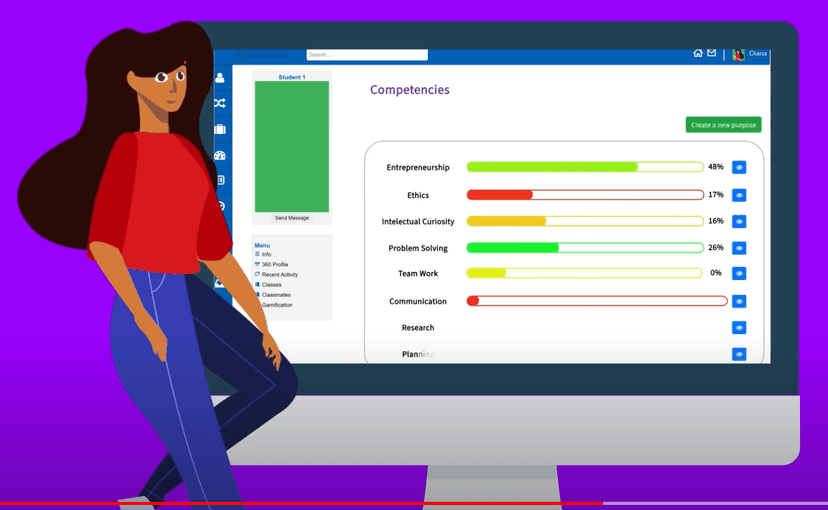
- Provides educators with granular performance dashboards to track individual and group skill acquisition.
- Aligns learning objectives directly with international certification standards to ensure real-world applicability.
- Organizes thousands of learning objects into sequential pathways to reduce cognitive overload during complex tasks.
Cons
- Relies heavily on direct instruction, which can lead to passive engagement without frequent active retrieval practice.
- Requires high intrinsic motivation to persist through dense technical modules like object-oriented programming.
- Lacks transparent pricing information, requiring schools to request custom quotes based on their region.
What Do We Know About Testing Program?
This Spanish-language platform is effective for motivated students seeking technical certifications, but it requires substantial independent focus. Testing Program focuses entirely on concrete digital skills, teaching your child how to use Microsoft Office, Adobe Creative Suite, and foundational programming languages. It relies on a competency-based model. Your child must prove they can execute a specific task, such as building a Power Pivot table or formatting an Excel spreadsheet, before moving to the next level. This approach prevents them from advancing with critical knowledge gaps. However, because the instruction is highly technical and direct, it lacks the gamification or interactive scaffolding found in programs designed for younger learners. While the developer states it is appropriate for students as young as fourth grade, the dense subject matter is best suited for middle schoolers, high schoolers, and adults preparing for the workforce. Educators receive detailed reports to monitor exactly which skills a student has mastered and where they are stuck, making it a strong supplemental tool for a dedicated computer science or vocational classroom.
How Does Testing Program Work?
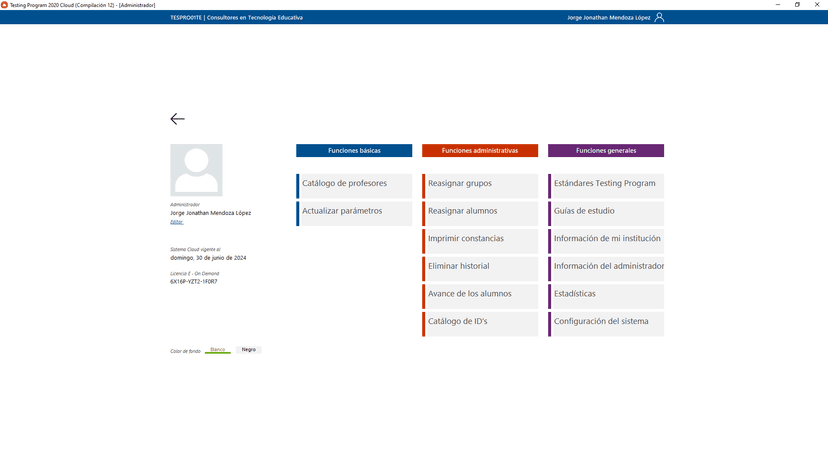
Testing Program uses mastery-based progression driven by direct instruction and frequent competency assessments. Learners log into a Spanish-language dashboard and select a specific software track, such as Microsoft Word, Adobe Photoshop, or Object-Oriented Programming. The system presents thousands of sequenced learning objects that break down complex software functions into isolated, manageable steps. This reduces cognitive load, allowing your child to focus on one specific tool or coding concept at a time. After receiving direct instruction on a concept, students must complete practical assessments that require them to apply the skill within the software environment. The platform tracks these inputs and generates real-time competency data. If a student fails to demonstrate mastery, they cannot unlock subsequent, more advanced modules. On the backend, a teacher portal aggregates this performance data. Educators can assign specific modules to target learning gaps and review summary reports to see which technical concepts require classroom intervention.
Strengths and tradeoffs of Testing Program
Testing Program's biggest strength is its granular, mastery-based assessment of technical skills, while its biggest weakness is a heavy reliance on passive direct instruction that may fail to engage younger learners. The platform excels at scaffolding complex tasks. By breaking down dense software applications like Adobe Dreamweaver or Microsoft Access into sequential micro-skills, it effectively manages cognitive load. Students are not overwhelmed by the entire software interface; instead, they learn and practice isolated functions. The inclusion of frequent formative assessment ensures that learners must retrieve and apply knowledge to prove mastery, which strengthens long-term retention. However, the instructional delivery leans heavily on traditional, direct methods. Without dynamic interactive elements or varied spaced retrieval practice built into the initial learning phase, students may struggle with attention and engagement. The lack of varied instructional modalities means that students who struggle with standard text or video instruction have few alternative paths to understanding. Furthermore, while the assessment data is highly detailed for teachers, the student-facing experience requires significant self-regulation to persist through difficult programming or database modules.
Who Might Benefit From Testing Program?
Testing Program is best for Spanish-speaking high school students and adult learners pursuing international technical certifications in software and programming. While marketed for grades four and up, the rigorous, mastery-based focus on professional tools like Microsoft Project, Power Query, and Adobe Creative Cloud requires a level of executive functioning and self-direction typical of older learners. It serves as an excellent curriculum framework for career and technical education teachers who need a structured way to assign software drills, track competency, and prepare students for workplace readiness.
Data Transparency
Does Not Meet Data Transparency Standard
Testing Program does not meet our data transparency standard. Its privacy policy does not document basic protections, including a statement that it does not sell data, a commitment against targeted advertising and limits on sharing children's data.
3 of 35 checks passed
Evaluated September 2026
Aviso de privacidad →Level 1 · Basic protections
Does not sell data or target ads at students, limits sharing, and lets parents see and delete their child's data.
Not documented: a statement that it does not sell data, a commitment against targeted advertising, limits on sharing children's data, contractual limits on service providers, a COPPA or FERPA commitment, parents' right to see their child's data, parents' right to delete their child's data
Level 2 · Parent control (meets the standard)
Families can get their data out, know who processes it, and know how long it is kept.
Not documented: data export, a data retention timeline, named service providers, self-service deletion
Level 3 · Direct data access
Families or schools can pull their own data through an API, in a stated format.
Not documented: an API for retrieving their own data, a named export format
View all 35 checks
Parent Access0/8
Does the policy mention parents specifically?
The policy does not mention parents.
Can parents view their child's data?
The policy does not address parental access to a child's data.
Can parents modify their child's data?
The policy does not address parents modifying a child's data.
Can parents delete their child's account?
The policy does not address parents deleting a child's data or account.
Is there a dedicated Children's Privacy section?
The policy has no section on children's privacy.
Does it reference COPPA compliance?
The policy does not reference COPPA; it cites only Mexico's federal data protection law.
Does it reference FERPA compliance?
The policy does not reference FERPA.
Is parental consent required for child accounts?
The policy does not address parental consent for child accounts.
Data Portability1/5
Can users access their personal data?
“Es importante informarle que usted tiene derecho al Acceso, Rectificación y Cancelación de sus datos personales, a Oponerse al tratamiento de los mismos o a revocar el consentimiento que para dicho fin nos haya otorgado.”
Can users download/export their data?
The policy does not mention downloading or exporting data.
Is there a self-service data access tool?
The policy says rights requests go by mail, phone or email, and it describes no self-service tool.
Is a specific data format mentioned for export?
The policy does not mention an export format.
Is there an API for data access?
The policy does not mention an API for data access.
Data Minimization1/6
Is data collection itemized?
“Para las finalidades antes mencionadas, requerimos obtener, entre otros, los siguientes datos personales: - Nombre completo (Personas físicas y morales - Correo electrónico”
Can the app be used without a real name?
The policy says full name is required data.
Can the app be used without an email?
The policy says email address is required data.
Does it state collection is limited to what is necessary?
The policy does not state that collection is limited to what is necessary.
Is IP address anonymized or truncated?
The policy does not address IP address anonymization.
Is location tracking explicitly excluded?
The policy does not address location tracking.
Third-Party Protection0/7
Does it explicitly state no selling of data?
The policy does not state that data is not sold.
Are third-party providers named?
The policy does not name any third-party providers.
Are providers contractually restricted?
The policy does not address contractual restrictions on providers.
No-targeted-advertising commitment?
The policy makes no commitment against targeted advertising and says data is used to study consumption habits and promote related products.
Is AI/ML data sharing addressed?
The policy does not address AI or machine learning.
Child-specific sharing restriction?
The policy has no child-specific sharing restrictions.
Cookies/tracking limited or opt-out?
The policy does not address cookies or tracking.
Deletion & Retention1/5
Can users delete their account?
“Es importante informarle que usted tiene derecho al Acceso, Rectificación y Cancelación de sus datos personales, a Oponerse al tratamiento de los mismos o a revocar el consentimiento que para dicho fin nos haya otorgado.”
Self-service deletion mechanism?
The policy requires deletion requests by mail, phone or email, with no self-service mechanism.
Specific data retention timeline?
The policy does not state a data retention timeline.
Auto-deletion of inactive accounts?
The policy does not address auto-deletion of inactive accounts.
Post-deletion handling described?
The policy does not describe how data is handled after deletion.
Advertising0/4
Advertising model explicitly disclosed?
The policy does not disclose an advertising model.
Free from third-party advertisements?
The policy does not address third-party advertisements.
Children excluded from ad targeting?
The policy does not address excluding children from ad targeting.
Ad-free option available?
The policy does not address advertising or an ad-free option.
What This Means
The policy review did not meet our data transparency standard. The checks above show the documented findings and unknowns. A missing statement does not establish how the app handles data in practice.
About this evaluation: Based on automated analysis of Aviso de privacidad against 35 policy-disclosure questions, including questions adapted from the Common Sense Privacy Program's published evaluation questions. TLS is not affiliated with Common Sense Media, and this is not a Common Sense rating. Quoted text is copied from the policy; unquoted notes are our summary. Results describe what the policy documents, not the company's actual practices. Privacy policies can change: this review reflects the version we analyzed and does not determine legal compliance.
Sources and review method
TLS combines product information and editorial analysis to explain how Testing Program works, its tradeoffs, and the questions to ask before choosing it. Product features, an instructional rationale and evidence of learning outcomes are different kinds of information.
Formal Learning Standard assessment: not yet completed. Data Transparency findings are reported separately and do not establish learning effectiveness. Read our methodology.
Frequently Asked Questions About Testing Program
Is Testing Program free?
No, Testing Program is not free. It requires paid licenses that provide access to the instructional materials and the certification pathways. Pricing is not transparently listed online, as the developer customizes quotes based on the school's region and the number of user licenses required.
Is Testing Program good for elementary students?
No, Testing Program is not ideal for elementary students. Although the developer lists it as appropriate for fourth grade and up, the platform's direct instruction and focus on complex professional software like Microsoft Access and object-oriented programming are far better suited for middle school, high school, and adult learners with stronger self-regulation skills.
What does Testing Program teach?
Testing Program teaches technical proficiency in major professional software and programming languages. The Spanish-language curriculum covers the Microsoft Office suite, Adobe Creative Cloud including Photoshop and Dreamweaver, business intelligence tools like Power Pivot, and the fundamentals of object-oriented programming. It aligns these skills with international certification standards.
Has The Learning Standard evaluated Testing Program?
TLS has not yet completed a Learning Standard evaluation of how well Testing Program teaches. Its privacy policy has been reviewed for Data Transparency and does not yet document the basic protections (Level 1).
Is Testing Program COPPA compliant?
A COPPA reference was not found in the reviewed privacy policy. This does not determine whether the app complies with COPPA. Policy review note: The policy does not reference COPPA; it cites only Mexico's federal data protection law.
Is Testing Program FERPA compliant?
A FERPA reference was not found in the reviewed privacy policy. This does not determine whether the app complies with FERPA. Policy review note: The policy does not reference FERPA.
Does Testing Program have a children's privacy policy?
No dedicated children's privacy section was found in the reviewed policy. Policy review note: The policy has no section on children's privacy.
Does Testing Program sell student data?
A statement ruling out data selling was not found in the reviewed policy. This does not establish that the app sells student data. Policy review note: The policy does not state that data is not sold.
Can you delete your data from Testing Program?
The reviewed privacy policy describes account deletion. We have not tested the deletion process. Policy review note: Users can request cancellation (deletion) of their personal data.
Follow TLS Research
Subscribe to future TLS research updates: app reviews, findings, and what the evidence shows.
Screenshots
Take Action
For Testing Program
If you represent Consultores en Tecnología Educativa S. C. and have a correction or new evidence, send the relevant source so we can review and update this page.
Submit a correctionDetails
- Pricing
- Testing Program licenses that include access to teaching material and certification under international standards. The price may vary depending on the area.
- Platforms
- Windows (Microsoft)
- Grade Levels
- 4th Grade, 5th Grade, 6th Grade, 7th Grade, 8th Grade, 9th Grade, 10th Grade, 11th Grade, 12th Grade, Associate's degree, Bachelor's degree, Post-baccalaureate certificate, Master's Degree, Professional or Technical Credential
- Website
- Visit site