
Symphony Math
Product by Symphony Learning
Facts checked: Not yet checked
Our take (not a Learning Standard rating). This label applies to learning-science judgments throughout this overview.
Our take (not a Learning Standard rating)
While Symphony Math has not yet been fully evaluated by The Learning Standard, its reliance on visual models over rote memorization aligns well with evidence-based practices for building conceptual mathematics. It adapts to individual student pacing, though parents should monitor if the interface maintains engagement without classroom support.
Pros
- Uses visual representations to build conceptual understanding before introducing abstract mathematical symbols.
- Adapts difficulty based on student performance to maintain an appropriate zone of proximal development.
- Emphasizes mastery-based progression over speed and rote memorization.
- Provides a self-paced learning environment that accommodates individual working speeds.
Cons
- Lacks explicit instructional scaffolding for students who repeatedly fail a conceptual visual task.
- Requires institutional licensing tiers that make individual home use difficult to access.
- Visual interface feels clinical and may struggle to hold the attention of younger students without adult facilitation.
What Do We Know About Symphony Math?
Symphony Math is likely effective for building foundational number sense, though its clinical interface requires active parental or educator monitoring to ensure consistent engagement. The program focuses entirely on K-5 mathematics and deliberately avoids rote memorization drills. Instead, it requires your child to manipulate visual models to solve problems. This approach forces learners to prove they understand the why behind math concepts rather than just memorizing the how. The Learning Standard has not yet formally evaluated this program, but its core mechanics align with established cognitive science principles regarding conceptual math acquisition. Because the platform is built primarily for school districts, the user experience lacks the gamified rewards common in consumer apps. This absence of distraction keeps the cognitive load strictly on the math, but it also means your child may resist using it independently. You will need to sit with younger learners to help them translate the visual puzzles into mathematical concepts. The program adapts to your child's inputs, adjusting the complexity of the visual models based on their accuracy. This personalized learning path ensures students do not advance until they demonstrate true mastery of a concept.
How Does Symphony Math Work?
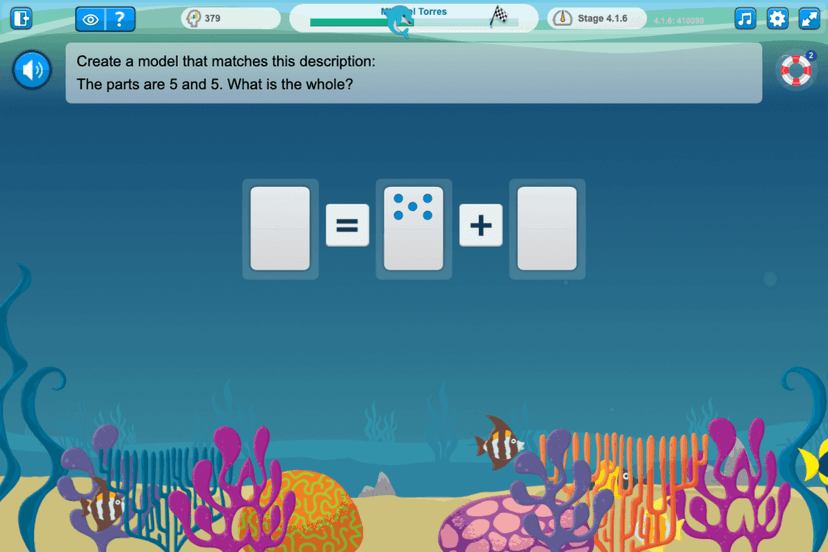
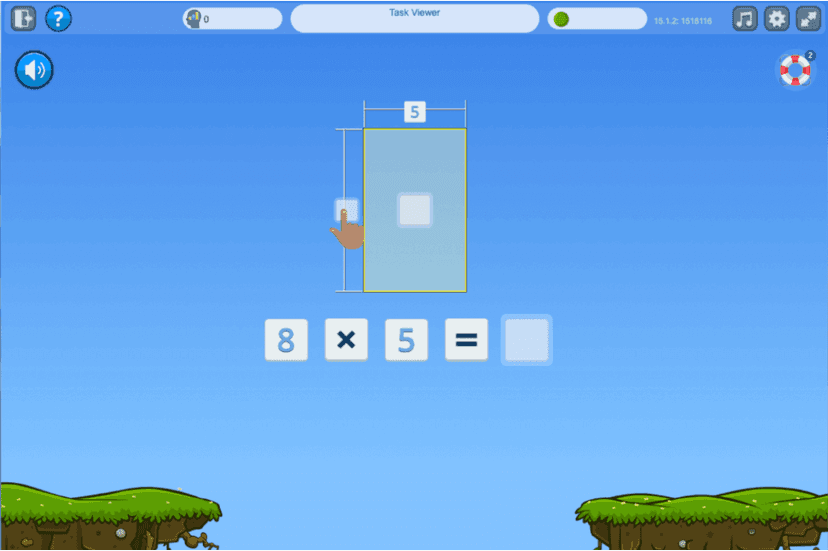
Symphony Math uses a mastery-based visual progression system to teach foundational K-5 mathematics. Students begin by interacting with simple visual representations, such as number bars or dot grids, rather than traditional equations. The app introduces a concept purely through these manipulatives, requiring the user to balance visual equations or identify missing quantities. Once a student demonstrates consistent success with the visual models, the platform slowly introduces standard numerical symbols alongside the graphics. Finally, it removes the visual aids and tests the abstract mathematical concept. This fading of scaffolding ensures the student relies on conceptual understanding rather than guessing. The software continuously tracks accuracy and response patterns to dictate the next set of problems. If your child struggles, the system drops back to a more concrete visual representation. This experiential learning loop forces active problem-solving and prevents students from blindly guessing their way through the curriculum.
Strengths and tradeoffs of Symphony Math
Symphony Math's biggest strength is its systematic transition from concrete visual models to abstract mathematical symbols, while its biggest weakness is the lack of explicit, worked-example instruction when a student gets stuck. The app excels at building conceptual understanding by forcing students to manipulate digital objects. This aligns perfectly with cognitive science findings that show visual-spatial representations strengthen mathematical reasoning better than rote drill practice. By delaying the introduction of traditional numbers, the program ensures students grasp the underlying logic of addition or fractions first. However, the experiential nature of the app means students learn entirely through trial and error. If a child fails to grasp the visual metaphor, the app lacks explicit instructional interventions. It will offer easier problems, but it does not provide direct, step-by-step video instruction or worked examples to bridge the knowledge gap. This absence of direct instruction increases the risk of frustration for struggling learners. Furthermore, the adaptive progression effectively utilizes spaced repetition by reintroducing older concepts in new visual formats, ensuring long-term retention of K-5 math fundamentals.
Who Might Benefit From Symphony Math?
Best for K-5 students who struggle with traditional math instruction and need visual models to build fundamental number sense. The program is ideal for classroom environments or dedicated homeschool setups where an adult can provide supplemental instruction when the student hits a roadblock. Because it avoids gamification and rapid-fire drills, it works well for children who experience math anxiety or become overwhelmed by timed tests. It is less suited for parents seeking a standalone, hands-off tutoring app, as the lack of direct instruction necessitates active adult facilitation.
Data Transparency
Does Not Meet Data Transparency Standard
Symphony Math reaches Level 1 of 3 (Basic protections), below our data transparency standard. Reaching Level 2 needs the policy to document data export, a data retention timeline and named service providers.
14 of 35 checks passed
Evaluated September 2026
Privacy Policy →Level 1 · Basic protections
Does not sell data or target ads at students, limits sharing, and lets parents see and delete their child's data.
Level 2 · Parent control (meets the standard)
Families can get their data out, know who processes it, and know how long it is kept.
Not documented: data export, a data retention timeline, named service providers, self-service deletion
Level 3 · Direct data access
Families or schools can pull their own data through an API, in a stated format.
Not documented: an API for retrieving their own data, a named export format
View all 35 checks
Parent Access8/8
Does the policy mention parents specifically?
“Parents and legal guardians can request to see the personally identifiable information that we have collected about their children.”
Can parents view their child's data?
“Parents and legal guardians can request to see the personally identifiable information that we have collected about their children.”
Can parents modify their child's data?
“Upon written request, Symphony Learning will provide a full inventory of personal information held on the student’s behalf. We will respond within 30 days, and take all reasonable steps to allow the review and correction/deletion of this inventory.”
Can parents delete their child's account?
“Parents and legal guardians may also ask to have that information deleted, and can inform us that they do not consent to any further collection or use of their child’s personally identifiable information.”
Is there a dedicated Children's Privacy section?
“What information is collected online from children under 13?”
Does it reference COPPA compliance?
“COPPA and other U.S. laws authorize LEAs to act in place of the parent or guardian in deciding whether to give consent to the collection and use of student information for educational purposes.”
Does it reference FERPA compliance?
“we understand that we are acting in the capacity of a “school official” under FERPA, and are committed to complying with the limitations and requirements imposed on us as an educational service provider to our school and district customers under FERPA”
Is parental consent required for child accounts?
“COPPA and other U.S. laws authorize LEAs to act in place of the parent or guardian in deciding whether to give consent to the collection and use of student information for educational purposes. By creating student accounts, LEAs provide consent and authorization for Symphony Learning to store and process personal data about those children for purpose of providing our Services.”
Data Portability1/5
Can users access their personal data?
“We acknowledge the right of individuals to access their personal data.”
Can users download/export their data?
The policy offers an inventory of personal information on written request but does not describe a way to download or export data.
Is there a self-service data access tool?
The policy says access is by written request only and describes no self-service tool.
Is a specific data format mentioned for export?
The policy does not name any export format.
Is there an API for data access?
The policy does not mention an API for data access.
Data Minimization1/6
Is data collection itemized?
“The minimum information required to create a student account is: - First Name - User Name - Password - Grade Level”
Can the app be used without a real name?
The policy says a student's first name is required to create an account.
Can the app be used without an email?
The policy lists minimum student fields without email but points to optional fields and never says student email is not collected.
Does it state collection is limited to what is necessary?
The policy lists minimum required fields and limits how data is used, but never says collection is limited to what is necessary.
Is IP address anonymized or truncated?
The policy does not say IP addresses are anonymized or truncated.
Is location tracking explicitly excluded?
The policy does not explicitly rule out location tracking.
Third-Party Protection3/7
Does it explicitly state no selling of data?
“Symphony Learning does not provide, sell, trade, or rent personally identifiable information to any non-agent third parties or for any use not in line with the purposes for which the data was originally provided.”
Are third-party providers named?
The policy names Prighter only as its UK privacy representative and does not name its service providers or host provider.
Are providers contractually restricted?
“Our Service Providers may have access to personally identifiable information when they perform services on our behalf, such as product training, purchasing, and/or data storage, subject to confidentiality and security obligations.”
No-targeted-advertising commitment?
The policy does not address targeted advertising.
Is AI/ML data sharing addressed?
The policy does not address sharing data for AI or machine learning.
Child-specific sharing restriction?
“Student personal data is used only for the purpose of fulfilling our duties and provisioning our products and services under our services agreement with our school and district customer, and is not otherwise used or disclosed except as provided for in the service agreement, as required by law, or as authorized or directed in writing by our LEA customer.”
Cookies/tracking limited or opt-out?
The policy says cookies and tracking may be used but offers no opt-out or limits beyond sharing only aggregated data.
Deletion & Retention1/5
Can users delete their account?
“Requests to access data and/or deletion of information can be made at any time via written request by either the LEA or from a confirmed parent or legal guardian.”
Self-service deletion mechanism?
The policy says deletion is by written request only and describes no self-service option.
Specific data retention timeline?
The policy gives a 30-day window for responding to requests but no data retention timeline.
Auto-deletion of inactive accounts?
The policy does not address automatic deletion of inactive accounts.
Post-deletion handling described?
The policy does not describe what happens to data after it is deleted.
Advertising0/4
Advertising model explicitly disclosed?
The policy does not address advertising.
Free from third-party advertisements?
The policy does not say whether the product shows third-party ads.
Children excluded from ad targeting?
The policy does not address ad targeting of children.
Ad-free option available?
The policy does not address advertising or an ad-free option.
What This Means
The policy review did not meet our data transparency standard. The checks above show the documented findings and unknowns. A missing statement does not establish how the app handles data in practice.
About this evaluation: Based on automated analysis of Privacy Policy against 35 policy-disclosure questions, including questions adapted from the Common Sense Privacy Program's published evaluation questions. TLS is not affiliated with Common Sense Media, and this is not a Common Sense rating. Quoted text is copied from the policy; unquoted notes are our summary. Results describe what the policy documents, not the company's actual practices. Privacy policies can change: this review reflects the version we analyzed and does not determine legal compliance.
Sources and review method
TLS combines product information and editorial analysis to explain how Symphony Math works, its tradeoffs, and the questions to ask before choosing it. Product features, an instructional rationale and evidence of learning outcomes are different kinds of information.
Formal Learning Standard assessment: not yet completed. Data Transparency findings are reported separately and do not establish learning effectiveness. Read our methodology.
Frequently Asked Questions About Symphony Math
Is Symphony Math free?
No. Symphony Math requires a paid subscription. Pricing varies significantly depending on whether you purchase individual student licenses or an unlimited school-wide license.
Is Symphony Math good for K-5 students?
Yes, it is specifically designed for Kindergarten through 5th-grade students. The visual mechanics are tailored to early cognitive development and foundational math skills like number sense, addition, and fractions.
What does Symphony Math teach?
Symphony Math teaches foundational K-5 mathematics. It focuses heavily on number sense, counting, basic operations, fractions, and decimals, emphasizing conceptual understanding over rote memorization.
How does Symphony Math compare to DreamBox Learning?
Symphony Math offers a more stripped-down, purely visual approach compared to DreamBox Learning. While both are adaptive and focus on K-5 math, DreamBox features heavier gamification and a more engaging interface for independent student use.
Has The Learning Standard evaluated Symphony Math?
TLS has not yet completed a Learning Standard evaluation of how well Symphony Math teaches. Its privacy policy has been reviewed for Data Transparency and reaches Level 1, Basic protections.
Is Symphony Math COPPA compliant?
The reviewed privacy policy references COPPA. A policy reference alone does not establish COPPA compliance. Policy review note: The policy cites COPPA as the basis for how consent is handled.
Is Symphony Math FERPA compliant?
The reviewed privacy policy references FERPA. A policy reference alone does not establish FERPA compliance. Policy review note: The policy commits to complying with FERPA.
Does Symphony Math have a children's privacy policy?
The reviewed policy includes a dedicated children's privacy section. Policy review note: The policy has a subsection with its own heading about children under 13.
Does Symphony Math sell student data?
The reviewed policy states that the app does not sell data. This is a policy statement; actual data practices were not verified. Policy review note: The policy states that Symphony does not sell personally identifiable information.
Can you delete your data from Symphony Math?
The reviewed privacy policy describes account deletion. We have not tested the deletion process. Policy review note: The LEA or a parent can ask in writing to have the data deleted.
Follow TLS Research
Subscribe to future TLS research updates: app reviews, findings, and what the evidence shows.
Screenshots

Take Action
For Symphony Math
If you represent Symphony Learning and have a correction or new evidence, send the relevant source so we can review and update this page.
Submit a correctionDetails
- Pricing
- Varies depending on number of student licenses or unlimited school license, and term of license.
- Platforms
- Web Browser, iPadOS (Apple tablet), Chrome OS (Google)
- Grade Levels
- Kindergarten, 1st Grade, 2nd Grade, 3rd Grade, 4th Grade, 5th Grade
- Website
- Visit site