
ST Math
Product by MIND Education
Facts checked: Not yet checked
Our take (not a Learning Standard rating). This label applies to learning-science judgments throughout this overview.
Our take (not a Learning Standard rating)
ST Math leverages spatial-temporal reasoning to build conceptual math understanding without relying on language, making it highly accessible. However, because The Learning Standard has not yet evaluated its specific efficacy data against our rubric, we cannot definitively guarantee its outcomes until a full review is complete.
Keep the ST Math decision brief
Share the difference between the two progress measures, three questions and a ready-to-send message so caregivers celebrate the milestone and make the next decision together. Subscribe to future TLS research updates and download the one-page PDF here immediately.
Pros
- Uses spatial-temporal puzzles to build conceptual understanding before introducing mathematical symbols.
- Removes language barriers by relying entirely on visual feedback rather than written instructions.
- Enforces mastery-based progression by requiring students to solve puzzles perfectly before advancing.
- Provides immediate, animated visual feedback showing exactly why an answer failed to help students adjust their mental models.
Cons
- Lacks explicit direct instruction or worked examples to help students who become completely stuck.
- Frustration can run high because the game refuses to offer hints or text-based explanations.
- Teachers and parents must actively monitor dashboards to identify when a student is mathematically stuck.
- Pricing and access are typically restricted to school district purchases rather than individual family subscriptions.
What Do We Know About ST Math?
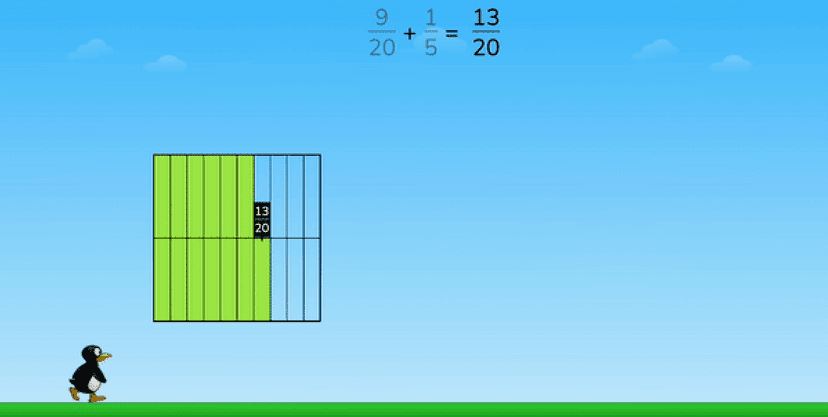
ST Math is an effective supplemental tool for building conceptual math skills, though its strict lack of written instructions can frustrate some learners. The program strips away language entirely, forcing your child to figure out mathematical concepts through trial, error, and visual feedback. When your child guides the penguin mascot, JiJi, across the screen, they are actually engaging in productive struggle and spatial-temporal reasoning. This approach is excellent for students who struggle with word problems or have language processing difficulties. However, because the app relies strictly on discovery learning rather than direct instruction, your child will not receive a worked example or a textual explanation if they fail. They must observe the visual animation of their failure to understand what went wrong. Parents must be prepared to ask guiding questions rather than just giving the answer, as the app is designed to build rigorous problem-solving persistence. The Learning Standard has not yet fully evaluated ST Math against our rubric, but its foundation in cognitive science aligns well with established principles of visual learning.
How Does ST Math Work?
ST Math uses a mastery-based, visual discovery approach to teach mathematics through spatial-temporal puzzles. Your child begins by interacting with visual models on the screen, manipulating objects to clear a path for the character JiJi. There are no written instructions, verbal prompts, or traditional numbers in the early stages. Instead, the game relies on immediate, animated feedback. If your child makes a mistake, the animation plays out their exact logic, showing physically why the solution failed. This mechanic forces the brain to reconcile the expected outcome with the actual outcome, a process deeply rooted in schema building. As your child demonstrates mastery by solving these visual puzzles consistently, the program gradually introduces traditional mathematical symbols and equations. Students cannot skip ahead or guess their way through; the mastery-based progression requires strict completion of a level before unlocking the next concept.
Strengths and tradeoffs of ST Math
ST Math's biggest strength is its ability to teach rigorous mathematical concepts entirely without language, while its biggest weakness is the lack of scaffolds or worked examples for students who reach a state of absolute frustration. Visual Schema Building: By removing language, ST Math reduces cognitive load related to reading, allowing the brain's working memory to focus entirely on spatial-temporal reasoning. This ensures that math concepts are internalized visually before symbolic abstraction occurs. Immediate Visual Feedback: The app excels at formative feedback. Instead of just marking an answer wrong, it animates the student's incorrect logic, helping them adjust their mental model. Productive Struggle vs. Frustration: The deliberate omission of hints relies heavily on the concept of productive struggle. However, learning science dictates that when cognitive overload occurs, learners benefit from worked examples. ST Math refuses to provide these, meaning a student can get permanently stuck unless a parent or teacher intervenes. Mastery Progression: The strict requirement to clear levels perfectly ensures no foundational gaps are left behind, but this rigid pacing can demoralize students who only need minor conceptual corrections. Note that ST Math is currently pending evaluation by The Learning Standard.
Who Might Benefit From ST Math?
ST Math is best for PreK-8 students who benefit from visual learning and struggle with the language demands of traditional math instruction. Because it removes reading barriers, it is highly effective for English language learners and students with dyslexia. It is also an excellent tool for standard classroom environments where educators want to build deeper conceptual understanding alongside traditional procedural math. Since the program requires high frustration tolerance and independent problem-solving, it is less suited for students who need explicit step-by-step instruction or frequent verbal encouragement.
Data Transparency
Does Not Meet Data Transparency Standard
ST Math reaches Level 1 of 3 (Basic protections), below our data transparency standard. Reaching Level 2 needs the policy to document data export, a data retention timeline and self-service deletion.
18 of 35 checks passed
Evaluated September 2026
Privacy Policy →Level 1 · Basic protections
Does not sell data or target ads at students, limits sharing, and lets parents see and delete their child's data.
Level 2 · Parent control (meets the standard)
Families can get their data out, know who processes it, and know how long it is kept.
Not documented: data export, a data retention timeline, self-service deletion
Level 3 · Direct data access
Families or schools can pull their own data through an API, in a stated format.
Not documented: an API for retrieving their own data, a named export format
View all 35 checks
Parent Access6/8
Does the policy mention parents specifically?
““Users” of our Sites include these Students; authorized representatives of the LEAs, including the Students’ teachers (“LEA Representative(s)”); parents / legal guardians of the Students (“Parent(s)”); and other visitors to our websites and mobile applications (“Visitor(s)”).”
Can parents view their child's data?
“Parents, legal guardians, and Students aged 13 and above may review the personally identifying information contained in Student Records and may have us correct any erroneous Student Records.”
Can parents modify their child's data?
“Parents, legal guardians, and Students aged 13 and above may review the personally identifying information contained in Student Records and may have us correct any erroneous Student Records.”
Can parents delete their child's account?
“We will terminate use and storage of any personal information contained in Student Records that we have collected for children under 13 following written request from their parent or legal guardian.”
Is there a dedicated Children's Privacy section?
The policy has no section with its own heading about children's privacy or COPPA.
Does it reference COPPA compliance?
“The organization is compliant with relevant federal and state legal requirements, including, as a non-limiting example, the federal Family Educational Rights and Privacy Act (20 U.S.C. Sec. 1232g) (“FERPA”), the Children’s Online Privacy Protection Act (15 U.S.C. Secs. 6501 – 6506) (“COPPA”)”
Does it reference FERPA compliance?
“The organization is compliant with relevant federal and state legal requirements, including, as a non-limiting example, the federal Family Educational Rights and Privacy Act (20 U.S.C. Sec. 1232g) (“FERPA”)”
Is parental consent required for child accounts?
The policy has schools or homeschool parents accept the policy on students' behalf, but does not say parental consent is required to create a child account.
Data Portability2/5
Can users access their personal data?
“Visitors may review, update and/or correct your contact or other personal information at any time by sending an e-mail to us at privacy@mindeducation.org and/or notifying the MIND Education of the changes, as applicable.”
Can users download/export their data?
The policy does not offer a way to download or export data.
Is there a self-service data access tool?
“If you have been prompted to provide information to register an account, you will be provided limited access to your account information to update and/or correct the personal information you have supplied.”
Is a specific data format mentioned for export?
The policy names no export format.
Is there an API for data access?
The policy does not mention an API for getting data.
Data Minimization1/6
Is data collection itemized?
“the Student’s legal name; name of the Student’s teacher; name of the course in which the Software is used, if applicable; the Student’s grade in school; the school and school district; the Student’s user name and password (in text or and/or pictorial form); date-of-birth; the Student’s identifier assigned by the LEA.”
Can the app be used without a real name?
The policy says it receives the student's legal name.
Can the app be used without an email?
The policy does not say that student email addresses are never collected.
Does it state collection is limited to what is necessary?
The policy does not say collection is limited to what is necessary.
Is IP address anonymized or truncated?
The policy says IP addresses are logged, with no mention of anonymizing or truncating them.
Is location tracking explicitly excluded?
The policy does not rule out location tracking.
Third-Party Protection6/7
Does it explicitly state no selling of data?
“MIND Education does not provide, sell, trade, or rent personally identifiable information.”
Are third-party providers named?
“Our secure servers, hosted by Amazon Web Services (AWS), are located within North America.”
Are providers contractually restricted?
“MIND Education also contractually requires any of its subcontractors or vendors who are accessing or utilizing such data on its behalf to comply with the requirements of this Privacy Policy pertaining to the use and access of such data.”
No-targeted-advertising commitment?
“MIND/ST Math does not utilize or share any personally identifiable information in student records for the purposes of targeted advertising or other commercial purposes.”
Is AI/ML data sharing addressed?
The policy does not address AI or machine learning.
Child-specific sharing restriction?
“We will not use or share any personal or sensitive information contained in Student Records for commercial purposes unrelated to the operation of the Sites or the services provided to the applicable LEA, Students, parents, or teachers”
Cookies/tracking limited or opt-out?
“Most web browsers automatically accept cookies, but if you prefer, you can set your computer to not accept cookies.”
Deletion & Retention2/5
Can users delete their account?
“We will terminate use and storage of any personal information contained in Student Records that we have collected for children under 13 following written request from their parent or legal guardian.”
Self-service deletion mechanism?
The policy only allows deletion by emailed request, with no self-service tool.
Specific data retention timeline?
The policy only says data is deleted within a "reasonable period of time" and gives no specific timeline.
Auto-deletion of inactive accounts?
The policy does not mention deleting inactive accounts automatically.
Post-deletion handling described?
“Personally identifiable information received from a LEA is de-identified or deleted in a reasonable period of time after the relationship between MIND Education and the LEA has”
Advertising1/4
Advertising model explicitly disclosed?
The policy only rules out using student data for targeted ads and does not say whether the product has advertising.
Free from third-party advertisements?
The policy does not say the product is free of third-party ads.
Children excluded from ad targeting?
“For the avoidance of doubt, we will not utilize any personally identifiable information in Student Records for the purposes of targeted advertising.”
Ad-free option available?
The policy does not mention an ad-free option or say the product has no ads.
What This Means
The policy review did not meet our data transparency standard. The checks above show the documented findings and unknowns. A missing statement does not establish how the app handles data in practice.
About this evaluation: Based on automated analysis of Privacy Policy against 35 policy-disclosure questions, including questions adapted from the Common Sense Privacy Program's published evaluation questions. TLS is not affiliated with Common Sense Media, and this is not a Common Sense rating. Quoted text is copied from the policy; unquoted notes are our summary. Results describe what the policy documents, not the company's actual practices. Privacy policies can change: this review reflects the version we analyzed and does not determine legal compliance.
Sources and review method
TLS combines product information and editorial analysis to explain how ST Math works, its tradeoffs, and the questions to ask before choosing it. Product features, an instructional rationale and evidence of learning outcomes are different kinds of information.
Formal Learning Standard assessment: not yet completed. Data Transparency findings are reported separately and do not establish learning effectiveness. Read our methodology.
Frequently Asked Questions About ST Math
Is ST Math free?
No, ST Math is not free for individual use. It is primarily sold directly to schools and districts as a supplemental curriculum. Pricing varies based on the size of the implementation, and parents typically access it for free only if their child's school has purchased a license.
Is ST Math good for elementary students?
Yes, ST Math is highly effective for elementary students in PreK through 5th grade, as well as middle schoolers up to 8th grade. Its visual puzzle format is especially engaging for younger learners, helping them grasp complex fractions and algebraic concepts intuitively before they ever see an equation.
What does ST Math teach?
ST Math teaches foundational to advanced PreK-8 mathematics, including number sense, fractions, geometry, and early algebra. Rather than teaching rote memorization or procedural formulas, it focuses entirely on conceptual understanding through spatial-temporal reasoning and problem-solving puzzles.
Does ST Math provide direct instruction?
No, ST Math does not provide direct instruction, lectures, or written explanations. It relies entirely on a discovery-based learning model. If you want an app that explicitly teaches step-by-step math procedures, ST Math will not meet that need.
Has The Learning Standard evaluated ST Math?
TLS has not yet completed a Learning Standard evaluation of how well ST Math teaches. Its privacy policy has been reviewed for Data Transparency and reaches Level 1, Basic protections.
Is ST Math COPPA compliant?
The reviewed privacy policy references COPPA. A policy reference alone does not establish COPPA compliance. Policy review note: The policy states it complies with COPPA.
Is ST Math FERPA compliant?
The reviewed privacy policy references FERPA. A policy reference alone does not establish FERPA compliance. Policy review note: The policy states it complies with FERPA.
Does ST Math have a children's privacy policy?
No dedicated children's privacy section was found in the reviewed policy. Policy review note: The policy has no section with its own heading about children's privacy or COPPA.
Does ST Math sell student data?
The reviewed policy states that the app does not sell data. This is a policy statement; actual data practices were not verified. Policy review note: The company states it does not sell personal information.
Can you delete your data from ST Math?
The reviewed privacy policy describes account deletion. We have not tested the deletion process. Policy review note: Stored student data can be removed on request.
Keep the ST Math decision brief
Share the difference between the two progress measures, three questions and a ready-to-send message so caregivers celebrate the milestone and make the next decision together. Subscribe to future TLS research updates and download the one-page PDF here immediately.
Screenshots



Latest News
All ST Math NewsHow Mentorship Platforms Are Changing the College-to-Career Path
Learn how award-winning mentorship platforms like PeopleGrove are connecting university students with alumni networks to prove the ROI of a college degree.
Visual Math Program ST Math Wins Solution of the Year Award
ST Math won Math Learning Solution of the Year. Discover how visual puzzles help students succeed, and why experts say language support is still essential.
How Visual Math Puzzles are Winning Educators and Boosting Test Scores
Discover how ST Math's visual-puzzle approach won the 2026 EdTech Breakthrough award and how cognitive science connects early spatial skills to math success.
Take Action
For ST Math
If you represent MIND Education and have a correction or new evidence, send the relevant source so we can review and update this page.
Submit a correctionDetails
- Pricing
- Pricing varies - contact MIND Education, creators of ST Math for more information.
- Platforms
- iOS (Apple mobile), iPadOS (Apple tablet), Windows (Microsoft), macOS (Apple), Chrome OS (Google)
- Grade Levels
- Prekindergarten, Kindergarten, 1st Grade, 2nd Grade, 3rd Grade, 4th Grade, 5th Grade, 6th Grade, 7th Grade, 8th Grade
- Website
- Visit site