
SpringMath
Product by Sourcewell Technology
Facts checked: Not yet checked
Our take (not a Learning Standard rating). This label applies to learning-science judgments throughout this overview.
Our take (not a Learning Standard rating)
While The Learning Standard has not yet evaluated SpringMath, its structural design relies heavily on teacher-directed direct instruction and mastery-based progression, which are proven methods for math intervention. It provides structured classwide and individual interventions, but its ultimate effectiveness depends entirely on successful teacher implementation.
Pros
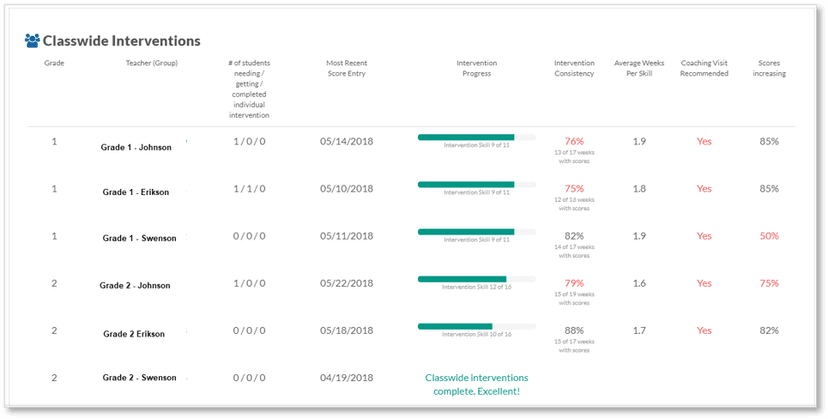
- Integrates classwide and individual math interventions into a single multi-tiered system of supports to easily track student progress.
- Utilizes mastery-based progression to ensure foundational mathematical skills are secured before introducing more complex concepts.
- Provides embedded coaching and instructional scripts to reduce cognitive load on teachers during intervention blocks.
- Employs direct instruction models which are highly effective for novice learners acquiring new procedural math skills.
Cons
- Relies completely on teacher fidelity, meaning inconsistent classroom implementation will severely limit student learning outcomes.
- Lacks independent, student-driven exploration modules, focusing entirely on structured teacher-directed instruction.
- Requires significant professional development time for educators to master the embedded coaching and data tracking systems.
What Do We Know About SpringMath ?
SpringMath is an effective school-based math intervention system for your child, provided their teachers implement the daily protocols consistently. It is a teacher-led, K-8 program designed to identify skill gaps and deliver targeted practice, rather than an app your child plays independently at home. Your child will likely experience SpringMath in the classroom through brief, daily, timed math exercises followed by immediate teacher feedback. This method leverages retrieval practice, a proven cognitive science strategy that strengthens memory through active recall. Because SpringMath operates within a school's Multi-Tiered System of Supports, it closely tracks your child's mastery of specific foundational skills. If your child struggles with fractions, the system directs the teacher to provide explicit instruction and practice tailored precisely to that deficit. Parents should know that they cannot purchase this app for individual home use; it requires a school-wide or district-wide subscription. Your child's success with this tool depends entirely on how well their school integrates the structured daily practice routines into the standard math block.
How Does SpringMath Work?
SpringMath uses a mastery-based, teacher-directed pedagogical approach that relies on daily, brief intervention sessions to close math achievement gaps. Teachers administer short, timed assessments to the entire class to pinpoint specific skill deficits. Based on these results, the platform generates a targeted lesson plan and practice sheets for a 15-minute daily intervention block. During this block, teachers use explicit, direct instruction to model mathematical procedures. Students then engage in guided practice with peer tutoring, followed by independent timed practice. This cycle heavily incorporates spaced repetition and active retrieval practice. The platform tracks student progress on a mastery trajectory. Once the class achieves a target median score, the system automatically progresses to the next logical skill in the math hierarchy. For students who do not respond to the classwide intervention, SpringMath generates individualized intervention plans with specific instructional scripts for teachers to deliver in small groups, ensuring no student is left behind.
Strengths and tradeoffs of SpringMath
SpringMath's biggest strength is its systematic use of explicit instruction for classwide intervention, while its biggest weakness is its absolute dependence on teacher fidelity to function effectively. The platform excels at organizing mastery-based progression. By breaking math down into a rigid hierarchy of skills, it ensures students do not attempt complex problem-solving before automating foundational procedures. The use of timed retrieval practice during the daily 15-minute sessions builds computational fluency, reducing the working memory load required for higher-order math tasks later on. Additionally, providing teachers with exact instructional scripts implements worked examples, a heavily researched strategy that minimizes cognitive overload for novice learners. Conversely, the system is rigidly teacher-directed. There is no automated, gamified pathway for students to learn independently. This means instructional fidelity is the single failure point; if a teacher skips the daily intervention block or deviates from the script, the spaced repetition cycle breaks, and the platform loses its efficacy. Furthermore, the strict focus on procedural fluency and direct instruction leaves little room for open-ended, inquiry-based learning, which some students need to develop deep conceptual understanding of mathematics.
Who Might Benefit From SpringMath ?
SpringMath is best for K-8 school districts that need a structured, evidence-based intervention system to address widespread math skill deficits. It serves administrators and teachers aiming to implement a strict Multi-Tiered System of Supports framework across multiple grade levels. The program targets students who lack foundational mathematical fluency and require explicit, step-by-step instruction to catch up to grade-level expectations. It is highly suitable for general education classrooms where the teacher needs scripted guidance to deliver effective 15-minute daily math interventions without spending hours on lesson planning.
Sources and review method
TLS combines product information and editorial analysis to explain how SpringMath works, its tradeoffs, and the questions to ask before choosing it. Product features, an instructional rationale and evidence of learning outcomes are different kinds of information.
Formal Learning Standard assessment: not yet completed. Data Transparency findings are reported separately and do not establish learning effectiveness. Read our methodology.
Frequently Asked Questions About SpringMath
Is SpringMath free?
No. SpringMath requires a paid, per-student annual subscription that is typically purchased at the school or district level. It is not available as a free application, nor is there a direct-to-consumer version for individual families to purchase for home use. Because the software is designed as a comprehensive Multi-Tiered System of Supports for school administration, the pricing model is structured strictly around institutional licensing rather than individual accounts.
Is SpringMath good for elementary and middle school students?
Yes. The program provides highly structured math interventions specifically engineered for Kindergarten through 8th-grade students. It systematically scales its procedural focus depending on the grade level, moving from basic number sense and counting in early elementary classrooms up to complex fractions, decimals, and pre-algebraic concepts in middle school. The direct instruction and peer-tutoring models it employs are developmentally appropriate and heavily researched for these specific age groups when they experience math difficulties.
What does SpringMath teach?
SpringMath teaches foundational mathematical fluency and core procedural skills required for K-8 learners. Rather than acting as a comprehensive core curriculum, it functions as an intervention system focusing on closing specific learning gaps. The platform targets arithmetic computation, fractions, decimals, and algebraic readiness. By utilizing daily timed practice and explicit teacher-led instruction, it ensures students achieve procedural mastery and automatization of these basic skills before they are expected to tackle complex, higher-order word problems.
Can my child use SpringMath independently at home?
No. SpringMath is strictly a teacher-directed classroom intervention tool, not an independent learning game. It requires a trained educator to administer the classwide assessments, interpret the resulting data, and deliver the scripted explicit instruction. Your child will participate in SpringMath through brief, daily sessions at school involving peer tutoring and timed paper-and-pencil or digital practice. It lacks an independent student portal for self-directed exploration or homework outside of the structured classroom environment.
How does SpringMath compare to independent learning apps like Khan Academy?
SpringMath is a heavily teacher-led, classwide intervention system requiring strict daily instructional protocols, whereas Khan Academy is a student-driven, self-paced platform. SpringMath focuses on standardized compliance, delivering exact scripts for teachers to address classwide skill deficits simultaneously. In contrast, Khan Academy is built for individual exploration, self-directed homework support, and video-based tutorials that students navigate independently. SpringMath requires high teacher fidelity, while Khan Academy requires high student self-regulation.
Has The Learning Standard evaluated SpringMath?
TLS has not yet completed a Learning Standard evaluation of how well SpringMath teaches. TLS has not published a Data Transparency result for its privacy policy.
Follow TLS Research
Subscribe to future TLS research updates: app reviews, findings, and what the evidence shows.
Screenshots

Take Action
For SpringMath
If you represent Sourcewell Technology and have a correction or new evidence, send the relevant source so we can review and update this page.
Submit a correctionDetails
- Pricing
- Per student annual subscription model.
- Platforms
- Web Browser, Windows (Microsoft), macOS (Apple), Chrome OS (Google)
- Grade Levels
- Kindergarten, 1st Grade, 2nd Grade, 3rd Grade, 4th Grade, 5th Grade, 6th Grade, 7th Grade, 8th Grade
- Website
- Visit site