Reading Eggs
Product by 3P Learning
Facts checked: Not yet checked
Our take (not a Learning Standard rating). This label applies to learning-science judgments throughout this overview.
Our take (not a Learning Standard rating)
Reading Eggs effectively teaches foundational literacy by systematically targeting the five pillars of reading: phonemic awareness, phonics, vocabulary, comprehension, and fluency. The app relies heavily on extrinsic gamification, which builds initial engagement but may distract from deep cognitive processing for some early learners.
Keep the Reading Eggs decision brief
Keep a before-you-reset decision guide, a reminder about progress removal and a message that helps the adults agree on a targeted next step. Subscribe to future TLS research updates and download the one-page PDF here immediately.
Pros
- Systematically introduces phonics rules using explicit instruction and immediate retrieval practice.
- Provides a vast library of leveled ebooks that appropriately match a student's assessed reading ability.
- Utilizes spaced repetition to reinforce newly acquired sight words across multiple distinct mini-games.
- Draws on evidence-based research to structure its early literacy curriculum progression.
Cons
- Relies heavily on extrinsic rewards like golden eggs, which can overshadow intrinsic reading motivation.
- Auditory instructions occasionally lack the clarity needed for independent use by very young children.
- Does not provide detailed, constructive feedback on incorrect answers beyond signaling a mistake.
What Do We Know About Reading Eggs?
Reading Eggs is a highly effective, evidence-based tool for teaching your child foundational literacy skills. The program systematically moves early learners through the five essential pillars of reading: phonemic awareness, phonics, fluency, vocabulary, and comprehension. Your child takes a placement test that drops them into a customized learning path. From there, they complete interactive lessons that pair explicit phonics instruction with immediate practice. The platform is incredibly engaging, utilizing a heavy dose of gamification. Kids earn golden eggs for completing tasks, which they use to buy digital items. While this extrinsic motivation keeps young children coming back, you must monitor their screen time to ensure they are actually learning and not just clicking through animations to get rewards. The Learning Standard has not yet formally evaluated this app's granular efficacy metrics, but its adherence to established science of reading principles makes it a strong supplemental tool for home or classroom use. Because the app does not provide robust corrective feedback when your child makes an error, adult supervision during challenging lessons is highly recommended.
How Does Reading Eggs Work?
Reading Eggs relies on a structured literacy approach that combines explicit, systematic phonics instruction with highly gamified practice routines. Your child begins by taking an adaptive placement test to determine their starting point on an interactive learning map. Each stepping stone on the map represents a specific lesson focused on a targeted reading skill. A lesson typically opens with a short instructional animation demonstrating a specific phoneme or sight word. Your child then completes a series of rapid-fire retrieval practice games, such as matching letters to sounds or dragging words to complete a sentence. To progress, students must demonstrate mastery of the targeted concept. The app seamlessly integrates a library of leveled ebooks into the progression, requiring your child to apply newly learned phonics skills to connected text. Upon completing a module, students take an end-of-map quiz to assess retention before unlocking the next set of challenges.
Strengths and tradeoffs of Reading Eggs
The biggest strength of Reading Eggs is its alignment with the science of reading, while its biggest weakness is an over-reliance on extrinsic digital rewards. Alignment with cognitive science is evident in how the app sequences instruction. It does not expect your child to guess words from context; instead, it uses explicit phonics instruction to teach decoding. The app effectively employs spaced repetition, ensuring that letters and sight words introduced in early lessons reappear in later ebooks to cement long-term retention. However, the heavy use of gamification presents a significant drawback. Earning golden eggs and customizing avatars relies entirely on extrinsic motivation. While this drives high initial engagement, learning science suggests that excessive digital rewards can diminish a child's intrinsic desire to read for pleasure. Furthermore, the app's error correction is limited. When your child selects a wrong answer, the app typically just plays a negative sound and allows them to guess again. This lacks the worked examples or scaffolding necessary to help a struggling student understand why their answer was incorrect.
Who Might Benefit From Reading Eggs?
Reading Eggs is best for Pre-K through early elementary students who need explicit, structured phonics practice in a highly engaging digital environment. It serves as an excellent supplemental tool for children aged 3 to 7 who are just beginning to decode words or struggling with early reading fluency. Parents who want to reinforce classroom literacy instruction at home will find the leveled reading library particularly useful. However, older students or advanced readers may find the cartoonish interface and repetitive gamification mechanics too juvenile for their learning needs.
Data Transparency
Does Not Meet Data Transparency Standard
Reading Eggs reaches Level 1 of 3 (Basic protections), below our data transparency standard. Reaching Level 2 needs the policy to document named service providers and self-service deletion.
23 of 35 checks passed
Evaluated September 2026
Privacy at 3P Learning →Level 1 · Basic protections
Does not sell data or target ads at students, limits sharing, and lets parents see and delete their child's data.
Level 2 · Parent control (meets the standard)
Families can get their data out, know who processes it, and know how long it is kept.
Not documented: named service providers, self-service deletion
Level 3 · Direct data access
Families or schools can pull their own data through an API, in a stated format.
Not documented: an API for retrieving their own data, a named export format
View all 35 checks
Parent Access8/8
Does the policy mention parents specifically?
“Parents, guardians of children and children themselves (via the parent account holder) on home-managed accounts can, at any time:”
Can parents view their child's data?
“Review the personal information we hold about the child.”
Can parents modify their child's data?
“Ask us to correct or update it.”
Can parents delete their child's account?
“A child can withdraw the permission to our processing of their personal information by asking their parent to delete their account. Parents and guardians can contact us to update or delete a child’s account at any time.”
Is there a dedicated Children's Privacy section?
“Children data and privacy rights When a parent or guardian creates a child’s account, the parent gives consent on the child’s behalf to our collection and use of the child’s personal information.”
Does it reference COPPA compliance?
“kidSAFE+ COPPA seal for products directed to children under 13 in the US (includes Reading Eggs & Mathseeds).”
Does it reference FERPA compliance?
“we agree to act as a “school official” with a legitimate educational interest under the US Family Educational Rights and Privacy Act (FERPA, 20 USC §1232g) and to only use student education records to provide the service under the school’s direction.”
Is parental consent required for child accounts?
“A link to this full Privacy Policy is included in the direct notice. We obtain verifiable parental consent via the monetary-transaction method.”
Data Portability2/5
Can users access their personal data?
“Requests by individuals to exercise their privacy rights (access, rectification, erasure, restriction, portability, objection, and rights related to automated individual decision-making) should be directed to the school as the Controller.”
Can users download/export their data?
“Requests by individuals to exercise their privacy rights (access, rectification, erasure, restriction, portability, objection, and rights related to automated individual decision-making) should be directed to the school as the Controller.”
Is there a self-service data access tool?
The policy handles access through requests to the school or privacy@3plearning.com and does not describe a self-service data access tool.
Is a specific data format mentioned for export?
The policy does not name any format for exported data.
Is there an API for data access?
The policy does not describe an API that users or schools can use to get their data.
Data Minimization3/6
Is data collection itemized?
“First name and last name or initials, year/grade level, school name, class assignment, login ID, learning activity data (scores, progress, time on task, content interactions, free-text entered into learning activities and read aloud voice feature).”
Can the app be used without a real name?
The policy says school accounts collect students' first and last names or initials.
Can the app be used without an email?
The policy says the student roster identifier can be an email address.
Does it state collection is limited to what is necessary?
“Data minimisation as standard.”
Is IP address anonymized or truncated?
The policy says IP addresses are collected for internal operations but does not say they are anonymised or truncated.
Is location tracking explicitly excluded?
“We do not collect, store, infer or surface precise or coarse geolocation data about children or any other users through the products covered by this Policy.”
Third-Party Protection6/7
Does it explicitly state no selling of data?
“We do not sell data to advertisers (whether personal, anonymous or aggregated). We do not use data to engage in targeted advertising to children.”
Are third-party providers named?
The policy links to a separate subprocessor list but names no third-party providers in its own text.
Are providers contractually restricted?
“Subprocessors process personal information only on our instructions and under contractual privacy and security obligations. 3P Learning does not authorise subprocessors to use personal information for their own purposes.”
No-targeted-advertising commitment?
“We do not use cookies or third-party providers to engage in behavioural targeting of advertisements to students or children.”
Is AI/ML data sharing addressed?
“For example, we do not share children data to any data brokerage, AI training or promotional activities.”
Child-specific sharing restriction?
“We do not share children’s personal information with third parties for the third parties’ own purposes.”
Cookies/tracking limited or opt-out?
“We use limited technical data — “persistent identifiers” such as IP addresses, device identifiers, cookies, log data, and mobile-app identifiers — solely to support the internal operations of our services.”
Deletion & Retention3/5
Can users delete their account?
“At all times the school can request the earlier deletion or anonymisation of student data by contacting us at [privacy@3plearning.com](mailto:privacy@3plearning.com).”
Self-service deletion mechanism?
The policy handles deletion by contacting the school or privacy@3plearning.com and describes no self-service deletion.
Specific data retention timeline?
“Security logs containing persistent identifiers are retained for 12 months and then deleted.”
Auto-deletion of inactive accounts?
The policy defines when accounts become inactive but does not state that inactive accounts are deleted automatically.
Post-deletion handling described?
“On receipt of a verified request we will delete or anonymise the data from production systems within 30 days.”
Advertising1/4
Advertising model explicitly disclosed?
The policy says there is no marketing to children and no behavioural ads to children, but it never explicitly states whether the product carries advertising.
Free from third-party advertisements?
The policy does not explicitly state that the product has no third-party advertisements.
Children excluded from ad targeting?
“We do not use children data for behavioural advertising, or marketing profiles.”
Ad-free option available?
The policy does not explicitly state that the product is ad-free or offer an ad-free option.
What This Means
The policy review did not meet our data transparency standard. The checks above show the documented findings and unknowns. A missing statement does not establish how the app handles data in practice.
About this evaluation: Based on automated analysis of Privacy at 3P Learning against 35 policy-disclosure questions, including questions adapted from the Common Sense Privacy Program's published evaluation questions. TLS is not affiliated with Common Sense Media, and this is not a Common Sense rating. Quoted text is copied from the policy; unquoted notes are our summary. Results describe what the policy documents, not the company's actual practices. Privacy policies can change: this review reflects the version we analyzed and does not determine legal compliance.
Sources and review method
TLS combines product information and editorial analysis to explain how Reading Eggs works, its tradeoffs, and the questions to ask before choosing it. Product features, an instructional rationale and evidence of learning outcomes are different kinds of information.
Formal Learning Standard assessment: not yet completed. Data Transparency findings are reported separately and do not establish learning effectiveness. Read our methodology.
Frequently Asked Questions About Reading Eggs
Is Reading Eggs free?
No, Reading Eggs is not free. It is a subscription-based service, though the developer often provides a free trial period for new users. Pricing varies based on the tier and whether it is purchased for home or school use. Contact the vendor directly for the most current pricing structure.
Is Reading Eggs good for early learners?
Yes, the app is specifically designed for early learners aged 3 to 7. It breaks down complex reading mechanics into bite-sized, interactive lessons that hold the attention of young children while explicitly teaching phonemic awareness and phonics.
What does Reading Eggs teach?
Reading Eggs teaches the five foundational pillars of early literacy: phonemic awareness, phonics, vocabulary, reading comprehension, and fluency. Your child will learn to match sounds to letters, decode words, recognize high-frequency sight words, and read full sentences within leveled ebooks.
How does Reading Eggs vs ABCmouse compare?
Reading Eggs focuses exclusively on structured literacy and the science of reading, making it a much stronger choice for targeted reading intervention. ABCmouse offers a broader, general curriculum covering math, science, and art, but its reading instruction is less systematic and rigorous than Reading Eggs.
Has The Learning Standard evaluated Reading Eggs?
TLS has not yet completed a Learning Standard evaluation of how well Reading Eggs teaches. Its privacy policy has been reviewed for Data Transparency and reaches Level 1, Basic protections.
Is Reading Eggs COPPA compliant?
The reviewed privacy policy references COPPA. A policy reference alone does not establish COPPA compliance. Policy review note: The policy says it complies with COPPA and holds a COPPA seal.
Is Reading Eggs FERPA compliant?
The reviewed privacy policy references FERPA. A policy reference alone does not establish FERPA compliance. Policy review note: The policy commits to FERPA school-official obligations.
Does Reading Eggs have a children's privacy policy?
The reviewed policy includes a dedicated children's privacy section. Policy review note: The policy has a section headed "Children data and privacy rights".
Does Reading Eggs sell student data?
The reviewed policy states that the app does not sell data. This is a policy statement; actual data practices were not verified. Policy review note: The vendor says it does not sell data to advertisers.
Can you delete your data from Reading Eggs?
The reviewed privacy policy describes account deletion. We have not tested the deletion process. Policy review note: Deletion can be requested by the school or by parents.
Keep the Reading Eggs decision brief
Keep a before-you-reset decision guide, a reminder about progress removal and a message that helps the adults agree on a targeted next step. Subscribe to future TLS research updates and download the one-page PDF here immediately.
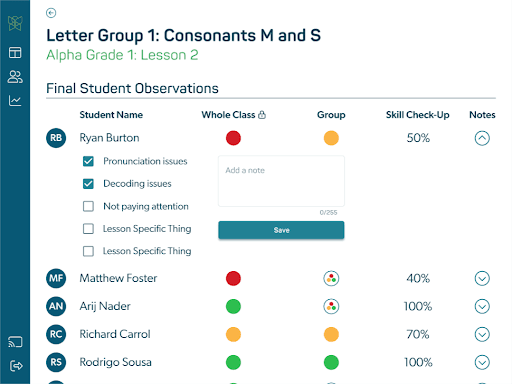
Screenshots
Latest News
All Reading Eggs NewsTake Action
For Reading Eggs
If you represent 3P Learning and have a correction or new evidence, send the relevant source so we can review and update this page.
Submit a correction