Read STOP Write
Product by Strong Literacy
Facts checked: Not yet checked
Our take (not a Learning Standard rating). This label applies to learning-science judgments throughout this overview.
Our take (not a Learning Standard rating)
Read STOP Write integrates reading comprehension and writing through direct instruction using authentic texts, which aligns with cognitive load theory by contextualizing vocabulary. However, because The Learning Standard has not yet evaluated this program, we cannot definitively confirm its long-term efficacy or adaptive capabilities for individual learners.
Pros
- Contextualizes vocabulary acquisition within authentic informational texts to improve semantic encoding.
- Links reading comprehension directly to writing exercises, reinforcing retention through active retrieval practice.
- Employs direct instruction techniques to explicitly model foundational literacy skills for middle-grade students.
- Provides cross-curricular materials applicable to science, social studies, and career education.
Cons
- Lacks independent empirical evaluation by The Learning Standard to verify its developer's efficacy claims.
- Relies heavily on text-based direct instruction, which struggles to engage students with severe decoding deficits.
- Provides no automated feedback loop for writing assignments, requiring heavy educator intervention to correct misconceptions.
- Offers limited adaptive scaffolding to support diverse pacing needs in mixed-ability classrooms.
What Do We Know About Read STOP Write?
Read STOP Write utilizes a structurally sound approach to literacy by combining reading and writing, but its definitive effectiveness for your child remains pending empirical evaluation by The Learning Standard.\n\nYou should know that this program targets students in grades 4 through 9 by using real-world informational texts rather than simplified fiction. This method forces your child to apply vocabulary and comprehension skills simultaneously, which mirrors how the brain actually processes and retains complex information. Instead of isolating spelling or grammar on digital flashcards, the platform asks your child to read a passage, pause, and immediately synthesize the information in writing.\n\nBecause it uses a direct instruction model, the app tells your child exactly what to look for before they read. This reduces cognitive overload when tackling difficult subjects like science or history. However, parents must be actively involved. The program does not feature advanced artificial intelligence to grade your child's writing or automatically correct their structural errors. You or your child's teacher will need to review the written outputs to ensure they actually grasp the material. Since the program is completely free, it serves as a highly accessible supplement for middle-grade students, but it functions best alongside active adult guidance rather than as a standalone babysitter.
How Does Read STOP Write Work?
Read STOP Write relies on direct instruction integrated with retrieval practice built around authentic informational texts.\n\nThe program introduces foundational literacy skills and vocabulary explicitly before asking students to engage with a passage. As students read through historical, scientific, or career-focused texts, the program prompts them to physically or cognitively stop at strategic intervals.\n\nDuring these planned interruptions, students must complete writing exercises that require them to summarize, analyze, or synthesize the text they just consumed. This process relies heavily on the testing effect, forcing learners to recall and apply information immediately rather than waiting until the end of a long chapter. By linking the reading input directly to a writing output, the program builds a structural mental model of the subject matter. The materials span multiple disciplines, meaning students practice these literacy mechanics while simultaneously absorbing core content for social science or career and technical education.
Strengths and tradeoffs of Read STOP Write
The biggest strength of Read STOP Write is its dual-coding approach that anchors vocabulary within active writing tasks, while its biggest weakness is the lack of automated, formative feedback for those written exercises.\n\nBy utilizing authentic informational texts, the program excels at contextualized learning. When students read about a scientific concept and immediately write about it, they engage in elaborative rehearsal. This moves information from short-term working memory into long-term storage far more effectively than isolated reading assignments. The direct instruction model also minimizes cognitive load by explicitly defining expectations and vocabulary before the reading begins, ensuring students are not overwhelmed by complex sentence structures.\n\nConversely, the reliance on open-ended writing introduces significant friction without an educator present. Writing is a high-effort cognitive task, and without immediate corrective feedback, students can easily reinforce poor grammar or factual misconceptions. Because the platform does not auto-grade these written responses, it lacks the adaptive learning pathways found in more technologically advanced literacy platforms. Students who struggle with the foundational reading step will find the subsequent writing step deeply frustrating unless a teacher or parent steps in to provide necessary scaffolding and targeted interventions.
Who Might Benefit From Read STOP Write?
Read STOP Write is best for middle-grade students in grades four through nine who possess basic decoding skills but require structured practice synthesizing complex non-fiction information.\n\nBecause the materials span science, humanities, and technical education, it serves as an excellent cross-curricular tool for educators trying to embed literacy instruction into specific content areas. It is highly effective for self-directed learners who can handle direct instruction. However, because it requires manual grading and oversight of the writing components, it is primarily suited for traditional classroom environments or homeschooling parents who have the time to actively review and critique written responses.
Sources and review method
TLS combines product information and editorial analysis to explain how Read STOP Write works, its tradeoffs, and the questions to ask before choosing it. Product features, an instructional rationale and evidence of learning outcomes are different kinds of information.
Formal Learning Standard assessment: not yet completed. Data Transparency findings are reported separately and do not establish learning effectiveness. Read our methodology.
Frequently Asked Questions About Read STOP Write
Is Read STOP Write free?
Yes, Read STOP Write is completely free. All resources, texts, and instructional materials provided by Strong Literacy are available at no cost to parents and educators. There are no premium subscription tiers or hidden paywalls restricting access to the core curriculum.
Is Read STOP Write good for 4th to 9th graders?
Yes, the platform is specifically designed for students in grades 4 through 9. The texts and direct instruction methods match the cognitive development of middle-grade learners, focusing on the transition from learning to read to reading to learn. Students with severe reading deficits may require additional foundational support.
What does Read STOP Write teach?
Read STOP Write teaches reading comprehension, vocabulary acquisition, and writing skills. It does this by using cross-curricular informational texts covering Humanities, Social Science, Science, and Career & Technical Education. The program forces students to synthesize complex non-fiction subjects through structured writing prompts.
Has Read STOP Write been evaluated by The Learning Standard?
No, Read STOP Write is currently pending evaluation by our team. While the developer claims to use a research-based approach, we have not yet run this program through our rigorous methodology to empirically verify its impact on student achievement.
Read STOP Write vs. Newsela: Which is better for informational reading?
Both platforms focus on non-fiction texts, but they serve different instructional needs. Newsela excels at providing highly adaptive, current-events reading with automatically leveled Lexile scores. Read STOP Write focuses more heavily on the direct integration of reading comprehension and explicit writing instruction. Newsela is better for broad, adaptive reading practice, while Read STOP Write is better for structured writing integration.
Has The Learning Standard evaluated Read STOP Write?
TLS has not yet completed a Learning Standard evaluation of how well Read STOP Write teaches. TLS has not published a Data Transparency result for its privacy policy.
Follow TLS Research
Subscribe to future TLS research updates: app reviews, findings, and what the evidence shows.
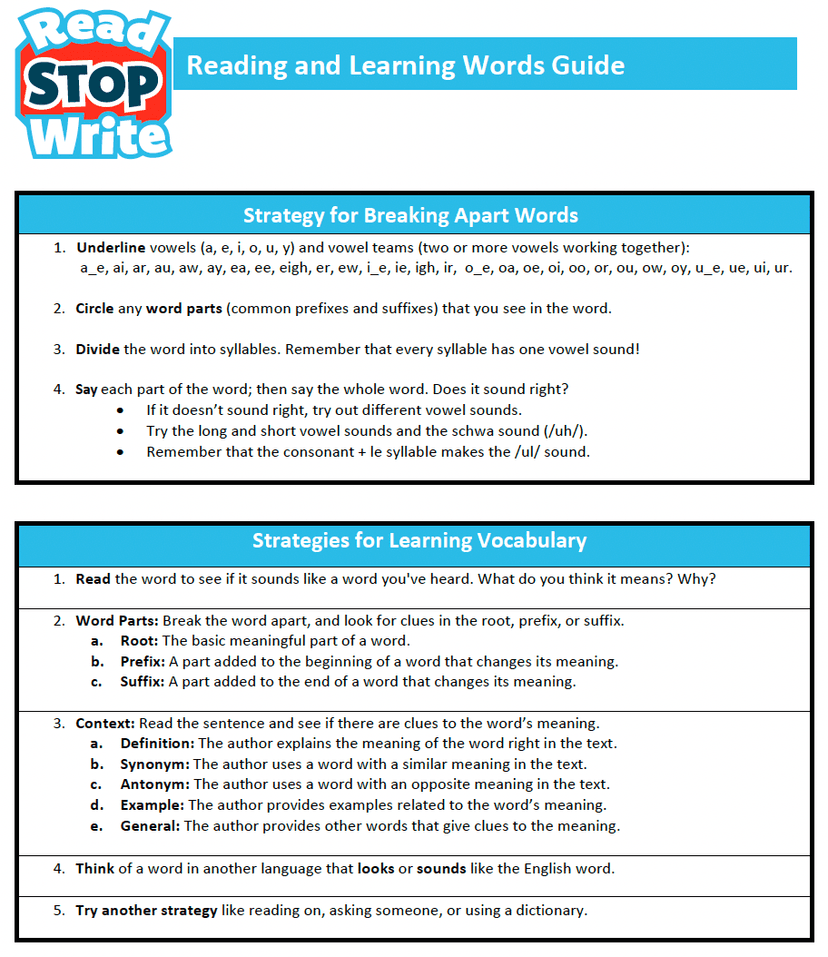
Screenshots


Take Action
For Read STOP Write
If you represent Strong Literacy and have a correction or new evidence, send the relevant source so we can review and update this page.
Submit a correctionDetails
- Pricing
- All our resources are totally free.
- Platforms
- Web Browser
- Grade Levels
- 4th Grade, 5th Grade, 6th Grade, 7th Grade, 8th Grade, 9th Grade
- Website
- Visit site