OT-2
Product by Opentrons Labworks Inc.
Facts checked: Not yet checked
Our take (not a Learning Standard rating). This label applies to learning-science judgments throughout this overview.
Our take (not a Learning Standard rating)
The OT-2 is an advanced laboratory tool rather than a direct instructional application. It facilitates highly effective experiential and project-based learning for high school and university students by providing hands-on experience with real-world lab automation. However, it requires educators to design the curriculum and assessments around its use.
Pros
- Facilitates experiential learning by allowing students to program and execute physical laboratory workflows.
- Encourages project-based problem solving by requiring students to design, test, and debug their own open-source protocols.
- Provides authentic career and technical education by utilizing the exact industry-standard automation hardware found in professional research labs.
Cons
- Lacks built-in instructional content, requiring educators to build all lesson plans and assessments from scratch.
- Provides no automated feedback on learning mastery, relying entirely on the student's ability to interpret physical laboratory outcomes.
- Imposes a high cognitive load on beginners because it lacks pre-built worked examples and instructional scaffolding.
What Do We Know About OT-2?
The OT-2 is highly effective for hands-on, experiential learning in advanced science courses, though it functions as a laboratory tool rather than a standalone teaching app. Your child will not log into this platform to complete modules or receive automated tutoring. Instead, they will use its graphical interface and Python API to program a physical robot to perform complex liquid handling tasks, such as DNA extraction or cell culturing. This approach grounds abstract scientific concepts in tangible, project-based learning, which cognitive science shows improves long-term retention and transfers knowledge to real-world applications. Because it is an open-source platform used in professional laboratories, it provides exceptional career and technical education. Students build genuine workforce skills by troubleshooting protocols and understanding automation workflows. However, parents and educators should understand that the OT-2 provides no built-in curriculum, quizzes, or instructional scaffolding. The effectiveness of the learning experience depends entirely on the teacher's ability to integrate the robot into a broader syllabus. It is best viewed as premium lab infrastructure that enables high-level scientific inquiry rather than a piece of direct instructional software.
How Does OT-2 Work?
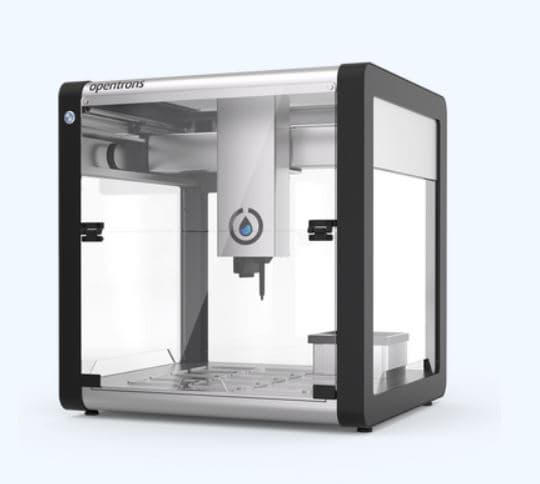
The OT-2 utilizes an experiential and project-based learning approach where students apply scientific principles through hands-on laboratory automation. Users interact with the system via a computer application that connects to the physical OT-2 liquid handling robot. Students use a graphical protocol designer or write custom Python scripts to instruct the robot's pipettes to move liquids between various labware components, such as well plates and test tubes. By defining precise volumes, transfer locations, and timing, students simulate or execute genuine biological and chemical assays. The learning mechanics rely heavily on trial and error and physical observation. When a student runs a protocol, they watch the robot execute their code in real time. If a liquid is misplaced or a volume is incorrect, the student receives immediate visual feedback from the physical outcome, forcing them to debug their protocol and refine their understanding of the underlying scientific process. This active manipulation of lab variables strongly supports competency-based progression.
Strengths and tradeoffs of OT-2
The biggest strength of the OT-2 is its capacity for authentic, hands-on scientific inquiry, while its biggest weakness is the complete absence of built-in instructional scaffolding. Authentic learning environments are highly effective because they contextualize abstract knowledge. By using the exact same open-source robotics platform found in professional research facilities, students engage in high-level cognitive tasks. They are not just memorizing biology facts; they are applying computational thinking and procedural knowledge to execute real-world lab workflows. This active engagement strengthens neural pathways far better than passive reading. Immediate visual feedback is another major strength. As students run their programmed protocols, they observe the physical robot executing their commands, allowing them to quickly spot errors in logic or measurement. However, the system provides no automated instructional feedback. It will not tell a student why a protocol failed scientifically, only that the code had an error or the physical result was flawed. Furthermore, without pre-built worked examples or structured curriculum, educators must shoulder the entire cognitive load of designing lessons. The platform assumes the user already possesses foundational scientific knowledge, making it an application tool rather than an introductory teaching mechanism.
Who Might Benefit From OT-2?
The OT-2 is best for advanced high school, university, and adult CTE students who are actively applying complex biology and chemistry concepts in a laboratory setting. It is ideally suited for learners in grades 11 through post-doctoral programs who already possess foundational lab skills and are ready to tackle automation, genomics, or proteomics. Because of the steep pricing and physical footprint, it is designed strictly for well-funded institutional laboratories rather than individual or home use. Educators building project-based workforce readiness programs will find it exceptional for bridging the gap between classroom theory and professional biotechnology careers.
Sources and review method
TLS combines product information and editorial analysis to explain how OT-2 works, its tradeoffs, and the questions to ask before choosing it. Product features, an instructional rationale and evidence of learning outcomes are different kinds of information.
Formal Learning Standard assessment: not yet completed. Data Transparency findings are reported separately and do not establish learning effectiveness. Read our methodology.
Frequently Asked Questions About OT-2
Is the OT-2 free?
No, the OT-2 is a premium physical laboratory robot with accompanying software, meaning it is a significant institutional investment rather than a free application. For educators, a discounted pricing tier ranges from $10,000 to $25,000 depending on the specific hardware configurations, labware, and additional pipettes chosen. Consumables like pipette tips add ongoing operational costs.
Is the OT-2 good for high school students?
Yes, but only for highly advanced students in grades 11 and 12 participating in specialized science, applied science, or career technical education programs. The OT-2 requires a solid foundational understanding of biology or chemistry. It is far too complex for early secondary students, but it serves as an exceptional bridge to professional laboratory careers for older teenagers.
What does the OT-2 teach?
The OT-2 does not directly teach theoretical science concepts via a built-in curriculum or quizzes. Instead, it facilitates hands-on, experiential learning in laboratory automation, computational thinking, and advanced experimental execution. Students learn how to design, program, and troubleshoot complex workflows used in professional fields like genomics, cell-based assays, proteomics, and modern drug discovery. This bridges the gap between textbook theory and practical application.
How does the OT-2 compare to traditional lab instruction?
The OT-2 replaces manual pipetting and isolated laboratory procedures with automated, programmable workflows that reflect modern industry standards. This technological shift allows students to focus their cognitive effort on protocol design, Python coding, and data analysis rather than repetitive physical tasks. It ultimately transforms a standard science class into a highly relevant career and technical education experience for aspiring scientists.
Has The Learning Standard evaluated OT-2?
TLS has not yet completed a Learning Standard evaluation of how well OT-2 teaches. TLS has not published a Data Transparency result for its privacy policy.
Follow TLS Research
Subscribe to future TLS research updates: app reviews, findings, and what the evidence shows.
Screenshots
Take Action
For OT-2
If you represent Opentrons Labworks Inc. and have a correction or new evidence, send the relevant source so we can review and update this page.
Submit a correctionDetails
- Pricing
- For educators, pricing can range from $10k-$25k, depending on chosen configuration. (This is a discounted rate)
- Platforms
- Windows (Microsoft), macOS (Apple)
- Grade Levels
- 9th Grade, 10th Grade, 11th Grade, 12th Grade, Associate's degree, Bachelor's degree, Post-baccalaureate certificate, Master's Degree, Post-master's certificate, Doctoral Degree, Post-doctoral certificate, Adult Education, Professional or Technical Credential
- Website
- Visit site