
Merge EDU
Product by Merge
Facts checked: Not yet checked
Our take (not a Learning Standard rating). This label applies to learning-science judgments throughout this overview.
Our take (not a Learning Standard rating)
Merge EDU provides highly engaging spatial learning experiences that help students visualize complex science concepts like cellular structures and planetary orbits. However, without formal evaluation data, its effectiveness as a primary instructional tool remains unproven. It functions best as an experiential supplement rather than a standalone curriculum.
Pros
- Utilizes spatial contiguity by anchoring digital information directly to a physical object.
- Allows students to manipulate 3D models, reducing the cognitive load required to visualize complex structures.
- Supports inquiry-based learning through interactive physics and biology simulations.
Cons
- High subscription costs and hardware requirements make it inaccessible for many individual families.
- Lacks built-in spaced repetition or formal assessment mechanics to ensure long-term retention.
- The physical cube manipulation can sometimes distract younger learners from the core educational content.
What Do We Know About Merge EDU?
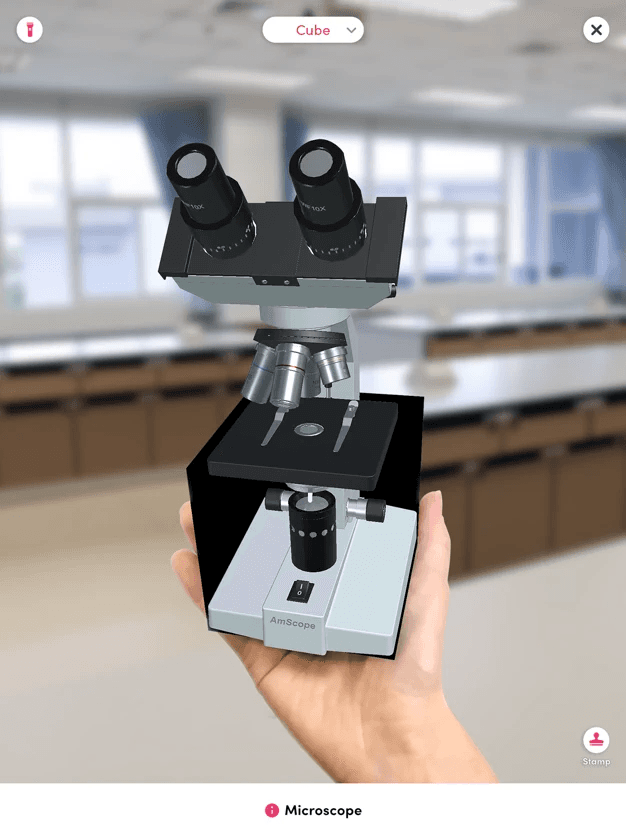
Merge EDU is an effective supplementary tool for visualizing science concepts, but it requires a physical Merge Cube and a significant financial investment. Your child will use a smartphone or tablet to view a physical foam cube, which the app transforms into interactive 3D digital objects like a beating heart or a functioning solar system. This immersive approach leverages experiential learning, allowing your child to rotate and inspect models from all angles. Research shows that physical manipulation of digital objects improves spatial reasoning and helps learners process complex scientific structures. However, you must purchase the physical cube separately, and the app's full content library requires costly licensing typically reserved for schools. While the simulations are highly engaging, Merge EDU does not replace direct instruction or systematic practice. It lacks the built-in retrieval practice and formal quizzing necessary to cement facts into long-term memory. Parents should view this as a premium digital encyclopedia and interactive lab rather than a comprehensive science curriculum. You will need to provide the primary instruction and testing yourself if using this at home.
How Does Merge EDU Work?
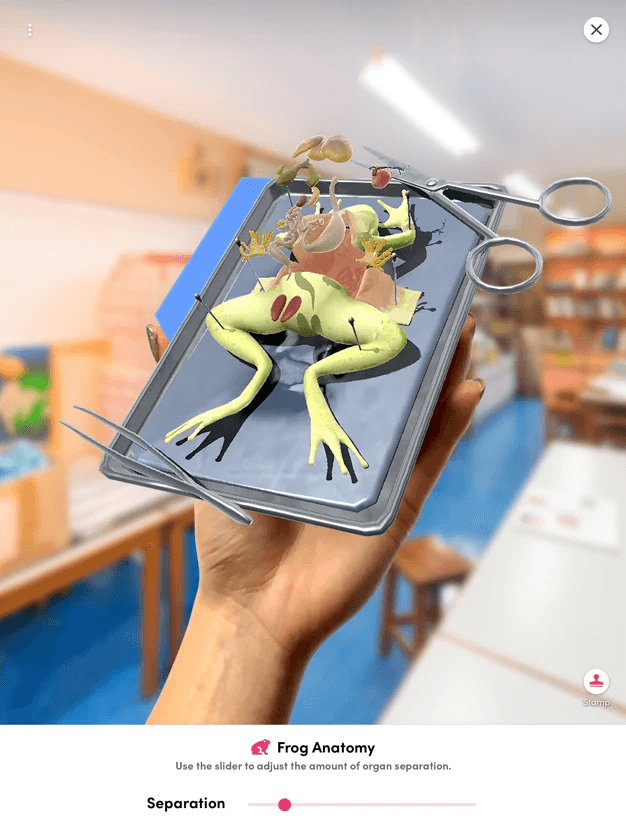
Merge EDU uses experiential and immersive learning by pairing augmented reality software with a physical, hand-held cube. Students launch an app on their device and point the camera at the Merge Cube. The software maps 3D digital models onto the physical object in real-time. As students rotate the physical cube in their hands, the digital model rotates on screen. This tactile interaction grounds abstract concepts in physical space. The platform includes interactive simulations where students can change variables, such as adjusting gravity in a physics module or dissecting layers of a virtual frog. By manipulating these variables, students engage in inquiry-based learning, observing immediate feedback based on their actions. The content is organized into topical modules aligned with K-12 science standards, but progress relies heavily on student-directed exploration rather than a rigid, mastery-based progression path.
Strengths and tradeoffs of Merge EDU
Merge EDU's biggest strength is its ability to reduce cognitive load through 3D visualization, while its biggest weakness is the lack of structured retrieval practice to ensure knowledge retention. Immersive Visualization: By allowing students to hold and rotate digital models, the app removes the mental effort required to translate 2D textbook images into 3D concepts. This spatial contiguity helps students focus entirely on understanding the mechanics of a cell or the layers of the Earth. Kinesthetic Engagement: The physical manipulation of the Merge Cube activates motor pathways, which can increase engagement and focus during science lessons. Cost and Accessibility: The pricing model is heavily skewed toward institutional purchasing, making the full experience prohibitively expensive for individual households. Lack of Assessment: While the simulations are excellent for initial encoding of information, the platform does not utilize spaced repetition or regular quizzing. Without these evidence-based retrieval mechanisms, students may struggle to recall the specific scientific terms and processes they explored once the simulation ends.
Who Might Benefit From Merge EDU?
Best for visual and kinesthetic learners who struggle to grasp abstract science concepts through traditional textbooks. Merge EDU serves K-12 students well, though middle schoolers studying complex biology and earth science will get the most value from the detailed 3D models. It is highly recommended for school districts and classroom educators who have the budget for lab licenses and can integrate the tool into broader lesson plans. For individual parents, it is best suited for homeschooling families willing to invest in premium experiential tools to replicate a hands-on science lab at home.
Data Transparency
Does Not Meet Data Transparency Standard
Merge EDU does not meet our data transparency standard. Its privacy policy does not document basic protections, including a commitment against targeted advertising, contractual limits on service providers and parents' right to delete their child's data.
16 of 35 checks passed
Evaluated September 2026
Privacy Policy →Level 1 · Basic protections
Does not sell data or target ads at students, limits sharing, and lets parents see and delete their child's data.
Not documented: a commitment against targeted advertising, contractual limits on service providers, parents' right to delete their child's data
Level 2 · Parent control (meets the standard)
Families can get their data out, know who processes it, and know how long it is kept.
Not documented: data export, a data retention timeline
Level 3 · Direct data access
Families or schools can pull their own data through an API, in a stated format.
Not documented: an API for retrieving their own data, a named export format
View all 35 checks
Parent Access7/8
Does the policy mention parents specifically?
“We encourage parents and teachers to supervise their child or student's use of the Apps and supervise the overall Merge EDU Experience.”
Can parents view their child's data?
“Merge agrees to work with educational institutions to ensure compliance with FERPA and the Parties will ensure compliance by providing parents, legal guardians or eligible students with the ability to inspect and review student records and to correct any inaccuracies therein as allowed by FERPA.”
Can parents modify their child's data?
“Merge agrees to work with educational institutions to ensure compliance with FERPA and the Parties will ensure compliance by providing parents, legal guardians or eligible students with the ability to inspect and review student records and to correct any inaccuracies therein as allowed by FERPA.”
Can parents delete their child's account?
The policy lets account owners and schools delete data but does not give parents a right to delete their child's data or account.
Is there a dedicated Children's Privacy section?
“Please read this policy in its entirety, including our Children's Privacy Policy section, before using our Service.”
Does it reference COPPA compliance?
“Merge makes commercially reasonable efforts to ensure its Apps and the Merge EDU Experience comply with the Children's Online Privacy Protection Act ("COPPA").”
Does it reference FERPA compliance?
“Merge agrees to work with educational institutions to ensure compliance with FERPA”
Is parental consent required for child accounts?
“If we learn that personally identifiable information has been provided to us and/or collected on our Sites from persons under 16 years of age and without verifiable parental consent, such as through a support request, we take the appropriate steps to delete the information.”
Data Portability1/5
Can users access their personal data?
“If you are a European resident, you have the right to access personal information we hold about you and to ask that your personal information be corrected, updated, or deleted.”
Can users download/export their data?
The policy does not address downloading or exporting data.
Is there a self-service data access tool?
The policy describes online account deletion but no self-service tool for accessing data.
Is a specific data format mentioned for export?
The policy does not mention an export format.
Is there an API for data access?
The policy does not mention an API for data access.
Data Minimization2/6
Is data collection itemized?
“Additionally when you make a purchase or attempt to make a purchase through our Sites or Apps, we collect certain information from you, including your name, billing address, shipping address, payment information (including credit card numbers), email address, and phone number.”
Can the app be used without a real name?
The policy says some student information is collected from teachers without saying what it is, so it does not rule out collecting real names.
Can the app be used without an email?
The policy says some student information is collected from teachers without saying what it is, so it does not rule out collecting email addresses.
Does it state collection is limited to what is necessary?
“We collect only the minimum amount of information needed about students from teachers, and any such information is used only in connection with the Educational Institution's use of the Merge EDU Experience for authorized educational/school purposes.”
Is IP address anonymized or truncated?
The policy says IP addresses are collected and does not mention anonymizing or truncating them.
Is location tracking explicitly excluded?
The policy collects IP address and time zone and does not explicitly exclude location tracking.
Third-Party Protection4/7
Does it explicitly state no selling of data?
“We will not sell your Personal Information under any circumstance.”
Are third-party providers named?
“We also use third party analytics services such as Smartlook: See here for how Smartlook uses data when you use our Service and how you may opt out”
Are providers contractually restricted?
The policy does not say that third-party providers are contractually restricted.
No-targeted-advertising commitment?
The policy does not address targeted advertising.
Is AI/ML data sharing addressed?
The policy does not address AI or machine learning data sharing.
Child-specific sharing restriction?
“We share some Personal Information with third parties to help us use your Personal Information, as described above. This does not include any student's or children's Personal Information.”
Cookies/tracking limited or opt-out?
“We also use third party analytics services such as Smartlook: See here for how Smartlook uses data when you use our Service and how you may opt out (https://help.smartlook.com/docs/privacy-policy, https://www.smartlook.com/opt-out/).”
Deletion & Retention2/5
Can users delete their account?
“All users are the owners of their accounts so therefore can visit their account online at any time to delete any information and/or the account.”
Self-service deletion mechanism?
“All users are the owners of their accounts so therefore can visit their account online at any time to delete any information and/or the account.”
Specific data retention timeline?
The policy says data is deleted when no longer needed or as agreed with the school, but gives no specific timeline.
Auto-deletion of inactive accounts?
The policy does not address automatic deletion of inactive accounts.
Post-deletion handling described?
The policy does not describe how data is handled after deletion.
Advertising0/4
Advertising model explicitly disclosed?
The policy does not disclose an advertising model or say the product has no ads.
Free from third-party advertisements?
The policy does not say the product is free of third-party advertisements.
Children excluded from ad targeting?
The policy says the Sites do not market to children but does not address excluding children from ad targeting.
Ad-free option available?
The policy does not address advertising or an ad-free option.
What This Means
The policy review did not meet our data transparency standard. The checks above show the documented findings and unknowns. A missing statement does not establish how the app handles data in practice.
About this evaluation: Based on automated analysis of Privacy Policy against 35 policy-disclosure questions, including questions adapted from the Common Sense Privacy Program's published evaluation questions. TLS is not affiliated with Common Sense Media, and this is not a Common Sense rating. Quoted text is copied from the policy; unquoted notes are our summary. Results describe what the policy documents, not the company's actual practices. Privacy policies can change: this review reflects the version we analyzed and does not determine legal compliance.
Sources and review method
TLS combines product information and editorial analysis to explain how Merge EDU works, its tradeoffs, and the questions to ask before choosing it. Product features, an instructional rationale and evidence of learning outcomes are different kinds of information.
Formal Learning Standard assessment: not yet completed. Data Transparency findings are reported separately and do not establish learning effectiveness. Read our methodology.
Frequently Asked Questions About Merge EDU
Is Merge EDU free?
No. While the app is free to download, accessing the educational content requires a paid subscription. Schoolwide and lab licenses run between $1,499 and $2,999 annually. You must also purchase physical Merge Cubes for about $22 each.
Is Merge EDU good for elementary students?
Yes. The tactile nature of the Merge Cube makes it accessible for younger students. Elementary learners can easily manipulate the cube to explore foundational science concepts like animal habitats and the solar system without needing advanced reading skills.
What does Merge EDU teach?
Merge EDU teaches K-12 science, STEM, and career and technical education. Content modules cover topics such as anatomy, earth science, physics, biology, and engineering. Students learn through exploring interactive 3D models and conducting virtual science experiments.
How does Merge EDU compare to traditional science kits?
Merge EDU provides a wider variety of simulations than a single physical science kit can offer, eliminating consumable materials and cleanup. However, traditional kits provide real-world tactile feedback regarding weight, texture, and physical chemical reactions that augmented reality cannot replicate.
Has The Learning Standard evaluated Merge EDU?
TLS has not yet completed a Learning Standard evaluation of how well Merge EDU teaches. Its privacy policy has been reviewed for Data Transparency and does not yet document the basic protections (Level 1).
Is Merge EDU COPPA compliant?
The reviewed privacy policy references COPPA. A policy reference alone does not establish COPPA compliance. Policy review note: The policy references COPPA compliance.
Is Merge EDU FERPA compliant?
The reviewed privacy policy references FERPA. A policy reference alone does not establish FERPA compliance. Policy review note: The policy references FERPA compliance.
Does Merge EDU have a children's privacy policy?
The reviewed policy includes a dedicated children's privacy section. Policy review note: The policy has a dedicated Children's Privacy Policy section.
Does Merge EDU sell student data?
The reviewed policy states that the app does not sell data. This is a policy statement; actual data practices were not verified. Policy review note: The policy explicitly says Merge does not sell personal information.
Can you delete your data from Merge EDU?
The reviewed privacy policy describes account deletion. We have not tested the deletion process. Policy review note: Users can delete their account.
Follow TLS Research
Subscribe to future TLS research updates: app reviews, findings, and what the evidence shows.
Screenshots


Take Action
For Merge EDU
If you represent Merge and have a correction or new evidence, send the relevant source so we can review and update this page.
Submit a correctionDetails
- Pricing
- A Merge EDU is Lab License is $1,499 per year. Every person on a single campus can use the subscription, but is limited to 30 simultaneous users. A Merge EDU Schoolwide License is $2,999 per year. Every person on a single campus can use the subscription, with no limits to simultaneous users. Merge Cubes cost $22.49 plus shipping. There are also customized and complete packages available. For a custom quote, visit mergeedu.com/quote.
- Platforms
- iOS (Apple mobile), iPadOS (Apple tablet), Android (Google mobile), Windows (Microsoft), Chrome OS (Google)
- Grade Levels
- Kindergarten, 1st Grade, 2nd Grade, 3rd Grade, 4th Grade, 5th Grade, 6th Grade, 7th Grade, 8th Grade, 9th Grade, 10th Grade, 11th Grade, 12th Grade
- Website
- Visit site