
LoiLoNote School
Product by LoiLoNote
Facts checked: Not yet checked
Our take (not a Learning Standard rating). This label applies to learning-science judgments throughout this overview.
Our take (not a Learning Standard rating)
While LoiLoNote School provides a robust platform for thought visualization and collaborative problem-solving, its effectiveness relies entirely on the quality of teacher-created lesson plans. Because it functions primarily as a classroom presentation tool rather than an independent instructional curriculum, its direct impact on individual student knowledge acquisition remains pending formal evaluation.
Pros
- Facilitates cognitive offloading by allowing students to map out complex ideas visually before solving mathematical problems.
- Enables peer-to-peer collaboration which enhances conceptual understanding through social learning mechanisms and classroom modeling.
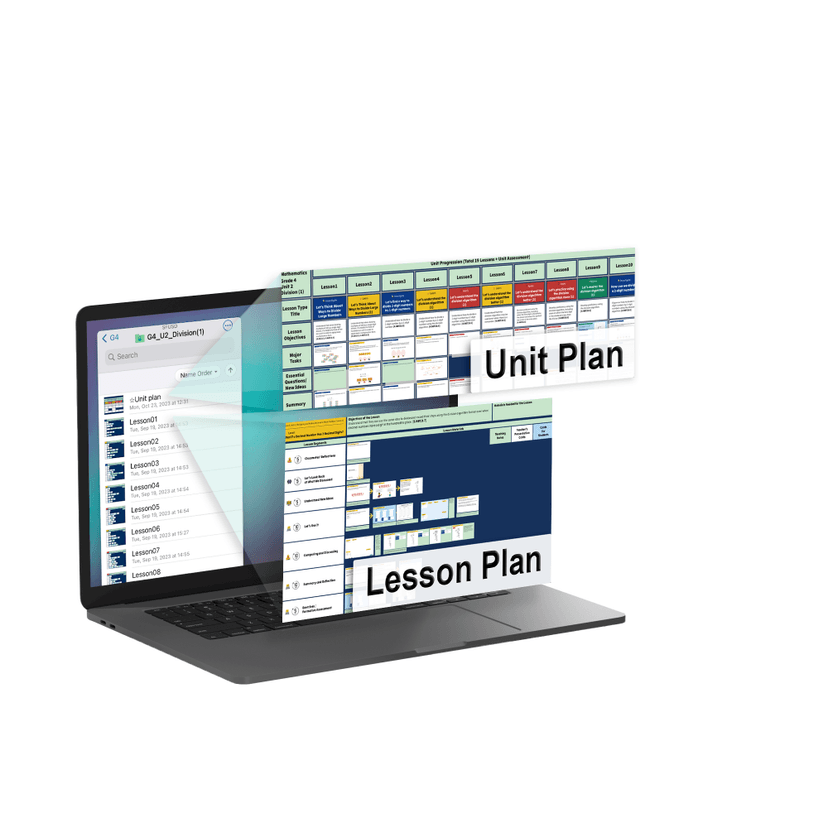
- Includes pre-structured math problem-solving templates that actively guide fourth and fifth-grade students through worked examples.
- Allows educators to provide immediate, formative feedback on student submissions in real-time during class instruction.
Cons
- Lacks built-in adaptive algorithms to automatically adjust academic difficulty based on individual student performance or errors.
- Requires significant teacher input to design and structure lessons, offering virtually no standalone instruction outside of middle elementary math.
- Does not utilize automated spaced repetition or retrieval practice to ensure long-term retention of core academic concepts.
- Provides no automated corrective feedback loop, leaving students to wait for human intervention when they demonstrate misconceptions.
What Do We Know About LoiLoNote School?
LoiLoNote School is effective for learning only when guided by an active teacher who designs strong, evidence-based lessons. This app functions more like a digital whiteboard and assignment collector than a standalone tutor. Your child will not log into this platform to independently learn new math concepts through automated drills or adaptive video instruction. Instead, they will use it to interact with materials directly provided by their school. The platform emphasizes thought visualization, requiring students to show their work and connect ideas visually. This approach aligns well with constructivist learning theories, forcing your child to actively process information rather than passively consume it. However, because the app relies heavily on teacher inputs, the educational quality will vary significantly from classroom to classroom. Parents should view this as an administrative and collaborative tool that supports classroom instruction rather than an independent curriculum. While it includes specific math lesson plans for fourth and fifth grades, older and younger students will primarily experience it strictly as a workflow manager.
How Does LoiLoNote School Work?
LoiLoNote School relies on a teacher-directed, constructivist approach where students build and share knowledge through interactive, visual cards. Teachers create digital workspaces and distribute materials, prompts, or math problems to the class. Students respond by drawing, typing, or recording audio onto digital cards. They can link these cards together with arrows to map out logical sequences, which effectively supports schema building and cognitive organization. Once a student completes a task, they submit their cards back to the teacher dashboard. The platform allows the educator to project selected student responses onto a main screen for class-wide review, facilitating peer-to-peer modeling and comparative analysis of different problem-solving strategies. For fourth and fifth-grade math, the platform provides pre-built problem-solving templates that walk students through the process of identifying a problem, drafting a solution, and reflecting on the outcome. Ultimately, the mechanics center on workflow exchange and visual organization rather than algorithmic instruction.
Strengths and tradeoffs of LoiLoNote School
The biggest strength of LoiLoNote School is its capacity for thought visualization, while its biggest weakness is the lack of independent, adaptive instruction. By requiring students to map out their reasoning on digital cards, the app forces active engagement and prevents passive scrolling. This visual organization aids in cognitive offloading, allowing students to externalize their working memory and tackle multi-step problems more effectively. The platform also excels in facilitating peer modeling. When teachers project student work, learners can compare different problem-solving methods, which strengthens deep conceptual understanding. Conversely, LoiLoNote School does not incorporate evidence-based software features like spaced repetition or retrieval practice algorithms. If your child struggles with a foundational math concept, the app will not automatically generate prerequisite practice sets to build mastery. It provides no automated feedback loop; if a student makes a mistake, they must wait for human intervention to correct their misconception. Because it acts primarily as an empty vessel for teacher content, its effectiveness is entirely dependent on the quality of external instruction rather than intrinsic software design.
Who Might Benefit From LoiLoNote School?
Best for K-12 classrooms where teachers need a collaborative workspace to facilitate interactive, problem-solving lessons. LoiLoNote School works best in blended learning environments where educators want students to visually map out their thought processes and share them with peers. It is particularly useful for fourth and fifth-grade teachers looking to implement structured math problem-solving frameworks. It is not designed for parents seeking an independent, at-home tutoring application for their children, as it requires a school ecosystem and direct teacher facilitation to function optimally.
Data Transparency
Does Not Meet Data Transparency Standard
LoiLoNote School reaches Level 1 of 3 (Basic protections), below our data transparency standard. Reaching Level 2 needs the policy to document a data retention timeline and self-service deletion.
20 of 35 checks passed
Evaluated September 2026
Privacy Policy for U.S. Users →Level 1 · Basic protections
Does not sell data or target ads at students, limits sharing, and lets parents see and delete their child's data.
Level 2 · Parent control (meets the standard)
Families can get their data out, know who processes it, and know how long it is kept.
Not documented: a data retention timeline, self-service deletion
Level 3 · Direct data access
Families or schools can pull their own data through an API, in a stated format.
Not documented: an API for retrieving their own data, a named export format
View all 35 checks
Parent Access7/8
Does the policy mention parents specifically?
“At LoiLo, we are serious about protecting the privacy of teachers, parents and children.”
Can parents view their child's data?
“If you are a parent or guardian and want to correct, edit, download, or update personal information about your child collected through the Service, including User-Generated Content, please work directly with your teacher or school, or you can contact us at [usa@loilo.tv](mailto:usa@loilo.tv).”
Can parents modify their child's data?
“If you are a parent or guardian and want to correct, edit, download, or update personal information about your child collected through the Service, including User-Generated Content, please work directly with your teacher or school, or you can contact us at [usa@loilo.tv](mailto:usa@loilo.tv).”
Can parents delete their child's account?
“If you would like to delete your Service account or delete your child’s Service account, please contact us at usa@loilo.tv.”
Is there a dedicated Children's Privacy section?
“The Children’s Online Privacy Protection Act (“COPPA”) protects personal information collected from children under the age of 13.”
Does it reference COPPA compliance?
“The Children’s Online Privacy Protection Act (“COPPA”) protects personal information collected from children under the age of 13. How we collect personal information from Users under 13, the types of personal information we collect, and the reasons for collecting this information are described in Sections 2 and 3 of this Policy, respectively.”
Does it reference FERPA compliance?
“To the extent that Student Data includes FERPA Records, you designate the Company as a "School Official" (as defined and used in FERPA and its implementing regulations) under the direct control of the applicable school with regard to the use and maintenance of the FERPA Records and the Company will comply with FERPA as required.”
Is parental consent required for child accounts?
The policy does not say that parental consent is required for child accounts.
Data Portability2/5
Can users access their personal data?
“The User has the right to access, correct or download any of the User’s personal information collected by the Company through the Service, including User-Generated Content, where permitted under applicable law .”
Can users download/export their data?
“The User has the right to access, correct or download any of the User’s personal information collected by the Company through the Service, including User-Generated Content, where permitted under applicable law .”
Is there a self-service data access tool?
The policy handles access through the school or by emailing LoiLo and does not describe a self-service tool.
Is a specific data format mentioned for export?
The policy does not name a file format for downloads.
Is there an API for data access?
The policy does not describe an API for getting user data.
Data Minimization1/6
Is data collection itemized?
“The Company collects the following types of information from Users using the Service:”
Can the app be used without a real name?
The policy says the Service collects users' names, including student names in FERPA records.
Can the app be used without an email?
The policy says the Service collects users' email addresses.
Does it state collection is limited to what is necessary?
The policy limits the use of personal information to what is necessary but does not say collection is limited to what is necessary.
Is IP address anonymized or truncated?
The policy says IP addresses are collected and does not say they are anonymized or truncated.
Is location tracking explicitly excluded?
The policy says LoiLo does not collect precise geographic location, but it also says some parts of the Service use location information from mobile phones and that website visits collect location data.
Third-Party Protection6/7
Does it explicitly state no selling of data?
“(3) does not sell Covered Data;”
Are third-party providers named?
“We use Amazon Web Services (AWS) to host our Service. All User information we collect through the Service is stored on computers and databases managed by AWS.”
Are providers contractually restricted?
“The Company may share your personal information with its affiliates and business partners who assist the Company in operating the Website and/or Service, conducting the Company’s business, or otherwise servicing Users, so long as those parties agree to keep this information confidential.”
No-targeted-advertising commitment?
“(1) does not use any Covered Data collected through the Service to serve targeted advertisements;”
Is AI/ML data sharing addressed?
The policy does not address sharing data with AI or machine learning systems.
Child-specific sharing restriction?
“(4) does not disclose Covered Data to others, except for legal, regulatory, judicial, safety, or operational improvement reasons;”
Cookies/tracking limited or opt-out?
“The User may choose not to allow cookies to be used; however, if the User does not permit cookies to be stored, the User may not be able to use some parts of the Service such as those which require the User to log in.”
Deletion & Retention2/5
Can users delete their account?
“If you would like to delete your Service account or delete your child’s Service account, please contact us at usa@loilo.tv.”
Self-service deletion mechanism?
The policy handles deletion by emailing LoiLo and does not describe a self-service deletion tool.
Specific data retention timeline?
The policy does not give a specific retention period.
Auto-deletion of inactive accounts?
The policy does not address automatic deletion of inactive accounts.
Post-deletion handling described?
“If you request that your Service account or any User-Generated Content submitted to/collected by the Company be deleted, the Company may still retain information as needed to provide customer support and prevent accidental deletion, or as required or permitted by law.”
Advertising2/4
Advertising model explicitly disclosed?
“These third parties may use cookies alone or in conjunction with web beacons or other tracking technologies to collect information about you when you use the Website. The information they collect may be associated with your personal information or they may collect information, including personal information, about your online activities over time and across different websites and other online services. They may use this information to provide you with interest-based (behavioral) advertising or other targeted content.”
Free from third-party advertisements?
The policy says third parties on the Website may serve interest-based advertising and does not state that the product has no ads.
Children excluded from ad targeting?
“(1) does not use any Covered Data collected through the Service to serve targeted advertisements;”
Ad-free option available?
The policy does not describe an ad-free option or say that the product has no ads.
What This Means
The policy review did not meet our data transparency standard. The checks above show the documented findings and unknowns. A missing statement does not establish how the app handles data in practice.
About this evaluation: Based on automated analysis of Privacy Policy for U.S. Users against 35 policy-disclosure questions, including questions adapted from the Common Sense Privacy Program's published evaluation questions. TLS is not affiliated with Common Sense Media, and this is not a Common Sense rating. Quoted text is copied from the policy; unquoted notes are our summary. Results describe what the policy documents, not the company's actual practices. Privacy policies can change: this review reflects the version we analyzed and does not determine legal compliance.
Sources and review method
TLS combines product information and editorial analysis to explain how LoiLoNote School works, its tradeoffs, and the questions to ask before choosing it. Product features, an instructional rationale and evidence of learning outcomes are different kinds of information.
Formal Learning Standard assessment: not yet completed. Data Transparency findings are reported separately and do not establish learning effectiveness. Read our methodology.
Frequently Asked Questions About LoiLoNote School
Is LoiLoNote School free?
Teachers can use LoiLoNote School for free, but student access requires a paid subscription. After a free first year, student licenses cost $15 per student per year. Because it is a school-oriented platform, these costs are typically absorbed by the school district rather than individual parents. Parents cannot purchase individual family accounts for home use, as the system is structurally designed to require a master educator dashboard to function.
Is LoiLoNote School good for elementary students?
Yes, but it requires strong teacher guidance to be truly effective. LoiLoNote School is heavily utilized in elementary classrooms, particularly for fourth and fifth-grade math, where it provides specific pre-built problem-solving templates. The interface relies on visual cards and drawing tools, which are accessible for younger learners. However, early elementary students will likely need significant adult supervision to navigate the digital workspace and manage their assignment submissions without frustration.
What does LoiLoNote School teach?
LoiLoNote School does not teach a specific curriculum on its own, with the strict exception of its included fourth and fifth-grade math lesson plans. Instead, it is a completely content-agnostic platform that teachers use to deliver instruction across all core academic subjects. Educators upload their own reading materials, science assignments, and historical passages for students to interact with, making the app's actual educational content highly dependent on the individual classroom teacher.
Has LoiLoNote School been evaluated by The Learning Standard?
No, LoiLoNote School is currently pending evaluation by The Learning Standard. While we have analyzed its mechanics and pedagogical framework, our researchers have not yet conducted a full efficacy review. You can read more about how we rate educational software on our methodology page to understand our evaluation criteria for active learning apps and classroom management platforms used in modern schools.
LoiLoNote School vs Google Classroom: Which is better?
Google Classroom is generally better for broad assignment management and seamless integration with document editors, while LoiLoNote School is significantly better for real-time thought visualization and interactive whiteboarding. Google Classroom focuses on efficient workflow logistics and file storage. Conversely, LoiLoNote School emphasizes active classroom participation, allowing students to draw, securely link idea cards together, and instantly project their thought processes to the entire class for peer review.
Has The Learning Standard evaluated LoiLoNote School?
TLS has not yet completed a Learning Standard evaluation of how well LoiLoNote School teaches. Its privacy policy has been reviewed for Data Transparency and reaches Level 1, Basic protections.
Is LoiLoNote School COPPA compliant?
The reviewed privacy policy references COPPA. A policy reference alone does not establish COPPA compliance. Policy review note: The policy has a COPPA Compliance section that refers to COPPA.
Is LoiLoNote School FERPA compliant?
The reviewed privacy policy references FERPA. A policy reference alone does not establish FERPA compliance. Policy review note: The policy says LoiLo will comply with FERPA as a school official.
Does LoiLoNote School have a children's privacy policy?
The reviewed policy includes a dedicated children's privacy section. Policy review note: The policy has a section with its own heading, "COPPA Compliance".
Does LoiLoNote School sell student data?
The reviewed policy states that the app does not sell data. This is a policy statement; actual data practices were not verified. Policy review note: Under SOPIPA, the policy says LoiLo does not sell student Covered Data.
Can you delete your data from LoiLoNote School?
The reviewed privacy policy describes account deletion. We have not tested the deletion process. Policy review note: Users can ask LoiLo to delete their account.
Follow TLS Research
Subscribe to future TLS research updates: app reviews, findings, and what the evidence shows.
Screenshots

Take Action
For LoiLoNote School
If you represent LoiLoNote and have a correction or new evidence, send the relevant source so we can review and update this page.
Submit a correctionDetails
- Pricing
- School Account. Teacher subscription: Free. Student subscription: $15 per student per year. Student subscriptions are free for the first year.
- Platforms
- iOS (Apple mobile), iPadOS (Apple tablet), Android (Google mobile), Windows (Microsoft), macOS (Apple), Chrome OS (Google)
- Grade Levels
- 1st Grade, 2nd Grade, 3rd Grade, 4th Grade, 5th Grade, 6th Grade, 7th Grade, 8th Grade, 9th Grade, 10th Grade, 11th Grade, 12th Grade, Associate's degree, Bachelor's degree
- Website
- Visit site