
Lexia® English Language Development™
Product by Lexia Learning
Facts checked: Not yet checked
Our take (not a Learning Standard rating). This label applies to learning-science judgments throughout this overview.
Our take (not a Learning Standard rating)
While pending our formal evaluation, Lexia English uses strong pedagogical foundations by integrating speaking, listening, and grammar practice within academic contexts. Connecting vocabulary to subjects like math and science builds essential cognitive schema. However, its ultimate effectiveness depends heavily on teacher integration in a blended classroom environment.
Pros
- Embeds language practice within academic subjects to build cognitive schema and context.
- Utilizes adaptive sequencing to adjust difficulty based on student speaking and listening performance.
- Requires expressive language output through speaking rather than just passive receptive matching.
- Combines grammar instruction with immediate conversational application to reinforce structural rules.
Cons
- Requires significant teacher facilitation and classroom integration to achieve maximum results.
- Speech recognition technology can struggle with diverse accents or background classroom noise.
- Lacks independent consumer access since it requires school or district purchasing.
What Do We Know About Lexia® English Language Development™?
Lexia English Language Development appears highly effective for building academic English skills, though The Learning Standard has not yet formally evaluated its outcomes. This program is not a consumer app you can download at home; it is an enterprise platform designed for school districts. If your child's school uses it, you will notice it focuses heavily on 'academic language': the specific vocabulary and grammar needed to understand math, science, and social studies. Unlike basic language apps that teach conversational phrases through rote memorization, this platform forces your child to practice verbalizing complex academic concepts. This approach relies on output-based retrieval practice, which forces the brain to construct sentences rather than just recognizing correct answers. Your child will use a microphone to interact with digital characters, practicing both listening comprehension and spoken grammar. Because it is a blended learning tool, its true effectiveness depends on how well your child's teacher uses the platform's data to drive offline instruction.
How Does Lexia® English Language Development™ Work?
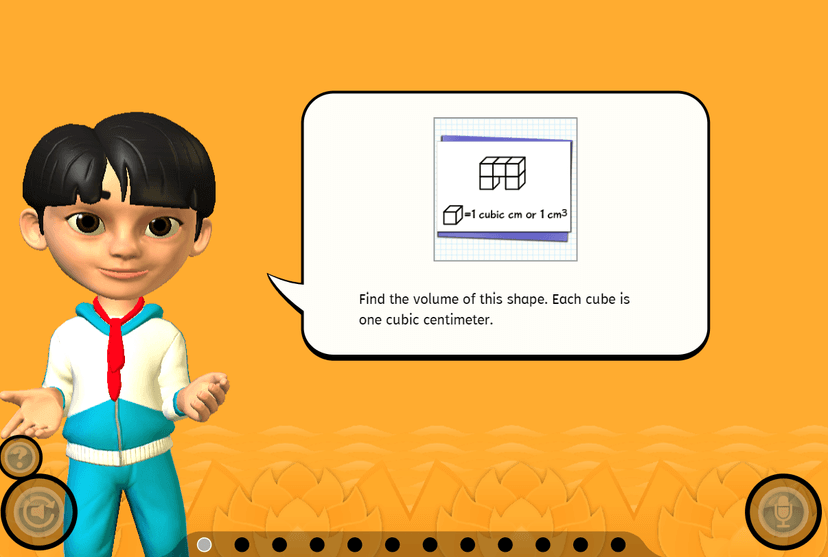
Lexia English utilizes adaptive blended learning with direct instruction and gamification to build language proficiency. The software presents students with interactive scenarios featuring digital characters from diverse backgrounds. Students listen to academic conversations centered around math, science, social studies, or biographies. They are then required to speak into a microphone to respond, practicing specific grammatical structures and vocabulary. The system's speech recognition engine analyzes their pronunciation and sentence structure, providing immediate corrective feedback. As your child progresses, the adaptive algorithm adjusts the complexity of the listening passages and the required spoken responses. This scaffolds the learning process, ensuring students achieve mastery of foundational grammar before encountering complex academic syntax. Teachers receive real-time data on student performance, allowing them to pull small groups for targeted, face-to-face intervention based on specific skill gaps identified by the software.
Strengths and tradeoffs of Lexia® English Language Development™
The platform's biggest strength is its integration of language practice within core academic subjects, while its biggest weakness is its heavy reliance on precise speech recognition technology that can frustrate young learners. Language acquisition relies heavily on context. By using content-integrated vocabulary, Lexia English ensures students build cognitive schema that transfers directly to their classroom learning. Instead of learning isolated words, students practice the exact phrasing needed to explain a math problem or a science experiment. This leverages elaborative rehearsal, connecting new linguistic structures to existing academic knowledge. Furthermore, the requirement for active verbal output utilizes generation effect principles; students remember grammar better when they actively produce it rather than passively selecting multiple-choice options. However, the system has inherent limitations. Speech recognition friction is a known issue in ed-tech; background classroom noise or unique accents can lead to false negatives, where correct student answers are marked wrong. This disrupts the learning loop and reduces motivation. Additionally, the blended learning dependency means the app is only as strong as the teacher's ability to interpret its data and provide offline support.
Who Might Benefit From Lexia® English Language Development™?
Best for K-6 emergent bilingual students who need to transition from basic conversational English to complex academic language. It serves as an excellent supplemental tool within a structured classroom environment where teachers can monitor progress. Because it covers kindergarten through sixth grade, it adapts well to both early learners developing foundational phonics and older elementary students tackling complex sentence structures in science and social studies. It is not suitable for independent home use by parents seeking a casual language learning app, as it requires school-level implementation and teacher oversight to function as designed.
Data Transparency
Meets Data Transparency Standard
Lexia® English Language Development™ meets our data transparency standard at Level 2 of 3 (Parent control). Level 3 needs the policy to document an API for retrieving their own data and a named export format.
22 of 35 checks passed
Evaluated September 2026
Application Data Privacy Policy →Level 1 · Basic protections
Does not sell data or target ads at students, limits sharing, and lets parents see and delete their child's data.
Level 2 · Parent control (meets the standard)
Families can get their data out, know who processes it, and know how long it is kept.
Level 3 · Direct data access
Families or schools can pull their own data through an API, in a stated format.
Not documented: an API for retrieving their own data, a named export format
View all 35 checks
Parent Access7/8
Does the policy mention parents specifically?
“Parents and legal guardians can make choices regarding the personal information we store online for their children by contacting their child’s school to review what personal information is being collected.”
Can parents view their child's data?
“Upon written request from the school, or from a confirmed parent or legal guardian (as noted above), Lexia will provide an inventory of the personal information it holds on their behalf and take reasonable steps to allow such persons to review their information for the purposes of correction or removal, subject to limitations under applicable law.”
Can parents modify their child's data?
“Upon written request from the school, or from a confirmed parent or legal guardian (as noted above), Lexia will provide an inventory of the personal information it holds on their behalf and take reasonable steps to allow such persons to review their information for the purposes of correction or removal, subject to limitations under applicable law.”
Can parents delete their child's account?
“Upon written request from the school, or from a confirmed parent or legal guardian (as noted above), Lexia will provide an inventory of the personal information it holds on their behalf and take reasonable steps to allow such persons to review their information for the purposes of correction or removal, subject to limitations under applicable law.”
Is there a dedicated Children's Privacy section?
“Children's Privacy **What information is collected online regarding children under 13?**”
Does it reference COPPA compliance?
“COPPA and other laws authorize schools to act in place of the parent or guardian in deciding whether to give consent to the collection and use of student information for educational purposes.”
Does it reference FERPA compliance?
“we understand that we are acting in the capacity of a “school official” under FERPA, and are committed to complying with the limitations and requirements imposed on us as an educational service provider to our school and district customers under FERPA and other applicable state student records privacy laws.”
Is parental consent required for child accounts?
The policy says Lexia does not get parental consent and relies on the school's consent instead.
Data Portability3/5
Can users access their personal data?
“Lexia acknowledges that you have the right to access your personal information.”
Can users download/export their data?
“you have the right to obtain confirmation of the existence of certain Personal Data relating to you, to verify its content, origin, and accuracy, as well as the right to access, review, port, delete, or to block or withdraw consent to the processing of certain Personal Data”
Is there a self-service data access tool?
“For teachers and administrators of the Services and mobile applications, you may access the personal information we receive and process for the purposes of correcting, amending, or deleting it by logging into your administrator account and reviewing and selecting the profile and other preferences.”
Is a specific data format mentioned for export?
The policy does not name any format for exported data.
Is there an API for data access?
The policy does not describe an API for getting data.
Data Minimization3/6
Is data collection itemized?
“The minimum information required to create a student account is: - First Name - Last Name - User Name - Grade - School”
Can the app be used without a real name?
The policy says it collects each student's first and last name.
Can the app be used without an email?
The policy never says student email addresses are not collected, and it links to a separate list of optional data fields.
Does it state collection is limited to what is necessary?
“Lexia endeavors to only collect information that is relevant and not excessive for the purposes for which it is to be processed.”
Is IP address anonymized or truncated?
The policy says IP addresses are collected in log files and does not say they are anonymized or truncated.
Is location tracking explicitly excluded?
“We do not ask you for access or track any location-based information from your mobile device at any time while downloading or using our mobile application or services.”
Third-Party Protection4/7
Does it explicitly state no selling of data?
“Lexia does not sell student or user personal information”
Are third-party providers named?
The policy describes service providers only by type and links to a separate subprocessor page instead of naming them.
Are providers contractually restricted?
“All such service providers are bound by contract to refrain from using the personal information we collect from you for any purpose other than providing the specified services to Lexia.”
No-targeted-advertising commitment?
The policy limits promotional disclosure and marketing linkage of data but does not explicitly commit to no targeted advertising.
Is AI/ML data sharing addressed?
The policy says speech recordings may be machine-analyzed to improve its speech engine but does not address sharing data for AI/ML.
Child-specific sharing restriction?
“No. Personal information obtained online from students is not released to any unrelated third party except as permitted by law or as expressly set forth in this policy (such as to certain Affiliated Businesses, as provided below), or at the direction of the school.”
Cookies/tracking limited or opt-out?
“While most cookies and tracking technologies within our programs are necessary for the program to function properly, for others, you may choose to set your web browser not to accept certain cookies.”
Deletion & Retention5/5
Can users delete their account?
“If you are a student or other end user receiving access to Lexia through a school, you will need to contact the school administrator that submitted your personal information to us, and we will support them as need in responding to your request to access, change or delete the personal information submitted and associated with your account.”
Self-service deletion mechanism?
“For teachers and administrators of the Services and mobile applications, you may access the personal information we receive and process for the purposes of correcting, amending, or deleting it by logging into your administrator account and reviewing and selecting the profile and other preferences.”
Specific data retention timeline?
“Within 45 days following expiration or termination, and as directed in writing by the school administrator, we start the process of removing and destroying Student Personal Data in our possession, however, depending upon our back-up systems retention times, such information may be maintained in backups for up to 180 days after removal from active processing systems.”
Auto-deletion of inactive accounts?
“If educational institutions do not instruct us to delete data, or our contracts do not specify time periods for retention, we reserve the right to delete inactive account information, including Student Data, in a reasonable period of time.”
Post-deletion handling described?
“depending upon our back-up systems retention times, such information may be maintained in backups for up to 180 days after removal from active processing systems.”
Advertising0/4
Advertising model explicitly disclosed?
The policy does not describe any advertising model or say the product has no ads.
Free from third-party advertisements?
The policy does not say whether the product shows third-party ads.
Children excluded from ad targeting?
The policy does not address ad targeting of children.
Ad-free option available?
The policy does not say whether the product is ad-free.
Meets Data Transparency Standard
The reviewed policy met our data transparency standard. This result describes the policy disclosures we assessed. Actual practices and legal compliance were not verified.
About this evaluation: Based on automated analysis of Application Data Privacy Policy against 35 policy-disclosure questions, including questions adapted from the Common Sense Privacy Program's published evaluation questions. TLS is not affiliated with Common Sense Media, and this is not a Common Sense rating. Quoted text is copied from the policy; unquoted notes are our summary. Results describe what the policy documents, not the company's actual practices. Privacy policies can change: this review reflects the version we analyzed and does not determine legal compliance.
Sources and review method
TLS combines product information and editorial analysis to explain how Lexia® English Language Development™ works, its tradeoffs, and the questions to ask before choosing it. Product features, an instructional rationale and evidence of learning outcomes are different kinds of information.
Formal Learning Standard assessment: not yet completed. Data Transparency findings are reported separately and do not establish learning effectiveness. Read our methodology.
Frequently Asked Questions About Lexia® English Language Development™
Is Lexia English Language Development free?
No. Lexia English is an enterprise-level educational platform purchased by schools and districts. It is not available as a free or paid consumer app for individual families. If your child uses it, the school provides the license.
Is Lexia English Language Development good for kindergarteners?
Yes, it is designed for grades K-6. For kindergarteners, the platform uses gamified elements, heavily scaffolded listening exercises, and basic verbal repetition to build foundational vocabulary. However, young students may need initial help navigating the microphone and interface.
What does Lexia English Language Development teach?
The program teaches academic English speaking, listening, and grammar. Rather than focusing solely on conversational English, it trains emergent bilingual students to understand and articulate the specific language used in math, science, social studies, and general knowledge lessons.
How does Lexia English Language Development compare to Rosetta Stone?
Rosetta Stone focuses on immersive, conversational language acquisition for general users. Lexia English is built specifically for K-6 classrooms and targets academic language: the specific vocabulary and grammar needed to succeed in core school subjects like math and science.
Has The Learning Standard evaluated Lexia® English Language Development™?
TLS has not yet completed a Learning Standard evaluation of how well Lexia® English Language Development™ teaches. Its privacy policy has been reviewed for Data Transparency and reaches Level 2, Parent control.
Is Lexia® English Language Development™ COPPA compliant?
The reviewed privacy policy references COPPA. A policy reference alone does not establish COPPA compliance. Policy review note: The policy explains how it handles consent under COPPA.
Is Lexia® English Language Development™ FERPA compliant?
The reviewed privacy policy references FERPA. A policy reference alone does not establish FERPA compliance. Policy review note: The policy commits to complying with FERPA.
Does Lexia® English Language Development™ have a children's privacy policy?
The reviewed policy includes a dedicated children's privacy section. Policy review note: The policy has its own Children's Privacy section.
Does Lexia® English Language Development™ sell student data?
The reviewed policy states that the app does not sell data. This is a policy statement; actual data practices were not verified. Policy review note: The policy says Lexia does not sell personal information.
Can you delete your data from Lexia® English Language Development™?
The reviewed privacy policy describes account deletion. We have not tested the deletion process. Policy review note: Users can ask for deletion through their school.
Follow TLS Research
Subscribe to future TLS research updates: app reviews, findings, and what the evidence shows.
Screenshots


Take Action
For Lexia® English Language Development™
If you represent Lexia Learning and have a correction or new evidence, send the relevant source so we can review and update this page.
Submit a correctionDetails
- Pricing
- Please contact Lexia for detailed pricing models to meet your school's or district's needs.
- Platforms
- Web Browser, iPadOS (Apple tablet), Windows (Microsoft), macOS (Apple), Chrome OS (Google)
- Grade Levels
- Kindergarten, 1st Grade, 2nd Grade, 3rd Grade, 4th Grade, 5th Grade, 6th Grade
- Website
- Visit site