K-STEAM School
Product by Wedu Communications
Facts checked: Not yet checked
Our take (not a Learning Standard rating). This label applies to learning-science judgments throughout this overview.
Our take (not a Learning Standard rating)
While K-STEAM School provides an innovative approach to experiential learning through Korean cultural subjects, its effectiveness in delivering rigorous academic concepts remains untested. The app uses AI and 3D volumetric technology to assess physical performance in dance and esports, but relies heavily on student self-direction.
Pros
- Incorporates process-centered assessment to evaluate student progress continuously rather than relying solely on summative testing.
- Utilizes experiential learning models to connect physical activities like dance and esports to broader academic concepts.
- Offers optional mentorship to provide necessary scaffolding and corrective feedback during self-directed study.
Cons
- Focuses on highly niche subjects that struggle to map directly to standard high school or collegiate STEM curricula.
- Lacks peer-reviewed evidence proving the efficacy of its AI-supported performance evaluations for physical movement.
- Requires a high degree of self-regulation from students, which consistently leads to lower completion rates in MOOC environments without mentor intervention.
What Do We Know About K-STEAM School?
K-STEAM School presents a unique but highly specialized educational model that connects Korean cultural exports with academic credit, though its direct impact on core academic proficiency remains pending evaluation. This platform targets older students, from high school sophomores through college undergraduates, using non-traditional subjects like K-Dance, breakdancing, and esports to teach humanities and applied sciences. For your child, the primary value lies in the experiential learning framework, which encourages active participation over passive video consumption. The program relies heavily on a Massive Open Online Course (MOOC) structure. Learning science consistently shows that self-directed MOOCs suffer from low engagement unless students possess strong self-regulation skills. To mitigate this, parents and educators should strongly consider the mentored tier. A human mentor provides the external accountability and targeted corrective feedback that self-paced modules lack. While the platform utilizes AI performance evaluation and 3D volumetric technology to assess physical movements, these features operate as supplementary engagement tools rather than proven pedagogical replacements for expert human feedback. Expect a highly specialized elective course rather than a core science or math curriculum.
How Does K-STEAM School Work?
K-STEAM School uses a Massive Open Online Course (MOOC) delivery model combined with experiential learning to teach high school and college students through physical and digital activity. Students enroll in specific cultural tracks, such as K-Dance or esports, and progress through self-directed modules designed to earn academic credit. The instructional core relies on process-centered performance assessment. Instead of taking standard multiple-choice tests, your child performs tasks, like specific dance routines or esports strategies, which are then analyzed by the platform's AI and 3D volumetric technology. This system attempts to provide immediate performance feedback, a critical component in motor skill acquisition. When students opt for the mentored version, the platform introduces cooperative learning elements and expert scaffolding. The mentor reviews the AI-generated evaluations and provides nuanced, qualitative feedback that algorithms often miss. This dual-layer feedback loop guides students toward mastery of both the physical skills and the underlying cultural or applied science concepts embedded in the curriculum.
Strengths and tradeoffs of K-STEAM School
The biggest strength of K-STEAM School is its innovative use of process-centered assessment for non-traditional subjects, while its biggest weakness is the inherent lack of structured accountability in its base self-directed model. Experiential learning serves as the foundation of the platform, requiring students to actively physicalize their learning through dance or active gaming. This active engagement helps encode information more deeply than passive reading. Furthermore, the integration of formative feedback via AI assessment provides students with real-time data on their physical performance, which is vital for motor skill correction. However, the platform relies on a MOOC structure, which notoriously demands high executive functioning. Without the $200 mentor upgrade, students miss out on essential scaffolding and human guidance. Algorithms currently struggle to provide the qualitative reasoning behind an incorrect movement or strategy, limiting the depth of the feedback loop. Until The Learning Standard officially evaluates the efficacy of this AI grading system, educators should remain cautious about relying entirely on automated evaluations for official academic credit.
Who Might Benefit From K-STEAM School?
Best for highly motivated older teenagers and college students looking for non-traditional, elective credits in cultural studies or applied sciences. Because the subjects center on K-Dance, breakdancing, and esports, it requires a specific intrinsic interest in Korean culture or digital athletics to maintain engagement. The platform targets 10th graders through undergraduate students who possess the executive functioning skills necessary to navigate a self-directed MOOC environment. It is not suitable for younger students or those requiring strict, traditional classroom structures and constant teacher supervision to stay on task and complete assignments.
Sources and review method
TLS combines product information and editorial analysis to explain how K-STEAM School works, its tradeoffs, and the questions to ask before choosing it. Product features, an instructional rationale and evidence of learning outcomes are different kinds of information.
Formal Learning Standard assessment: not yet completed. Data Transparency findings are reported separately and do not establish learning effectiveness. Read our methodology.
Frequently Asked Questions About K-STEAM School
Is K-STEAM School free?
No, K-STEAM School requires a fee to access its courses. The base self-directed online learning module costs $100 per student. If your child requires a dedicated mentor to provide structured feedback and accountability, the cost increases to $200. Schools or districts looking to integrate the platform on a larger scale will face variable pricing based on specific service requirements and the necessary scope of platform customization.
Is K-STEAM School good for high schoolers?
Yes, K-STEAM School is appropriate for older high school students in grades 10 through 12 who possess strong self-regulation skills. Because the platform relies heavily on a Massive Open Online Course (MOOC) framework, it demands a high level of independent time management. Younger students or those who struggle with executive functioning will likely flounder without the strict oversight of a traditional classroom environment, making the $200 mentor-led option critical for high school learners.
What does K-STEAM School teach?
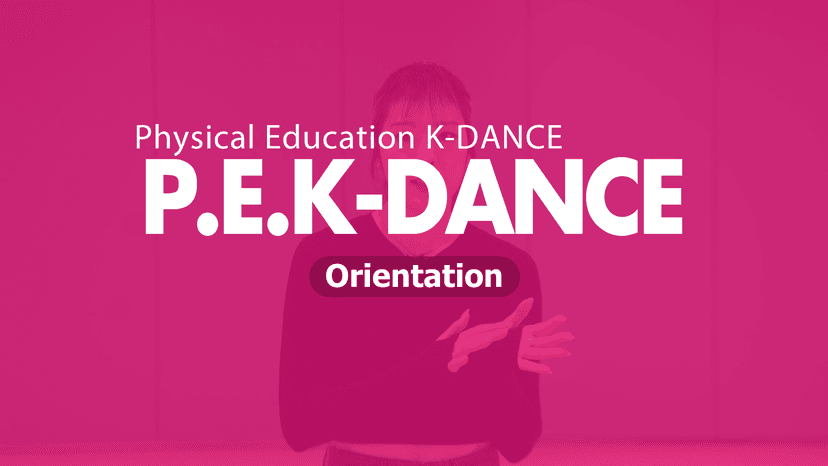
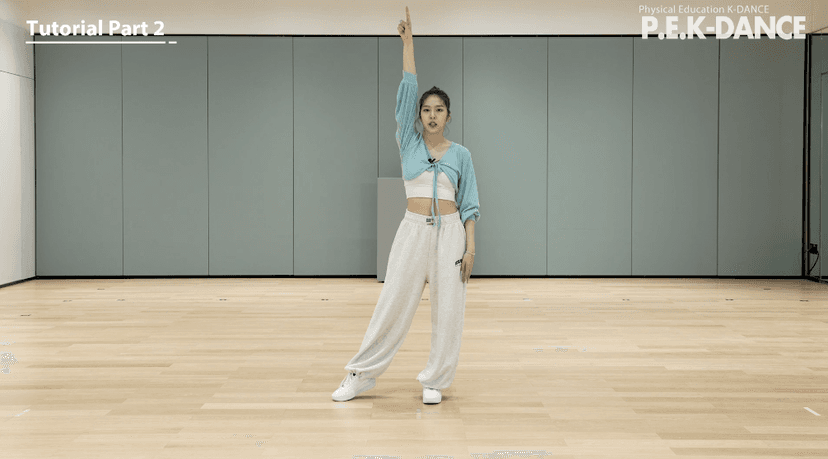
K-STEAM School teaches applied sciences, humanities, and career technical education specifically through the lens of modern Korean culture. Rather than traditional classroom subjects, the curriculum currently focuses on three unique performance tracks: K-Dance, Breakdancing, and e-Sports. Students engage in these specific activities to earn elective academic credits. The platform uses experiential learning to connect the physical mechanics of dance and the digital strategies of esports to broader, applicable academic concepts.
Does K-STEAM School provide reliable academic assessments?
The platform claims to use process-centered performance assessments supported by artificial intelligence and 3D volumetric technology to grade physical movement and digital gameplay. However, K-STEAM School is currently pending evaluation by The Learning Standard. Because of this, the actual pedagogical reliability and accuracy of these automated AI assessments remain officially unverified. Educators should exercise caution and supplement the automated data with human grading before awarding official academic credit based solely on the platform's algorithms.
Has The Learning Standard evaluated K-STEAM School?
TLS has not yet completed a Learning Standard evaluation of how well K-STEAM School teaches. TLS has not published a Data Transparency result for its privacy policy.
Follow TLS Research
Subscribe to future TLS research updates: app reviews, findings, and what the evidence shows.
Screenshots
Take Action
For K-STEAM School
If you represent Wedu Communications and have a correction or new evidence, send the relevant source so we can review and update this page.
Submit a correctionDetails
- Pricing
- In the case of 100% online self-directed learning, the cost is $100. However, if a mentor is provided, the cost is $200. Please note that pricing policies may vary depending on service requirements and customization scope.
- Platforms
- Web Browser, Windows (Microsoft), macOS (Apple)
- Grade Levels
- 10th Grade, 11th Grade, 12th Grade, Associate's degree, Bachelor's degree
- Website
- Visit site