
GrammarFlip
Product by GrammarFlip
GrammarFlip review
How it works, strengths, tradeoffs, cost and fit, with the evidence behind each finding.
Our take (not a Learning Standard rating)
GrammarFlip provides direct instruction and self-paced practice that aligns well with flipped classroom models, allowing students to learn foundational grammar rules independently. However, because The Learning Standard has not yet evaluated the platform, we cannot definitively confirm its efficacy in long-term retention or transfer to authentic writing tasks.
Pros
- Utilizes direct instruction through video lessons to deliver foundational grammar concepts before students attempt practice exercises.
- Enables self-paced progression, allowing students to advance only after demonstrating comprehension of specific grammatical rules.
- Frees up classroom time for teachers to focus on applied writing tasks rather than rote grammar instruction.
Cons
- Requires a minimum purchase of 25 student seats, making it inaccessible for individual parents or single-student homeschooling setups.
- Lacks independent evaluation data from The Learning Standard to verify if the grammar drills transfer to improved student writing.
- Relies heavily on traditional drill-and-practice mechanics that may fail to engage students who struggle with isolated grammar exercises.
What Do We Know About GrammarFlip ?
GrammarFlip is an effective tool for teaching foundational grammar mechanics, but it is designed primarily for classroom teachers rather than individual home use. Because the platform requires a minimum bulk purchase of 25 seats, you will likely only encounter this program if your child's school adopts it. If your child's teacher uses GrammarFlip, expect your child to watch instructional videos at home and complete practice exercises at their own pace. This flipped learning model relies heavily on direct instruction and immediate practice, a sequence supported by learning science for acquiring declarative knowledge like grammar rules. By moving rote grammar instruction to independent digital work, teachers gain more time in the classroom to help your child apply these rules to actual writing. However, The Learning Standard has not yet formally evaluated GrammarFlip's efficacy. While the mechanics of video instruction followed by drill practice are standard, true mastery requires that your child transfers these isolated grammar skills into their independent essay and paragraph writing. You should monitor whether your child's improved scores on GrammarFlip translate to fewer grammatical errors in their school papers.
How Does GrammarFlip Work?
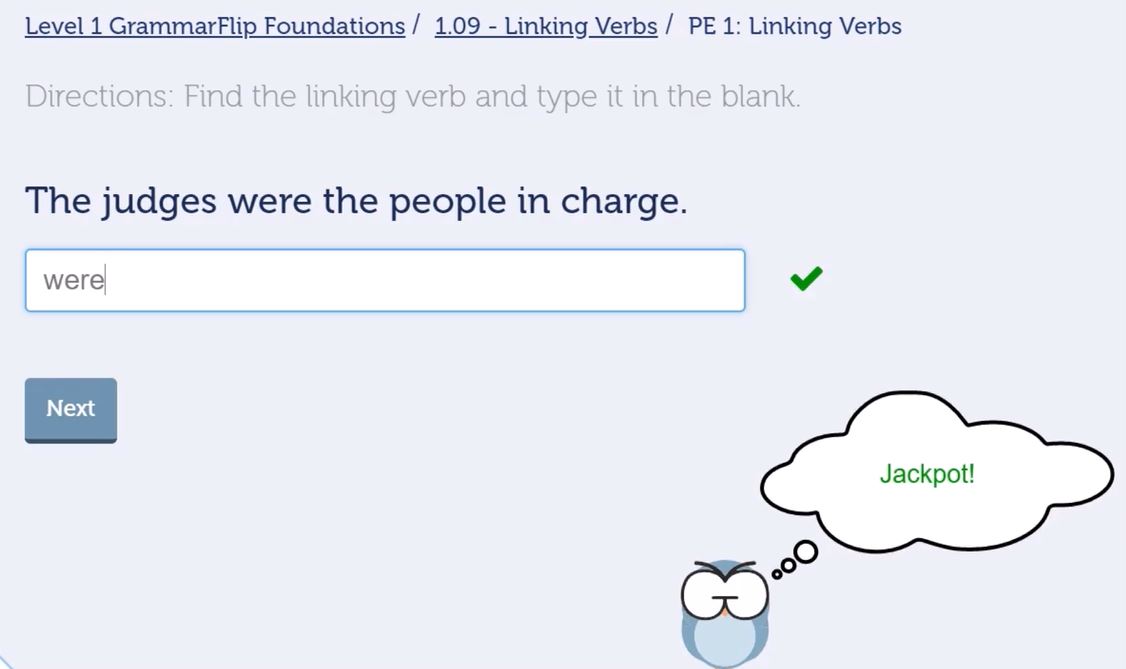
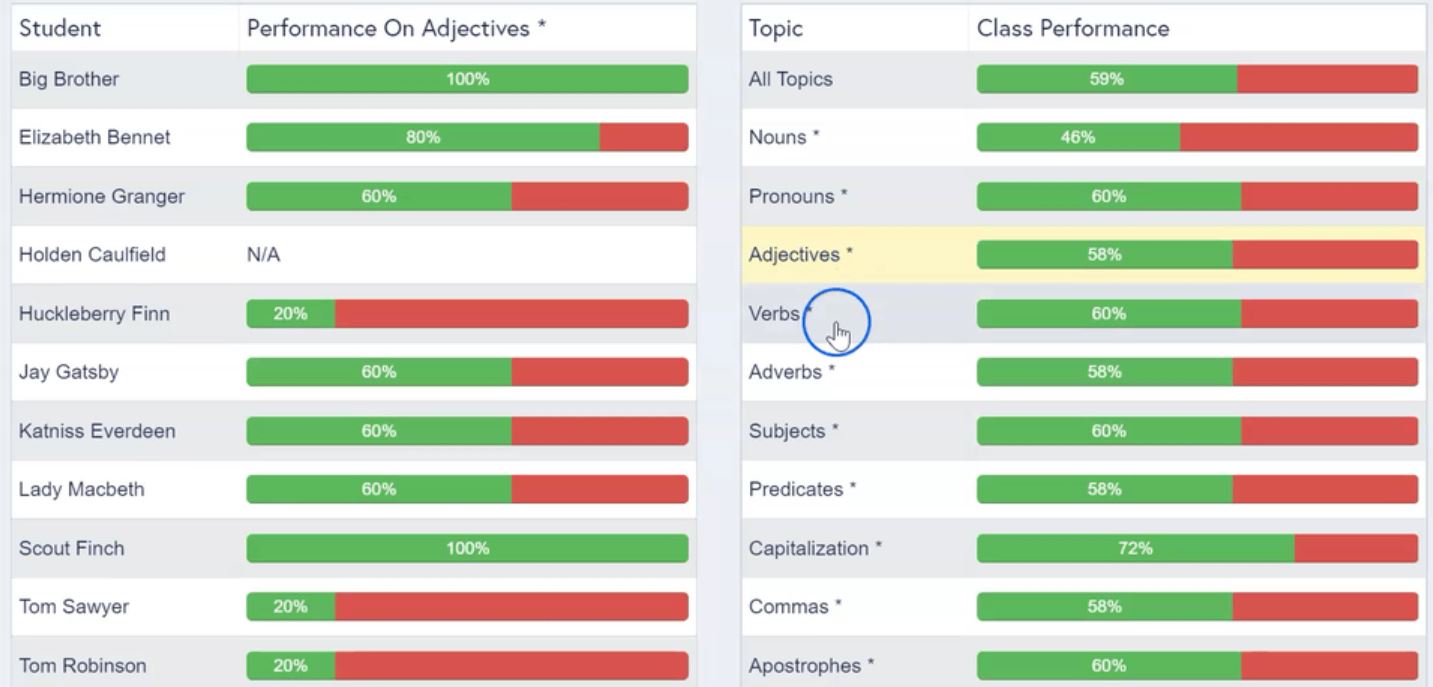
GrammarFlip uses a flipped classroom pedagogy combining direct video instruction with self-paced, mastery-based practice sets. The platform hosts a comprehensive library of grammar topics ranging from basic parts of speech to complex sentence structures. Students begin a module by watching a short, targeted instructional video that explicitly explains a grammatical concept. Following the video, students complete practice exercises that test their immediate recall and application of the rule. The system scores these exercises to determine if the student has grasped the material. Teachers monitor this progress through a dashboard, identifying exactly which concepts challenge the class or specific students. This setup allows educators to assign targeted interventions or group students based on their specific grammar deficits. The core mechanic relies on retrieval practice: forcing students to actively recall the rules they just watched to solve localized grammar problems before advancing to more complex linguistic concepts.
Strengths and tradeoffs of GrammarFlip
GrammarFlip's biggest strength is its efficient delivery of direct instruction, while its biggest weakness is the inherent difficulty of transferring isolated grammar drills to authentic writing. The platform successfully utilizes the flipped classroom model by offloading explicit grammar instruction to digital videos. This format allows students to engage with new material at their own pace, pausing and rewinding to manage their cognitive load. The immediate follow-up with practice exercises leverages retrieval practice, helping students solidify their memory of specific grammatical rules. However, learning science repeatedly demonstrates that grammar learned in isolation rarely translates directly to improved composition skills. Transfer of learning is notoriously difficult. While GrammarFlip ensures students can identify a dangling modifier in a multiple-choice drill, teachers and parents must actively facilitate the application of these rules during actual writing tasks. Additionally, the lack of an individual subscription model limits its utility outside of institutional environments. Without formal evaluation data from The Learning Standard, we cannot confirm if the platform utilizes long-term spaced repetition to prevent students from forgetting rules weeks after passing a module.
Who Might Benefit From GrammarFlip ?
GrammarFlip is best for middle and high school English teachers who want to shift rote grammar instruction out of limited class time. While the content spans 4th grade through college, the self-directed nature of the video lessons is most appropriate for independent learners in grade 6 and above. It serves schools implementing blended or flipped classroom models where students learn concepts digitally at home and apply them during school hours. Because of the 25-seat minimum purchase requirement, it is exclusively suited for institutional use or large homeschooling co-ops, rather than individual parents seeking supplemental grammar tutoring for a single child.
Data Transparency findings
Does Not Meet Data Transparency Standard
GrammarFlip reaches Level 1 of 3 (Basic protections), below our data transparency standard. Reaching Level 2 needs the policy to document a data retention timeline, named service providers and self-service deletion.
17 of 35 checks passed
Policy review ·
Privacy and Terms →These findings describe reviewed policy wording. They do not establish observed data practices or learning effectiveness.
ShowHide all 35 policy findings
Level 1 · Basic protections
Does not sell data or target ads at students, limits sharing, and lets parents see and delete their child's data.
Level 2 · Parent control (meets the standard)
Families can get their data out, know who processes it, and know how long it is kept.
Not documented: a data retention timeline, named service providers, self-service deletion
Level 3 · Direct data access
Families or schools can pull their own data through an API, in a stated format.
Not documented: an API for retrieving their own data, a named export format
Parent Access5/8
Does the policy mention parents specifically?
The policy mentions parents' access and correction rights.
“we abide by the policy of providing parents with access and correction rights under the Family Educational Rights and Privacy Act (FERPA).”Policy document ↗
Can parents view their child's data?
Parents have access rights under FERPA.
“we abide by the policy of providing parents with access and correction rights under the Family Educational Rights and Privacy Act (FERPA).”Policy document ↗
Can parents modify their child's data?
Parents have correction rights under FERPA.
“we abide by the policy of providing parents with access and correction rights under the Family Educational Rights and Privacy Act (FERPA).”Policy document ↗
Can parents delete their child's account?
The policy gives schools the ability to delete student data but does not say parents can request deletion, directly or through the school.
Is there a dedicated Children's Privacy section?
The policy discusses children under 13 only within the general 'Permitted Visitors; Account Termination' section, with no dedicated children's privacy heading.
Does it reference COPPA compliance?
Explicitly positions its student data collection against COPPA.
“Such students may be under the age of 13, but any information collected from students under the age of 13 on the Website will not be “personal information” as that term is defined in the Children’s Online Privacy Protection Act.”Policy document ↗
Does it reference FERPA compliance?
The policy states adherence to FERPA access and correction rights.
“we abide by the policy of providing parents with access and correction rights under the Family Educational Rights and Privacy Act (FERPA).”Policy document ↗
Is parental consent required for child accounts?
The policy does not require parental consent for student accounts.
Data Portability2/5
Can users access their personal data?
Users can request access to their information.
“The Data Protection Officer will establish a system to enable and facilitate the exercise of data subject rights related to: **•** Information access;”Policy document ↗
Can users download/export their data?
The policy lists data portability among the data subject rights users can exercise by written request.
“• Data portability;”Policy document ↗
Is there a self-service data access tool?
The policy provides data rights only by written request, not through a self-service tool.
Is a specific data format mentioned for export?
The policy does not mention any export format.
Is there an API for data access?
The policy does not mention an API for data access.
Data Minimization2/6
Is data collection itemized?
The policy lists the specific data collected.
“This information is limited to a student’s first name, last name (or last-name initials), and an email address.”Policy document ↗
Can the app be used without a real name?
The policy states student first and last names (or last-name initials) are collected.
Can the app be used without an email?
The policy states student email addresses are collected.
Does it state collection is limited to what is necessary?
The policy states personal data will be limited to what is necessary.
“(iii) adequate, relevant, and limited to what is necessary;”Policy document ↗
Is IP address anonymized or truncated?
The policy states IP addresses are collected and does not mention anonymizing them.
Is location tracking explicitly excluded?
The policy says cookies may collect country, state and area code, and does not exclude location tracking.
Third-Party Protection5/7
Does it explicitly state no selling of data?
The policy states it will never sell student data.
“Under no circumstances will we sell or lease student data, and we will not engage in any behavioral targeting or advertisements.”Policy document ↗
Are third-party providers named?
The policy refers to service providers generally without naming any.
Are providers contractually restricted?
Third parties are required to follow consistent privacy policies.
“Any third parties or sub-processors used will be required to have privacy policies that are consistent with the policies contained herein.”Policy document ↗
No-targeted-advertising commitment?
The policy commits to no behavioral targeting.
“Under no circumstances will we sell or lease student data, and we will not engage in any behavioral targeting or advertisements.”Policy document ↗
Is AI/ML data sharing addressed?
The policy does not address AI or machine learning.
Child-specific sharing restriction?
Student data may not be sold or leased.
“Under no circumstances will we sell or lease student data, and we will not engage in any behavioral targeting or advertisements.”Policy document ↗
Cookies/tracking limited or opt-out?
Users can reject cookies through browser settings.
“You may configure your internet browser or other settings to accept or reject all or some cookies, or notify you when a cookie is sent;”Policy document ↗
Deletion & Retention2/5
Can users delete their account?
Student data can be deleted through the school.
“We will provide schools with the ability to access, update, or delete student data maintained by the school or district.”Policy document ↗
Self-service deletion mechanism?
The policy provides deletion only by request or through schools, not through a self-service mechanism.
Specific data retention timeline?
The policy says student data is kept no longer than necessary, with no specific timeline.
Auto-deletion of inactive accounts?
The policy does not address deleting inactive accounts.
Post-deletion handling described?
The policy describes what data is kept after an account is terminated.
“Except as required by law, even after termination of an Account, we may retain Visitor or registered Account holder information, data, and content for business or legal purposes, at our sole discretion.”Policy document ↗
Advertising1/4
Advertising model explicitly disclosed?
The policy says it will not engage in behavioral targeting or advertisements, but does not clearly state the product has no advertising or describe an advertising model.
Free from third-party advertisements?
The policy does not clearly state that the product is free of third-party advertisements.
Children excluded from ad targeting?
Student data is not used for behavioral targeting.
“Under no circumstances will we sell or lease student data, and we will not engage in any behavioral targeting or advertisements.”Policy document ↗
Ad-free option available?
The policy does not clearly state the product has no advertising or offer an ad-free option.
What This Means
The policy review did not meet our data transparency standard. The checks above show the documented findings and unknowns. A missing statement does not establish how the app handles data in practice.
About this evaluation: Based on automated analysis of Privacy and Terms against 35 policy-disclosure questions, including questions adapted from the Common Sense Privacy Program's published evaluation questions. TLS is not affiliated with Common Sense Media, and this is not a Common Sense rating. Quoted text is copied from the policy; unquoted notes are our summary. Results describe what the policy documents, not the company's actual practices. Privacy policies can change: this review reflects the version we analyzed and does not determine legal compliance.
Frequently Asked Questions About GrammarFlip
Is GrammarFlip free?
No, GrammarFlip is not free for students to use. While administrative and teacher accounts are provided for free, the platform charges a licensing fee of $2 per student seat. Furthermore, schools or educators must purchase a minimum of 25 student seats at a time. This makes the baseline cost $50, which generally prices out individual families seeking supplementary at-home grammar practice.
Is GrammarFlip good for elementary students?
Partially. While GrammarFlip offers foundational content starting at the 4th-grade level, the required independent learning style may challenge younger children. The self-directed video instruction and flipped classroom model demand a high degree of executive functioning and sustained attention. Consequently, the platform is generally more effective for middle school, high school, and college students who can manage independent digital coursework without constant adult supervision.
What does GrammarFlip teach?
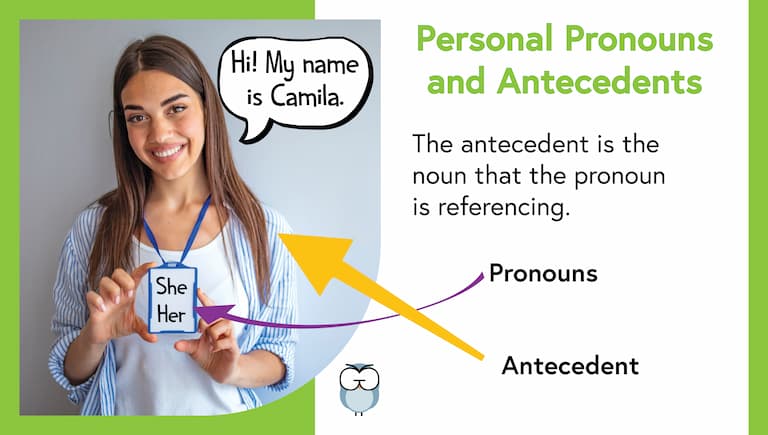
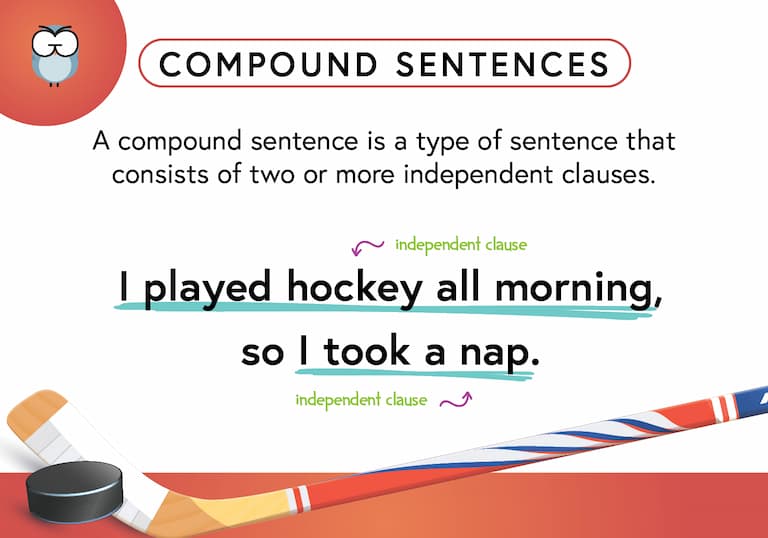
GrammarFlip explicitly teaches English grammar mechanics, syntax, and foundational writing rules. The platform's digital curriculum covers a wide progression of topics, ranging from basic parts of speech and punctuation rules to complex sentence structures and common usage errors. It delivers this content through direct video instruction and reinforces the rules via targeted, localized practice exercises designed to test immediate recall.
How does GrammarFlip compare to NoRedInk?
Both platforms teach grammar mechanics, but they utilize distinctly different pedagogical approaches. GrammarFlip relies heavily on direct video instruction followed by localized practice, which perfectly fits a strict flipped classroom instructional model. Conversely, NoRedInk focuses heavily on adaptive, text-based exercises that integrate students' personal interests and favorite pop culture characters into the practice sentences to increase engagement during repetitive grammar drills.
Has The Learning Standard evaluated GrammarFlip?
TLS has not yet completed a Learning Standard evaluation of how well GrammarFlip teaches. Its privacy policy has been reviewed for Data Transparency and reaches Level 1, Basic protections.
Is GrammarFlip COPPA compliant?
The reviewed privacy policy references COPPA. A policy reference alone does not establish COPPA compliance. Policy review note: Explicitly positions its student data collection against COPPA.
Is GrammarFlip FERPA compliant?
The reviewed privacy policy references FERPA. A policy reference alone does not establish FERPA compliance. Policy review note: The policy states adherence to FERPA access and correction rights.
Does GrammarFlip have a children's privacy policy?
No dedicated children's privacy section was found in the reviewed policy. Policy review note: The policy discusses children under 13 only within the general 'Permitted Visitors; Account Termination' section, with no dedicated children's privacy heading.
Does GrammarFlip sell student data?
The reviewed policy states that the app does not sell data. This is a policy statement; actual data practices were not verified. Policy review note: The policy states it will never sell student data.
Can you delete your data from GrammarFlip ?
The reviewed privacy policy describes account deletion. We have not tested the deletion process. Policy review note: Student data can be deleted through the school.
Overview sources and freshness
Facts checked: Not yet checked
App details and requirements
Product by GrammarFlip
Details
- Pricing model
- Flat-rate subscriptions, License subscriptions, Tiered-pricing
- Pricing
- $2 per student seat (teacher accounts are free). Minimum purchase of 25 student seats.
- Platforms
- Web Browser
- Grade Levels
- 4th Grade, 5th Grade, 6th Grade
All 13 grade levels
4th Grade, 5th Grade, 6th Grade, 7th Grade, 8th Grade, 9th Grade, 10th Grade, 11th Grade, 12th Grade, Associate's degree, Bachelor's degree, Post-baccalaureate certificate, Master's Degree
- Website
- Visit site
Subjects
Teaching Approaches
Screenshots
See inside GrammarFlip . Select an image to view it at full size.
Original catalogue image records
Catalogue image sources
Sources and review method
TLS combines product information and editorial analysis to explain how GrammarFlip works, its tradeoffs, and the questions to ask before choosing it. Product features, an instructional rationale and evidence of learning outcomes are different kinds of information.
Formal Learning Standard assessment: not yet completed. Data Transparency findings are reported separately and do not establish learning effectiveness. Read our methodology.
Follow TLS Research
Subscribe to future TLS research updates: app reviews, findings, and what the evidence shows.
Keep exploring.
For GrammarFlip
If you represent GrammarFlip and have a correction or new evidence, send the relevant source so we can review and update this page.
Submit a correction