CAPIT Reading
Product by Capit Learning
Facts checked: Not yet checked
Our take (not a Learning Standard rating). This label applies to learning-science judgments throughout this overview.
Our take (not a Learning Standard rating)
While CAPIT Reading utilizes explicit direct instruction and a mastery-based progression for phonics, The Learning Standard has not yet evaluated its full efficacy. Its focus on phonemic awareness aligns with foundational reading science, but we cannot definitively verify its adaptive personalized learning claims until our formal classroom testing is complete.
Pros
- Focuses exclusively on phonemic awareness and phonics rather than mixed-cueing guessing methods.
- Requires mastery of letter-sound correspondences before allowing students to progress to complex words.
- Utilizes explicit direct instruction to introduce new phonetic rules clearly.
- Integrates physical classroom resources to support multisensory learning pathways for young learners.
Cons
- Lacks independent evaluation data from The Learning Standard to verify its proficiency claims.
- Requires a yearly school-level subscription, making it inaccessible for individual parent purchase.
- Relies heavily on screen time for early childhood learners who benefit from concrete play.
- Strict mastery gates may cause frustration if the software fails to adapt its teaching method for struggling students.
What Do We Know About CAPIT Reading?
CAPIT Reading is a structured literacy program designed for schools, meaning your child will likely only use it if their district purchases a subscription. Because this app targets early childhood and primary grades, it relies heavily on direct instruction for phonics and phonemic awareness. This approach aligns well with the science of reading by teaching children to decode words through letter-sound relationships rather than guessing from context or pictures. The program operates on a mastery-based learning model. This means your child cannot move forward to complex texts until they have proven they understand the foundational phonetic rules. While this prevents learning gaps from forming, it can also cause frustration for students who need more varied instruction or struggle with strict digital interfaces. Currently, CAPIT Reading is pending evaluation by The Learning Standard. We have not yet verified how well its personalized learning algorithms adapt to struggling readers in real-time. Parents should know that the app is intended to supplement teacher-led instruction rather than replace it, functioning best when paired with physical classroom resources and targeted educator interventions.
How Does CAPIT Reading Work?
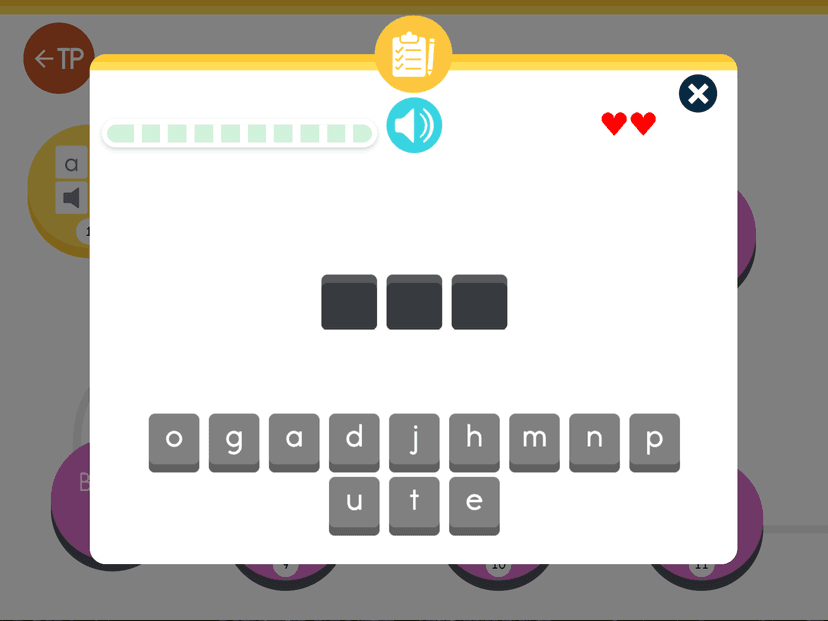
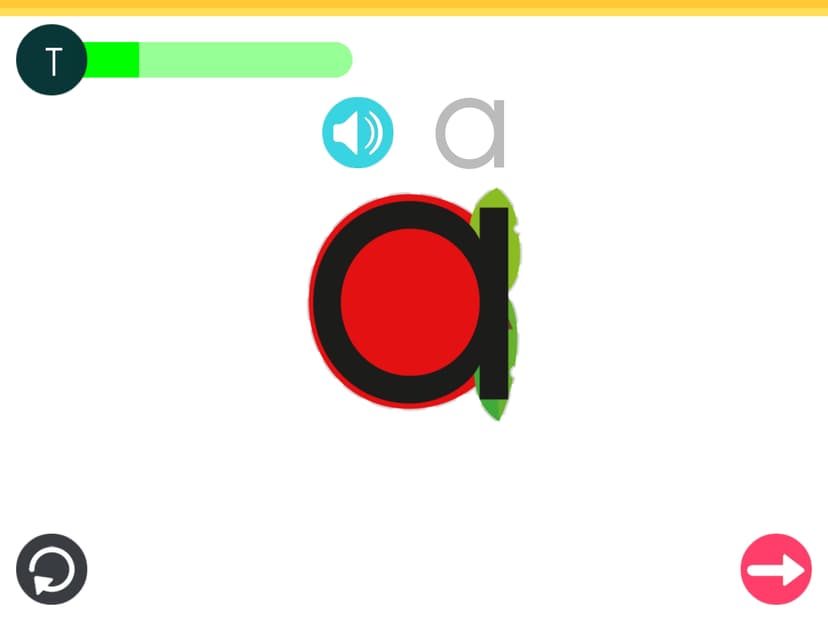
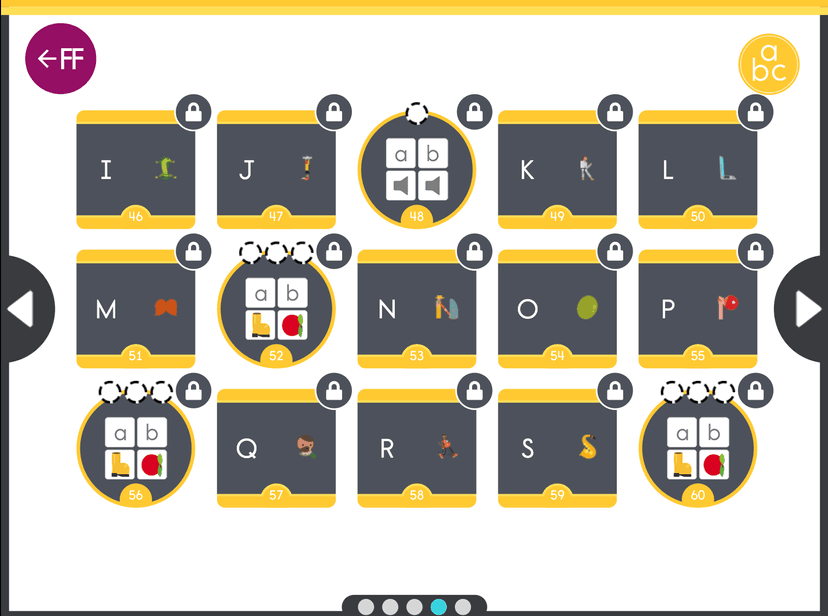
CAPIT Reading uses a mastery-based direct instruction approach to teach foundational literacy skills. The application introduces lowercase letters and their corresponding sounds before moving to uppercase letters, digraphs, and complex word building. Students interact with digital exercises that require them to match sounds to symbols, build words phonetically, and decode short sentences. The software acts as a personalized learning platform, locking advanced lessons until a student demonstrates consistent retrieval of earlier concepts. This forces spaced repetition and prevents children from skipping ahead without true comprehension. Because it is designed for school environments, the system feeds performance data back to educators. Teachers use this dashboard to identify exactly which phonemes or spelling patterns your child is struggling with, allowing for targeted offline intervention. The digital curriculum is also paired with physical classroom resources, bridging the gap between digital practice and tactile, physical writing tasks.
Strengths and tradeoffs of CAPIT Reading
CAPIT Reading's biggest strength is its strict adherence to explicit phonics instruction, while its biggest weakness is its complete reliance on school-based implementation, limiting parent access. The platform successfully utilizes mastery-based progression, ensuring that students do not advance until they have secured foundational letter-sound knowledge. This prevents the common issue of early readers masking their decoding deficits through picture-guessing. Furthermore, the use of direct instruction removes ambiguity, presenting clear, worked examples of phoneme blending before asking students to perform the task independently. However, the app's interface and strict progression can be rigid. Without formal evaluation data from The Learning Standard, it is unclear if the software's personalized learning pathways effectively offer varied retrieval practice or merely repeat the exact same drills when a child fails. Additionally, for preschool and kindergarten students, heavy reliance on a digital interface for cognitive tasks can lead to fatigue. While the program includes offline materials, the core digital mechanic requires sustained attention that may not align with the developmental stamina of a four-year-old.
Who Might Benefit From CAPIT Reading?
CAPIT Reading is best for school districts seeking a standardized, phonics-first curriculum for their early childhood and primary classrooms. Because it requires a school-wide or district-wide subscription, it serves educators who need a structured tool to implement explicit reading instruction alongside data tracking. The mastery-based pacing makes it particularly useful for diverse classrooms where students are acquiring literacy at different rates, as it prevents children from moving past foundational phonemic awareness before they are ready. It is not suitable for individual families seeking an at-home reading supplement, as it remains strictly a business-to-education product.
Data Transparency
Meets Data Transparency Standard
CAPIT Reading meets our data transparency standard at Level 2 of 3 (Parent control). Level 3 needs the policy to document an API for retrieving their own data and a named export format.
30 of 35 checks passed
Evaluated September 2026
Privacy Policy 1 →Level 1 · Basic protections
Does not sell data or target ads at students, limits sharing, and lets parents see and delete their child's data.
Level 2 · Parent control (meets the standard)
Families can get their data out, know who processes it, and know how long it is kept.
Level 3 · Direct data access
Families or schools can pull their own data through an API, in a stated format.
Not documented: an API for retrieving their own data, a named export format
View all 35 checks
Parent Access8/8
Does the policy mention parents specifically?
“Parents and legal guardians of children under 13 who use our Services have certain rights under the Children's Online Privacy Protection Act (COPPA), and we recognize those rights.”
Can parents view their child's data?
“Please note that your parent or guardian, as well as an administrator from your school and/or district, can view all activity and content associated with your student account, including your Children’s Personal Information.”
Can parents modify their child's data?
“Parents have a right to request to delete a student's Personally Identifiable Information or request a change in a student's records if it is inaccurate or misleading by contacting the school or teacher or by contacting Capit Learning in writing using one of the methods identified above.”
Can parents delete their child's account?
“Parents have a right to request to delete a student's Personally Identifiable Information or request a change in a student's records if it is inaccurate or misleading by contacting the school or teacher or by contacting Capit Learning in writing using one of the methods identified above.”
Is there a dedicated Children's Privacy section?
“Part 1: How Capit Learning Treats Children's Information”
Does it reference COPPA compliance?
“CAPIT makes every effort to ensure consistency with the Family Educational Rights and Privacy Act (FERPA) policies. We also comply with Children's Online Privacy Protection Act (COPPA).”
Does it reference FERPA compliance?
“We understand the obligation educational agencies, districts, and school systems have to comply with the Family Educational Rights and Privacy Act (FERPA) and we support schools in their compliance efforts and facilitate their alignment with FERPA.”
Is parental consent required for child accounts?
“If you are not of legal age to form a binding contract (in many jurisdictions, this age is 18), you may only use the Services and disclose information to us with your parent’s or guardian’s express consent.”
Data Portability3/5
Can users access their personal data?
“You may currently view, access, and modify the following information if your User Category allows you to input any of the following:”
Can users download/export their data?
“The Services provide users the ability to download, export, save and maintain their data or content at any time through our District/School/Teacher Portals.”
Is there a self-service data access tool?
“The Services provide users the ability to download, export, save and maintain their data or content at any time through our District/School/Teacher Portals.”
Is a specific data format mentioned for export?
The policy mentions downloading and printing reports but names no specific export format.
Is there an API for data access?
The policy does not mention an API for data access.
Data Minimization4/6
Is data collection itemized?
“If you are a student registrant, the only Children’s Personal Information we require is your name, username, password, user ID, grade, teacher, school, and district.”
Can the app be used without a real name?
The policy says it collects the student's name.
Can the app be used without an email?
“We do not collect students' emails or addresses as Children’s Personal Information.”
Does it state collection is limited to what is necessary?
“A minor student’s participation in our Services, and the ability of a minor student to access the Services will not be conditioned on that student providing more Children’s Personal Information than is reasonably necessary for that participation or access.”
Is IP address anonymized or truncated?
The policy says IP addresses are recorded but does not say they are anonymized or truncated.
Is location tracking explicitly excluded?
“We do not collect geo-location tracking information.”
Third-Party Protection6/7
Does it explicitly state no selling of data?
“We neither rent nor sell your Personal Information or Children's Personal Information; we may share your Personal Information and Children's Personal Information in personally identifiable form only as described below.”
Are third-party providers named?
“Your data is stored on Amazon’s secured AWS servers.”
Are providers contractually restricted?
“These third parties are well-known, established service providers, who are bound contractually to practice adequate security measures and only use your information for the sole purpose of providing the services.”
No-targeted-advertising commitment?
“We do not use student data for targeted, behavioral, or contextual advertising to students under the age of 13, or anyone using our Services.”
Is AI/ML data sharing addressed?
The policy does not address AI or machine-learning data sharing.
Child-specific sharing restriction?
“We do not share a persistent identifier collected from children/students that can be used to recognize and track a user over time and across different websites or services.”
Cookies/tracking limited or opt-out?
“Most browsers have an option for turning off the cookie feature, which will prevent your browser from accepting new cookies, as well as (depending on the sophistication of your browser software) allowing you to decide on acceptance of each new cookie in a variety of ways.”
Deletion & Retention5/5
Can users delete their account?
“You may request deletion of your Capit Learning account.”
Self-service deletion mechanism?
“The administrator can view a student’s progress and usage, and directly create, update, modify, or delete individual accounts.”
Specific data retention timeline?
“Unless districts, schools, or individual users request that we delete all student PII, when a subscription expires, we retain such information for a limited period of two school years after expiration.”
Auto-deletion of inactive accounts?
“Student accounts and the student identifiable information within them are automatically deleted after two school years of inactivity - first from our server and then, two weeks later, from any backup server.”
Post-deletion handling described?
“When we delete that information, it is deleted first from our servers — and then, two weeks later, from any backup server.”
Advertising4/4
Advertising model explicitly disclosed?
“No third-party advertisements are displayed on our Services.”
Free from third-party advertisements?
“No third-party advertisements are displayed on our Services.”
Children excluded from ad targeting?
“We do not allow third parties to use a child’s/student’s data to create a profile, engage in data enhancement, social advertising, or target advertising to students, parents, teachers, or the school.”
Ad-free option available?
“We do not advertise to children/students within our learning application.”
Meets Data Transparency Standard
The reviewed policy met our data transparency standard. This result describes the policy disclosures we assessed. Actual practices and legal compliance were not verified.
About this evaluation: Based on automated analysis of Privacy Policy 1 against 35 policy-disclosure questions, including questions adapted from the Common Sense Privacy Program's published evaluation questions. TLS is not affiliated with Common Sense Media, and this is not a Common Sense rating. Quoted text is copied from the policy; unquoted notes are our summary. Results describe what the policy documents, not the company's actual practices. Privacy policies can change: this review reflects the version we analyzed and does not determine legal compliance.
Sources and review method
TLS combines product information and editorial analysis to explain how CAPIT Reading works, its tradeoffs, and the questions to ask before choosing it. Product features, an instructional rationale and evidence of learning outcomes are different kinds of information.
Formal Learning Standard assessment: not yet completed. Data Transparency findings are reported separately and do not establish learning effectiveness. Read our methodology.
Frequently Asked Questions About CAPIT Reading
Is CAPIT Reading free?
No, CAPIT Reading is not free and operates on a yearly subscription model. This subscription is specifically aimed at schools and school districts rather than individual consumers. As a parent, you cannot purchase a single license for your child to use at home; access must be granted and managed through your child's educational institution. The cost is absorbed by the school, which often includes teacher training and physical classroom resources alongside the digital software licenses.
Is CAPIT Reading good for preschoolers?
Yes, the program is specifically designed to accommodate early childhood learners from Preschool through 3rd Grade. It introduces foundational phonemic awareness without requiring advanced fine motor skills. However, parents and educators should be mindful of digital fatigue. While the software teaches critical pre-reading skills, relying heavily on screen-based instruction for four-year-olds should be balanced with tactile, concrete play to ensure developmentally appropriate learning environments.
What does CAPIT Reading teach?
CAPIT Reading teaches foundational literacy skills through a structured, science-based approach. The curriculum focuses heavily on phonics, phonemic awareness, spelling, and basic decoding. Instead of teaching students to guess words using context clues or pictures, it uses direct instruction to teach letter-sound correspondences. Your child will learn how to blend individual sounds together to form words, eventually progressing to reading full sentences as their phonetic mastery improves.
CAPIT Reading vs ABCmouse: Which is better?
These applications serve entirely different educational purposes. While ABCmouse is a broad, consumer-facing edutainment app that covers many subjects with a game-like interface, CAPIT Reading is a highly specialized, school-only structured literacy program. CAPIT Reading focuses exclusively on mastering reading science through direct instruction and requires a district subscription. If your child needs targeted, rigorous phonics mastery, CAPIT Reading provides a much more focused and distraction-free pedagogical environment.
Has The Learning Standard evaluated CAPIT Reading?
TLS has not yet completed a Learning Standard evaluation of how well CAPIT Reading teaches. Its privacy policy has been reviewed for Data Transparency and reaches Level 2, Parent control.
Is CAPIT Reading COPPA compliant?
The reviewed privacy policy references COPPA. A policy reference alone does not establish COPPA compliance. Policy review note: The policy states it complies with COPPA.
Is CAPIT Reading FERPA compliant?
The reviewed privacy policy references FERPA. A policy reference alone does not establish FERPA compliance. Policy review note: The policy addresses FERPA and describes acting as a School Official.
Does CAPIT Reading have a children's privacy policy?
The reviewed policy includes a dedicated children's privacy section. Policy review note: The policy has a section with its own heading on children's information.
Does CAPIT Reading sell student data?
The reviewed policy states that the app does not sell data. This is a policy statement; actual data practices were not verified. Policy review note: The vendor states it does not sell personal information.
Can you delete your data from CAPIT Reading?
The reviewed privacy policy describes account deletion. We have not tested the deletion process. Policy review note: Users can ask for their account to be deleted.
Follow TLS Research
Subscribe to future TLS research updates: app reviews, findings, and what the evidence shows.
Screenshots
Take Action
For CAPIT Reading
If you represent Capit Learning and have a correction or new evidence, send the relevant source so we can review and update this page.
Submit a correctionDetails
- Pricing
- Yearly subscription. We also offer teacher training in the Science of Reading and physical classroom resources.
- Platforms
- Web Browser, iPadOS (Apple tablet), Android (Google mobile), Tizen (Samsung mobile), Windows (Microsoft), macOS (Apple), Chrome OS (Google)
- Grade Levels
- Preschool, Prekindergarten, Transitional Kindergarten, Kindergarten, 1st Grade, 2nd Grade, 3rd Grade
- Website
- Visit site