BookNook
Product by BookNook
Facts checked: Not yet checked
Our take (not a Learning Standard rating). This label applies to learning-science judgments throughout this overview.
Our take (not a Learning Standard rating)
While The Learning Standard has not yet formally evaluated BookNook, its use of synchronous direct instruction and mastery-based progression aligns well with established learning science. It pairs standards-aligned reading and math curriculum with live tutoring, though the effectiveness heavily depends on the individual tutor's implementation of the provided lesson scaffolds.
Pros
- Integrates live, synchronous direct instruction to provide immediate corrective feedback during practice.
- Uses mastery-based progression to ensure foundational skills are secured before introducing complex topics.
- Provides explicit, standards-aligned curriculum frameworks that reduce cognitive load during tutoring sessions.
- Employs blended learning models that connect digital practice with human intervention.
Cons
- Instructional efficacy relies heavily on the pedagogical skill and engagement of the individual human tutor.
- Requires scheduling synchronous sessions, eliminating the flexibility required for spontaneous, on-demand retrieval practice.
- Pricing and access are structured exclusively for school districts rather than direct-to-consumer parental access.
What Do We Know About BookNook?
BookNook is a structured tool for reading and math intervention that relies on live tutoring rather than standalone software to teach effectively. Because it requires a human tutor to deliver the lessons, its success is tied directly to the quality of that interaction. This is not an app your child can play independently in the backseat of a car. Instead, it is a synchronous platform designed for schools and districts to deliver highly structured, standards-aligned lessons. The platform uses a blended learning approach, meaning your child interacts with digital curriculum while a tutor guides them through direct instruction. This model is strong because it allows for immediate, customized feedback, a critical component of learning science. When your child makes an error, the tutor can intervene instantly, preventing misconceptions from taking root. Parents should know that access is generally managed through schools rather than individual subscriptions. While it holds an ESSA Tier 1 rating from external studies, The Learning Standard has not yet formally evaluated BookNook's internal pedagogical metrics. If your child's school uses it, expect scheduled, structured sessions focused on closing specific skill gaps in K-8 reading and math through mastery-based progression.
How Does BookNook Work?
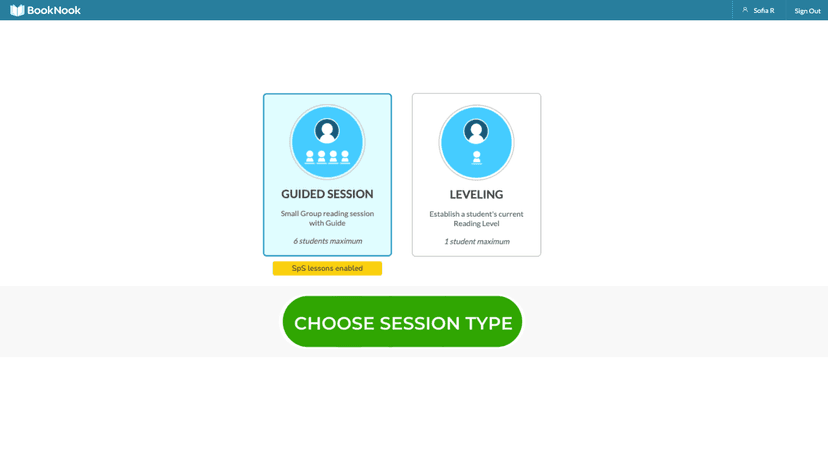
BookNook uses a blended learning approach that combines synchronous direct instruction with a mastery-based digital curriculum. The platform connects a student with a live tutor who guides them through highly structured reading or math lessons. During a session, the tutor and student view the same digital environment. The software provides the lesson scaffolding, reading texts, and problem sets, while the human tutor delivers the instruction and verbal prompts. This setup relies heavily on explicit instruction, where concepts are clearly explained and modeled before the student is asked to practice them independently. As your child works through the material, the platform tracks their accuracy and fluency. Progression is mastery-based, meaning the student must demonstrate competence in a specific skill, such as phonics decoding or fraction addition, before the system introduces the next instructional tier. This prevents cognitive overload by ensuring prerequisite knowledge is secure. The platform also includes built-in formative assessments to measure growth over time, automatically adjusting the starting points of future lessons based on real-time student performance data.
Strengths and tradeoffs of BookNook
BookNook's biggest strength is its integration of live human feedback into a structured digital curriculum, while its biggest weakness is its reliance on school-based implementation rather than on-demand accessibility. By pairing students with live tutors, the platform leverages immediate corrective feedback, a cornerstone of effective learning science. Unlike purely algorithmic apps that only mark an answer wrong, a human tutor can identify exactly why a student made a mistake and provide a targeted worked example to correct the misconception in real-time. The curriculum itself relies heavily on direct instruction, minimizing unnecessary distractions and focusing the student's cognitive capacity directly on the learning objective. However, the strict requirement for synchronous sessions completely removes the benefit of spontaneous spaced retrieval practice. Students cannot easily log on for five minutes of independent drill work; all learning happens in scheduled blocks. Furthermore, because the instruction is mediated by humans, the fidelity of the pedagogical delivery will vary. A highly skilled tutor will maximize the platform's mastery-based progression, whereas a less engaged tutor may simply push a student through the modules without ensuring deep encoding of the material.
Who Might Benefit From BookNook?
BookNook is best for K-8 students who require structured, live intervention in reading or math and have access through their school district. It is highly effective for children who struggle with independent, self-guided learning apps and need the strict accountability and immediate guidance of a live human tutor. The platform targets foundational literacy and numeracy gaps, making it ideal for students performing below grade level who need explicit direct instruction to catch up. Because it requires scheduling and institutional access, it is not suited for parents seeking a standalone educational game for casual enrichment.
Data Transparency
Does Not Meet Data Transparency Standard
BookNook reaches Level 1 of 3 (Basic protections), below our data transparency standard. Reaching Level 2 needs the policy to document a data retention timeline and self-service deletion.
25 of 35 checks passed
Evaluated September 2026
Privacy Policy →Level 1 · Basic protections
Does not sell data or target ads at students, limits sharing, and lets parents see and delete their child's data.
Level 2 · Parent control (meets the standard)
Families can get their data out, know who processes it, and know how long it is kept.
Not documented: a data retention timeline, self-service deletion
Level 3 · Direct data access
Families or schools can pull their own data through an API, in a stated format.
Not documented: an API for retrieving their own data, a named export format
View all 35 checks
Parent Access8/8
Does the policy mention parents specifically?
“Parent Rights: parents may review or request deletion of their child’s information at any time.”
Can parents view their child's data?
“Parent Rights: parents may review or request deletion of their child’s information at any time. If the account was set up through a School, contact the School and we’ll coordinate promptly; otherwise, contact [privacy@booknook.com](mailto:privacy@booknook.com).”
Can parents modify their child's data?
“Access via School: students/parents may view, edit, or delete personal information where permitted by law; contact your School/Service Provider first.”
Can parents delete their child's account?
“Parent Rights: parents may review or request deletion of their child’s information at any time.”
Is there a dedicated Children's Privacy section?
“## **10\. Children’s Privacy Notice (COPPA)**”
Does it reference COPPA compliance?
“BookNook complies with the Children’s Online Privacy Protection Act (COPPA) and collects personal information from children under 13 only as permitted by law.”
Does it reference FERPA compliance?
“BookNook complies with FERPA, COPPA, PPRA and related student privacy laws.”
Is parental consent required for child accounts?
“Consent: when used through a School, we rely on the School to provide verifiable parental consent on the parent’s behalf where permitted by COPPA; otherwise, we obtain consent directly from a parent/guardian.”
Data Portability2/5
Can users access their personal data?
“California residents (not acting as students within FERPA context) may request to know, access, correct, or delete personal information.”
Can users download/export their data?
“We support School requests to access, correct, export, or delete Student Personal Data and will verify the requester’s authority.”
Is there a self-service data access tool?
The policy says profile information can be reviewed in account settings only 'where available' and does not describe a self-service data access tool.
Is a specific data format mentioned for export?
The policy does not name any format for exported data.
Is there an API for data access?
The policy does not describe an API for users or schools to retrieve their data.
Data Minimization2/6
Is data collection itemized?
“Students (via teacher/school setup): first and last name, grade level, student ID, username, gender and other demographic information (only where required by the School), learning level, and performance data.”
Can the app be used without a real name?
The policy states that students' first and last names are collected when the teacher or school sets up accounts.
Can the app be used without an email?
The policy does not say student email is never collected, and it says SSO providers such as Google pass along limited identifiers.
Does it state collection is limited to what is necessary?
“What we collect for under-13 users: limited identifiers (e.g., name or username), classroom affiliation, usage/performance, and device/technical data necessary to provide the Services.”
Is IP address anonymized or truncated?
The policy says IP addresses are collected and does not mention anonymizing or truncating them.
Is location tracking explicitly excluded?
The policy excludes only precise geolocation; it still infers general location from IP addresses.
Third-Party Protection6/7
Does it explicitly state no selling of data?
“We do not sell personal information and do not disclose Student Personal Data except as described above or as required by law.”
Are third-party providers named?
“Single Sign-On (SSO): if you log in via Google, Clever, ClassLink, etc., we receive limited identifiers per your SSO settings and the provider’s policy.”
Are providers contractually restricted?
“All subprocessors operate under written agreements requiring confidentiality, data security, and compliance with applicable student data privacy laws.”
No-targeted-advertising commitment?
“We do not display third-party advertisements, sell personal information, or “share” personal information for cross-context behavioral advertising. We do not use Student Personal Data for targeted/behavioral advertising.”
Is AI/ML data sharing addressed?
The policy does not address sharing data with AI or machine learning systems.
Child-specific sharing restriction?
“We do not sell personal information and do not disclose Student Personal Data except as described above or as required by law.”
Cookies/tracking limited or opt-out?
“No Cross-Site Ad Tracking: We do not use cookies/pixels to track you across third-party services for advertising.”
Deletion & Retention3/5
Can users delete their account?
“Deletion Requests: request deletion via in-product tools (if offered) or by contacting privacy@booknook.com (parents of school-managed students should route through the School per FERPA).”
Self-service deletion mechanism?
The policy mentions in-product deletion tools only 'if offered' and does not confirm a self-service deletion option.
Specific data retention timeline?
The policy keeps data 'as necessary' without a fixed retention period; it gives only a 60-day window for completing school deletion requests.
Auto-deletion of inactive accounts?
“Student Personal Data is deleted or irreversibly de-identified upon: (i) a verified School request, (ii) termination or lapse of the School’s agreement, or (iii) extended inactivity in accordance with our retention policy”
Post-deletion handling described?
“Verified School deletion requests are completed within 60 days of receipt, and written confirmation of deletion is available upon request.”
Advertising4/4
Advertising model explicitly disclosed?
“We do not: (a) build personal profiles for non-educational purposes, (b) display advertising, or (c) use/allow cross-site tracking for targeted ads.”
Free from third-party advertisements?
“No Ads; No Sale/“Sharing.” We do not display third-party advertisements, sell personal information, or “share” personal information for cross-context behavioral advertising.”
Children excluded from ad targeting?
“We do not use Student Personal Data for targeted/behavioral advertising.”
Ad-free option available?
“We do not: (a) build personal profiles for non-educational purposes, (b) display advertising, or (c) use/allow cross-site tracking for targeted ads.”
What This Means
The policy review did not meet our data transparency standard. The checks above show the documented findings and unknowns. A missing statement does not establish how the app handles data in practice.
About this evaluation: Based on automated analysis of Privacy Policy against 35 policy-disclosure questions, including questions adapted from the Common Sense Privacy Program's published evaluation questions. TLS is not affiliated with Common Sense Media, and this is not a Common Sense rating. Quoted text is copied from the policy; unquoted notes are our summary. Results describe what the policy documents, not the company's actual practices. Privacy policies can change: this review reflects the version we analyzed and does not determine legal compliance.
Sources and review method
TLS combines product information and editorial analysis to explain how BookNook works, its tradeoffs, and the questions to ask before choosing it. Product features, an instructional rationale and evidence of learning outcomes are different kinds of information.
Formal Learning Standard assessment: not yet completed. Data Transparency findings are reported separately and do not establish learning effectiveness. Read our methodology.
Frequently Asked Questions About BookNook
Is BookNook free?
No, BookNook is not free for individual consumers. Pricing is based on a per-session tutoring model and is exclusively purchased by school districts, non-profits, or charter networks rather than individual parents. If your child's school has partnered with BookNook, the service will be provided to your family at no direct cost, but you cannot independently purchase a single-user subscription for home use.
Is BookNook good for K-8 students?
Yes, BookNook is designed specifically for students in Kindergarten through 8th grade. The curriculum scaffolds foundational skills, starting with basic phonics and early numeracy for younger children, and progressing to complex reading comprehension and middle school math concepts. Because it relies heavily on live tutors, the instruction is dynamically adjusted to fit the developmental and behavioral needs of both early elementary and middle school students.
What does BookNook teach?
BookNook teaches core humanities, specifically reading, and mathematics. The reading curriculum focuses on phonological awareness, phonics, fluency, vocabulary, and reading comprehension. The math curriculum covers foundational numeracy, operations, algebraic thinking, and geometry. Both subjects are taught using standards-aligned materials, ensuring that the targeted intervention directly supports what students are expected to learn and master in their traditional classroom environments.
How does BookNook compare to Khan Academy?
BookNook relies on synchronous, live tutoring, whereas Khan Academy is an asynchronous, self-guided platform. BookNook connects your child with a human instructor who walks them through standardized lesson modules in real-time. Khan Academy relies entirely on pre-recorded video instruction and automated practice sets. If your child requires human accountability and instant, customized feedback, BookNook is superior. If they require flexible, independent practice, Khan Academy is the better fit.
Has The Learning Standard evaluated BookNook?
TLS has not yet completed a Learning Standard evaluation of how well BookNook teaches. Its privacy policy has been reviewed for Data Transparency and reaches Level 1, Basic protections.
Is BookNook COPPA compliant?
The reviewed privacy policy references COPPA. A policy reference alone does not establish COPPA compliance. Policy review note: The policy states it complies with COPPA.
Is BookNook FERPA compliant?
The reviewed privacy policy references FERPA. A policy reference alone does not establish FERPA compliance. Policy review note: The policy states it complies with FERPA.
Does BookNook have a children's privacy policy?
The reviewed policy includes a dedicated children's privacy section. Policy review note: The policy has a dedicated Children's Privacy Notice section.
Does BookNook sell student data?
The reviewed policy states that the app does not sell data. This is a policy statement; actual data practices were not verified. Policy review note: The policy explicitly says it does not sell personal information.
Can you delete your data from BookNook?
The reviewed privacy policy describes account deletion. We have not tested the deletion process. Policy review note: Users can ask for deletion by email or through their school.
Follow TLS Research
Subscribe to future TLS research updates: app reviews, findings, and what the evidence shows.
Screenshots

Take Action
For BookNook
If you represent BookNook and have a correction or new evidence, send the relevant source so we can review and update this page.
Submit a correctionDetails
- Pricing
- Pricing is based on the number of sessions per student
- Platforms
- Web Browser, iPadOS (Apple tablet), Android (Google mobile), Windows (Microsoft), macOS (Apple), Chrome OS (Google)
- Grade Levels
- Kindergarten, 1st Grade, 2nd Grade, 3rd Grade, 4th Grade, 5th Grade, 6th Grade, 7th Grade, 8th Grade
- Website
- Visit site