
Blooket
Product by Blooket LLC
Facts checked: Not yet checked
Our take (not a Learning Standard rating). This label applies to learning-science judgments throughout this overview.
Our take (not a Learning Standard rating)
Blooket drives extraordinary student engagement through gamified retrieval practice, but its heavy emphasis on competitive mechanics often distracts from actual learning. While it effectively motivates rote memorization and quick recall, the chaotic pacing limits deep cognitive processing and fails to support complex skill acquisition.
Keep the Blooket decision brief
Keep the Gold Quest distinction and a constructive message for the next time a leaderboard comes home. Subscribe to future TLS research updates and download the one-page PDF here immediately.
Pros
- Uses fast-paced retrieval practice to strengthen basic recall and factual fluency.
- Offers highly motivating competitive mechanics that sustain student engagement longer than traditional worksheets.
- Allows educators to instantly import and customize thousands of existing question sets for varied subjects.
- Provides immediate corrective feedback after each multiple-choice response to prevent the encoding of errors.
Cons
- Emphasizes speed over accuracy, which induces cognitive overload and penalizes thoughtful problem-solving.
- Includes aggressive game mechanics like stealing points that cause frustration and distract from the educational content.
- Lacks adaptive sequencing to target individual student knowledge gaps.
- Fails to provide worked examples or instructional scaffolding when a student consistently answers incorrectly.
What Do We Know About Blooket?
Blooket is an engaging but highly gamified review tool that effectively drills basic facts but struggles to teach new concepts. Your child will likely experience Blooket in a classroom setting where the teacher hosts a live quiz game. As your child answers multiple-choice questions on their device, they earn virtual currency and power-ups used in mini-games like tower defense or cafe management. The platform leverages retrieval practice, a proven learning science strategy where actively recalling information strengthens memory. However, you should know that the intense competitive elements often overshadow the academic content. Because the game rewards speed and aggressive tactics like stealing points from classmates, your child may guess rapidly rather than thinking critically. This makes Blooket excellent for reviewing multiplication tables, vocabulary words, or historical dates, but poor for mastering complex math equations or deep reading comprehension. There is no instructional content or adaptive tutoring built into the platform. If your child gets a question wrong, they simply see the correct answer and move on, which does not help them build a foundational understanding of the material. Ultimately, Blooket is a motivational tool for rote review rather than a primary instructional platform.
How Does Blooket Work?
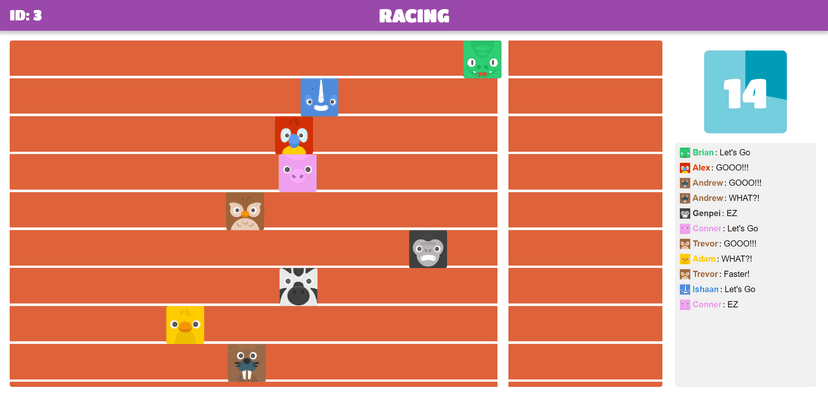
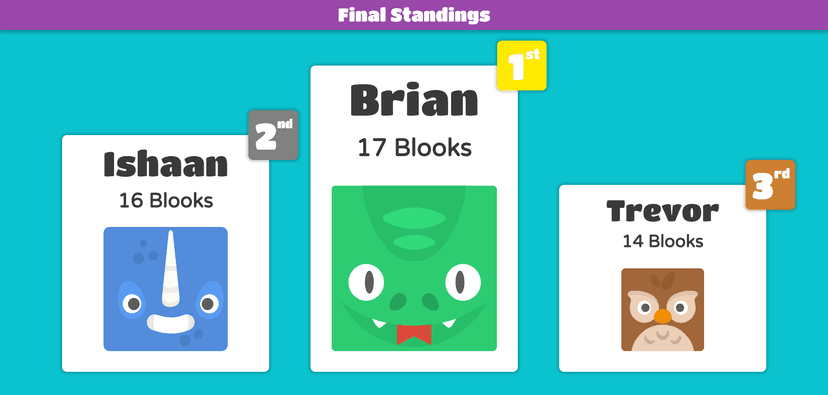
Blooket uses game-based retrieval practice by embedding multiple-choice quizzes into highly competitive, arcade-style multiplayer games. A teacher selects a question set and hosts a live session on a central screen while students join using a game code on their individual devices. The platform offers over a dozen game modes ranging from racing to strategy games. As students correctly answer questions, they earn in-game tokens, animal avatars called Blooks, and abilities that affect the overarching game. The core learning mechanic relies on immediate feedback and massed practice. Students see a question, select an answer, and are immediately told if they are right or wrong before returning to the game screen. Because the games are timed and competitive, students cycle through the same set of questions repeatedly until the timer runs out. This repetition builds automaticity for simple factual knowledge. Teachers can track accuracy metrics through a post-game dashboard to identify broad classroom trends, though the rapid-fire nature of the questions means the data reflects quick recall rather than deep mastery.
Strengths and tradeoffs of Blooket
Blooket's biggest strength is its unparalleled ability to motivate massed retrieval practice, while its biggest weakness is the cognitive overload caused by its chaotic game mechanics. On the positive side, Blooket utilizes active recall, forcing students to retrieve information from memory rather than passively reviewing notes. This is a foundational pillar of learning science that reliably strengthens retention. The platform's use of immediate corrective feedback also ensures that misconceptions are quickly addressed before they take root. Furthermore, the sheer variety of game modes prevents the habituation often seen in standard digital flashcards. However, the instructional value is severely limited by split attention. The complex mini-games require significant cognitive bandwidth, leaving less working memory available for processing the actual academic content. Because the games highly incentivize speed, students often resort to rapid guessing rather than deliberate practice. There is no spaced repetition algorithm to optimize long-term retention, nor are there worked examples to guide struggling learners. Consequently, Blooket acts as a highly effective behavioral motivator for surface-level review, but lacks the pedagogical depth required for complex skill acquisition or conceptual understanding.
Who Might Benefit From Blooket?
Blooket is best for elementary and middle school classrooms that need a highly engaging, occasional review tool for basic factual fluency. It shines when used by educators to inject excitement into vocabulary drills, historical dates, or mental math practice at the end of a lesson unit. Because it relies heavily on competitive game mechanics, it is ideal for students who are motivated by peer competition and fast-paced digital environments. However, it is not suitable as a primary instructional tool, nor is it optimal for students who experience high anxiety under time pressure or require step-by-step scaffolding to grasp new concepts.
Data Transparency
Meets Data Transparency Standard
Blooket meets our data transparency standard at Level 2 of 3 (Parent control). Level 3 needs the policy to document an API for retrieving their own data and a named export format.
27 of 35 checks passed
Evaluated September 2026
Privacy Policy →Level 1 · Basic protections
Does not sell data or target ads at students, limits sharing, and lets parents see and delete their child's data.
Level 2 · Parent control (meets the standard)
Families can get their data out, know who processes it, and know how long it is kept.
Level 3 · Direct data access
Families or schools can pull their own data through an API, in a stated format.
Not documented: an API for retrieving their own data, a named export format
View all 35 checks
Parent Access8/8
Does the policy mention parents specifically?
“Any parents that want copies of their children's personal information that we may have stored can contact their children's school personnel to that end.”
Can parents view their child's data?
“Any parents that want copies of their children's personal information that we may have stored can contact their children's school personnel to that end. If a parent has authorized an account, they also may contact Blooket to retrieve their child's personal information.”
Can parents modify their child's data?
“Parents, legal guardians, or eligible students may review personally identifiable information in the student's records and correct erroneous information by contacting their educational institution.”
Can parents delete their child's account?
“Parents, legal guardians, or eligible students may delete their accounts by contacting their educational institution.”
Is there a dedicated Children's Privacy section?
“Protecting the Privacy Rights of Children”
Does it reference COPPA compliance?
“For example, we work with Schools to protect Student Personal Data consistent with FERPA and, for School Users under 13, the Children's Online Privacy Protection Act (“COPPA”).”
Does it reference FERPA compliance?
“For example, we work with Schools to protect Student Personal Data consistent with FERPA and, for School Users under 13, the Children's Online Privacy Protection Act (“COPPA”).”
Is parental consent required for child accounts?
“Blooket permits children under the age of thirteen to become users only with parental consent.”
Data Portability3/5
Can users access their personal data?
“To request access to the personal information we have about you on file, users can contact us at contact-us@blooket.com.”
Can users download/export their data?
“where applicable, to portability of personal data, that is to say, to receive your personal information in a structured and commonly used format.”
Is there a self-service data access tool?
“Access and manage your account information by using the account settings within Blooket.”
Is a specific data format mentioned for export?
The policy only refers to a "structured and commonly used format" without naming a specific format.
Is there an API for data access?
The policy does not mention an API for data access.
Data Minimization2/6
Is data collection itemized?
“If you create a Blooket account as a user, you will be asked to enter your first name, last name, username, password and email. Visitors who participate in games will be asked only for a username.”
Can the app be used without a real name?
The policy states students who join as users provide names, email addresses and usernames, so real names are collected.
Can the app be used without an email?
The policy states registered users, including students with parental consent, provide email addresses.
Does it state collection is limited to what is necessary?
“We will not require children to provide more personal information than is reasonably necessary in order to participate in the Service.”
Is IP address anonymized or truncated?
The policy states IP addresses are logged and does not mention anonymizing or truncating them.
Is location tracking explicitly excluded?
The policy states it collects coarse city-level location data, so location collection is not excluded.
Third-Party Protection6/7
Does it explicitly state no selling of data?
“First and foremost, you should know that Blooket does not sell or rent any personal information to any third party for any purpose including for advertising or marketing purposes.”
Are third-party providers named?
“As further explained in the Security Measures section of this Privacy Policy, payments are processed over Stripe through their third party website service.”
Are providers contractually restricted?
“We will obtain contractual assurances from our third-party service providers which assure that they will safeguard personal information in a manner consistent with this Policy”
No-targeted-advertising commitment?
“Information collected from students (including personal information and information collected automatically) is never used or disclosed for third-party advertising, including any kind of first- or third-party behaviorally targeted advertising”
Is AI/ML data sharing addressed?
The policy defines automated decision-making and profiling but does not address sharing data for AI/ML.
Child-specific sharing restriction?
“We do not disclose any personal information about children to third parties, except to service providers necessary to provide the Service, as required by law, or to protect the security of the Service for other users.”
Cookies/tracking limited or opt-out?
“Once you have accessed the website and opted in, you have the option of opting out at any time by accessing the Cookies Preferences on the bottom of our home page.”
Deletion & Retention4/5
Can users delete their account?
“if for some reason you ever want to delete your account, you can do so by contacting us at contact-us@blooket.com and we will proceed to delete the requested data within a reasonable period of time.”
Self-service deletion mechanism?
The policy requires account deletion by contacting Blooket or the school; only some profile information can be edited or deleted in account settings.
Specific data retention timeline?
“In case we keep copies or backups of personal information, such copies or backups will be kept for a maximum term of eighteen (18) months after the deletion of your account.”
Auto-deletion of inactive accounts?
“Deleting inactive accounts: Blooket will delete inactive accounts and data in compliance with the data retention policy of the company.”
Post-deletion handling described?
“When we delete your account, we delete any personal information that you provided in your profile (such as your name, username, password, and email address) and also questions, responses and comments.”
Advertising4/4
Advertising model explicitly disclosed?
“BLOOKET IS COMMITTED TO REMAINING AN AD-FREE SERVICE TO OUR USERS. BLOOKET”
Free from third-party advertisements?
“BLOOKET IS COMMITTED TO REMAINING AN AD-FREE SERVICE TO OUR USERS. BLOOKET”
Children excluded from ad targeting?
“Information collected from students (including personal information and information collected automatically) is never used or disclosed for third-party advertising, including any kind of first- or third-party behaviorally targeted advertising”
Ad-free option available?
“BLOOKET IS COMMITTED TO REMAINING AN AD-FREE SERVICE TO OUR USERS. BLOOKET”
Meets Data Transparency Standard
The reviewed policy met our data transparency standard. This result describes the policy disclosures we assessed. Actual practices and legal compliance were not verified.
About this evaluation: Based on automated analysis of Privacy Policy against 35 policy-disclosure questions, including questions adapted from the Common Sense Privacy Program's published evaluation questions. TLS is not affiliated with Common Sense Media, and this is not a Common Sense rating. Quoted text is copied from the policy; unquoted notes are our summary. Results describe what the policy documents, not the company's actual practices. Privacy policies can change: this review reflects the version we analyzed and does not determine legal compliance.
Sources and review method
TLS combines product information and editorial analysis to explain how Blooket works, its tradeoffs, and the questions to ask before choosing it. Product features, an instructional rationale and evidence of learning outcomes are different kinds of information.
Formal Learning Standard assessment: not yet completed. Data Transparency findings are reported separately and do not establish learning effectiveness. Read our methodology.
Frequently Asked Questions About Blooket
Is Blooket free?
Yes, Blooket offers a highly functional free tier that allows educators to host classroom games and access millions of user-created question sets without spending money. For many classrooms, this free version is entirely sufficient for basic review. However, the platform also offers paid subscription plans starting at $35.88 per year for individual teachers. These premium tiers unlock enhanced instructional features, including detailed student performance reporting, exclusive game modes, and advanced folder organization to help teachers manage their curriculum more effectively.
Is Blooket good for high school students?
Yes, Blooket is popular in high schools, but it is notably less effective for advanced or nuanced subjects. While older students often enjoy the chaotic, competitive game mechanics as a break from traditional lectures, Blooket's core format is only suited for simple retrieval practice like foreign language vocabulary or historical dates. The fast-paced, timed nature of the platform does not support the deep critical thinking, multi-step problem solving, or analytical reasoning required for AP-level coursework and upper-level mathematics.
What does Blooket teach?
Blooket does not inherently teach any new concepts or offer built-in instructional curriculum; rather, it functions as an interactive assessment tool where teachers supply all the academic content. It can be used to review virtually any subject across the humanities, sciences, or mathematics. Educators use it as a highly gamified digital flashcard system to reinforce previously introduced classroom material through repetitive multiple-choice quizzing, building automaticity in basic facts rather than introducing new pedagogical frameworks.
How does Blooket compare to Kahoot?
While both platforms utilize gamified multiple-choice quizzes to drive classroom engagement, Blooket places a much heavier emphasis on individual, screen-based mini-games rather than focusing attention on a shared classroom board. Kahoot is fundamentally a straightforward quizzing tool with a competitive leaderboard. In contrast, Blooket embeds its educational questions inside complex strategy, racing, and action games. This dramatically increases student engagement and excitement, but it also increases cognitive distraction by pulling focus away from the learning material.
Has The Learning Standard evaluated Blooket?
TLS has not yet completed a Learning Standard evaluation of how well Blooket teaches. Its privacy policy has been reviewed for Data Transparency and reaches Level 2, Parent control.
Is Blooket COPPA compliant?
The reviewed privacy policy references COPPA. A policy reference alone does not establish COPPA compliance. Policy review note: The policy references COPPA compliance.
Is Blooket FERPA compliant?
The reviewed privacy policy references FERPA. A policy reference alone does not establish FERPA compliance. Policy review note: The policy references FERPA compliance.
Does Blooket have a children's privacy policy?
The reviewed policy includes a dedicated children's privacy section. Policy review note: The policy has a dedicated children's privacy section.
Does Blooket sell student data?
The reviewed policy states that the app does not sell data. This is a policy statement; actual data practices were not verified. Policy review note: The policy explicitly states Blooket does not sell personal information.
Can you delete your data from Blooket?
The reviewed privacy policy describes account deletion. We have not tested the deletion process. Policy review note: Users can request account deletion.
Keep the Blooket decision brief
Keep the Gold Quest distinction and a constructive message for the next time a leaderboard comes home. Subscribe to future TLS research updates and download the one-page PDF here immediately.
Screenshots
Latest News
All Blooket NewsBeyond Blooket: How to Choose the Right Classroom Review Tool
Discover how schools are shifting from speed-based games to tools like Wayground, and what research says about using gamified tools to boost student recall.
Blooket Overtakes Kahoot: What Gamified Apps Mean for Learning
Blooket has surpassed Kahoot in classroom popularity, but do gamified apps actually improve learning? What parents and educators need to know about EdTech.
New Kahoot! Modes Target Screen Fatigue and Group Collaboration
Learn how Kahoot! is targeting screen fatigue with new device-free and accuracy-focused game modes, and how research supports unplugged gamification.
Take Action
For Blooket
If you represent Blooket LLC and have a correction or new evidence, send the relevant source so we can review and update this page.
Submit a correctionDetails
- Pricing
- Blooket offers individual teacher plans for $35.88 per teacher. Blooket also offers group plans for departments, schools or even whole districts.
- Platforms
- Web Browser, iOS (Apple mobile), iPadOS (Apple tablet), Android (Google mobile), Tizen (Samsung mobile), Windows (Microsoft), macOS (Apple), Chrome OS (Google)
- Grade Levels
- Kindergarten, 1st Grade, 2nd Grade, 3rd Grade, 4th Grade, 5th Grade, 6th Grade, 7th Grade, 8th Grade, 9th Grade, 10th Grade, 11th Grade, 12th Grade, Associate's degree, Bachelor's degree
- Website
- Visit site