
Yeti Academy
Product by Yeti Learning, LLC
Facts checked: Not yet checked
Our take (not a Learning Standard rating). This label applies to learning-science judgments throughout this overview.
Our take (not a Learning Standard rating)
Yeti Academy provides a broad, gamified introduction to STEM, coding, and digital literacy, but its wide K-12 scope often sacrifices depth for breadth. While project-based modules encourage active learning, the heavy reliance on gamified rewards can distract from intrinsic motivation and deep cognitive engagement. Official evaluation by The Learning Standard is pending.
Pros
- Utilizes project-based learning to connect abstract STEM concepts to real-world applications.
- Integrates typing and digital literacy into broader coding lessons, encouraging dual-coding and practical skill acquisition.
- Offers a blended learning approach that supports both independent student practice and explicit teacher-led instruction.
Cons
- Relies heavily on extrinsic gamification mechanics that diminish intrinsic motivation over time.
- Attempts to cover too wide an age range, resulting in interface designs that may feel infantile to high schoolers.
- Lacks rigorous spaced retrieval practice for coding syntax, prioritizing completion over long-term retention.
What Do We Know About Yeti Academy?
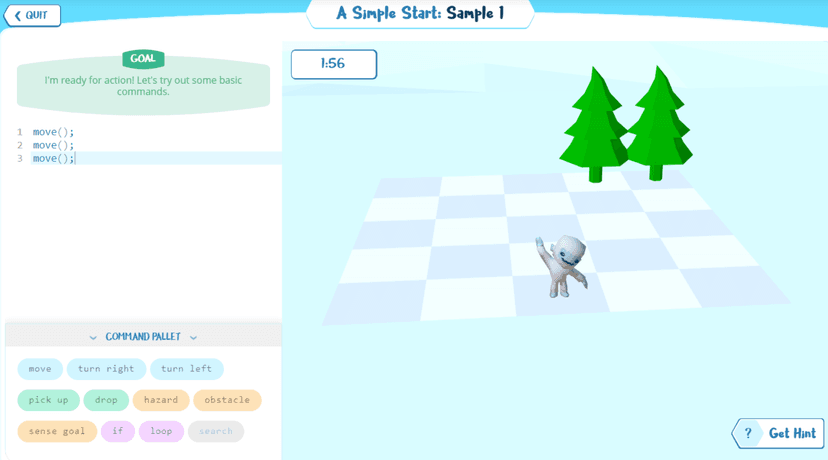
Yeti Academy serves as a competent introductory platform for digital literacy and STEM, though its broad K-12 focus means it lacks the specialized depth needed for mastery. Your child will interact with a gamified snow-themed world that teaches typing, coding, and digital citizenship through project-based modules. Gamification works well to initiate engagement, particularly for younger learners building foundational keyboarding skills. However, cognitive science indicates that extrinsic rewards like earning virtual points in a snow world rarely sustain long-term learning and can distract from the actual subject matter. Because the platform attempts to serve students from kindergarten through high school, the user experience risks alienating older students who require more sophisticated interfaces and rigorous coding environments. Parents should view this tool as a supplementary practice environment rather than a standalone curriculum for complex computer science. Direct instruction and guided feedback from a teacher remain necessary to correct misconceptions. Note: The Learning Standard has not yet formally evaluated Yeti Academy.
How Does Yeti Academy Work?
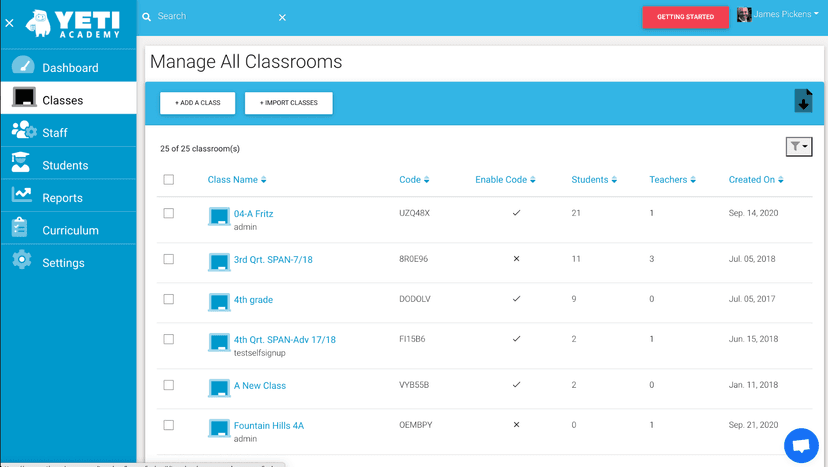
Yeti Academy uses a blended learning approach combining gamified, student-led practice modules with project-based STEM activities. Your child logs into a unified, snow-themed dashboard that hosts various interactive courses, ranging from fundamental keyboarding drills to block-based coding and digital citizenship lessons. The platform delivers instruction through multimodal formats, including text, interactive exercises, and guided projects. During a typical session, your child completes sequential modules that introduce a concept, prompt them to apply it through a digital task, and reward them with gamified elements upon completion. Educators can toggle between allowing students to self-pace through the curriculum or locking modules for teacher-led, synchronized instruction. This flexibility supports differentiated learning, though the core mechanism relies heavily on basic drill-and-practice wrapped in a thematic narrative. Progress tracking dashboards allow teachers and parents to monitor completion rates and accuracy across different STEM disciplines.
Strengths and tradeoffs of Yeti Academy
Yeti Academy’s biggest strength is its multidisciplinary integration of project-based STEM learning, while its biggest weakness is an over-reliance on superficial gamification that impedes deep cognitive processing. Integrating disciplines like keyboarding, digital citizenship, and coding within a single ecosystem reduces cognitive load related to navigating multiple apps, allowing students to focus on the tasks. The platform's use of project-based learning requires students to actively apply concepts, which is far more effective for knowledge transfer than passive video consumption. However, the heavy use of extrinsic rewards like badges, animations, and points can create the seductive detail effect, where decorative elements distract working memory from the core educational content. Additionally, while the app claims to serve K-12, developmental appropriateness is a significant weakness. An interface designed to be a fun-filled snow world naturally skews toward elementary users, making it difficult to engage a high schooler in rigorous computer science modules. Finally, the platform lacks robust spaced repetition algorithms, meaning students may pass a module without retaining the coding syntax weeks later.
Who Might Benefit From Yeti Academy?
Yeti Academy is best for elementary and middle school students who need structured, engaging practice in typing and introductory digital literacy alongside traditional classroom instruction. Although marketed for grades K-12, the snow-themed gamification and generalized STEM curriculum align most effectively with the developmental needs and attention spans of students in grades 3 through 8. It serves schools and districts looking for a consolidated platform to cover basic tech requirements. It is not ideal for high school students seeking advanced computer science mastery or sophisticated, text-based coding environments.
Data Transparency
Does Not Meet Data Transparency Standard
Yeti Academy does not meet our data transparency standard. Its privacy policy does not document basic protections, including a commitment against targeted advertising and contractual limits on service providers.
22 of 35 checks passed
Evaluated September 2026
Privacy Policy →Level 1 · Basic protections
Does not sell data or target ads at students, limits sharing, and lets parents see and delete their child's data.
Not documented: a commitment against targeted advertising, contractual limits on service providers
Level 2 · Parent control (meets the standard)
Families can get their data out, know who processes it, and know how long it is kept.
Not documented: data export
Level 3 · Direct data access
Families or schools can pull their own data through an API, in a stated format.
Not documented: an API for retrieving their own data, a named export format
View all 35 checks
Parent Access8/8
Does the policy mention parents specifically?
“Upon request from a parent or legal guardian, we will provide a description of the personal information we collect, give parents the opportunity to review their child’s personal information or have their child’s personal information deleted.”
Can parents view their child's data?
“Upon request from a parent or legal guardian, we will provide a description of the personal information we collect, give parents the opportunity to review their child’s personal information or have their child’s personal information deleted.”
Can parents modify their child's data?
“For parents, guardians, schools, and other users in the United States, this includes the right to review the personal information we hold, request corrections, and request deletion, as described below and consistent with FERPA, COPPA, and applicable state student privacy laws:”
Can parents delete their child's account?
“Upon request from a parent or legal guardian, we will provide a description of the personal information we collect, give parents the opportunity to review their child’s personal information or have their child’s personal information deleted.”
Is there a dedicated Children's Privacy section?
“Children under the age of 13 in the United States and children under the age of 16 in the European Union are not permitted to create their own account on Yeti Academy without the consent of a parent or legal guardian.”
Does it reference COPPA compliance?
“Yeti Academy is designed to support schools’ obligations under the Family Educational Rights and Privacy Act (“FERPA”) and is operated in a manner consistent with the Children’s Online Privacy Protection Act (“COPPA”).”
Does it reference FERPA compliance?
“Yeti Academy is designed to support schools’ obligations under the Family Educational Rights and Privacy Act (“FERPA”) and is operated in a manner consistent with the Children’s Online Privacy Protection Act (“COPPA”).”
Is parental consent required for child accounts?
“Children under the age of 13 in the United States and children under the age of 16 in the European Union are not permitted to create their own account on Yeti Academy without the consent of a parent or legal guardian.”
Data Portability2/5
Can users access their personal data?
“**Access:** This includes your right to access the personal information we gather about you, and your right to obtain information about the sharing, storage, security and processing of that information.”
Can users download/export their data?
The policy lists portability only as a right that users may have under some jurisdictions' laws, and otherwise offers only a printable overview report, not a data download or export.
Is there a self-service data access tool?
“During the duration of the Yeti Academy subscription, students, parents, teachers, and administrators can print a report of an overview of the work that the student accomplished while on the program.”
Is a specific data format mentioned for export?
The policy does not name any export format.
Is there an API for data access?
The policy covers only third-party APIs used for rostering and sign-on, not an API users can use to access their data.
Data Minimization3/6
Is data collection itemized?
“This includes: first name, last name, app username, app password, grade level, and lesson progress data (such as words per minute, accuracy, lesson completion, and time-on-task).”
Can the app be used without a real name?
The policy says it collects students' first and last names, even though only a username is required.
Can the app be used without an email?
“This includes: first name, last name, app username, app password, grade level, and lesson progress data (such as words per minute, accuracy, lesson completion, and time-on-task). Only this information is stored securely online for students.”
Does it state collection is limited to what is necessary?
“Student information collected is limited to what is required to deliver the educational service and identify students within their class.”
Is IP address anonymized or truncated?
The policy does not address IP address anonymization.
Is location tracking explicitly excluded?
The policy does not explicitly rule out location tracking, and its cookies store geographic region settings.
Third-Party Protection4/7
Does it explicitly state no selling of data?
“Yeti Academy will not sell, trade, rent or publish customer data to any advertisers, or third parties, other than for purposes of processing a transaction and providing direct product support for Yeti Academy and its parent company, Typing Agent LLC.”
Are third-party providers named?
“API’s used include Google API’s for Google Classroom Rostering, Google Single Sign on and Google Drive for assignment workflow. Other 3rd party API’s that the school or district administrators will need to activate and authorize include, ClassLink Rostering, Clever Rostering.”
Are providers contractually restricted?
The policy only says order processing partners respect privacy and describes no contractual limits on providers.
No-targeted-advertising commitment?
The policy makes no explicit promise against targeted or behavioral advertising.
Is AI/ML data sharing addressed?
The policy mentions automated decision-making rights but does not address sharing data for AI or machine learning.
Child-specific sharing restriction?
“Student data, most specifically, is not used, accessed, or shared with any third party and is kept strictly confidential by Yeti Academy.”
Cookies/tracking limited or opt-out?
“Yeti Academy’s cookies are used only to store your geographical region/language settings, which enables us to always show correct ordering information to you.”
Deletion & Retention5/5
Can users delete their account?
“**Erasure:** This is your right to request, subject to certain limitations under applicable law, that your personal information be erased from our possession (also known as the “Right to be forgotten”).”
Self-service deletion mechanism?
“A school or district that has chosen not to renew may also delete all student data themselves through self-service options at any time, or authorize Yeti Academy to do so on their behalf.”
Specific data retention timeline?
“In addition, student identifying records will be deleted from our database within 90 days following the separation or expiration of a school or district’s account.”
Auto-deletion of inactive accounts?
“In addition, student identifying records will be deleted from our database within 90 days following the separation or expiration of a school or district’s account.”
Post-deletion handling described?
“For reporting purposes, an overview report of the school or district’s progress (excluding student identifying data) may be retained for analytical purposes.”
Advertising0/4
Advertising model explicitly disclosed?
The policy does not explicitly describe its advertising model or say the product has no ads.
Free from third-party advertisements?
The policy does not explicitly say the product has no third-party ads.
Children excluded from ad targeting?
The policy says it sends no promotional material to children but does not address ad targeting.
Ad-free option available?
The policy does not say the product is ad-free or offer an ad-free option.
What This Means
The policy review did not meet our data transparency standard. The checks above show the documented findings and unknowns. A missing statement does not establish how the app handles data in practice.
About this evaluation: Based on automated analysis of Privacy Policy against 35 policy-disclosure questions, including questions adapted from the Common Sense Privacy Program's published evaluation questions. TLS is not affiliated with Common Sense Media, and this is not a Common Sense rating. Quoted text is copied from the policy; unquoted notes are our summary. Results describe what the policy documents, not the company's actual practices. Privacy policies can change: this review reflects the version we analyzed and does not determine legal compliance.
Sources and review method
TLS combines product information and editorial analysis to explain how Yeti Academy works, its tradeoffs, and the questions to ask before choosing it. Product features, an instructional rationale and evidence of learning outcomes are different kinds of information.
Formal Learning Standard assessment: not yet completed. Data Transparency findings are reported separately and do not establish learning effectiveness. Read our methodology.
Frequently Asked Questions About Yeti Academy
Is Yeti Academy free?
No, Yeti Academy is not free for individual users. It operates on a per-license pricing model aimed primarily at schools and districts, offering both Essentials and Premium versions. Parents cannot typically purchase single standalone subscriptions easily without school access, meaning it must be provided through your child's educational institution. For districts, pricing scales based on the number of student licenses required.
Is Yeti Academy good for high schoolers?
No, despite being marketed for K-12, Yeti Academy is not ideal for high school students. The platform relies heavily on a fun-filled snow world and gamified rewards, which do not align with the developmental preferences of older teens. High schoolers require rigorous, text-based coding environments and professional digital literacy tools rather than elementary-style gamification. The interface simply does not match the cognitive maturity expected in upper secondary education.
What does Yeti Academy teach?
Yeti Academy teaches a broad spectrum of foundational digital and STEM skills. Core subjects include keyboarding, block-based coding, Google Workspace applications, digital citizenship, and general applied science concepts. The curriculum uses project-based learning to introduce these topics, ensuring students interact with the material practically. However, it generally focuses on foundational exposure across many subjects rather than facilitating advanced mastery in any single discipline like pure computer science.
How does Yeti Academy compare to Code.org?
Code.org provides a rigorous, structured progression for computer science backed by extensive learning science research and spaced practice. Yeti Academy, by contrast, offers a wider but shallower mix of general digital literacy, typing, and STEM within a gamified ecosystem. If your child needs dedicated programming instruction, Code.org is superior. Yeti Academy is better suited as a general digital skills omnibus for elementary classrooms requiring basic technology exposure.
Has The Learning Standard evaluated Yeti Academy?
TLS has not yet completed a Learning Standard evaluation of how well Yeti Academy teaches. Its privacy policy has been reviewed for Data Transparency and does not yet document the basic protections (Level 1).
Is Yeti Academy COPPA compliant?
The reviewed privacy policy references COPPA. A policy reference alone does not establish COPPA compliance. Policy review note: The policy says the service is operated consistently with COPPA.
Is Yeti Academy FERPA compliant?
The reviewed privacy policy references FERPA. A policy reference alone does not establish FERPA compliance. Policy review note: The policy says the service supports schools' FERPA obligations.
Does Yeti Academy have a children's privacy policy?
The reviewed policy includes a dedicated children's privacy section. Policy review note: The policy has sections headed "Children’s Information" and "FERPA and COPPA".
Does Yeti Academy sell student data?
The reviewed policy states that the app does not sell data. This is a policy statement; actual data practices were not verified. Policy review note: The vendor says it will not sell customer data.
Can you delete your data from Yeti Academy?
The reviewed privacy policy describes account deletion. We have not tested the deletion process. Policy review note: Users can ask to have their personal information erased.
Follow TLS Research
Subscribe to future TLS research updates: app reviews, findings, and what the evidence shows.
Screenshots

Take Action
For Yeti Academy
If you represent Yeti Learning, LLC and have a correction or new evidence, send the relevant source so we can review and update this page.
Submit a correctionDetails
- Pricing
- Essentials & Premium Versions Available. Pricing is per license.
- Platforms
- Web Browser, iOS (Apple mobile), iPadOS (Apple tablet), Windows (Microsoft), macOS (Apple), Chrome OS (Google)
- Grade Levels
- Kindergarten, 1st Grade, 2nd Grade, 3rd Grade, 4th Grade, 5th Grade, 6th Grade, 7th Grade, 8th Grade, 9th Grade, 10th Grade, 11th Grade, 12th Grade
- Website
- Visit site