Wordwall
Product by Visual Education Ltd.
Facts checked: Not yet checked
Our take (not a Learning Standard rating). This label applies to learning-science judgments throughout this overview.
Our take (not a Learning Standard rating)
Wordwall is a highly versatile authoring tool rather than a standalone curriculum, meaning its educational effectiveness depends entirely on the quality of the teacher-created content. When educators design activities using solid retrieval practice principles, it effectively reinforces factual knowledge, but it lacks built-in pedagogy to guide self-directed learning.
Pros
- Enables educators to easily build low-stakes retrieval practice activities like quizzes and matching games.
- Offers a wide variety of interactive templates that boost student engagement through game-based mechanics.
- Provides immediate feedback on interactive activities to help correct misconceptions in real-time.
- Supports diverse subjects and grade levels with customizable text and images.
Cons
- Lacks a built-in curriculum or adaptive learning paths to guide students through a scope and sequence.
- Does not provide worked examples or instructional scaffolding when a student struggles.
- Relies completely on the instructional design skills of the person creating the resource.
- Game mechanics and countdown timers frequently induce cognitive overload or distract from core learning objectives.
What Do We Know About Wordwall?
Wordwall is only as effective as the teacher or parent creating the specific activities. Because it is a content-creation platform rather than an instructional curriculum, it does not independently teach your child new concepts. Instead, it serves as an interactive testing environment where educators build custom games, quizzes, and matching exercises. If your child's teacher assigns a Wordwall activity, it is likely being used for rote memorization and retrieval practice. This is a proven learning science strategy for cementing factual knowledge like vocabulary, math facts, or historical dates. The platform provides immediate feedback, allowing your child to see what they got right or wrong instantly. However, it does not explain why an answer is incorrect or provide worked examples to help them improve. Parents should view Wordwall as a digital worksheet or flashcard alternative rather than a comprehensive tutor. It is excellent for reviewing material your child has already been taught. Keep an eye on whether the game elements, like timers or flashy animations, are causing anxiety or distracting your child from the actual learning material. Since The Learning Standard has not yet formally evaluated Wordwall's specific templates, effectiveness will vary wildly based on the specific link your child is given.
How Does Wordwall Work?
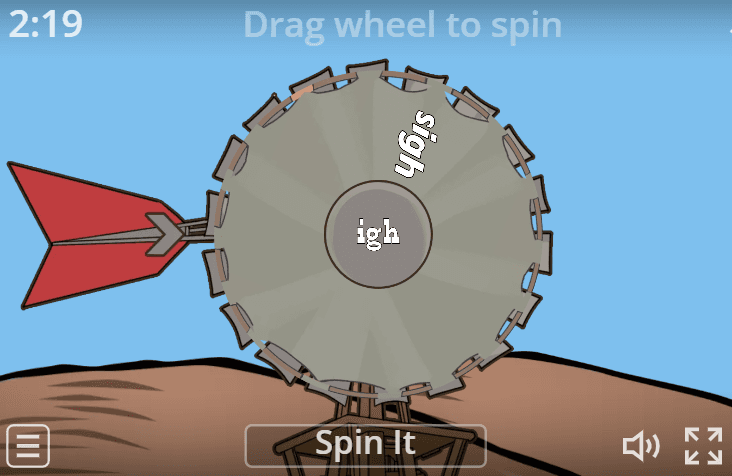
Wordwall relies on a game-based, drill-and-practice pedagogical approach designed to reinforce previously introduced material. Educators select from dozens of templates, such as multiple-choice quizzes, anagrams, sorting boxes, and spinning wheels, and input their own subject matter. Once a resource is created, it generates a unique link that students can access on any web-enabled device. The mechanics focus heavily on low-stakes testing. When a student interacts with a module, they must recall information from memory, drag-and-drop elements into categories, or select correct answers against a countdown timer. The system automatically grades the inputs, providing a final score and a leaderboard ranking. Teachers can track student performance through a backend dashboard, allowing them to identify common knowledge gaps across the classroom. Because the platform simply wraps user-generated text in game mechanics, it does not adapt its difficulty based on learner performance.
Strengths and tradeoffs of Wordwall
Wordwall's biggest strength is its frictionless support for low-stakes retrieval practice, while its biggest weakness is a total lack of built-in instructional scaffolding. Strengths in Retrieval Practice: Cognitive science shows that actively recalling information strengthens memory pathways. Wordwall makes it incredibly easy for educators to build interactive quizzes and matching games that force students to retrieve facts. The immediate feedback provided at the end of an activity ensures that students do not encode incorrect information, which is a critical component of effective drill-and-practice exercises. The visual variety of the templates also helps sustain attention during repetitive review tasks. Weaknesses in Instruction and Adaptation: Because Wordwall is essentially an empty vessel, it provides no direct instruction. It lacks worked examples or step-by-step guidance when a student answers incorrectly. Furthermore, it does not utilize spaced repetition algorithms. The activities are static and do not adapt to a learner's specific struggles. If a student does not understand the underlying concept, Wordwall's game mechanics will simply measure their failure rather than help them overcome it. The heavy reliance on timers in many templates can also induce cognitive overload, particularly for students who struggle with processing speed.
Who Might Benefit From Wordwall?
Best for classroom teachers and tutors who need a quick, customizable tool to generate engaging review activities for their students. Wordwall is not designed for students to use independently to learn new concepts. Instead, it is an ideal supplementary tool across virtually all grade levels, from preschool vocabulary matching to adult education professional credentials. It shines when used as a formative assessment tool or a gamified alternative to traditional paper worksheets, provided the educator has already delivered the foundational instruction required to succeed in the games.
Data Transparency
Does Not Meet Data Transparency Standard
Wordwall does not meet our data transparency standard. Its privacy policy does not document basic protections, including a commitment against targeted advertising, limits on sharing children's data and parents' right to see their child's data.
17 of 35 checks passed
Evaluated September 2026
Privacy Policy →Level 1 · Basic protections
Does not sell data or target ads at students, limits sharing, and lets parents see and delete their child's data.
Not documented: a commitment against targeted advertising, limits on sharing children's data, parents' right to see their child's data, parents' right to delete their child's data
Level 2 · Parent control (meets the standard)
Families can get their data out, know who processes it, and know how long it is kept.
Level 3 · Direct data access
Families or schools can pull their own data through an API, in a stated format.
Not documented: an API for retrieving their own data, a named export format
View all 35 checks
Parent Access4/8
Does the policy mention parents specifically?
“We do not demand real names are used for this purpose, and any entry is accepted on the basis that consent of the parent or guardian has been obtained in all cases.”
Can parents view their child's data?
The policy does not give parents a specific right to view their child's data.
Can parents modify their child's data?
The policy does not give parents a specific right to modify their child's data.
Can parents delete their child's account?
The policy does not give parents a right to delete their child's data or account; it only says data collected without appropriate consent will be deleted.
Is there a dedicated Children's Privacy section?
“## Children Under 13 We do not knowingly collect personal data directly from children.”
Does it reference COPPA compliance?
“Wordwall also participates in the iKeepSafe COPPA Safe Harbor program.”
Does it reference FERPA compliance?
The policy text does not mention FERPA; only a linked badge image on the page refers to it.
Is parental consent required for child accounts?
“We do not demand real names are used for this purpose, and any entry is accepted on the basis that consent of the parent or guardian has been obtained in all cases.”
Data Portability2/5
Can users access their personal data?
“**Your right of access** \- You have the right to ask us for copies of your personal information.”
Can users download/export their data?
“**Your right to data portability** \- You have the right to ask that we transfer the personal information you gave us to another organisation, or to you, in certain circumstances.”
Is there a self-service data access tool?
The policy says access requests go to the Data Protection Officer and describes no self-service access tool.
Is a specific data format mentioned for export?
The policy does not name any export format.
Is there an API for data access?
The policy does not describe an API for users to retrieve their data.
Data Minimization2/6
Is data collection itemized?
“This may include the child's name, the score they achieved in a game, and their progress through an assignment.”
Can the app be used without a real name?
The policy says it may collect the child's name, although it does not require real names.
Can the app be used without an email?
The policy does not say whether student email addresses are collected.
Does it state collection is limited to what is necessary?
“We will only collect data about you that is relevant and necessary.”
Is IP address anonymized or truncated?
The policy does not address anonymizing or truncating IP addresses.
Is location tracking explicitly excluded?
The policy does not rule out location tracking.
Third-Party Protection5/7
Does it explicitly state no selling of data?
“We won't share or sell your data to any third party, except, if permitted, for the marketing of our own services to you, unless either you have agreed, we are required to share it by law, or we need to fulfil our service commitments.”
Are third-party providers named?
“Data is processed/stored locally and on encrypted third party hosted cloud services such as Google Business Suite and Azure.”
Are providers contractually restricted?
“It is our policy to use only third-party providers that are bound to maintain appropriate levels of security and confidentiality, to process your personal information only as instructed by us, and to flow those same obligations down to their sub-processors.”
No-targeted-advertising commitment?
The policy says it uses data to deliver relevant online advertisements and makes no commitment against targeted advertising.
Is AI/ML data sharing addressed?
“We may also use your input data to improve the way we design and configure prompts for our AI service providers, to enhance the quality and relevance of AI‑generated content. This data is not used to train the underlying AI models operated by those providers.”
Child-specific sharing restriction?
The policy has no sharing restriction specific to children's data.
Cookies/tracking limited or opt-out?
“By clicking "Reject all" you decline non-essential cookies.”
Deletion & Retention3/5
Can users delete their account?
“**Your right to erasure** \- You have the right to ask us to erase your personal information in certain circumstances.”
Self-service deletion mechanism?
“Data for students may be deleted at any time by account holders through the dashboard.”
Specific data retention timeline?
“Dependent on the data you provide us and for what purpose it is provided we may need to retain your data for up to 7 years following the end of engagement with you or our client.”
Auto-deletion of inactive accounts?
The policy does not mention deleting inactive accounts automatically.
Post-deletion handling described?
The policy does not say what happens to data after deletion, such as removal from backups.
Advertising1/4
Advertising model explicitly disclosed?
“To deliver relevant website content and online advertisements to you and measure or understand the effectiveness of the advertising we serve to you”
Free from third-party advertisements?
The policy says it serves online advertisements and uses third-party marketing services, and does not say the product is ad-free.
Children excluded from ad targeting?
The policy does not exclude children from ad targeting.
Ad-free option available?
The policy does not mention an ad-free option.
What This Means
The policy review did not meet our data transparency standard. The checks above show the documented findings and unknowns. A missing statement does not establish how the app handles data in practice.
About this evaluation: Based on automated analysis of Privacy Policy against 35 policy-disclosure questions, including questions adapted from the Common Sense Privacy Program's published evaluation questions. TLS is not affiliated with Common Sense Media, and this is not a Common Sense rating. Quoted text is copied from the policy; unquoted notes are our summary. Results describe what the policy documents, not the company's actual practices. Privacy policies can change: this review reflects the version we analyzed and does not determine legal compliance.
Sources and review method
TLS combines product information and editorial analysis to explain how Wordwall works, its tradeoffs, and the questions to ask before choosing it. Product features, an instructional rationale and evidence of learning outcomes are different kinds of information.
Formal Learning Standard assessment: not yet completed. Data Transparency findings are reported separately and do not establish learning effectiveness. Read our methodology.
Frequently Asked Questions About Wordwall
Is Wordwall free?
Wordwall operates on a freemium model. Educators can create a limited number of resources for free, but creating unlimited activities requires a paid subscription. Pricing varies by region. Students do not need to pay to play the activities assigned to them by their teachers.
Is Wordwall good for elementary students?
Yes, Wordwall is highly engaging for elementary students. The platform's colorful templates and game-based mechanics are well-suited for practicing foundational skills like sight words, basic math facts, and spelling. However, teachers must ensure the flashy game elements do not distract from the primary learning objectives.
What does Wordwall teach?
Wordwall does not teach any specific subject on its own. It is a content-authoring tool that allows educators to input their own material. Therefore, it can be used to assess and review anything from kindergarten phonics to college-level anatomy, depending entirely on the creator's input.
How does Wordwall compare to Kahoot!?
Both platforms utilize game-based learning and low-stakes testing. While Kahoot! is primarily designed for synchronous, whole-class competitive quizzes, Wordwall offers a wider variety of asynchronous, individual activity types like crosswords, anagrams, and sorting games. Kahoot! is better for live classroom events, whereas Wordwall excels as a digital worksheet replacement.
Has The Learning Standard evaluated Wordwall?
TLS has not yet completed a Learning Standard evaluation of how well Wordwall teaches. Its privacy policy has been reviewed for Data Transparency and does not yet document the basic protections (Level 1).
Is Wordwall COPPA compliant?
The reviewed privacy policy references COPPA. A policy reference alone does not establish COPPA compliance. Policy review note: The policy says Wordwall takes part in a COPPA Safe Harbor program.
Is Wordwall FERPA compliant?
A FERPA reference was not found in the reviewed privacy policy. This does not determine whether the app complies with FERPA. Policy review note: The policy text does not mention FERPA; only a linked badge image on the page refers to it.
Does Wordwall have a children's privacy policy?
The reviewed policy includes a dedicated children's privacy section. Policy review note: The policy has a section headed "Children Under 13".
Does Wordwall sell student data?
The reviewed policy states that the app does not sell data. This is a policy statement; actual data practices were not verified. Policy review note: The vendor says it won't sell user data to third parties, with stated exceptions.
Can you delete your data from Wordwall?
The reviewed privacy policy describes account deletion. We have not tested the deletion process. Policy review note: Users can ask for their personal information to be erased.
Follow TLS Research
Subscribe to future TLS research updates: app reviews, findings, and what the evidence shows.
Screenshots


Latest News
All Wordwall NewsNew Kahoot! Modes Target Screen Fatigue and Group Collaboration
Learn how Kahoot! is targeting screen fatigue with new device-free and accuracy-focused game modes, and how research supports unplugged gamification.
Beyond Blooket: How to Choose the Right Classroom Review Tool
Discover how schools are shifting from speed-based games to tools like Wayground, and what research says about using gamified tools to boost student recall.
Take Action
For Wordwall
If you represent Visual Education Ltd. and have a correction or new evidence, send the relevant source so we can review and update this page.
Submit a correctionDetails
- Pricing
- Depends on the location: https://wordwall.net/price-plans
- Platforms
- Web Browser, iOS (Apple mobile), Android (Google mobile), Windows (Microsoft), macOS (Apple), Chrome OS (Google), Other
- Grade Levels
- Infant/Toddler, Preschool, Prekindergarten, Transitional Kindergarten, Kindergarten, 1st Grade, 2nd Grade, 3rd Grade, 4th Grade, 5th Grade, 6th Grade, 7th Grade, 8th Grade, 9th Grade, 10th Grade, 11th Grade, 12th Grade, Associate's degree, Bachelor's degree, Post-baccalaureate certificate, Master's Degree, Post-master's certificate, Doctoral Degree, Post-doctoral certificate, Adult Education, Professional or Technical Credential
- Website
- Visit site