WonJo Kids
Product by Upily
Facts checked: Not yet checked
Our take (not a Learning Standard rating). This label applies to learning-science judgments throughout this overview.
Our take (not a Learning Standard rating)
WonJo Kids provides a broad, play-based introduction to early literacy, math, and science concepts, but its reliance on passive cartoons and songs limits deep cognitive engagement. While the platform offers a safe, ad-free environment, active retrieval practice often takes a back seat to simple gamified entertainment.
Pros
- Integrates multiple early childhood domains including math, literacy, and social-emotional learning into one unified platform.
- Operates in a completely ad-free environment with independent safety certifications to prevent exposure to external links.
- Uses colorful play-based mechanics to sustain attention in younger learners during foundational skill acquisition.
Cons
- Relies heavily on passive media consumption like animated cartoons rather than demanding active problem solving.
- Lacks targeted feedback loops that guide learners through specific misconceptions when they submit incorrect answers.
- Demands a high weekly subscription cost compared to other early childhood platforms with more robust pedagogical frameworks.
What Do We Know About WonJo Kids?
WonJo Kids is partially effective as a supplementary tool for early exposure to math, reading, and science, though it leans heavily toward entertainment rather than rigorous instruction. The Learning Standard has not yet formally evaluated this app, but initial analysis of its features reveals a mix of active game-based learning and passive media consumption. Your child will interact with a colorful interface that bundles educational games, animated cartoons, and songs. While this variety keeps young minds engaged, passive viewing does not stimulate the active retrieval practice necessary for long-term memory retention. The inclusion of social-emotional learning alongside standard academic subjects is a structural advantage, helping your child recognize emotions and practice basic interpersonal skills. Parents must monitor whether their children are merely watching videos or actually engaging with the interactive problem-solving modules. The platform operates in a strict, ad-free environment with recognized safety certifications, meaning you can trust the digital perimeter. Expect a broad foundational tool rather than a deeply adaptive curriculum.
How Does WonJo Kids Work?
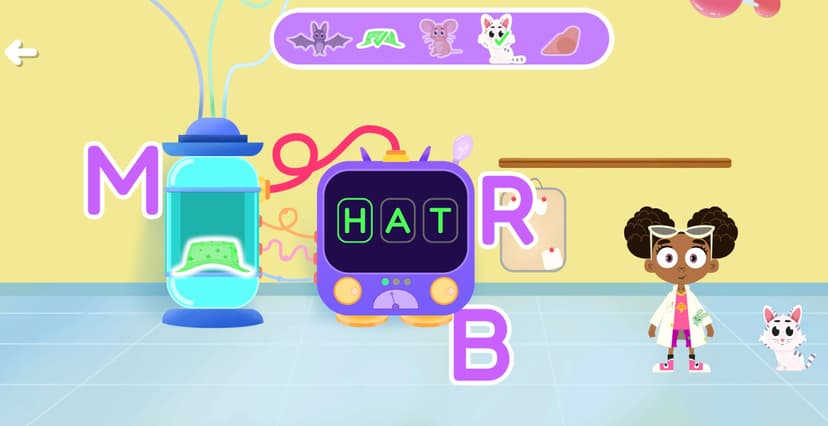
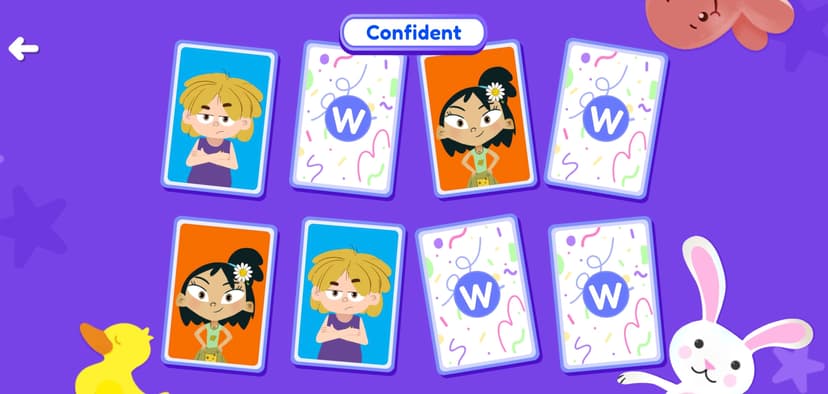
WonJo Kids uses a play-based, gamified approach to deliver a broad survey of early childhood curriculum standards. The platform organizes content across core domains like literacy, math, science, and social-emotional development. Your child navigates an interactive menu to choose between active games, animated story cartoons, and musical content. When interacting with the games, children complete simple matching, tracing, and counting exercises to earn in-game rewards. These mechanics use basic continuous reinforcement schedules to motivate ongoing play. The app introduces new content weekly, aiming to maintain engagement through novelty rather than adaptive difficulty progression. Because the system mixes passive viewing with active clicking, the cognitive load varies significantly from task to task. Without sophisticated spacing or interleaving algorithms, the app functions more like a digital activity book than a structured, mastery-based tutor.
Strengths and tradeoffs of WonJo Kids
The biggest strength of WonJo Kids is its comprehensive coverage of diverse early learning domains within a safe environment, while its biggest weakness is the overreliance on passive media that limits deep cognitive processing. Breadth over depth characterizes the platform's approach to early learning. By including social-emotional learning alongside traditional math and science, the app helps your child develop a well-rounded foundational vocabulary. Play-based engagement keeps toddlers and kindergarteners interacting longer, leveraging bright visuals and simple reward mechanics. However, this gamification lacks rigorous retrieval practice. When your child consumes the cartoons and songs, they are engaging in passive learning. Cognitive science dictates that durable memory requires the active struggle of recalling information, which is minimized when content is simply presented through video. Furthermore, the app lacks robust worked examples and adaptive feedback. If your child struggles with a math concept, the system does not dynamically alter the instruction to bridge the knowledge gap, instead relying on simple trial and error.
Who Might Benefit From WonJo Kids?
Best for toddlers and preschoolers who need a safe, general introduction to early learning concepts rather than targeted academic intervention. The platform serves children ages two through eight, but the play-based mechanics and cartoon-heavy delivery are most appropriate for the younger end of this spectrum. Parents seeking a secure, ad-free digital babysitter that provides more educational value than standard video streaming services will find this app useful. It is not ideal for first graders requiring structured, mastery-based phonics or math drills to catch up to grade-level standards.
Data Transparency
Does Not Meet Data Transparency Standard
WonJo Kids does not meet our data transparency standard. Its privacy policy does not document basic protections, including limits on sharing children's data, a COPPA or FERPA commitment and parents' right to see their child's data.
17 of 35 checks passed
Evaluated September 2026
Privacy Policy →Level 1 · Basic protections
Does not sell data or target ads at students, limits sharing, and lets parents see and delete their child's data.
Not documented: limits on sharing children's data, a COPPA or FERPA commitment, parents' right to see their child's data, parents' right to delete their child's data
Level 2 · Parent control (meets the standard)
Families can get their data out, know who processes it, and know how long it is kept.
Not documented: data export, a data retention timeline, self-service deletion
Level 3 · Direct data access
Families or schools can pull their own data through an API, in a stated format.
Not documented: an API for retrieving their own data, a named export format
View all 35 checks
Parent Access3/8
Does the policy mention parents specifically?
“Our service is designed exclusively for children under 13 and their parents or guardians.”
Can parents view their child's data?
The policy gives access rights to "users" in general but never says parents can view their child's data.
Can parents modify their child's data?
The policy gives correction rights to "users" in general but never says parents can modify their child's data.
Can parents delete their child's account?
The policy lets parents withdraw consent to stop further collection, but it never says parents can delete their child's data or account.
Is there a dedicated Children's Privacy section?
“Children’s privacy notice”
Does it reference COPPA compliance?
The policy does not mention COPPA.
Does it reference FERPA compliance?
The policy does not mention FERPA.
Is parental consent required for child accounts?
“At the point of collecting any personal information, we seek opt-in consent and provide clear instructions for parents to submit this consent.”
Data Portability1/5
Can users access their personal data?
“Users can contact us at hello@wonjo.kids to access, modify, correct, or delete their data.”
Can users download/export their data?
The policy does not offer a way to download or export data.
Is there a self-service data access tool?
The policy only describes access requests made by email, not a self-service tool.
Is a specific data format mentioned for export?
The policy does not name an export format.
Is there an API for data access?
The policy does not mention an API for data access.
Data Minimization2/6
Is data collection itemized?
“Personal Data | User ID, Email Address, Name | App Functionality, Product Personalization, Analytics |”
Can the app be used without a real name?
The policy says the vendor collects names, including at account creation.
Can the app be used without an email?
The policy says the vendor collects email addresses.
Does it state collection is limited to what is necessary?
“Data is collected and used strictly to support the features and functionality of the product. We limit and restrict the use of personal information to the purposes for which it was collected.”
Is IP address anonymized or truncated?
The policy does not say IP addresses are anonymized or truncated.
Is location tracking explicitly excluded?
The policy says it collects coarse location for analytics.
Third-Party Protection5/7
Does it explicitly state no selling of data?
“Please note that personal information is not sold or rented to third parties for any purpose, including third-party marketing.”
Are third-party providers named?
“Google (https://firebase.google.com/support/privacy): Used to store diagnostics data to monitor app crashes”
Are providers contractually restricted?
“Third-parties with access to information are required to provide the same security protections as the company.”
No-targeted-advertising commitment?
“Our service is free from any advertising including any contextual or personalized advertising. We do not allow partners and third-parties to create data profiles for personalised advertisements.”
Is AI/ML data sharing addressed?
The policy does not address sharing data for AI or machine learning.
Child-specific sharing restriction?
The children's section limits who children can interact with, but it sets no child-specific limit on data sharing.
Cookies/tracking limited or opt-out?
“You have the option to opt-out of specific tracking activities related to targeted advertising, also referred to as interest-based advertising.”
Deletion & Retention2/5
Can users delete their account?
“Deletion: You can request that we delete your personal information.”
Self-service deletion mechanism?
The policy only describes deletion by request, not a self-service tool.
Specific data retention timeline?
The policy says data is deleted when no longer needed or when the account is cancelled, but gives no specific timeline.
Auto-deletion of inactive accounts?
The policy does not mention auto-deleting inactive accounts.
Post-deletion handling described?
“In some cases, we may retain Personal Data beyond the length of time that you have an account with us in order to resolve disputes, comply with legal and compliance obligations, or otherwise. Anonymized data, which is no longer attached to you personally, may be retained for longer periods of time.”
Advertising4/4
Advertising model explicitly disclosed?
“Our service is free from any advertising including any contextual or personalized advertising.”
Free from third-party advertisements?
“Our service is free from any advertising including any contextual or personalized advertising.”
Children excluded from ad targeting?
“Our service is free from any advertising including any contextual or personalized advertising.”
Ad-free option available?
“Our service is free from any advertising including any contextual or personalized advertising.”
What This Means
The policy review did not meet our data transparency standard. The checks above show the documented findings and unknowns. A missing statement does not establish how the app handles data in practice.
About this evaluation: Based on automated analysis of Privacy Policy against 35 policy-disclosure questions, including questions adapted from the Common Sense Privacy Program's published evaluation questions. TLS is not affiliated with Common Sense Media, and this is not a Common Sense rating. Quoted text is copied from the policy; unquoted notes are our summary. Results describe what the policy documents, not the company's actual practices. Privacy policies can change: this review reflects the version we analyzed and does not determine legal compliance.
Sources and review method
TLS combines product information and editorial analysis to explain how WonJo Kids works, its tradeoffs, and the questions to ask before choosing it. Product features, an instructional rationale and evidence of learning outcomes are different kinds of information.
Formal Learning Standard assessment: not yet completed. Data Transparency findings are reported separately and do not establish learning effectiveness. Read our methodology.
Frequently Asked Questions About WonJo Kids
Is WonJo Kids free?
No. WonJo Kids requires a paid premium subscription to access its full library of content, currently priced at $6.99 per week or $44.99 for a six-month plan. There is no permanent free tier available for home users, though volume purchase discounts are officially offered for schools and educational institutions. Parents must evaluate if this ongoing weekly financial commitment aligns with the primarily supplementary and entertainment-focused nature of the provided educational content.
Is WonJo Kids good for toddlers and preschoolers?
Yes. The app is explicitly designed for early learners aged two to eight, making it highly accessible for toddlers and preschoolers. It utilizes highly intuitive navigation menus, bright contrasting colors, and simple play-based games that accommodate young children who have not yet developed strong fine motor control or reading fluency. The inclusion of basic sorting and matching tasks aligns well with the cognitive capabilities of this early childhood demographic.
What does WonJo Kids teach?
WonJo Kids provides broad, entry-level exposure to foundational math, early literacy, introductory science, and social-emotional learning principles. Your child will practice basic rote counting, alphabet letter recognition, and elementary emotional identification. The application delivers these concepts through a varied mixture of interactive touchscreen games, repetitive musical songs, and animated story cartoons designed to sustain attention across multiple different early childhood educational domains.
WonJo Kids vs ABCmouse: Which is better?
ABCmouse offers a highly structured, step-by-step sequential learning path, whereas WonJo Kids functions more like an open sandbox of educational activities. While WonJo Kids provides a modern interface and incorporates targeted social-emotional learning content, ABCmouse delivers a significantly deeper, historically tested curriculum designed for explicit reading and mathematics instruction. Parents seeking a rigorous, mastery-based progression should choose ABCmouse, while those wanting casual, play-based exploration might prefer WonJo Kids.
Has The Learning Standard evaluated WonJo Kids?
TLS has not yet completed a Learning Standard evaluation of how well WonJo Kids teaches. Its privacy policy has been reviewed for Data Transparency and does not yet document the basic protections (Level 1).
Is WonJo Kids COPPA compliant?
A COPPA reference was not found in the reviewed privacy policy. This does not determine whether the app complies with COPPA. Policy review note: The policy does not mention COPPA.
Is WonJo Kids FERPA compliant?
A FERPA reference was not found in the reviewed privacy policy. This does not determine whether the app complies with FERPA. Policy review note: The policy does not mention FERPA.
Does WonJo Kids have a children's privacy policy?
The reviewed policy includes a dedicated children's privacy section. Policy review note: The policy has a section headed "Children’s privacy notice".
Does WonJo Kids sell student data?
The reviewed policy states that the app does not sell data. This is a policy statement; actual data practices were not verified. Policy review note: The policy says personal information is not sold.
Can you delete your data from WonJo Kids?
The reviewed privacy policy describes account deletion. We have not tested the deletion process. Policy review note: Users can ask for their personal information to be deleted.
Follow TLS Research
Subscribe to future TLS research updates: app reviews, findings, and what the evidence shows.
Screenshots

Take Action
For WonJo Kids
If you represent Upily and have a correction or new evidence, send the relevant source so we can review and update this page.
Submit a correctionDetails
- Pricing
- WonJo Kids offers a weekly subscription for $6.99 and a 6-month subscription for $44.99. Substantial discounts are available for volume purchases.
- Platforms
- iOS (Apple mobile), iPadOS (Apple tablet), Android (Google mobile)
- Grade Levels
- Infant/Toddler, Preschool, Prekindergarten, Transitional Kindergarten, Kindergarten, 1st Grade
- Website
- Visit site