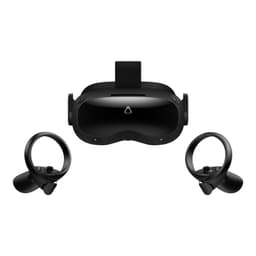
VIVE Focus 3 Education
Product by HTC VIVE
Facts checked: Not yet checked
Our take (not a Learning Standard rating). This label applies to learning-science judgments throughout this overview.
Our take (not a Learning Standard rating)
While The Learning Standard has not yet formally evaluated the VIVE Focus 3 Education, virtual reality platforms excel at building contextual knowledge through immersive environments. However, VR hardware itself does not teach; learning effectiveness depends entirely on the specific software applications schools choose to run on the headset.
Pros
- Provides high-fidelity immersive environments that reduce external classroom distractions and increase student focus.
- Supports spatial learning and embodied cognition through physical interaction with virtual 3D objects.
- Eliminates the need for external computer hardware or tracking base stations, streamlining classroom deployment.
- Enables highly contextualized virtual field trips that provide rich background knowledge for historical and scientific topics.
Cons
- High hardware cost severely limits the possibility of a one-to-one student ratio in most typical school budgets.
- Learning outcomes depend entirely on third-party software quality since the headset provides no built-in curriculum.
- Extended use can cause physical discomfort, motion sickness, or eye strain in some students.
- Lacks built-in formative assessment tools or mastery tracking at the base hardware level.
What Do We Know About VIVE Focus 3 Education?
The VIVE Focus 3 Education is a delivery mechanism for immersive experiences rather than a standalone curriculum, meaning its effectiveness depends entirely on the software your child's school uses. While The Learning Standard has not yet evaluated this specific headset, learning science indicates that virtual reality (VR) can significantly boost engagement and spatial understanding. When your child uses VR for historical simulations or scientific modeling, they benefit from situated learning: experiencing context directly rather than reading abstract text. However, you should know that VR is best used as a supplemental tool rather than a primary instructional method. The headset does not inherently track mastery, utilize spaced repetition, or provide worked examples; those critical learning mechanisms must be built into the specific apps downloaded to the device. Furthermore, at $1399 per unit, this is a premium enterprise tool designed for school labs rather than a necessary purchase for home use. If your child's school utilizes this system, ask educators which specific educational programs they are running, as the software dictates the actual learning outcomes.
How Does VIVE Focus 3 Education Work?
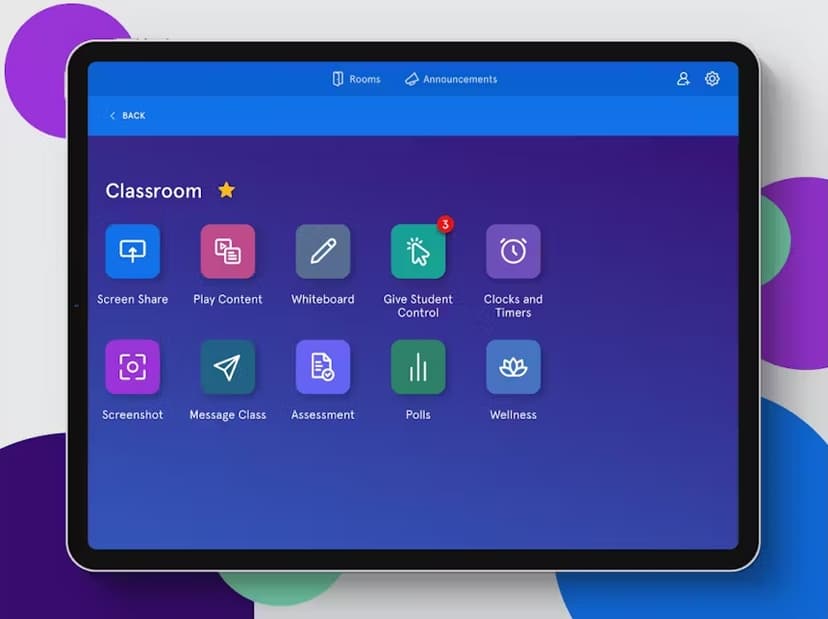
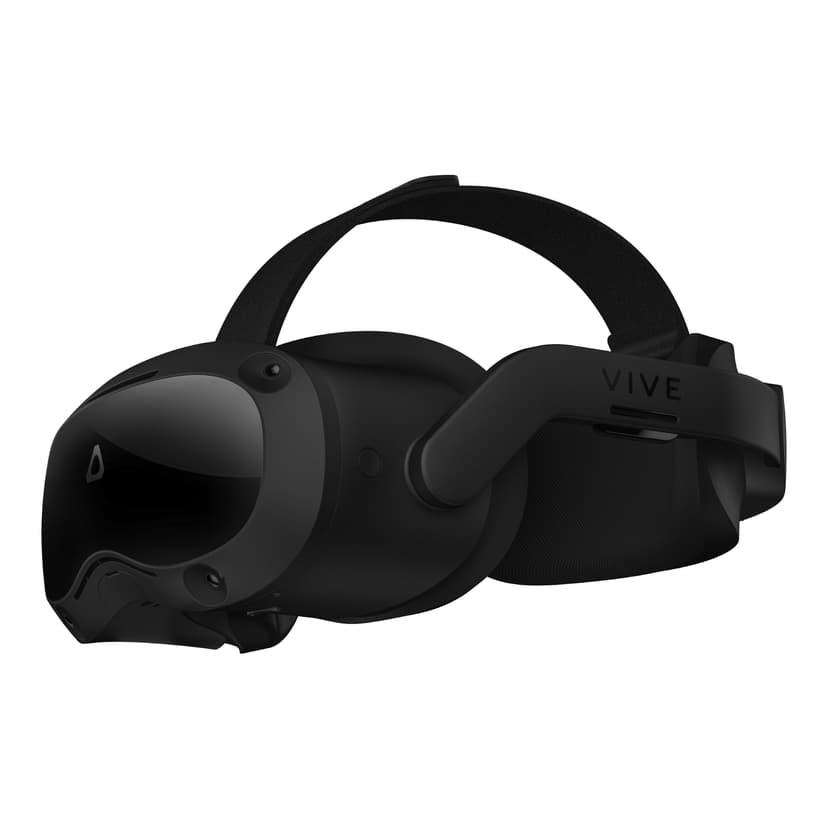
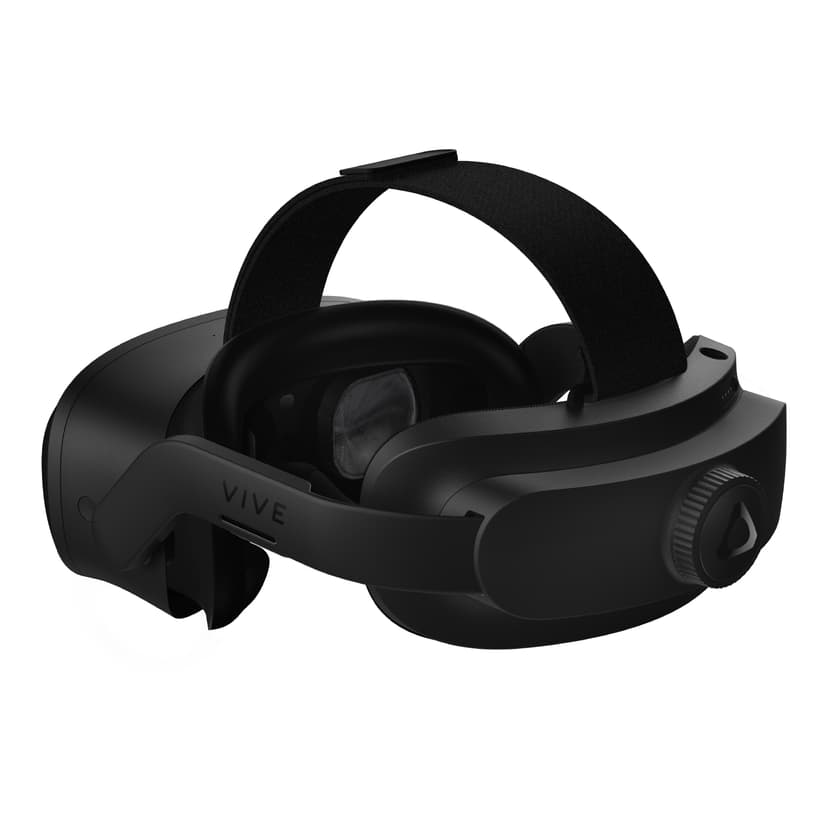
VIVE Focus 3 Education uses immersive, simulation-based learning by placing students directly into interactive 3D environments. The system operates as a standalone virtual reality headset, meaning it processes graphics and tracks movement internally without requiring a connection to a desktop computer. Students navigate interactive modules using handheld controllers that track spatial movement, allowing them to manipulate virtual objects in science labs or explore historical recreations. This physical engagement taps into embodied cognition, helping learners encode memory through physical action rather than passive observation. Teachers use centralized device management software to deploy specific educational applications to a fleet of headsets simultaneously. Because the device relies entirely on third-party software for content, the instructional mechanics (whether mastery-based progression, gamified quizzes, or open-ended sandbox exploration) vary widely depending on the chosen application.
Strengths and tradeoffs of VIVE Focus 3 Education
The biggest strength of the VIVE Focus 3 Education is its ability to provide high-fidelity, situated learning experiences, while its biggest weakness is the high cost coupled with a total reliance on variable third-party software. Immersive presence is the core advantage here; learning science shows that placing students in realistic simulations helps build strong episodic memories. When students explore a virtual cell or walk through a historical site, they build contextual frameworks that make subsequent reading or lecture material easier to comprehend. Spatial interaction through the controllers also allows for active manipulation of models, which benefits Career and Technical Education and applied sciences. Conversely, the hardware alone lacks core pedagogical structures like retrieval practice or adaptive scaffolding. The $1399 price point makes it an expensive investment for a tool that ultimately requires additional software subscriptions to function as an educational device. Furthermore, cognitive load can sometimes be too high in rich VR environments, distracting students from the actual learning objectives if the software is poorly designed.
Who Might Benefit From VIVE Focus 3 Education?
The VIVE Focus 3 Education is best for middle school through collegiate institutions that have dedicated budgets for immersive labs and Career and Technical Education programs. Because of the high price point and complex deployment, it is not recommended for home schooling or individual parent purchase. It serves 5th through 12th-grade students and higher education learners studying complex spatial concepts, such as human anatomy, architectural design, or historical geography. It is an ideal fit for schools aiming to provide virtual field trips or safe, simulated vocational training where physical labs are too dangerous or expensive to maintain.
Data Transparency
Does Not Meet Data Transparency Standard
VIVE Focus 3 Education does not meet our data transparency standard. Its privacy policy does not document basic protections, including a statement that it does not sell data, a commitment against targeted advertising and limits on sharing children's data.
10 of 35 checks passed
Evaluated September 2026
Privacy Policy →Level 1 · Basic protections
Does not sell data or target ads at students, limits sharing, and lets parents see and delete their child's data.
Not documented: a statement that it does not sell data, a commitment against targeted advertising, limits on sharing children's data, a COPPA or FERPA commitment, parents' right to see their child's data, parents' right to delete their child's data
Level 2 · Parent control (meets the standard)
Families can get their data out, know who processes it, and know how long it is kept.
Not documented: a data retention timeline, self-service deletion
Level 3 · Direct data access
Families or schools can pull their own data through an API, in a stated format.
Not documented: an API for retrieving their own data, a named export format
View all 35 checks
Parent Access2/8
Does the policy mention parents specifically?
“In the event that we learn that we have collected personal information from a child under age 14 (or under the age concerning with children privacy under the applicable laws) without parental consent, we will remove that information as quickly as possible.”
Can parents view their child's data?
The policy gives parents no right to view their child's data.
Can parents modify their child's data?
The policy gives parents no right to modify their child's data.
Can parents delete their child's account?
The policy says HTC will remove a child's data it learns was collected without parental consent and invites anyone to report it, but it gives parents no right to request deletion.
Is there a dedicated Children's Privacy section?
“CHILDREN PRIVACY”
Does it reference COPPA compliance?
The policy does not mention COPPA.
Does it reference FERPA compliance?
The policy does not mention FERPA.
Is parental consent required for child accounts?
The policy says the Services are not meant for children under 14 and does not describe a parental consent process for child accounts.
Data Portability2/5
Can users access their personal data?
“You may have the right to request obtain access to the specific pieces of your information we have collected, and certain other information (similar to that provided in this Privacy Policy).”
Can users download/export their data?
“You may have rights to obtain and reuse your information for your own purposes across different services. For example, if you decide to switch to a new provider.”
Is there a self-service data access tool?
The policy says access requests are made by contacting HTC, not through a self-service tool.
Is a specific data format mentioned for export?
The policy does not name any export format.
Is there an API for data access?
The policy does not describe an API for users to get their own data.
Data Minimization1/6
Is data collection itemized?
“Contact Information: your name, email address, street address, phone numbers, crypto wallet address;”
Can the app be used without a real name?
The policy says HTC collects users' names.
Can the app be used without an email?
The policy says HTC collects email addresses.
Does it state collection is limited to what is necessary?
The policy does not say collection is limited to what is necessary.
Is IP address anonymized or truncated?
The policy says IP addresses are collected and used to infer location, and does not say they are anonymized or truncated.
Is location tracking explicitly excluded?
The policy says HTC may collect, store and share precise location data.
Third-Party Protection3/7
Does it explicitly state no selling of data?
The policy does not say that HTC does not sell personal information.
Are third-party providers named?
“Some of our HTC e-store is operated by third parties, such as Luzern Technology Solutions Ltd..”
Are providers contractually restricted?
“With service providers and vendors who process personal information for the purposes described in this Policy as part of services to us and who are subject to appropriate contractual obligations.”
No-targeted-advertising commitment?
The policy says HTC and third parties use data to serve tailored ads.
Is AI/ML data sharing addressed?
The policy does not address sharing data for AI or machine learning.
Child-specific sharing restriction?
The policy has no sharing restriction specific to children, beyond saying it does not knowingly collect their data.
Cookies/tracking limited or opt-out?
“Some of our third party ad service providers also provide choices for use of cookies to deliver ads tailored to your profile and preferences.”
Deletion & Retention1/5
Can users delete their account?
“Subject to certain exceptions, this right enables you to request the deletion or removal of your information that we hold.”
Self-service deletion mechanism?
The policy says deletion requests are made by contacting HTC, not through a self-service tool.
Specific data retention timeline?
The policy says data is kept as long as needed or as the law requires, with no specific timeline.
Auto-deletion of inactive accounts?
The policy does not address automatic deletion of inactive accounts.
Post-deletion handling described?
The policy only says information is securely erased when no longer needed and does not describe how data is handled after deletion.
Advertising1/4
Advertising model explicitly disclosed?
“We may use third-party ad service providers to serve ads in our Services.”
Free from third-party advertisements?
The policy says third-party ad providers may serve ads in the Services.
Children excluded from ad targeting?
The policy does not specifically exclude children from ad targeting.
Ad-free option available?
The policy does not describe an ad-free option.
What This Means
The policy review did not meet our data transparency standard. The checks above show the documented findings and unknowns. A missing statement does not establish how the app handles data in practice.
About this evaluation: Based on automated analysis of Privacy Policy against 35 policy-disclosure questions, including questions adapted from the Common Sense Privacy Program's published evaluation questions. TLS is not affiliated with Common Sense Media, and this is not a Common Sense rating. Quoted text is copied from the policy; unquoted notes are our summary. Results describe what the policy documents, not the company's actual practices. Privacy policies can change: this review reflects the version we analyzed and does not determine legal compliance.
Sources and review method
TLS combines product information and editorial analysis to explain how VIVE Focus 3 Education works, its tradeoffs, and the questions to ask before choosing it. Product features, an instructional rationale and evidence of learning outcomes are different kinds of information.
Formal Learning Standard assessment: not yet completed. Data Transparency findings are reported separately and do not establish learning effectiveness. Read our methodology.
Frequently Asked Questions About VIVE Focus 3 Education
Is VIVE Focus 3 Education free?
No. The VIVE Focus 3 Education headset is a premium hardware investment priced at $1399 per unit. This upfront cost only covers the physical headset and controllers, alongside basic enterprise management software for schools. Parents and educators must understand that this price does not include the ongoing cost of individual educational software applications required to actually use the device for learning. Schools will need to budget additional funds for software licenses, making this a significant institutional purchase.
Is VIVE Focus 3 Education good for 5th grade and high school students?
Yes. The VIVE Focus 3 Education hardware is specifically targeted at learners from 5th grade through higher education. Virtual reality is highly effective for this age group when exploring complex scientific concepts or interacting with historical environments. By this age, students have the cognitive development required to navigate 3D spatial environments effectively. However, educators must monitor usage carefully, keeping VR sessions relatively short to prevent eye strain and maintain focus on the underlying learning objectives.
What does VIVE Focus 3 Education teach?
The VIVE Focus 3 Education itself does not teach any specific subject out of the box. It is entirely a hardware platform designed to run third-party educational applications covering Social Science, Science, Math, Applied Science, and Career and Technical Education. The actual instructional content, pedagogical approach, and learning mechanics depend entirely on the specific software programs a school decides to purchase and install on the headsets. It acts as a delivery system rather than a standalone curriculum.
How does VIVE Focus 3 Education compare to Meta Quest for education?
VIVE Focus 3 Education is positioned as a premium, enterprise-grade alternative to consumer headsets like the Meta Quest. It offers high-resolution graphics and robust centralized device management tools designed specifically for school IT departments. Most importantly for schools, it operates without requiring students to link personal social media accounts. While it is significantly more expensive than base consumer models, its focus on data privacy and classroom fleet management makes it a strong contender for institutional deployment.
Has The Learning Standard evaluated VIVE Focus 3 Education?
TLS has not yet completed a Learning Standard evaluation of how well VIVE Focus 3 Education teaches. Its privacy policy has been reviewed for Data Transparency and does not yet document the basic protections (Level 1).
Is VIVE Focus 3 Education COPPA compliant?
A COPPA reference was not found in the reviewed privacy policy. This does not determine whether the app complies with COPPA. Policy review note: The policy does not mention COPPA.
Is VIVE Focus 3 Education FERPA compliant?
A FERPA reference was not found in the reviewed privacy policy. This does not determine whether the app complies with FERPA. Policy review note: The policy does not mention FERPA.
Does VIVE Focus 3 Education have a children's privacy policy?
The reviewed policy includes a dedicated children's privacy section. Policy review note: The policy has a section headed "Children Privacy".
Does VIVE Focus 3 Education sell student data?
A statement ruling out data selling was not found in the reviewed policy. This does not establish that the app sells student data. Policy review note: The policy does not say that HTC does not sell personal information.
Can you delete your data from VIVE Focus 3 Education?
The reviewed privacy policy describes account deletion. We have not tested the deletion process. Policy review note: Users can ask for their information to be deleted.
Follow TLS Research
Subscribe to future TLS research updates: app reviews, findings, and what the evidence shows.
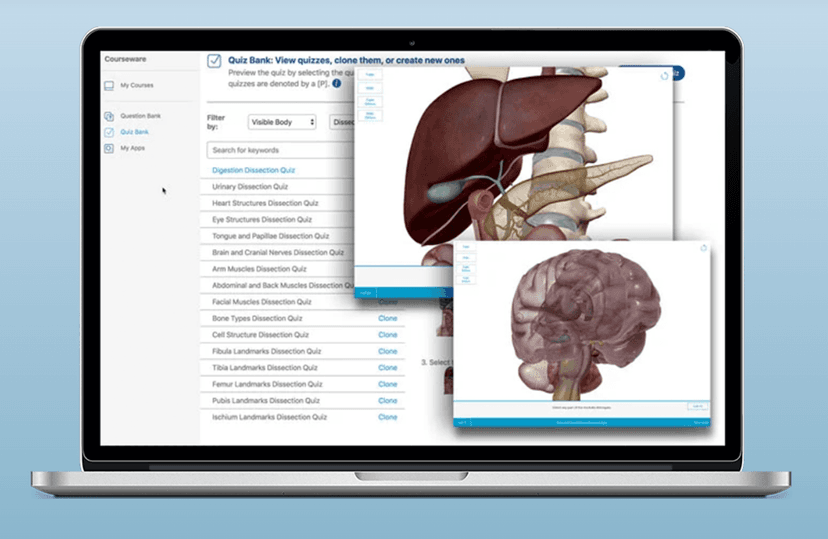
Screenshots
Take Action
For VIVE Focus 3 Education
If you represent HTC VIVE and have a correction or new evidence, send the relevant source so we can review and update this page.
Submit a correctionDetails
- Pricing
- $1399
- Platforms
- Web Browser
- Grade Levels
- 5th Grade, 6th Grade, 7th Grade, 8th Grade, 9th Grade, 10th Grade, 11th Grade, 12th Grade, Associate's degree, Bachelor's degree
- Website
- Visit site