
Visual Studio Code for Education
Product by Microsoft
Facts checked: Not yet checked
Our take (not a Learning Standard rating). This label applies to learning-science judgments throughout this overview.
Our take (not a Learning Standard rating)
Visual Studio Code for Education offers authentic, project-based coding practice using professional tools, but structured pedagogy is still pending evaluation. It provides high-fidelity skill transfer for high schoolers learning Python and web development. However, without built-in spaced repetition or adaptive scaffolding, students may struggle with complex concepts without educator support.
Pros
- Utilizes authentic, high-fidelity practice environments that mirror professional coding tools to maximize skill transfer.
- Supports project-based learning by requiring students to build functional Python and web applications from scratch.
- Incorporates mastery-based progression to ensure learners understand foundational syntax before moving to complex programming tasks.
Cons
- Lacks built-in adaptive scaffolding to automatically adjust task difficulty when a student struggles with syntax.
- Does not utilize spaced repetition algorithms to ensure long-term retention of specific programming functions.
- Requires high intrinsic motivation or external educator support to keep students engaged through difficult debugging challenges.
What Do We Know About Visual Studio Code for Education?
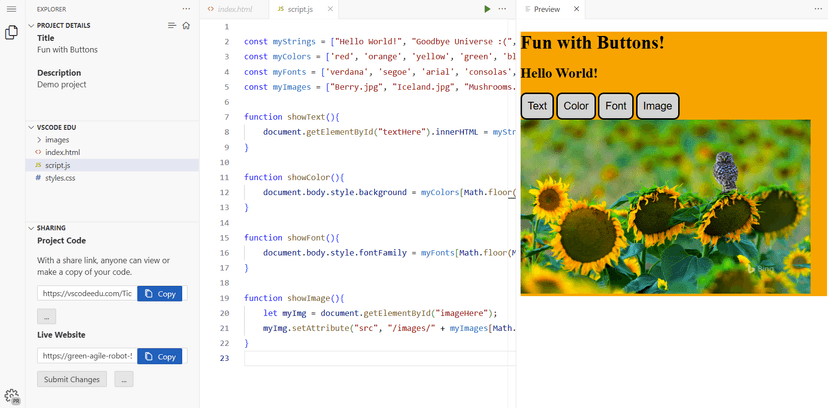
Visual Studio Code for Education provides an authentic learning environment for high school students to learn coding, though its exact pedagogical effectiveness remains pending evaluation by The Learning Standard. Your child will use the exact same interface that professional software engineers use daily, which eliminates the friction of transitioning from a simplified educational tool to a real-world application. This high-fidelity environment supports strong skill transfer, ensuring the Python and web development concepts your child learns are immediately applicable to real careers. The platform relies heavily on project-based learning, requiring students to actively construct code rather than passively watch tutorials. This active retrieval practice forces learners to recall syntax and logic from memory, strengthening their programming fluency. However, parents should know that professional-grade tools can be overwhelming for absolute beginners. Because the platform mirrors a real development environment, it does not hold your child's hand with aggressive gamification or step-by-step adaptive scaffolding. Your child will need to practice self-regulation and resilience when debugging errors. It is an excellent resource for mature learners in grades 9 through 12, but younger students or those easily frustrated by technical roadblocks will likely require guided support from an educator or knowledgeable adult.
How Does Visual Studio Code for Education Work?
Visual Studio Code for Education uses mastery-based progression and project-based learning within a professional-grade coding environment. Students access the platform directly through their web browser, eliminating the need for complex software installations. The curriculum is divided into modules focusing on specific technologies like Python and web development. Your child learns by engaging with worked examples and then immediately applying those concepts to build actual projects. This sequence reduces cognitive load during initial instruction while demanding active recall during the application phase. As students type code, the platform provides standard developer features like syntax highlighting and basic error detection. This immediate feedback helps learners correct spelling and formatting mistakes in real-time. The instructional design emphasizes building complete, functional applications rather than just passing isolated quizzes. By solving authentic programming problems, students develop both computational thinking and practical debugging skills. Progression requires students to successfully compile and run their code, ensuring they have achieved baseline competency before advancing to more complex architectural concepts.
Strengths and tradeoffs of Visual Studio Code for Education
The biggest strength of Visual Studio Code for Education is its authentic, high-fidelity practice environment, while its biggest weakness is the lack of adaptive scaffolding for struggling novices. The platform excels at facilitating near-transfer learning; because students use the identical interface as professional developers, the skills they acquire map perfectly to real-world career demands. The curriculum relies heavily on project-based learning, which forces students to engage in deep, generative cognitive processing as they construct complex programs from scratch. This approach is highly effective for building robust mental models of programming logic. Additionally, the immediate error feedback provided by the code compiler helps students quickly correct misconceptions about syntax. Conversely, the environment can impose a high cognitive load on beginners. The platform does not natively employ spaced repetition to reinforce discrete vocabulary or syntax rules over time, meaning students must take responsibility for reviewing older material. Furthermore, when your child hits a structural roadblock, the system does not automatically scale down the difficulty or provide granular, adaptive hints. Students must rely on their own metacognitive skills to troubleshoot, making the tool much more effective in a classroom setting with a teacher than as a completely independent study tool.
Who Might Benefit From Visual Studio Code for Education?
Visual Studio Code for Education is best for high school and college students who want to learn professional Python and web development through hands-on projects. Because it uses a real-world coding interface, it targets learners in grades 9 through 12 and higher education who are serious about acquiring career-ready technical skills. Your child will thrive here if they are self-motivated, resilient when facing errors, and capable of managing complex, multi-step tasks. It is an ideal fit for Career and Technical Education (CTE) classrooms, coding bootcamps, or highly driven independent learners who have outgrown simplified, block-based coding games and are ready for professional syntax.
Data Transparency
Meets Data Transparency Standard
Visual Studio Code for Education meets our data transparency standard at Level 2 of 3 (Parent control). Level 3 needs the policy to document an API for retrieving their own data and a named export format.
24 of 35 checks passed
Evaluated September 2026
Microsoft Privacy Statement →Level 1 · Basic protections
Does not sell data or target ads at students, limits sharing, and lets parents see and delete their child's data.
Level 2 · Parent control (meets the standard)
Families can get their data out, know who processes it, and know how long it is kept.
Level 3 · Direct data access
Families or schools can pull their own data through an API, in a stated format.
Not documented: an API for retrieving their own data, a named export format
View all 35 checks
Parent Access6/8
Does the policy mention parents specifically?
“When a child is under 13-or a higher age if required in their region-the child will need consent from their parent or guardian to create a Microsoft account. Parents can change or revoke consent at any time.”
Can parents view their child's data?
“For Microsoft products and services that require parental consent, parents can view and delete certain data about their child, such as browsing history, search history, location activity, and app usage by signing into the parent’s [privacy dashboard](https://account.microsoft.com/privacy).”
Can parents modify their child's data?
“As the organizer of a Microsoft family group, the parent or guardian can manage their child’s information and settings on their [Family Safety](https://account.microsoft.com/family) page and view and delete a child’s data on their [privacy dashboard](https://account.microsoft.com/privacy).”
Can parents delete their child's account?
“To delete all your child’s personal information, request deletion of the child’s account using the [close your account form](https://go.microsoft.com/fwlink/?LinkId=523898).”
Is there a dedicated Children's Privacy section?
“Microsoft offers many products and services that children and teens can use, though child and teen users will not always have access to all the features and services that adult users do.”
Does it reference COPPA compliance?
The policy does not mention COPPA.
Does it reference FERPA compliance?
The policy does not mention FERPA.
Is parental consent required for child accounts?
“When a child is under 13-or a higher age if required in their region-the child will need consent from their parent or guardian to create a Microsoft account.”
Data Portability3/5
Can users access their personal data?
“You can request **access to**, **erasure of**, and **updates** to your personal data.”
Can users download/export their data?
“If you’d like to **port** your data elsewhere, you can use tools Microsoft provides to do so, or if none are available, you can contact Microsoft for assistance.”
Is there a self-service data access tool?
“**Microsoft privacy dashboard**. You can control some of the data Microsoft processes via your Microsoft account on the [Microsoft privacy dashboard](https://account.microsoft.com/privacy). For example, you can view and clear the browsing, search, and location data associated with your Microsoft account.”
Is a specific data format mentioned for export?
The policy describes export tools but does not name any file format.
Is there an API for data access?
The policy does not describe an API that users can use to access their data.
Data Minimization2/6
Is data collection itemized?
“**Name and contact details**. Your first and last name, email address, mailing address, phone number, and other similar contact details.”
Can the app be used without a real name?
The policy says it collects names, including children's names, and that some products require a real name.
Can the app be used without an email?
The policy says it collects email addresses, including children's email addresses.
Does it state collection is limited to what is necessary?
“We will not knowingly ask children under the age of consent to provide more data than is necessary to provide the product.”
Is IP address anonymized or truncated?
The policy says it collects IP addresses but does not say they are anonymized or truncated.
Is location tracking explicitly excluded?
The policy says it collects precise and imprecise location data.
Third-Party Protection7/7
Does it explicitly state no selling of data?
“For Microsoft products provided by your K-12 school, including Microsoft 365 Education, Microsoft will: - not collect or use student personal data beyond that needed for authorized educational or school purposes; - not sell or rent student personal data;”
Are third-party providers named?
“We may provide collected data to internal and external partners, including Xandr, other subsidiaries and affiliates, Yahoo, Facebook, or Trade Desk to help make sure the ads you see in our products and theirs, or on other sites, are more relevant to you.”
Are providers contractually restricted?
“We also provide personal data to vendors or agents working on our behalf for the purposes described in this statement, such as companies we hire to provide customer service support. These companies must comply with our data privacy and security standards and may not use your data for other purposes.”
No-targeted-advertising commitment?
“For Microsoft products provided by your K-12 school, including Microsoft 365 Education, Microsoft will: - not collect or use student personal data beyond that needed for authorized educational or school purposes; - not sell or rent student personal data; - not use or share student personal data for advertising or similar commercial purposes, such as providing personalized advertising to students;”
Is AI/ML data sharing addressed?
“As part of our efforts to improve and develop our products, we may use your data to develop, train, and fine-tune our AI models, including large language models (LLMs).”
Child-specific sharing restriction?
“For Microsoft products provided by your K-12 school, including Microsoft 365 Education, Microsoft will: - not collect or use student personal data beyond that needed for authorized educational or school purposes; - not sell or rent student personal data; - not use or share student personal data for advertising or similar commercial purposes, such as providing personalized advertising to students;”
Cookies/tracking limited or opt-out?
“Where consent is required, you may withdraw consent to optional cookies by clicking “Manage cookies” in the footer of the website.”
Deletion & Retention4/5
Can users delete their account?
“**Microsoft account.** You can visit the [Microsoft account website](https://account.microsoft.com/) if you want to access, edit, or remove your account’s profile and payment information, change your password, add security information or close your account.”
Self-service deletion mechanism?
“**Microsoft account.** You can visit the [Microsoft account website](https://account.microsoft.com/) if you want to access, edit, or remove your account’s profile and payment information, change your password, add security information or close your account.”
Specific data retention timeline?
“After requesting account closure, the account is marked for deletion, but we will wait 60 days before permanently deleting the account in case you change your mind or need to access information. After 60 days, the account will be permanently deleted.”
Auto-deletion of inactive accounts?
The policy does not say inactive accounts are deleted automatically.
Post-deletion handling described?
“After requesting account closure, the account is marked for deletion, but we will wait 60 days before permanently deleting the account in case you change your mind or need to access information. After 60 days, the account will be permanently deleted.”
Advertising2/4
Advertising model explicitly disclosed?
“Advertising helps us provide, support, and improve some of our products. Ads may be shown based on your current interactions with us, as well as personalized using information about you over time.”
Free from third-party advertisements?
The policy says Microsoft allows third-party ad companies to show ads on its sites and does not say the product has no ads.
Children excluded from ad targeting?
“We do not deliver personalized advertising to children whose birthdate in their Microsoft account identifies them as under 18 years of age.”
Ad-free option available?
The policy says users still see ads after opting out of personalized ads, and it offers no ad-free option.
Meets Data Transparency Standard
The reviewed policy met our data transparency standard. This result describes the policy disclosures we assessed. Actual practices and legal compliance were not verified.
About this evaluation: Based on automated analysis of Microsoft Privacy Statement against 35 policy-disclosure questions, including questions adapted from the Common Sense Privacy Program's published evaluation questions. TLS is not affiliated with Common Sense Media, and this is not a Common Sense rating. Quoted text is copied from the policy; unquoted notes are our summary. Results describe what the policy documents, not the company's actual practices. Privacy policies can change: this review reflects the version we analyzed and does not determine legal compliance.
Sources and review method
TLS combines product information and editorial analysis to explain how Visual Studio Code for Education works, its tradeoffs, and the questions to ask before choosing it. Product features, an instructional rationale and evidence of learning outcomes are different kinds of information.
Formal Learning Standard assessment: not yet completed. Data Transparency findings are reported separately and do not establish learning effectiveness. Read our methodology.
Frequently Asked Questions About Visual Studio Code for Education
Is Visual Studio Code for Education free?
Yes, Visual Studio Code for Education is completely free. Microsoft provides the online coding platform, the browser-based integrated development environment, and the associated Python and web development curriculum at no cost. There are no hidden subscription fees or premium tiers to unlock. This makes it a highly accessible tool for career and technical education, allowing students from any economic background to practice with the exact same professional software used by industry experts.
Is Visual Studio Code for Education good for high school students?
Yes, it is explicitly designed for learners in 9th through 12th grade, as well as college-level students. The platform uses an authentic, professional-grade interface that demands high reading comprehension, typing proficiency, and abstract logical thinking. Because it removes the artificial safety nets found in children's coding games, it is perfect for mature teens who are ready to transition from beginner tutorials to rigorous, real-world computer science training.
What does Visual Studio Code for Education teach?
Visual Studio Code for Education teaches applied computer science, specifically focusing on Python programming and modern web development technologies. Students learn how to write real-world syntax, structure computational logic, and troubleshoot errors. Instead of answering multiple-choice quizzes, learners engage in project-based learning to build functional software applications from scratch. The curriculum emphasizes career and technical education skills, ensuring that the coding practices your child learns map directly to the daily tasks of professional software engineers.
Visual Studio Code for Education vs Code.org: Which is better?
Code.org is generally better for absolute beginners, elementary, and middle school students because it provides heavy pedagogical scaffolding and utilizes intuitive, block-based coding interfaces. Visual Studio Code for Education is vastly superior for older, more advanced high school students who are ready to type real, text-based syntax. Microsoft's platform provides an authentic, professional development environment without the gamified training wheels, making it the better choice for teens seriously preparing for real-world computer science careers or college-level engineering programs.
Has The Learning Standard evaluated Visual Studio Code for Education?
TLS has not yet completed a Learning Standard evaluation of how well Visual Studio Code for Education teaches. Its privacy policy has been reviewed for Data Transparency and reaches Level 2, Parent control.
Is Visual Studio Code for Education COPPA compliant?
A COPPA reference was not found in the reviewed privacy policy. This does not determine whether the app complies with COPPA. Policy review note: The policy does not mention COPPA.
Is Visual Studio Code for Education FERPA compliant?
A FERPA reference was not found in the reviewed privacy policy. This does not determine whether the app complies with FERPA. Policy review note: The policy does not mention FERPA.
Does Visual Studio Code for Education have a children's privacy policy?
The reviewed policy includes a dedicated children's privacy section. Policy review note: The policy has its own section headed "Collection of data from children".
Does Visual Studio Code for Education sell student data?
The reviewed policy states that the app does not sell data. This is a policy statement; actual data practices were not verified. Policy review note: Microsoft commits not to sell or rent student personal data.
Can you delete your data from Visual Studio Code for Education?
The reviewed privacy policy describes account deletion. We have not tested the deletion process. Policy review note: Users can close their account.
Follow TLS Research
Subscribe to future TLS research updates: app reviews, findings, and what the evidence shows.
Screenshots

Take Action
For Visual Studio Code for Education
If you represent Microsoft and have a correction or new evidence, send the relevant source so we can review and update this page.
Submit a correctionDetails
- Pricing
- Free
- Platforms
- Web Browser
- Grade Levels
- 9th Grade, 10th Grade, 11th Grade, 12th Grade, Associate's degree, Bachelor's degree
- Website
- Visit site