Velocity Learning Management System
Product by Jones Software Corp.
Facts checked: Not yet checked
Our take (not a Learning Standard rating). This label applies to learning-science judgments throughout this overview.
Our take (not a Learning Standard rating)
Velocity Learning Management System provides a structured environment for K-12 instruction, but its effectiveness depends heavily on teacher implementation. While the built-in iLikeMath tool offers scaffolded practice to support struggling learners, The Learning Standard has not yet formally evaluated the platform's adaptive algorithms or overall pedagogical impact.
Pros
- Consolidates math, science, and computer science curricula into a single digital environment to reduce cognitive load from platform switching.
- Features scaffolded instruction in the iLikeMath tool to break complex problems into manageable sequential steps.
- Supports flexible instruction models with built-in virtual classroom tools designed for synchronous remote learning.
Cons
- Functions primarily as an administrative tool rather than a standalone instructional program for independent student practice.
- Lacks transparent data on how its adaptive pathways adjust difficulty based on student error rates.
- Requires formal evaluation by The Learning Standard to verify the efficacy of its computer science and personalized math modules.
What Do We Know About Velocity Learning Management System?
Velocity Learning Management System acts primarily as a digital classroom hub rather than an independent tutor, meaning its effectiveness relies entirely on how your child's teacher uses it. It is not an app your child will use independently for self-guided enrichment. The platform houses daily assignments, virtual classroom links, and specific curricula designed by the school. Its most notable feature is the embedded iLikeMath program. This tool uses scaffolding, breaking down complex math concepts into smaller, manageable steps to help your child bridge knowledge gaps. When your child struggles with an equation, the system provides intermediate steps rather than simply marking the answer wrong. Additionally, the platform includes a computer science track covering coding, robotics, and game design. Because this is an institutional learning management system, your child's experience will be dictated by the school's syllabus. As this platform is currently pending formal evaluation, The Learning Standard cannot yet verify if its pacing and feedback mechanisms align with best practices in learning science. Expect to monitor your child's progress through the platform's portal and communicate directly with their teacher regarding their performance.
How Does Velocity Learning Management System Work?
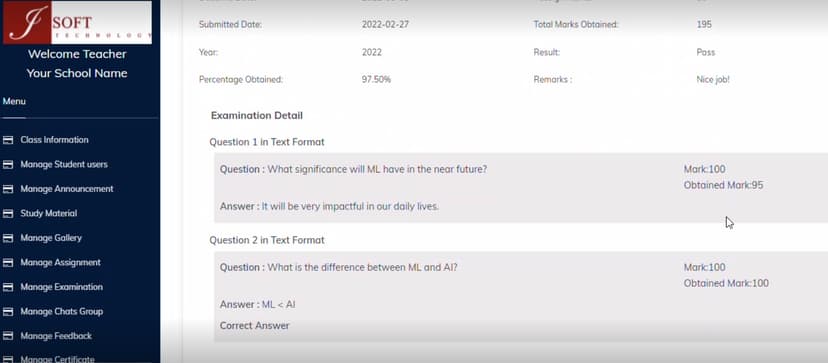
Velocity Learning Management System uses a blended learning approach that pairs teacher-led virtual instruction with structured digital practice modules. Students log into a central cloud-based dashboard to access their daily schedule, assignments, and virtual classroom links. When working within the embedded iLikeMath curriculum, students engage in sequential problem-solving. The software delivers practice sets designed to target specific grade-level standards. As students input answers, the system uses scaffolding techniques to provide targeted hints or simpler precursor problems if they struggle. For the computer science and robotics modules, the platform delivers interactive modules where students apply logic and coding principles to project-based tasks. Teachers monitor this activity through a backend dashboard, tracking completion rates and identifying areas where students require intervention. The system relies entirely on the educator to assign the appropriate modules, set the pace of instruction, and provide substantive feedback on complex projects.
Strengths and tradeoffs of Velocity Learning Management System
The platform's biggest strength is its integration of scaffolded math practice directly into the learning management system, while its biggest weakness is its heavy reliance on teacher execution rather than offering robust, self-correcting independent learning pathways. Strengths: Velocity Learning Management System successfully reduces friction by housing core subjects like math and computer science in one place. The inclusion of the iLikeMath tool is a notable advantage. By using scaffolded instruction, the software prevents cognitive overload. When a student encounters a difficult problem, the system breaks it down into component parts, ensuring the learner grasps the underlying mechanics rather than just guessing. The addition of project-based learning in the robotics and game development modules also encourages active engagement over passive consumption. Weaknesses: Because this is a broad learning management system, it lacks the specialized, highly adaptive algorithms found in dedicated tutoring software. There is limited evidence that the platform utilizes spaced repetition or retrieval practice systematically across its subjects. Instead, it relies on the teacher to manually schedule review sessions. Furthermore, as the platform is pending formal evaluation by The Learning Standard, its specific claims regarding personalized learning pathways remain unverified.
Who Might Benefit From Velocity Learning Management System?
Best for K-12 schools and districts seeking an integrated platform to manage hybrid classrooms alongside dedicated math and computer science curricula. It serves educators who need a centralized hub for assignments, virtual meetings, and automated grading. For parents, it is best utilized as a reliable monitoring tool to track classroom progress, upcoming test dates, and daily homework completion. It is not designed for independent homeschooling families or parents looking for a standalone, adaptive tutoring application for supplementary after-school practice. Because the system relies heavily on teacher input and pacing, students who need highly individualized, algorithm-driven remediation may find it insufficient without direct educator intervention.
Data Transparency
Meets Data Transparency Standard
Velocity Learning Management System meets our data transparency standard at Level 2 of 3 (Parent control). Level 3 needs the policy to document an API for retrieving their own data and a named export format.
22 of 35 checks passed
Evaluated September 2026
Jones Software Corp. →Level 1 · Basic protections
Does not sell data or target ads at students, limits sharing, and lets parents see and delete their child's data.
Level 2 · Parent control (meets the standard)
Families can get their data out, know who processes it, and know how long it is kept.
Level 3 · Direct data access
Families or schools can pull their own data through an API, in a stated format.
Not documented: an API for retrieving their own data, a named export format
View all 35 checks
Parent Access7/8
Does the policy mention parents specifically?
“Parents or guardians may review or request deletion of a child’s data by contacting”
Can parents view their child's data?
“Parents or guardians may review or request deletion of a child’s data by contacting”
Can parents modify their child's data?
The policy lets parents review or ask to delete a child's data, but it does not say they can correct or change it.
Can parents delete their child's account?
“Parents or guardians may review or request deletion of a child’s data by contacting”
Is there a dedicated Children's Privacy section?
“Children’s Privacy (COPPA)”
Does it reference COPPA compliance?
“Children’s Privacy (COPPA)”
Does it reference FERPA compliance?
“FERPA (34 C.F.R. §99.31(a)(1)(i)(B))”
Is parental consent required for child accounts?
“Verified parental or institutional consent is required prior to account activation.”
Data Portability2/5
Can users access their personal data?
“Access, correct, delete, or export personal data”
Can users download/export their data?
“Access, correct, delete, or export personal data”
Is there a self-service data access tool?
The policy handles requests by email or a request form, not through a tool users run themselves.
Is a specific data format mentioned for export?
The policy does not name a file format for exports.
Is there an API for data access?
The policy does not describe an API that users or schools can use to get their own data.
Data Minimization2/6
Is data collection itemized?
“Name, email address, organization, role, authentication credentials”
Can the app be used without a real name?
The policy says it collects names as account information.
Can the app be used without an email?
The policy says it collects email addresses as account information.
Does it state collection is limited to what is necessary?
“We collect only what is necessary to operate, secure, and improve VLME.”
Is IP address anonymized or truncated?
The policy says it collects IP addresses and does not mention anonymizing or truncating them.
Is location tracking explicitly excluded?
The policy does not rule out location tracking.
Third-Party Protection7/7
Does it explicitly state no selling of data?
“Student data is never sold, leased, or used for targeted advertising.”
Are third-party providers named?
“Microsoft Azure (hosting, security, Fabric analytics, Azure OpenAI)”
Are providers contractually restricted?
“JSC engages trusted subprocessors solely to support VLME operations under contractual confidentiality and data-protection obligations.”
No-targeted-advertising commitment?
“Student data is never sold, leased, or used for targeted advertising.”
Is AI/ML data sharing addressed?
“No personal data used to train foundation models”
Child-specific sharing restriction?
“Student data is never sold, leased, or used for targeted advertising.”
Cookies/tracking limited or opt-out?
“Users may manage preferences via the Cookie Settings panel or the”
Deletion & Retention3/5
Can users delete their account?
“Access, correct, delete, or export personal data”
Self-service deletion mechanism?
The policy handles deletion only by email or a request form, not a self-service option.
Specific data retention timeline?
“Deleted within 30 days of institutional request”
Auto-deletion of inactive accounts?
The policy says data is kept while accounts are active and does not mention deleting inactive accounts automatically.
Post-deletion handling described?
“All deletions are logged and auditable within Azure Education tenants.”
Advertising1/4
Advertising model explicitly disclosed?
The policy says student data is not used for targeted advertising but does not describe any advertising model or state that there are no ads.
Free from third-party advertisements?
The policy does not say the product is free of third-party ads.
Children excluded from ad targeting?
“Student data is never sold, leased, or used for targeted advertising.”
Ad-free option available?
The policy does not say the product has no ads or offer an ad-free option.
Meets Data Transparency Standard
The reviewed policy met our data transparency standard. This result describes the policy disclosures we assessed. Actual practices and legal compliance were not verified.
About this evaluation: Based on automated analysis of Jones Software Corp. against 35 policy-disclosure questions, including questions adapted from the Common Sense Privacy Program's published evaluation questions. TLS is not affiliated with Common Sense Media, and this is not a Common Sense rating. Quoted text is copied from the policy; unquoted notes are our summary. Results describe what the policy documents, not the company's actual practices. Privacy policies can change: this review reflects the version we analyzed and does not determine legal compliance.
Sources and review method
TLS combines product information and editorial analysis to explain how Velocity Learning Management System works, its tradeoffs, and the questions to ask before choosing it. Product features, an instructional rationale and evidence of learning outcomes are different kinds of information.
Formal Learning Standard assessment: not yet completed. Data Transparency findings are reported separately and do not establish learning effectiveness. Read our methodology.
Frequently Asked Questions About Velocity Learning Management System
Is Velocity Learning Management System free?
No. Velocity Learning Management System costs $14 per student annually. However, this fee is typically paid by the school district or educational institution rather than individual parents. When your child's school adopts this platform, it provides them with full access at no direct cost to your family. The institutional license includes access to the core platform, the virtual classroom communication features, and the embedded iLikeMath curriculum for grades K-12, meaning there are no hidden in-app purchases required.
Is Velocity Learning Management System good for elementary students?
Yes, Velocity Learning Management System is appropriate for elementary students when properly guided by a classroom teacher. The interface is specifically designed to support K-12 learners, and the embedded iLikeMath module scales down to teach foundational arithmetic using visual aids. However, early elementary students will require adult supervision and guidance to navigate the platform, manage their daily assignments, and successfully join virtual classroom sessions, as the administrative dashboard can be complex for young users.
What does Velocity Learning Management System teach?
Velocity Learning Management System acts as a digital shell for various school subjects, but it specifically includes proprietary built-in curricula for both mathematics and computer science. The math component, iLikeMath, covers foundational arithmetic through advanced high school concepts. The comprehensive computer science modules introduce students to block-based coding, robotics programming, and game development. Additionally, the platform hosts teacher-provided content for social science, general science, and career and technical education based on local district standards.
Has The Learning Standard evaluated Velocity Learning Management System?
TLS has not yet completed a Learning Standard evaluation of how well Velocity Learning Management System teaches. Its privacy policy has been reviewed for Data Transparency and reaches Level 2, Parent control.
Is Velocity Learning Management System COPPA compliant?
The reviewed privacy policy references COPPA. A policy reference alone does not establish COPPA compliance. Policy review note: The children's section is headed with COPPA.
Is Velocity Learning Management System FERPA compliant?
The reviewed privacy policy references FERPA. A policy reference alone does not establish FERPA compliance. Policy review note: FERPA appears in the list of laws the company says it complies with.
Does Velocity Learning Management System have a children's privacy policy?
The reviewed policy includes a dedicated children's privacy section. Policy review note: Section 7 is a separate Children's Privacy (COPPA) section.
Does Velocity Learning Management System sell student data?
The reviewed policy states that the app does not sell data. This is a policy statement; actual data practices were not verified. Policy review note: The company says student data is never sold.
Can you delete your data from Velocity Learning Management System?
The reviewed privacy policy describes account deletion. We have not tested the deletion process. Policy review note: Users can ask to have their personal data deleted.
Follow TLS Research
Subscribe to future TLS research updates: app reviews, findings, and what the evidence shows.
Screenshots

Take Action
For Velocity Learning Management System
If you represent Jones Software Corp. and have a correction or new evidence, send the relevant source so we can review and update this page.
Submit a correctionDetails
- Pricing
- The fee for velocity learning is $14 per student. This fee includes iLikeMath (K - 12) math curriculum embedded into the Learning Management System.
- Platforms
- Web Browser
- Website
- Visit site