
Ulipsu
Product by Ulipsu Learning
Facts checked: Not yet checked
Our take (not a Learning Standard rating). This label applies to learning-science judgments throughout this overview.
Our take (not a Learning Standard rating)
While Ulipsu offers a broad range of future-ready skills through project-based learning and gamification, The Learning Standard has not yet formally evaluated its effectiveness. Its reliance on mastery-based progression aligns well with learning science, but independent data on long-term knowledge retention remains pending.
Pros
- Integrates project-based learning to connect abstract concepts with real-world applications.
- Uses mastery-based progression to ensure students understand foundational skills before advancing.
- Covers a wide range of practical competencies like financial literacy alongside core STEM subjects.
Cons
- Lacks independent efficacy data to verify long-term knowledge retention.
- Broad focus across multiple disciplines may dilute deep learning in core academic subjects.
- Gamification elements risk distracting students from underlying learning objectives.
What Do We Know About Ulipsu?
Ulipsu shows strong potential for effective learning through its mastery-based design, though independent efficacy data is still pending. Your child will experience a curriculum that stretches beyond traditional academics, blending math and science with career and technical education. The platform uses project-based learning, a pedagogical approach that requires students to apply knowledge to solve practical problems, which strongly supports cognitive development and critical thinking. By tying lessons to real-world competencies like digital and financial literacy, the app helps bridge the gap between classroom theory and practical application. However, because the app covers such a massive age range from first through tenth grade across varied subjects, the depth of instruction in any single area may vary significantly. Parents should carefully monitor whether the gamification elements keep their child engaged with the actual educational content or merely provide superficial entertainment. While the competency-based progression ensures your child cannot simply click through without showing some level of understanding, The Learning Standard has not yet fully rated the app against our strict learning science rubrics.
How Does Ulipsu Work?
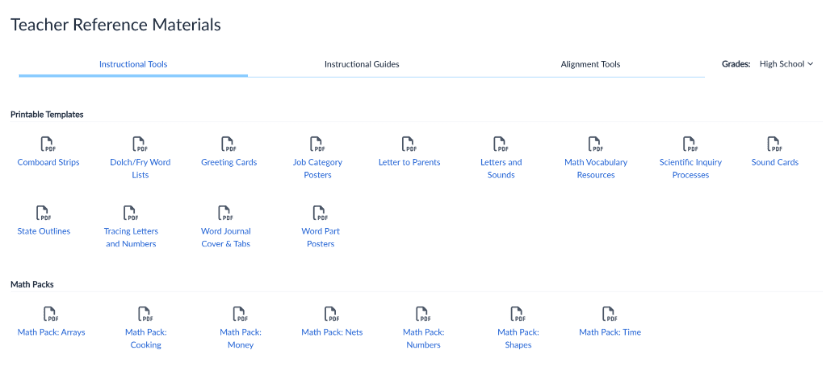
Ulipsu relies on a mix of competency-based progression, gamification, and project-based learning to teach diverse STEM and life skills. Your child begins by selecting learning modules that align with their grade level, spanning grades one through ten. Rather than passively consuming information, students must demonstrate understanding of a specific concept before the system unlocks more advanced material. This mastery-based mechanic prevents learners from accumulating knowledge gaps over time. As your child moves through the modules, they encounter project-based tasks that require them to synthesize what they have learned into practical outputs. Gamified rewards, such as points or badges, are woven into the progression to sustain motivation during challenging segments. The platform spans multiple domains simultaneously, asking students to switch between mathematical reasoning, applied science, and career-oriented technical tasks.
Strengths and tradeoffs of Ulipsu
Ulipsu's biggest strength is its integration of project-based learning to build real-world competencies, while its biggest weakness is the risk that its broad scope dilutes focused, deep practice. Project-based learning requires students to retrieve and apply knowledge in novel contexts, a highly effective strategy for building durable memory. By forcing your child to use math and science skills in career-technical scenarios, the app promotes cognitive flexibility. Mastery-based progression is another core strength, ensuring students achieve foundational competence before moving to complex tasks. However, the sheer breadth of the platform presents a structural weakness. Learning science dictates that deep expertise requires deliberate practice and focused repetition. By jumping between financial literacy, creative arts, and core STEM, the app may lack the structured spaced repetition necessary to encode specific math or science facts into long-term memory. Furthermore, gamification elements can sometimes shift a student's focus from intrinsic learning to extrinsic reward collection. Parents should be aware that while the multidisciplinary approach exposes students to many fields, it may not replace the targeted drill-and-practice needed for core academic fluency.
Who Might Benefit From Ulipsu?
Ulipsu is best for students in grades one through ten who benefit from exploring real-world career skills alongside their standard math and science curriculum. It serves as an excellent supplemental tool for children who disengage from traditional rote memorization and need project-based applications to understand why a specific concept matters in the real world. Because it covers everything from financial literacy to digital arts, it fits exceptionally well in a homeschooling environment or for proactive parents wanting to introduce future-ready competencies early. It is less suited for students needing intensive, focused remedial help in a single core subject like foundational math.
Data Transparency
Does Not Meet Data Transparency Standard
Ulipsu does not meet our data transparency standard. Its privacy policy does not document basic protections, including a statement that it does not sell data, a commitment against targeted advertising and limits on sharing children's data.
6 of 35 checks passed
Evaluated September 2026
Privacy Policy →Level 1 · Basic protections
Does not sell data or target ads at students, limits sharing, and lets parents see and delete their child's data.
Not documented: a statement that it does not sell data, a commitment against targeted advertising, limits on sharing children's data, contractual limits on service providers, parents' right to see their child's data, parents' right to delete their child's data, account deletion
Level 2 · Parent control (meets the standard)
Families can get their data out, know who processes it, and know how long it is kept.
Not documented: users' right to access their data, data export, a data retention timeline, self-service deletion
Level 3 · Direct data access
Families or schools can pull their own data through an API, in a stated format.
Not documented: an API for retrieving their own data, a named export format
View all 35 checks
Parent Access2/8
Does the policy mention parents specifically?
The policy does not mention parents.
Can parents view their child's data?
The policy does not give parents any right to view their child's data.
Can parents modify their child's data?
The policy does not give parents any right to change their child's data.
Can parents delete their child's account?
The policy does not give parents any right to delete their child's data or account.
Is there a dedicated Children's Privacy section?
“COMPLIANCE WITH CHILDREN’S ONLINE PRIVACY PROTECTION ACT”
Does it reference COPPA compliance?
“COMPLIANCE WITH CHILDREN’S ONLINE PRIVACY PROTECTION ACT”
Does it reference FERPA compliance?
The policy does not mention FERPA.
Is parental consent required for child accounts?
The policy does not require parental consent; it says it never knowingly collects information from users under 13.
Data Portability0/5
Can users access their personal data?
The policy does not give users a right to access their personal data.
Can users download/export their data?
The policy does not address downloading or exporting data.
Is there a self-service data access tool?
The policy does not describe a self-service tool for accessing data.
Is a specific data format mentioned for export?
The policy does not name any format for exporting data.
Is there an API for data access?
The policy does not mention an API for accessing data.
Data Minimization1/6
Is data collection itemized?
“Users may be asked for, as appropriate, name, email address, mailing address, and phone number.”
Can the app be used without a real name?
The policy says users may be asked for their name.
Can the app be used without an email?
The policy says users may be asked for their email address.
Does it state collection is limited to what is necessary?
The policy says it collects information users submit voluntarily, but does not say collection is limited to what is necessary.
Is IP address anonymized or truncated?
The policy does not say IP addresses are anonymized or truncated.
Is location tracking explicitly excluded?
The policy does not explicitly rule out location tracking.
Third-Party Protection2/7
Does it explicitly state no selling of data?
The policy does not say the company does not sell personal data.
Are third-party providers named?
“Some of the ads may be served by Google.”
Are providers contractually restricted?
The policy limits sharing with service providers to certain purposes when users give permission, but does not mention contractual restrictions.
No-targeted-advertising commitment?
The policy says Google's DART cookie serves ads to users based on their visits to the Site and other sites.
Is AI/ML data sharing addressed?
The policy does not address AI or machine learning.
Child-specific sharing restriction?
The policy says it does not collect information from children under 13, but has no restriction specific to sharing children's data.
Cookies/tracking limited or opt-out?
“You may opt-out of the use of the DART cookie by visiting the Google ad and content network privacy policy”
Deletion & Retention0/5
Can users delete their account?
The policy does not let users delete their account or data.
Self-service deletion mechanism?
The policy does not describe a self-service way to delete data.
Specific data retention timeline?
The policy gives no specific timeline for keeping data.
Auto-deletion of inactive accounts?
The policy does not address automatic deletion of inactive accounts.
Post-deletion handling described?
The policy does not describe what happens to data after deletion.
Advertising1/4
Advertising model explicitly disclosed?
“Some of the ads may be served by Google. Google’s use of the DART cookie enables it to serve ads to Users based on their visit to our Site and other sites on the Internet.”
Free from third-party advertisements?
The policy says Google serves third-party ads on the Site.
Children excluded from ad targeting?
The policy does not exclude children from ad targeting; it only says it does not knowingly collect information from users under 13.
Ad-free option available?
The policy does not offer an ad-free option and says the Site shows Google ads.
What This Means
The policy review did not meet our data transparency standard. The checks above show the documented findings and unknowns. A missing statement does not establish how the app handles data in practice.
About this evaluation: Based on automated analysis of Privacy Policy against 35 policy-disclosure questions, including questions adapted from the Common Sense Privacy Program's published evaluation questions. TLS is not affiliated with Common Sense Media, and this is not a Common Sense rating. Quoted text is copied from the policy; unquoted notes are our summary. Results describe what the policy documents, not the company's actual practices. Privacy policies can change: this review reflects the version we analyzed and does not determine legal compliance.
Sources and review method
TLS combines product information and editorial analysis to explain how Ulipsu works, its tradeoffs, and the questions to ask before choosing it. Product features, an instructional rationale and evidence of learning outcomes are different kinds of information.
Formal Learning Standard assessment: not yet completed. Data Transparency findings are reported separately and do not establish learning effectiveness. Read our methodology.
Frequently Asked Questions About Ulipsu
Is Ulipsu free?
No, Ulipsu requires an annual subscription fee for access. Parents must purchase a yearly plan to unlock the platform's full K-12 curriculum, STEM modules, and project-based learning tracks. There is no free tier available, so families should be prepared for a recurring financial commitment to maintain access to the multidisciplinary lessons and career readiness materials. While this ensures an ad-free environment, it requires an upfront investment before you can assess if the teaching style matches your child's needs.
Is Ulipsu good for elementary students?
Yes, Ulipsu includes content specifically designed for early learners starting in the first grade. The platform adapts its competency-based learning modules to suit younger children, adjusting the complexity of its applied science and math projects. However, parents of elementary students should monitor whether the gamified interface distracts from the core learning objectives. Younger users often require guided supervision to ensure they are actually absorbing the project-based lessons rather than just clicking through the colorful activities to earn digital rewards.
What does Ulipsu teach?
Ulipsu teaches a multidisciplinary curriculum encompassing math, applied science, and career and technical education. Your child will encounter interactive modules on digital literacy, creative arts, financial literacy, and cognitive development. Instead of isolating these subjects, the platform uses project-based learning to integrate them into real-world applications. This ensures students do not just memorize facts, but actually learn how to apply technical and financial concepts to solve practical problems they might encounter in future careers.
How does Ulipsu compare to traditional math apps?
Unlike traditional drill-and-practice math apps, Ulipsu focuses heavily on project-based learning and multi-skill integration. Instead of merely presenting isolated equations or repetitive flashcards, it asks students to apply mathematical concepts within broader career readiness and applied science scenarios. This approach builds superior cognitive flexibility. However, it may not provide the same level of deliberate practice and spaced repetition that dedicated math apps use to build rapid calculation fluency in foundational arithmetic.
Has The Learning Standard evaluated Ulipsu?
TLS has not yet completed a Learning Standard evaluation of how well Ulipsu teaches. Its privacy policy has been reviewed for Data Transparency and does not yet document the basic protections (Level 1).
Is Ulipsu COPPA compliant?
The reviewed privacy policy references COPPA. A policy reference alone does not establish COPPA compliance. Policy review note: The policy has a section that claims compliance with COPPA.
Is Ulipsu FERPA compliant?
A FERPA reference was not found in the reviewed privacy policy. This does not determine whether the app complies with FERPA. Policy review note: The policy does not mention FERPA.
Does Ulipsu have a children's privacy policy?
The reviewed policy includes a dedicated children's privacy section. Policy review note: The policy has its own section with a heading about COPPA.
Does Ulipsu sell student data?
A statement ruling out data selling was not found in the reviewed policy. This does not establish that the app sells student data. Policy review note: The policy does not say the company does not sell personal data.
Can you delete your data from Ulipsu?
Account deletion was not documented in the reviewed privacy policy. This does not establish whether deletion is available. Policy review note: The policy does not let users delete their account or data.
Follow TLS Research
Subscribe to future TLS research updates: app reviews, findings, and what the evidence shows.
Screenshots

Take Action
For Ulipsu
If you represent Ulipsu Learning and have a correction or new evidence, send the relevant source so we can review and update this page.
Submit a correctionDetails
- Pricing
- Annual subscription fee.
- Platforms
- iOS (Apple mobile), Android (Google mobile), Windows (Microsoft)
- Grade Levels
- 1st Grade, 2nd Grade, 3rd Grade, 4th Grade, 5th Grade, 6th Grade, 7th Grade, 8th Grade, 9th Grade, 10th Grade
- Website
- Visit site