The Switch Lab - EV for Education
Product by Switch Vehicles Inc
Facts checked: Not yet checked
Our take (not a Learning Standard rating). This label applies to learning-science judgments throughout this overview.
Our take (not a Learning Standard rating)
While The Switch Lab has not yet been formally evaluated by The Learning Standard, its hands-on, project-based approach aligns with constructivist learning theories. Building a drivable electric vehicle provides high physical engagement and authentic problem-solving, though the extreme cost limits accessibility to well-funded career and technical education programs.
Pros
- Utilizes authentic project-based learning to teach applied physics and electrical engineering through physical assembly.
- Fosters cooperative learning through necessary teamwork during the complex mechanical build process.
- Supports repeated practice by allowing the vehicle to be completely disassembled and rebuilt by future student cohorts.
- Provides tangible, immediate feedback when mechanical or electrical components fail to operate due to incorrect assembly.
Cons
- Prohibitive cost barrier restricts access almost entirely to institutional or grant-funded purchases.
- Requires high teacher expertise in mechanical and electrical systems to safely and effectively facilitate the build.
- Lacks automated individual assessment metrics to verify that each group member actually masters the underlying physics concepts.
What Do We Know About The Switch Lab - EV for Education?
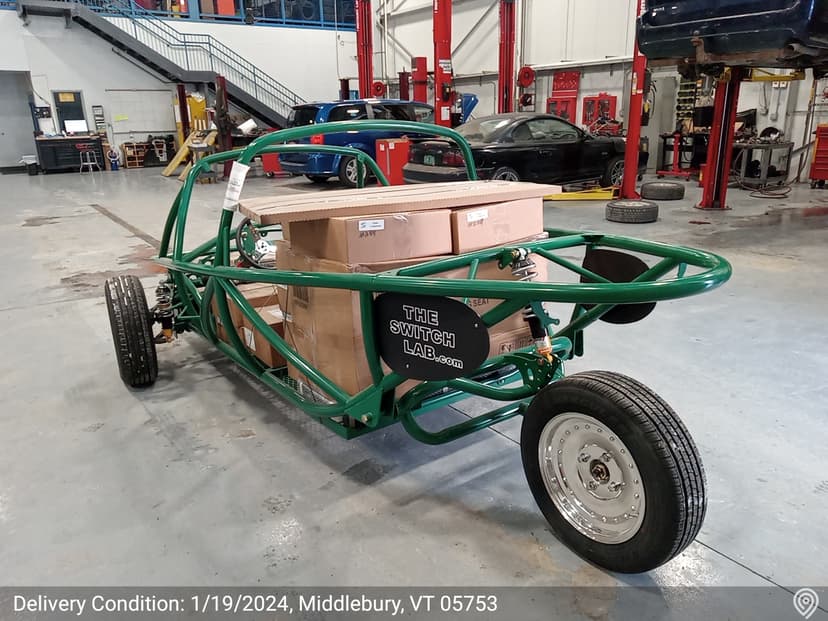
The Switch Lab EV Kit is a highly effective, immersive tool for teaching applied science and engineering skills, pending our formal evaluation. This program moves students entirely away from screen-based simulations and into physical, constructivist learning where they build a functioning, drivable electric vehicle. Your child will not be passively consuming information from a lecture. Instead, they will engage in cooperative learning and authentic problem-solving. When a wiring harness is installed incorrectly, the vehicle simply will not start, providing immediate, natural feedback. This physical application of physics and mathematics cements abstract concepts into working memory far better than traditional textbook study. However, parents should understand that this is absolutely not an at-home educational toy. At a starting cost of fifty thousand dollars, this is a school-based curriculum designed for sophisticated career and technical education programs. The effectiveness of the learning experience will rely heavily on the classroom teacher's ability to facilitate complex group work and maintain rigorous safety standards in a collaborative shop environment.
How Does The Switch Lab - EV for Education Work?
The Switch Lab relies on project-based and cooperative learning, requiring students to collaboratively assemble a full-scale electric vehicle from raw components. Students receive a comprehensive kit containing chassis parts, batteries, wiring, and an electric motor, alongside an assembly manual and structured curriculum. The pedagogical model emphasizes experiential learning over passive direct instruction. Educators guide small student groups through progressive build stages, tying each physical step to core science and engineering concepts. For example, before installing the battery bank, students calculate voltage and amperage requirements. The system relies heavily on physical trial and error, a form of active retrieval practice where students must constantly test their assemblies against the manual's precise specifications. Once completed, the vehicle is drivable, offering a summative physical validation of the students' engineering work. At the end of the semester, the vehicle is disassembled, preparing the raw materials for the next cohort of learners.
Strengths and tradeoffs of The Switch Lab - EV for Education
The biggest strength of The Switch Lab is its profound level of authentic, physical engagement, while its biggest weakness is the extreme logistical and financial burden it places on schools. Tangible Application: By forcing students to apply abstract electrical and mechanical theory to a real-world object, the kit utilizes high-fidelity project-based learning. This creates strong associative memory links, making concepts like electrical resistance and torque highly memorable. Cooperative Skill Building: The sheer physical scale of the project mandates collaboration, naturally teaching essential workforce communication and teamwork skills. Immediate Feedback Loops: The physical world does not grade on a curve; if the circuit is incomplete, the motor remains silent. This provides flawless, objective error correction. High Barrier to Entry: The starting price makes this strictly a premium institutional purchase. Facilitator Dependency: Unlike adaptive software, this kit cannot teach itself. It requires an educator with significant technical expertise and shop-safety training to guide the learning effectively. Limited Individual Assessment: In a group setting, a highly motivated student may dominate the complex tasks, allowing peers to passively observe without mastering the underlying physics.
Who Might Benefit From The Switch Lab - EV for Education?
Best for high school and collegiate career and technical education programs seeking a flagship, hands-on engineering capstone project. The Switch Lab is ideal for older students in grades nine through twelve, as well as adult learners, who need practical workforce training in the rapidly growing electric vehicle industry. It requires a dedicated shop space and is intended for structured classroom environments rather than individual or at-home use. Programs focused on applied physics, automotive technology, and cooperative problem-solving will extract the highest instructional value.
Data Transparency
Does Not Meet Data Transparency Standard
The Switch Lab - EV for Education does not meet our data transparency standard. Its privacy policy does not document basic protections, including a statement that it does not sell data, a commitment against targeted advertising and limits on sharing children's data.
6 of 35 checks passed
Evaluated October 2026
Privacy Policy →Level 1 · Basic protections
Does not sell data or target ads at students, limits sharing, and lets parents see and delete their child's data.
Not documented: a statement that it does not sell data, a commitment against targeted advertising, limits on sharing children's data, a COPPA or FERPA commitment, parents' right to see their child's data, account deletion
Level 2 · Parent control (meets the standard)
Families can get their data out, know who processes it, and know how long it is kept.
Not documented: users' right to access their data, data export, a data retention timeline, named service providers, self-service deletion
Level 3 · Direct data access
Families or schools can pull their own data through an API, in a stated format.
Not documented: an API for retrieving their own data, a named export format
View all 35 checks
Parent Access3/8
Does the policy mention parents specifically?
“If you are a parent or guardian and you are aware that your child has provided us with Personal Information, please contact us.”
Can parents view their child's data?
The policy does not give parents a right to view their child's data.
Can parents modify their child's data?
The policy does not give parents a right to modify their child's data.
Can parents delete their child's account?
“If you are a parent or guardian and you are aware that your child has provided us with Personal Information, please contact us. If we discover that a child under 18 has provided us with Personal Information, we will delete such information from our servers immediately.”
Is there a dedicated Children's Privacy section?
“Children’s Privacy Our Service does not address anyone under the age of 18 (“Children”).”
Does it reference COPPA compliance?
The policy does not reference COPPA.
Does it reference FERPA compliance?
The policy does not reference FERPA.
Is parental consent required for child accounts?
The policy says it does not knowingly collect data from children under 18 and does not describe parental consent.
Data Portability0/5
Can users access their personal data?
The policy does not give users a right to access their personal data.
Can users download/export their data?
The policy does not address data export.
Is there a self-service data access tool?
The policy does not describe a self-service data access tool.
Is a specific data format mentioned for export?
The policy does not mention an export format.
Is there an API for data access?
The policy does not mention an API for data access.
Data Minimization1/6
Is data collection itemized?
“Personally identifiable information (“Personal Information”) may include, but is not limited to: - Name - Email address - Telephone number - Address”
Can the app be used without a real name?
The policy says it collects names.
Can the app be used without an email?
The policy says it collects email addresses.
Does it state collection is limited to what is necessary?
The policy does not say collection is limited to what is necessary.
Is IP address anonymized or truncated?
The policy says it collects IP addresses in log data and does not mention anonymizing them.
Is location tracking explicitly excluded?
The policy does not explicitly exclude location tracking.
Third-Party Protection2/7
Does it explicitly state no selling of data?
The policy says information is used or shared only as described, but it never explicitly says the company does not sell data.
Are third-party providers named?
The policy refers to third-party service providers without naming any.
Are providers contractually restricted?
“These third parties have access to your Personal Information only to perform these tasks on our behalf and are obligated not to disclose or use it for any other purpose.”
No-targeted-advertising commitment?
The policy does not address targeted advertising.
Is AI/ML data sharing addressed?
The policy does not address AI or machine learning.
Child-specific sharing restriction?
The policy has no restriction on sharing that applies specifically to children.
Cookies/tracking limited or opt-out?
“You can instruct your browser to refuse all cookies or to indicate when a cookie is being sent.”
Deletion & Retention0/5
Can users delete their account?
The policy does not give users a right to delete their account or data; it covers deletion only for data from children.
Self-service deletion mechanism?
The policy does not describe a self-service deletion mechanism.
Specific data retention timeline?
The policy does not give a data retention timeline.
Auto-deletion of inactive accounts?
The policy does not address auto-deletion of inactive accounts.
Post-deletion handling described?
The policy does not describe how data is handled after deletion.
Advertising0/4
Advertising model explicitly disclosed?
The policy does not address advertising.
Free from third-party advertisements?
The policy does not address third-party advertising.
Children excluded from ad targeting?
The policy does not address ad targeting of children.
Ad-free option available?
The policy does not address advertising or an ad-free option.
What This Means
The policy review did not meet our data transparency standard. The checks above show the documented findings and unknowns. A missing statement does not establish how the app handles data in practice.
About this evaluation: Based on automated analysis of Privacy Policy against 35 policy-disclosure questions, including questions adapted from the Common Sense Privacy Program's published evaluation questions. TLS is not affiliated with Common Sense Media, and this is not a Common Sense rating. Quoted text is copied from the policy; unquoted notes are our summary. Results describe what the policy documents, not the company's actual practices. Privacy policies can change: this review reflects the version we analyzed and does not determine legal compliance.
Sources and review method
TLS combines product information and editorial analysis to explain how The Switch Lab - EV for Education works, its tradeoffs, and the questions to ask before choosing it. Product features, an instructional rationale and evidence of learning outcomes are different kinds of information.
Formal Learning Standard assessment: not yet completed. Data Transparency findings are reported separately and do not establish learning effectiveness. Read our methodology.
Frequently Asked Questions About The Switch Lab - EV for Education
Is The Switch Lab - EV for Education free?
No. The Switch Lab is an enterprise-level educational purchase designed strictly for institutional use, completely eliminating any possibility of a free version. Starter kits begin at approximately fifty thousand dollars, while the advanced kits reach up to seventy thousand dollars. This immense pricing structure fully restricts the platform to well-funded schools, districts, or grant-backed career and technical education programs rather than individual consumer or at-home use.
Is The Switch Lab - EV for Education good for middle schoolers?
Yes, it is appropriate for older middle schoolers in seventh and eighth grade, provided there is strict adult supervision at all times. However, the sheer complexity of the electrical systems and the heavy physical demands of building a drivable vehicle make it most effective for high school students, college students, and adult learners who possess more advanced motor skills and foundational math knowledge.
What does The Switch Lab - EV for Education teach?
The curriculum primarily teaches applied physics, electrical engineering, and automotive mechanics through rigorous hands-on application. Beyond these hard technical skills, the project-based structure explicitly targets essential soft skills demanded by employers. Students practice cooperative learning, complex physical problem-solving, adaptable thinking, and technical communication as they work together to translate a written assembly manual into a fully functioning electric vehicle.
How does The Switch Lab - EV for Education compare to virtual engineering simulations?
Virtual simulations offer safe, inexpensive, and easily repeatable environments for testing physics concepts and engineering designs. However, The Switch Lab provides authentic tactile feedback and actual physical stakes that software simply cannot replicate. Building a physical object grounds learning in reality, forcing your students to troubleshoot unpredictable real-world mechanical friction, wiring issues, and structural alignment problems that clean digital environments often ignore.
Has The Learning Standard evaluated The Switch Lab - EV for Education?
TLS has not yet completed a Learning Standard evaluation of how well The Switch Lab - EV for Education teaches. Its privacy policy has been reviewed for Data Transparency and does not yet document the basic protections (Level 1).
Is The Switch Lab - EV for Education COPPA compliant?
A COPPA reference was not found in the reviewed privacy policy. This does not determine whether the app complies with COPPA. Policy review note: The policy does not reference COPPA.
Is The Switch Lab - EV for Education FERPA compliant?
A FERPA reference was not found in the reviewed privacy policy. This does not determine whether the app complies with FERPA. Policy review note: The policy does not reference FERPA.
Does The Switch Lab - EV for Education have a children's privacy policy?
The reviewed policy includes a dedicated children's privacy section. Policy review note: The policy has a dedicated Children's Privacy section.
Does The Switch Lab - EV for Education sell student data?
A statement ruling out data selling was not found in the reviewed policy. This does not establish that the app sells student data. Policy review note: The policy says information is used or shared only as described, but it never explicitly says the company does not sell data.
Can you delete your data from The Switch Lab - EV for Education?
Account deletion was not documented in the reviewed privacy policy. This does not establish whether deletion is available. Policy review note: The policy does not give users a right to delete their account or data; it covers deletion only for data from children.
Follow TLS Research
Subscribe to future TLS research updates: app reviews, findings, and what the evidence shows.
Screenshots
Take Action
For The Switch Lab - EV for Education
If you represent Switch Vehicles Inc and have a correction or new evidence, send the relevant source so we can review and update this page.
Submit a correctionDetails
- Pricing
- Starter Kit: ~$50,000. Advanced Kit: ~$70,000. Ask for a quote.
- Platforms
- Web Browser
- Grade Levels
- 7th Grade, 8th Grade, 9th Grade, 10th Grade, 11th Grade, 12th Grade, Associate's degree, Bachelor's degree, Adult Education, Professional or Technical Credential
- Website
- Visit site