
The Mimir Language Learning Platform
Product by The Mimir
Facts checked: Not yet checked
Our take (not a Learning Standard rating). This label applies to learning-science judgments throughout this overview.
Our take (not a Learning Standard rating)
While The Mimir Language Learning Platform uses AI to provide immediate feedback on speaking exercises, a proven method for language acquisition, we have not yet evaluated its long-term retention metrics. Its focus on conversational practice and vocabulary retrieval shows promise for middle schoolers through adults, but definitive efficacy remains unverified.
Pros
- Integrates active recall by requiring students to practice saved vocabulary sets regularly.
- Uses speech recognition to provide immediate corrective feedback on pronunciation and conversational fluency.
- Adjusts task difficulty based on student performance to maintain an appropriate cognitive load.
- Forces learners to generate original spoken responses rather than passively selecting multiple-choice answers.
Cons
- High subscription cost and mandatory onboarding fees make it prohibitively expensive for individual families.
- Reliance on AI-generated conversation lacks the nuanced cultural context provided by fluent human instruction.
- Efficacy data and structured pedagogical frameworks remain unverified by independent independent reviewers.
- Requires strong executive functioning skills to self-manage vocabulary practice and initiate speaking tasks.
What Do We Know About The Mimir Language Learning Platform?
The Mimir Language Learning Platform shows pedagogical promise for developing your child's conversational skills, though its ultimate effectiveness remains pending independent evaluation. This platform moves away from rote memorization and instead relies on artificial intelligence to simulate real-world speaking scenarios. By forcing learners to actively produce language rather than just passively consume it, the app leverages the 'generation effect', a cognitive psychology principle demonstrating that information is better remembered if it is actively created from the learner's own mind. Your student will engage with reading and watching materials, initiate speech activities, and review saved vocabulary. This structure supports spaced retrieval practice, essential for moving new words from short-term to long-term memory. However, the system is designed primarily for institutional use, targeting middle schoolers through adults. The high price tag of $120 per user annually, coupled with mandatory onboarding fees, means this is not a casual download for weekend practice. Parents and educators must weigh this significant financial investment against the lack of third-party efficacy data. Until The Learning Standard completes a full evaluation, approach it as a robust supplemental tool rather than a guaranteed standalone language curriculum.
How Does The Mimir Language Learning Platform Work?
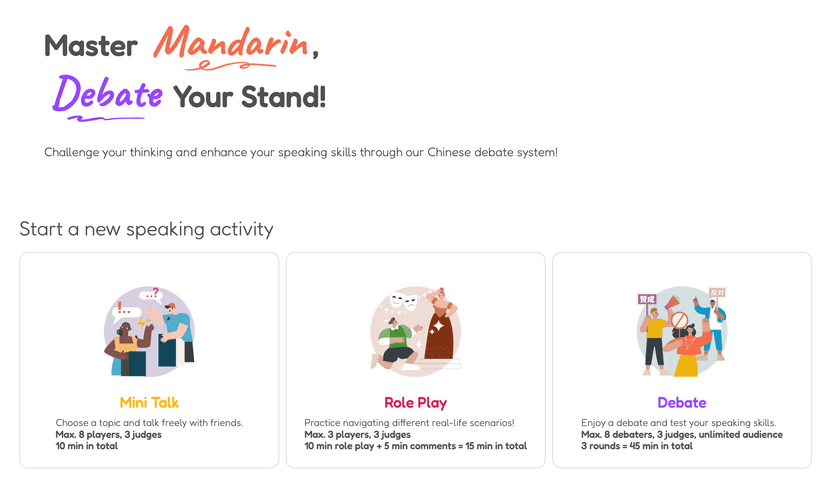
The Mimir Language Learning Platform uses an adaptive, production-focused approach with AI-driven conversational practice and vocabulary retrieval. When your child logs in, they interact with text and video materials tailored to their current proficiency level. Instead of filling in multiple-choice blanks, students must initiate speech activities, speaking directly into their device. The AI processes their verbal output and responds, forcing the learner to engage in unscripted dialogue. This mimics natural language acquisition by requiring immediate cognitive processing and linguistic output. As your student encounters new words, they save them into a personal database. The platform then prompts them to practice this saved vocabulary over time, a mechanic grounded in spaced repetition. By repeatedly testing these specific terms at increasingly longer intervals, the app disrupts the forgetting curve. The AI continuously evaluates the student's speaking pace and accuracy, dynamically adjusting the complexity of future reading and watching tasks to ensure the material is neither too easy nor frustratingly difficult.
Strengths and tradeoffs of The Mimir Language Learning Platform
The biggest strength of The Mimir Language Learning Platform is its emphasis on active speech production, while its biggest weakness is the prohibitive pricing structure geared entirely toward institutions. Active Retrieval Practice: By requiring students to speak their answers and construct original sentences, the platform avoids the pitfalls of passive recognition tasks commonly found in other language apps. Generating language forces a deeper cognitive processing that improves long-term retention. Spaced Vocabulary Review: The app's mechanism for saving and revisiting vocabulary aligns perfectly with spaced repetition principles, ensuring your child encounters words just as they are about to forget them. Adaptive Difficulty: The AI engine modulates the complexity of reading and listening materials to match the learner's current capacity, managing cognitive load effectively. Cost and Accessibility: At $120 per user annually plus mandatory onboarding fees, it is largely inaccessible to individual parents. Lack of Human Nuance: While AI conversation is excellent for syntax and vocabulary drill, it cannot fully replicate the cultural nuances, idioms, and physical cues that a human teacher provides. Furthermore, without a completed evaluation from The Learning Standard, claims of accelerated fluency remain theoretical rather than proven.
Who Might Benefit From The Mimir Language Learning Platform?
This app is best for middle school through adult learners in institutional settings who need intensive, adaptive speaking practice to supplement core language instruction. Because the interface and pedagogical demands require a degree of self-regulation, it is entirely inappropriate for early elementary students. It serves effectively as a speaking lab for high schools, universities, or corporate training programs willing to absorb the high per-user cost and onboarding fees. Your student will get the most out of this tool if they already have a foundational understanding of the target language's grammar and need to bridge the gap between reading comprehension and active conversational fluency.
Data Transparency
Does Not Meet Data Transparency Standard
The Mimir Language Learning Platform does not meet our data transparency standard. Its privacy policy does not document basic protections, including a statement that it does not sell data, a commitment against targeted advertising and a COPPA or FERPA commitment.
17 of 35 checks passed
Evaluated September 2026
The Mimir: Learn and Speak Chinese & Spanish →Level 1 · Basic protections
Does not sell data or target ads at students, limits sharing, and lets parents see and delete their child's data.
Not documented: a statement that it does not sell data, a commitment against targeted advertising, a COPPA or FERPA commitment
Level 2 · Parent control (meets the standard)
Families can get their data out, know who processes it, and know how long it is kept.
Not documented: self-service deletion
Level 3 · Direct data access
Families or schools can pull their own data through an API, in a stated format.
Not documented: an API for retrieving their own data, a named export format
View all 35 checks
Parent Access6/8
Does the policy mention parents specifically?
“For Children to use our Services, we obtain the consent of Schools or parents or guardians of those children (“Parents”).”
Can parents view their child's data?
“We give parents access or the ability to request access to Personal Information we have collected about their Children and the ability to request that the Personal Information be changed or deleted.”
Can parents modify their child's data?
“We give parents access or the ability to request access to Personal Information we have collected about their Children and the ability to request that the Personal Information be changed or deleted.”
Can parents delete their child's account?
“We give parents access or the ability to request access to Personal Information we have collected about their Children and the ability to request that the Personal Information be changed or deleted.”
Is there a dedicated Children's Privacy section?
“This section of the Policy describes how we collect and protect Personal Information of Children who may access our products through their Schools.”
Does it reference COPPA compliance?
The policy does not mention COPPA.
Does it reference FERPA compliance?
The policy does not mention FERPA.
Is parental consent required for child accounts?
“A Parent's or School's consent is required for the collection, use, or disclosure of Personal Information from Students, and we will not collect, use or disclose any such Personal Information without such consent.”
Data Portability2/5
Can users access their personal data?
“The right to access, update or delete the information we have collected from you.”
Can users download/export their data?
“The right to data portability. You have the right to be provided with a copy of the information we have on you in a structured, machine-readable, and commonly used format.”
Is there a self-service data access tool?
The policy has users send access requests by contacting the company and describes no tool users can run themselves to access their data.
Is a specific data format mentioned for export?
The policy says only "structured, machine-readable, and commonly used format" and names no specific format.
Is there an API for data access?
The policy does not mention an API for data access.
Data Minimization2/6
Is data collection itemized?
“Contact information such as your first and last name, username, email address;”
Can the app be used without a real name?
The policy says it collects students' first and last names.
Can the app be used without an email?
The policy says it collects students' email addresses.
Does it state collection is limited to what is necessary?
“As a rule, we limit the Personal Information we collect to that which is adequate, relevant and reasonably necessary for us to provide our Services to you.”
Is IP address anonymized or truncated?
The policy says it collects IP addresses and does not mention anonymizing or truncating them.
Is location tracking explicitly excluded?
The policy says it collects device location and other location information.
Third-Party Protection4/7
Does it explicitly state no selling of data?
The policy says only that it does not sell the personal information of children under 16, with no general no-sale statement.
Are third-party providers named?
“We may use the Meta pixel and other tracking and conversion pixels.”
Are providers contractually restricted?
“but only if we have a contractual agreement with the other party which prohibits them from disclosing or using the information other than for the purposes for which it was disclosed.”
No-targeted-advertising commitment?
The policy says it may use pixel and cookie data to show targeted ads and makes no no-targeting commitment.
Is AI/ML data sharing addressed?
The policy does not address AI or machine learning.
Child-specific sharing restriction?
“We do not sell the Personal Information of children under the age of 16.”
Cookies/tracking limited or opt-out?
“You can opt out of cookies by enabling an opt-out preference signal on your browser or opting out of cookies in our Site’s cookie preference centers.”
Deletion & Retention2/5
Can users delete their account?
“You can request that we correct or delete your Personal Information.”
Self-service deletion mechanism?
The policy handles deletion only through requests to the company.
Specific data retention timeline?
“All recordings are kept for a period of one year to support student learning and are permanently deleted after that time”
Auto-deletion of inactive accounts?
The policy does not address deleting inactive accounts automatically.
Post-deletion handling described?
The policy does not describe what happens to data after an account or data is deleted.
Advertising1/4
Advertising model explicitly disclosed?
“We may also engage third parties to track and analyze non-personally and personally identifiable website data and to serve advertisements.”
Free from third-party advertisements?
The policy says third parties may serve ads.
Children excluded from ad targeting?
The policy does not exclude children from ad targeting.
Ad-free option available?
The policy does not describe an ad-free option.
What This Means
The policy review did not meet our data transparency standard. The checks above show the documented findings and unknowns. A missing statement does not establish how the app handles data in practice.
About this evaluation: Based on automated analysis of The Mimir: Learn and Speak Chinese & Spanish against 35 policy-disclosure questions, including questions adapted from the Common Sense Privacy Program's published evaluation questions. TLS is not affiliated with Common Sense Media, and this is not a Common Sense rating. Quoted text is copied from the policy; unquoted notes are our summary. Results describe what the policy documents, not the company's actual practices. Privacy policies can change: this review reflects the version we analyzed and does not determine legal compliance.
Sources and review method
TLS combines product information and editorial analysis to explain how The Mimir Language Learning Platform works, its tradeoffs, and the questions to ask before choosing it. Product features, an instructional rationale and evidence of learning outcomes are different kinds of information.
Formal Learning Standard assessment: not yet completed. Data Transparency findings are reported separately and do not establish learning effectiveness. Read our methodology.
Frequently Asked Questions About The Mimir Language Learning Platform
Is The Mimir Language Learning Platform free?
No, it is a highly premium paid service rather than a free application. It costs $120 per user annually for full access, and schools or districts must also pay separate, mandatory onboarding and professional development fees. Because conditions affecting costs include contract lengths and user numbers, it is structured exclusively for institutional procurement rather than individual family subscriptions.
Is The Mimir Language Learning Platform good for middle and high school students?
Yes, it is highly appropriate for students in grades 6 through 12, as well as university and adult learners. The cognitive demands of unscripted AI conversation and independent vocabulary management require the mature executive functioning skills typical of adolescents and older students. Furthermore, the platform does not provide the gamified, highly scaffolded phonics instruction necessary for early elementary age groups to succeed.
What does The Mimir Language Learning Platform teach?
It explicitly teaches practical, conversational language skills rather than isolated grammar rules or rote translation. Instead of focusing solely on passive multiple-choice tasks, it builds active speaking fluency, dynamic listening comprehension, and long-term vocabulary retention through interactive AI dialogue. By requiring your student to watch, read, and immediately speak in response to contextual prompts, the platform develops the real-world communication abilities required for functional fluency.
How does The Mimir Language Learning Platform compare to Duolingo?
The Mimir Language Learning Platform focuses on unscripted, AI-driven speech production and is priced exclusively for institutional use, whereas Duolingo relies heavily on gamified, passive translation tasks and offers a widely accessible free consumer tier. Mimir requires deeper cognitive processing to generate original verbal responses, making it superior for actual conversational practice, while Duolingo serves primarily as an introductory tool for building foundational vocabulary.
Has The Learning Standard evaluated The Mimir Language Learning Platform?
TLS has not yet completed a Learning Standard evaluation of how well The Mimir Language Learning Platform teaches. Its privacy policy has been reviewed for Data Transparency and does not yet document the basic protections (Level 1).
Is The Mimir Language Learning Platform COPPA compliant?
A COPPA reference was not found in the reviewed privacy policy. This does not determine whether the app complies with COPPA. Policy review note: The policy does not mention COPPA.
Is The Mimir Language Learning Platform FERPA compliant?
A FERPA reference was not found in the reviewed privacy policy. This does not determine whether the app complies with FERPA. Policy review note: The policy does not mention FERPA.
Does The Mimir Language Learning Platform have a children's privacy policy?
The reviewed policy includes a dedicated children's privacy section. Policy review note: The policy has its own section titled "Children's Privacy".
Does The Mimir Language Learning Platform sell student data?
A statement ruling out data selling was not found in the reviewed policy. This does not establish that the app sells student data. Policy review note: The policy says only that it does not sell the personal information of children under 16, with no general no-sale statement.
Can you delete your data from The Mimir Language Learning Platform?
The reviewed privacy policy describes account deletion. We have not tested the deletion process. Policy review note: Users can ask for their personal information to be deleted.
Follow TLS Research
Subscribe to future TLS research updates: app reviews, findings, and what the evidence shows.
Screenshots


Take Action
For The Mimir Language Learning Platform
If you represent The Mimir and have a correction or new evidence, send the relevant source so we can review and update this page.
Submit a correctionDetails
- Pricing
- We offer annual pricing at $120/user, which includes Full Access + Premium Program Service There's an on-time onboarding fee and professional development training fees charged separately. Conditions affecting costs include contract lengths of 2 years or more and user numbers exceeding 1000.
- Platforms
- Web Browser, iOS (Apple mobile), iPadOS (Apple tablet), Android (Google mobile), Windows (Microsoft), macOS (Apple), Chrome OS (Google)
- Grade Levels
- 6th Grade, 7th Grade, 8th Grade, 9th Grade, 10th Grade, 11th Grade, 12th Grade, Associate's degree, Bachelor's degree, Post-baccalaureate certificate, Master's Degree, Post-master's certificate, Adult Education, Professional or Technical Credential
- Website
- Visit site