Teach Me Time
Product by Teach Me Time
Facts checked: Not yet checked
Our take (not a Learning Standard rating). This label applies to learning-science judgments throughout this overview.
Our take (not a Learning Standard rating)
While The Learning Standard has not yet formally evaluated Teach Me Time, its reliance on game-based retrieval practice shows promise for building clock-reading fluency. It provides real-time feedback to correct misconceptions immediately, but its long-term effectiveness depends on how well it spaces out practice sessions to ensure your child retains the skill.
Pros
- Uses immediate corrective feedback to prevent children from encoding incorrect time-telling habits.
- Translates abstract digital time into concrete analog visuals through highly interactive manipulation.
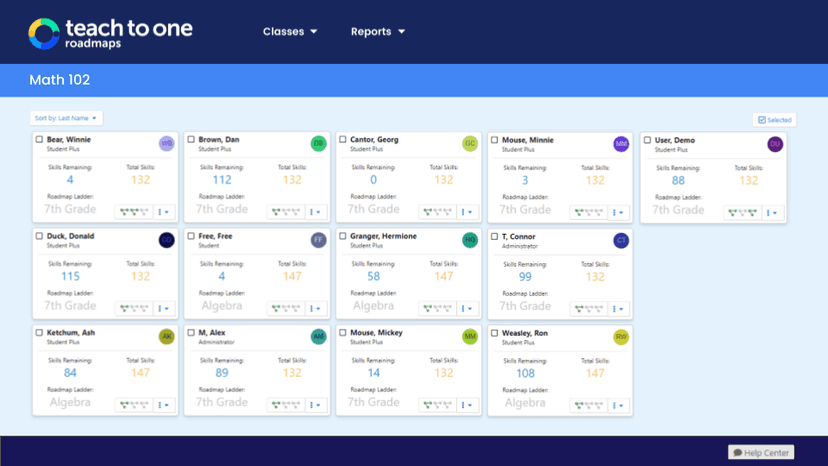
- Provides educators and parents with performance dashboards to monitor mathematical fluency progression over time.
Cons
- Lacks formal evaluation data from independent researchers to empirically verify its claims of mastery.
- Relies heavily on extrinsic game mechanics rather than intrinsic mathematical curiosity to maintain engagement.
- Does not explicitly detail how it implements spaced repetition to prevent skill decay after initial mastery.
What Do We Know About Teach Me Time?
Teach Me Time is a potentially effective tool for building time-telling fluency, though it remains pending formal evaluation by The Learning Standard. Your child will use this app to bridge the gap between digital and analog clocks through interactive, game-based retrieval practice. Learning to tell time on an analog clock requires strong spatial reasoning and working memory, as children must hold both the hour and minute values in their minds simultaneously. This platform addresses that cognitive load by providing immediate, real-time feedback when your child makes an error. This prevents them from memorizing incorrect patterns. Because the app utilizes a blended learning approach, it works best when you or a teacher contextualize the gameplay with physical clocks in the real world. You can monitor your child's progress through the built-in dashboard, which highlights specific areas where they struggle, such as confusing the minute and hour hands or calculating elapsed time. While the game-based elements maintain engagement, you should ensure your child does not rush through prompts simply to earn points. Encourage them to articulate how they read the clock to deepen their conceptual understanding.
How Does Teach Me Time Work?
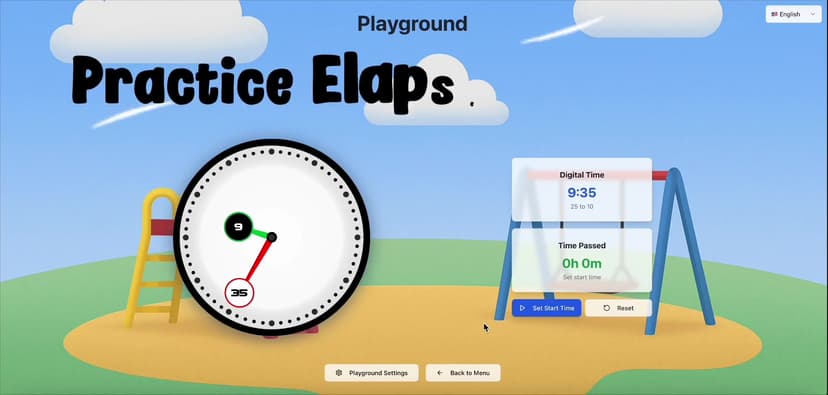
Teach Me Time uses game-based retrieval practice with immediate feedback to teach analog and digital clock reading. Your child logs into the platform and interacts with visual clock faces, manipulating hands or typing in digital equivalents to match given prompts. When a student submits an answer, the system immediately confirms accuracy or corrects the mistake, a critical component of learning science that prevents the encoding of errors. The platform tracks these interactions and feeds the data into a dashboard for parents and educators. This allows you to see exactly which time intervals require more targeted intervention. The app's play-based mechanics mask the repetitive nature of math drills, encouraging high volumes of practice. By blending this digital practice with classroom or at-home instruction, the software provides the necessary repetition required to turn the slow, effortful process of reading an analog clock into an automatic, fluent skill.
Strengths and tradeoffs of Teach Me Time
The biggest strength of Teach Me Time is its use of immediate corrective feedback, while its biggest weakness is the lack of transparent spaced repetition mechanics. Immediate feedback is highly effective in early mathematics and spatial learning; when your child places the minute hand incorrectly, the app intervenes before that mistake takes root in their long-term memory. This reduces cognitive friction and accelerates basic fluency. Furthermore, the use of visual manipulatives within the games helps translate the abstract concept of time into concrete, observable spatial relationships. However, time-telling is a skill highly susceptible to decay if not practiced regularly. The app's current design emphasizes gamified drilling but lacks clear evidence of interleaved practice or spaced repetition algorithms that automatically retest older concepts just as the student is about to forget them. Without these cognitive science principles driving the backend, students may achieve high scores during a single session but fail to retain the skill weeks later. Additionally, the heavy reliance on extrinsic rewards through games can sometimes distract from the intrinsic mathematical concepts of fractions and base-60 counting that underpin time-telling.
Who Might Benefit From Teach Me Time?
Teach Me Time is best for early elementary students who need targeted, repetitive practice to master reading analog clocks. While the developer states it is for all ages, the core mechanics primarily serve children between the ages of five and eight who are actively learning time-telling in school. It is an excellent supplementary tool for parents who want to reinforce classroom instruction at home. Educators will also find it extremely useful as a structured center activity, using the dashboard data to identify which students need small-group intervention.
Sources and review method
TLS combines product information and editorial analysis to explain how Teach Me Time works, its tradeoffs, and the questions to ask before choosing it. Product features, an instructional rationale and evidence of learning outcomes are different kinds of information.
Formal Learning Standard assessment: not yet completed. Data Transparency findings are reported separately and do not establish learning effectiveness. Read our methodology.
Frequently Asked Questions About Teach Me Time
Is Teach Me Time free?
Teach Me Time is currently free during its early access phase. The developer offers this complimentary tier to encourage widespread adoption among parents, educators, and schools. In the future, the platform will transition to a paid subscription model. This will include a Parent Plan priced at $4.99 per month or $49 per year. Additionally, schools and teachers will have access to customized licensing and tiered enterprise pricing based on student volume and specific classroom requirements.
Is Teach Me Time good for early elementary students?
Yes, Teach Me Time is highly appropriate for early elementary students. Children typically learn to read analog and digital clocks between kindergarten and second grade. The app's visual manipulatives and game-based approach align perfectly with the cognitive development of five- to eight-year-olds. It successfully breaks down the complex spatial reasoning required for telling time into manageable, highly interactive, and observable steps.
What does Teach Me Time teach?
Teach Me Time teaches students how to read, interpret, and mentally manipulate both analog and digital clocks. The curriculum focuses heavily on building mathematical fluency in translating time between digital numbers and analog hands. Through interactive gameplay, it helps children understand the relationships between hours, minutes, and spatial fractions on a physical clock face. It also provides foundational scaffolding for more advanced math concepts like calculating elapsed time.
How does Teach Me Time compare to traditional clock worksheets?
Teach Me Time offers immediate corrective feedback, which traditional paper worksheets simply cannot provide. When a child makes an error on paper, they may repeatedly practice that error until a teacher grades it hours or days later. The app corrects misconceptions in real-time, preventing incorrect habits from forming. However, physical manipulatives like a geared wooden clock remain superior for tactile learners who need physical feedback.
Has The Learning Standard evaluated Teach Me Time?
TLS has not yet completed a Learning Standard evaluation of how well Teach Me Time teaches. TLS has not published a Data Transparency result for its privacy policy.
Follow TLS Research
Subscribe to future TLS research updates: app reviews, findings, and what the evidence shows.
Screenshots

Take Action
For Teach Me Time
If you represent Teach Me Time and have a correction or new evidence, send the relevant source so we can review and update this page.
Submit a correctionDetails
- Pricing
- Teach Me Time is currently free to use while in its early access phase to support adoption by parents, teachers, and schools. In the future, pricing will include affordable subscription plans such as a Parent Plan ($4.99/month or $49/year) and customized licensing options for teachers, schools, and districts. Enterprise pricing will be tiered based on the number of students or classrooms supported. Discounts and pilot programs may also be available for early institutional partners.
- Platforms
- Web Browser
- Website
- Visit site