
Storytime AI
Product by Storytime AI
Facts checked: Not yet checked
Our take (not a Learning Standard rating). This label applies to learning-science judgments throughout this overview.
Our take (not a Learning Standard rating)
Storytime AI provides educators with a robust tool to generate differentiated literacy materials, but its direct instructional effectiveness depends entirely on how teachers implement these resources. While AI-driven leveling and translation support personalized learning, the platform itself is a content creation engine rather than a direct-to-student instructional intervention.
Pros
- Instantly differentiates reading passages across multiple Lexile levels to match varying student proficiencies.
- Reduces educator prep time by generating curriculum-aligned reading materials and assessments.
- Supports multilingual learners through automated translation of core texts.
- Allows teachers to incorporate specific student interests into stories to boost reading engagement.
Cons
- Lacks independent efficacy data on student literacy outcomes.
- Relies entirely on teacher implementation rather than providing direct instruction to the student.
- Requires careful educator review to ensure factual accuracy and appropriate narrative structure of AI-generated content.
What Do We Know About Storytime AI?
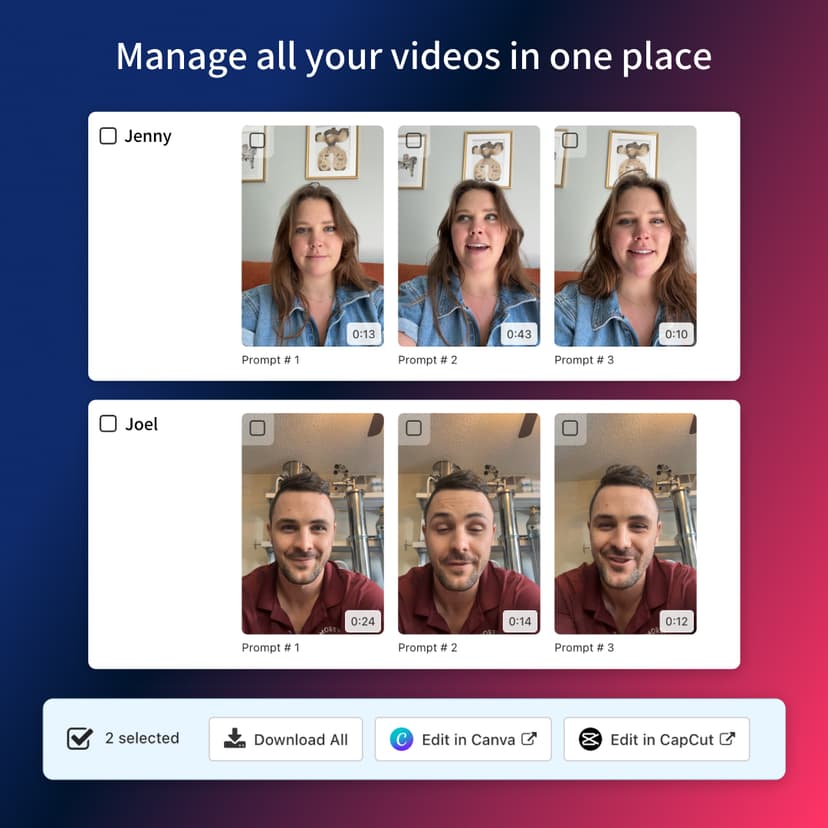
Storytime AI is primarily a teacher-facing tool for creating customized reading materials rather than an app your child will use independently to learn to read. For parents and educators, it is important to understand that this platform functions as a content generator. It allows teachers to quickly produce stories, videos, and music tailored to specific grade levels, reading abilities, and student interests. By leveraging AI, educators can differentiate instruction, for example, taking a single historical topic and generating reading passages at three different complexity levels for a diverse classroom. Because Storytime AI is not yet evaluated by The Learning Standard, we cannot confirm its direct impact on literacy outcomes. However, from a learning science perspective, the ability to rapidly adjust text complexity supports the concept of the zone of proximal development, ensuring your child reads material that is challenging but accessible. Parents should note that while the app creates the content, the actual teaching, feedback, and comprehension checks rely on the classroom teacher. The platform does not offer automated phonetic instruction, spaced repetition for vocabulary, or interactive scaffolding directly to the student.
How Does Storytime AI Work?
Storytime AI relies on a personalized learning model driven by educator-directed content differentiation rather than automated student-facing instruction. Teachers log into the platform to access a pre-existing library of standards-aligned texts or to generate custom reading materials based on current classroom topics. When creating resources, an educator inputs parameters such as subject matter, target grade level, and specific student interests. The AI then generates reading passages, which teachers can easily translate into other languages or level up and down in complexity. This allows a teacher to distribute the same thematic content to the entire class while ensuring each student receives a text matched to their current decoding and comprehension skills. The platform also generates accompanying comprehension questions to help teachers assess progress. Because the application does not interact directly with students in real-time, the learning mechanics, such as modeling, guided practice, and feedback, must be executed by the teacher using the AI-generated materials.
Strengths and tradeoffs of Storytime AI
The biggest strength of Storytime AI is its ability to rapidly generate differentiated texts, while its biggest weakness is the lack of direct, interactive scaffolding for the student. Differentiating instruction is notoriously time-consuming for educators, and this platform effectively solves that bottleneck. By allowing teachers to easily modify the Lexile level of a passage, Storytime AI helps ensure students practice reading within their optimal cognitive load limits. Furthermore, customizing stories to include student interests taps into intrinsic motivation, which learning science shows significantly increases reading stamina and engagement. However, the platform falls short in active instructional mechanics. Lack of immediate feedback is a notable limitation. Because the student reads a generated text offline or on a separate document, there is no system to provide corrective feedback on mispronounced words or immediate comprehension errors. Unlike adaptive reading apps that employ spaced repetition for high-frequency sight words or provide worked examples of phonics rules, Storytime AI simply delivers the text. Educators must manually build retrieval practice and active recall exercises into their lesson plans using the generated texts, as the software does not facilitate these evidence-based learning strategies directly.
Who Might Benefit From Storytime AI?
Storytime AI is best for PreK-6th grade educators who need to quickly generate differentiated reading materials for diverse classrooms. It is highly effective for teachers managing blended learning environments, inclusion classrooms with varying reading levels, or classrooms with a high population of multilingual learners requiring translated texts. Parents will not find much use for this as a direct-to-consumer app, as it requires pedagogical knowledge to integrate the generated texts into structured literacy routines. It is an ideal timesaver for curriculum coordinators and teachers looking to align engaging, customized content with specific educational standards.
Data Transparency
Meets Data Transparency Standard
Storytime AI meets our data transparency standard at Level 2 of 3 (Parent control). Level 3 needs the policy to document an API for retrieving their own data and a named export format.
29 of 35 checks passed
Evaluated September 2026
Privacy Policy →Level 1 · Basic protections
Does not sell data or target ads at students, limits sharing, and lets parents see and delete their child's data.
Level 2 · Parent control (meets the standard)
Families can get their data out, know who processes it, and know how long it is kept.
Level 3 · Direct data access
Families or schools can pull their own data through an API, in a stated format.
Not documented: an API for retrieving their own data, a named export format
View all 35 checks
Parent Access7/8
Does the policy mention parents specifically?
“A **parent or guardian** uses the parent-facing features of the Service to view their child's work or exercise rights described in Section 12.”
Can parents view their child's data?
“**Right to review.** A parent or guardian may review information we have about their child by making a request through the school.”
Can parents modify their child's data?
“A parent or guardian who wants to access, correct, or delete a child's information should contact the child's teacher or the school's privacy contact.”
Can parents delete their child's account?
“**Right to deletion.** A parent or guardian may request deletion by making a request through the school.”
Is there a dedicated Children's Privacy section?
“### 11\. Children under 13 — COPPA”
Does it reference COPPA compliance?
“We rely on the school's COPPA-compliant consent model:”
Does it reference FERPA compliance?
“When student data is involved, we operate as a **"school official"** with a legitimate educational interest under the Family Educational Rights and Privacy Act ( **FERPA**, 20 U.S.C. § 1232g; 34 C.F.R. Part 99)”
Is parental consent required for child accounts?
The policy relies on the school or district to consent on parents' behalf and does not require consent directly from parents.
Data Portability3/5
Can users access their personal data?
“You may request access to or correction of your personal information at `info@storytimeaiapp.com` (see Section 10 for how requests are handled)”
Can users download/export their data?
“**Right to a copy.** A parent or guardian may request an export of their child's information from the school, which the school can produce using the export mechanism in Section 10.2.”
Is there a self-service data access tool?
“**Student-data export.** A teacher (for students in their own classrooms) or an administrator (for students in their school or district) can export a student's data through the compliance endpoints described in our Data Retention and Deletion policy and our AI and Student Data guide.”
Is a specific data format mentioned for export?
The policy describes exports but does not name a file format.
Is there an API for data access?
The policy mentions 'compliance endpoints' for export but never says users, parents or schools can retrieve data through an API.
Data Minimization4/6
Is data collection itemized?
“| Identifiers | Student first name, last initial, classroom code, student personal sign-in code | Provided by the teacher when rostering |”
Can the app be used without a real name?
The policy says it collects the student's first name and last initial from the teacher's roster.
Can the app be used without an email?
“First name, last initial, a classroom code, a personal sign-in code, the work they do in class, and short audio recordings when a teacher assigns a reading-fluency activity.”
Does it state collection is limited to what is necessary?
“We collect the **minimum** information needed to deliver the classroom activities the teacher has assigned.”
Is IP address anonymized or truncated?
The policy says IP addresses are collected to run the Service but does not say they are anonymized or truncated.
Is location tracking explicitly excluded?
“behavioural-advertising identifiers, location more precise than the IP address required to operate the Service, or any other category of sensitive personal information unless a teacher explicitly enters it (which we do not request).”
Third-Party Protection7/7
Does it explicitly state no selling of data?
“We do **not** sell or rent student personal information.”
Are third-party providers named?
“send short audio clips of the student reading or speaking to SpeechAce, our sole speech-recognition sub-processor.”
Are providers contractually restricted?
“Each sub-processor is bound by a written agreement and is subject to the protections described in this Notice and in our Data Privacy Agreement.”
No-targeted-advertising commitment?
“We do **not** use or share student personal information for targeted advertising or to amass a profile about a student for any commercial purpose other than providing the Service.”
Is AI/ML data sharing addressed?
“Each AI sub-processor that receives student-derived input is engaged under terms that prohibit the sub-processor from using student-related inputs or outputs to train or fine-tune the sub-processor's models.”
Child-specific sharing restriction?
“We ensure these identifiers are not used to contact any child, build advertising profiles, or serve behavioural advertising: no advertising or analytics SDKs are loaded on the student experience, and identifiers are never shared with third parties for any purpose other than operating the Service.”
Cookies/tracking limited or opt-out?
“The Service uses browser cookies and local storage **only for the operation of the Service**:”
Deletion & Retention4/5
Can users delete their account?
“**Self-service teacher account deletion.** A teacher can delete their own account from Settings → Danger Zone.”
Self-service deletion mechanism?
“**Self-service teacher account deletion.** A teacher can delete their own account from Settings → Danger Zone. The flow requires password re-verification and explicit confirmation.”
Specific data retention timeline?
“Retained for teacher review for up to **30 days** after capture, then automatically and permanently deleted by storage lifecycle policy”
Auto-deletion of inactive accounts?
The policy keeps data while the account is active and until the school directs deletion, and does not auto-delete inactive accounts.
Post-deletion handling described?
“Deletion cascades to the student's assignments, submissions, audio clips, and dependent records.”
Advertising4/4
Advertising model explicitly disclosed?
“No. There are no ads in the Service.”
Free from third-party advertisements?
“No. There are no ads in the Service.”
Children excluded from ad targeting?
“We ensure these identifiers are not used to contact any child, build advertising profiles, or serve behavioural advertising”
Ad-free option available?
“No. There are no ads in the Service.”
Meets Data Transparency Standard
The reviewed policy met our data transparency standard. This result describes the policy disclosures we assessed. Actual practices and legal compliance were not verified.
About this evaluation: Based on automated analysis of Privacy Policy against 35 policy-disclosure questions, including questions adapted from the Common Sense Privacy Program's published evaluation questions. TLS is not affiliated with Common Sense Media, and this is not a Common Sense rating. Quoted text is copied from the policy; unquoted notes are our summary. Results describe what the policy documents, not the company's actual practices. Privacy policies can change: this review reflects the version we analyzed and does not determine legal compliance.
Sources and review method
TLS combines product information and editorial analysis to explain how Storytime AI works, its tradeoffs, and the questions to ask before choosing it. Product features, an instructional rationale and evidence of learning outcomes are different kinds of information.
Formal Learning Standard assessment: not yet completed. Data Transparency findings are reported separately and do not establish learning effectiveness. Read our methodology.
Frequently Asked Questions About Storytime AI
Is Storytime AI free?
The basic educator library containing pre-made, curriculum-aligned materials is free. However, premium features such as creating custom resources, text leveling, and translation require a paid subscription. Custom pricing is available for schools and districts.
Is Storytime AI good for elementary students?
Storytime AI is highly relevant for PreK through 6th-grade students, but it is designed for their teachers to use. The materials generated are appropriate for early childhood and elementary reading levels, provided educators review the AI output for age-appropriate vocabulary and structure.
What does Storytime AI teach?
Storytime AI does not teach specific subjects directly; rather, it provides customized reading materials for early childhood education, humanities, and social sciences. Teachers use these AI-generated stories and texts to teach decoding, reading comprehension, and subject-specific knowledge.
How does Storytime AI compare to traditional leveled libraries?
Traditional leveled libraries offer a static collection of books, whereas Storytime AI allows teachers to dynamically generate and alter texts. This means a teacher can take a single topic, like the solar system, and instantly create versions of the text for advanced readers, struggling readers, and English language learners.
Has The Learning Standard evaluated Storytime AI?
TLS has not yet completed a Learning Standard evaluation of how well Storytime AI teaches. Its privacy policy has been reviewed for Data Transparency and reaches Level 2, Parent control.
Is Storytime AI COPPA compliant?
The reviewed privacy policy references COPPA. A policy reference alone does not establish COPPA compliance. Policy review note: The policy states it complies with COPPA.
Is Storytime AI FERPA compliant?
The reviewed privacy policy references FERPA. A policy reference alone does not establish FERPA compliance. Policy review note: The policy says it acts as a FERPA school official.
Does Storytime AI have a children's privacy policy?
The reviewed policy includes a dedicated children's privacy section. Policy review note: The policy has a dedicated section for children under 13 and COPPA.
Does Storytime AI sell student data?
The reviewed policy states that the app does not sell data. This is a policy statement; actual data practices were not verified. Policy review note: The policy says the company does not sell student data.
Can you delete your data from Storytime AI?
The reviewed privacy policy describes account deletion. We have not tested the deletion process. Policy review note: Teachers can delete their accounts, and parents can ask for deletion through the school.
Follow TLS Research
Subscribe to future TLS research updates: app reviews, findings, and what the evidence shows.
Screenshots
Take Action
For Storytime AI
If you represent Storytime AI and have a correction or new evidence, send the relevant source so we can review and update this page.
Submit a correctionDetails
- Pricing
- Storytime AI offers free access to the curriculum- and standards-aligned materials in our Educator Library. Premium plans include access to creating custom resources, leveling, translation, and other advanced features. Premium plans are available for educators, schools, districts, and states. Please contact info@storytimeaiapp.com to discuss custom pricing for schools and districts.
- Platforms
- Web Browser, iOS (Apple mobile), iPadOS (Apple tablet), Android (Google mobile), Tizen (Samsung mobile), Windows (Microsoft), macOS (Apple), Chrome OS (Google)
- Grade Levels
- Prekindergarten, Transitional Kindergarten, Kindergarten, 1st Grade, 2nd Grade, 3rd Grade, 4th Grade, 5th Grade, 6th Grade
- Website
- Visit site