
STEM Education Works
Product by SDI Innovations
Facts checked: Not yet checked
Our take (not a Learning Standard rating). This label applies to learning-science judgments throughout this overview.
Our take (not a Learning Standard rating)
Pending full evaluation by The Learning Standard. STEM Education Works effectively facilitates hands-on, project-based learning through physical hardware like drones and 3D printers. However, its reliance on school-level implementation means instructional quality will vary wildly depending on the teacher's professional development and adherence to the provided curriculum.
Pros
- Integrates tactile learning with abstract coding concepts through physical robotics and drones.
- Uses project-based learning to increase student engagement and provide authentic context for STEM skills.
- Provides immediate physical feedback on logic errors when students test their code on actual hardware.
Cons
- Requires expensive physical hardware and institutional purchasing, making it entirely inaccessible for individual home use.
- Instructional quality heavily depends on the individual teacher rather than built-in software scaffolds.
- Lacks built-in automated retrieval practice or spaced repetition software to cement foundational coding syntax in long-term memory.
What Do We Know About STEM Education Works?
STEM Education Works provides effective hands-on learning for schools, but it is an institutional curriculum rather than a standalone app your child can use at home. This platform packages physical hardware like robotics kits, drones, and 3D printers with lesson plans designed for classroom teachers. If your child's school uses this program, they will benefit from project-based learning, which cognitive science shows is highly effective for transferring abstract concepts into real-world applications. When your child codes a drone to fly a specific path, they receive immediate, physical feedback on their logic errors. However, because this is an educator-led platform, its success depends entirely on the teacher's execution. The software itself does not independently teach, assess, or adapt to your child's individual learning pace. There are no built-in spaced repetition algorithms to ensure your child remembers coding syntax months later. It is a tool for classrooms, requiring significant teacher mediation to bridge the gap between playing with technology and actual cognitive skill acquisition.
How Does STEM Education Works Work?
STEM Education Works relies on project-based learning combined with tangible, hands-on hardware integration. Educators receive lesson plans, physical technology, and professional development designed to facilitate experiential learning in the classroom. Instead of sitting your child in front of a purely digital coding interface, the system requires them to write code that controls physical objects, such as a robotic arm or a drone. This approach utilizes embodied cognition, reinforcing mental models through physical action. The curriculum is structured around complex, multi-step projects rather than isolated rote drills. Students must apply the engineering design process by identifying a problem, prototyping a solution with 3D printers or robotics, testing their design, and iterating based on failure. The platform does not track individual student mastery through automated quizzes. Instead, assessment is rubric-based and observational, requiring the teacher to evaluate the final project and the student's problem-solving process.
Strengths and tradeoffs of STEM Education Works
The biggest strength of STEM Education Works is its use of tangible, project-based learning to provide immediate feedback, while its biggest weakness is the lack of systematic retrieval practice for core concepts. Authentic context is crucial for deep learning, and this platform excels by connecting abstract coding logic to physical movement. When a student writes a script for a robot, the physical behavior of that robot provides instant, undeniable feedback on their logic. This immediate error-correction cycle helps build accurate mental models. Embodied cognition plays a role here, as physically manipulating 3D-printed objects and robotics can lower the cognitive load associated with purely abstract spatial reasoning. However, the system lacks automated mechanisms for foundational skill-building. Retrieval practice and spaced repetition are largely absent from the core software. While students apply concepts during projects, they do not receive systematic, spaced quizzing to ensure long-term retention of specific programming languages or mathematical formulas. Furthermore, the lack of adaptive scaffolding means the software cannot automatically lower the difficulty if a student struggles; that intervention falls entirely on the classroom teacher.
Who Might Benefit From STEM Education Works?
Best for K-12 schools and districts looking to implement comprehensive, hands-on STEM programs with integrated hardware. STEM Education Works is not designed for individual consumer purchase or independent home learning. It is built for career and technical education classrooms, makerspaces, and after-school programs where trained educators can guide students through complex projects. Because the curriculum scales across all ages, it serves elementary students building basic mechanical literacy just as well as high schoolers engaging in advanced drone programming and 3D design for career preparation.
Data Transparency
Does Not Meet Data Transparency Standard
STEM Education Works does not meet our data transparency standard. Its privacy policy does not document basic protections, including a commitment against targeted advertising, limits on sharing children's data and contractual limits on service providers.
14 of 35 checks passed
Evaluated September 2026
Privacy Policy →Level 1 · Basic protections
Does not sell data or target ads at students, limits sharing, and lets parents see and delete their child's data.
Not documented: a commitment against targeted advertising, limits on sharing children's data, contractual limits on service providers, a COPPA or FERPA commitment
Level 2 · Parent control (meets the standard)
Families can get their data out, know who processes it, and know how long it is kept.
Not documented: data export, a data retention timeline
Level 3 · Direct data access
Families or schools can pull their own data through an API, in a stated format.
Not documented: an API for retrieving their own data, a named export format
View all 35 checks
Parent Access5/8
Does the policy mention parents specifically?
“If you become aware that a child under 16 has provided us with Personal Information without parental consent, please contact us.”
Can parents view their child's data?
“Only you, or someone legally authorized to act on your behalf, may make a verifiable consumer request related to your personal information. You may also make a verifiable consumer request on behalf of your minor child.”
Can parents modify their child's data?
The policy does not give parents or users any right to correct or modify data.
Can parents delete their child's account?
“If we become aware that a child under 16 has provided us with Personal Information without parental consent, we will take steps to terminate the child's account and delete any Personal Information provided to us.”
Is there a dedicated Children's Privacy section?
“4. **Children** **.** The Websites are not directed to children under 16.”
Does it reference COPPA compliance?
The policy does not mention COPPA.
Does it reference FERPA compliance?
The policy does not mention FERPA.
Is parental consent required for child accounts?
“If we become aware that a child under 16 has provided us with Personal Information without parental consent, we will take steps to terminate the child's account and delete any Personal Information provided to us.”
Data Portability1/5
Can users access their personal data?
“You have the right to request that we disclose to you the Personal Information we collect, use, disclose, and sell, including (i) the categories of, and specific pieces of, Personal Information that we have collected about you;”
Can users download/export their data?
The policy offers disclosure on request but says nothing about downloading or exporting data.
Is there a self-service data access tool?
Access requests go through a request form or phone line, not a self-service tool.
Is a specific data format mentioned for export?
The policy does not name any export format.
Is there an API for data access?
The policy does not mention an API for data access.
Data Minimization1/6
Is data collection itemized?
“Information by which you may be personally identified, such as your name, email address, mailing address, telephone number, address and zip code, payment information, and internet protocol address (collectively "Personal Information");”
Can the app be used without a real name?
The policy says it collects users' names.
Can the app be used without an email?
The policy says it collects email addresses.
Does it state collection is limited to what is necessary?
The policy does not say collection is limited to what is necessary.
Is IP address anonymized or truncated?
The policy collects IP addresses and does not say they are anonymized or truncated.
Is location tracking explicitly excluded?
The policy lists geolocation data among the categories it has collected.
Third-Party Protection3/7
Does it explicitly state no selling of data?
“No Operator will sell or rent your Personal Information.”
Are third-party providers named?
“Such third parties may include, for example, but are not limited to Google Analytics, Google AdWords, and Facebook.”
Are providers contractually restricted?
The policy shares data with service providers but does not say they are contractually restricted in how they use it.
No-targeted-advertising commitment?
The policy says Google and Facebook may be used for targeted marketing and ads based on interests.
Is AI/ML data sharing addressed?
The policy does not address AI or machine learning.
Child-specific sharing restriction?
The policy only says it has no knowledge of selling data of consumers under 16 and does not restrict sharing of children's data.
Cookies/tracking limited or opt-out?
“However, you may be able to change your privacy preferences regarding the use of cookies and similar technologies through your browser. You are always free to decline our cookies if your browser permits, but some parts of our site may not work properly in that case.”
Deletion & Retention3/5
Can users delete their account?
“If you have an Account, you can close your account by visiting your Account or by reaching out via our [Privacy Request form](https://sdiinnovations.com/privacy-request/).”
Self-service deletion mechanism?
“If you have an Account, you can close your account by visiting your Account or by reaching out via our [Privacy Request form](https://sdiinnovations.com/privacy-request/).”
Specific data retention timeline?
The policy gives no specific retention period.
Auto-deletion of inactive accounts?
The policy does not address automatic deletion of inactive accounts.
Post-deletion handling described?
“We will remove your Account from the Website, but we may retain Information for the purposes authorized under this Privacy Policy, and may also maintain residual copies of your Information in our backup systems, unless prohibited by law, or unless you opt out pursuant to the terms of this Privacy Policy.”
Advertising1/4
Advertising model explicitly disclosed?
“Additionally, other companies which may place advertising on the Website may collect information about you when you view or click on their advertising through the use of cookies.”
Free from third-party advertisements?
The policy says third-party advertisements appear on the Website.
Children excluded from ad targeting?
The policy does not exclude children from ad targeting.
Ad-free option available?
The policy describes advertising on the Website and offers no ad-free option.
What This Means
The policy review did not meet our data transparency standard. The checks above show the documented findings and unknowns. A missing statement does not establish how the app handles data in practice.
About this evaluation: Based on automated analysis of Privacy Policy against 35 policy-disclosure questions, including questions adapted from the Common Sense Privacy Program's published evaluation questions. TLS is not affiliated with Common Sense Media, and this is not a Common Sense rating. Quoted text is copied from the policy; unquoted notes are our summary. Results describe what the policy documents, not the company's actual practices. Privacy policies can change: this review reflects the version we analyzed and does not determine legal compliance.
Sources and review method
TLS combines product information and editorial analysis to explain how STEM Education Works works, its tradeoffs, and the questions to ask before choosing it. Product features, an instructional rationale and evidence of learning outcomes are different kinds of information.
Formal Learning Standard assessment: not yet completed. Data Transparency findings are reported separately and do not establish learning effectiveness. Read our methodology.
Frequently Asked Questions About STEM Education Works
Is STEM Education Works free?
No, STEM Education Works is not free and does not offer consumer-facing subscriptions. It is an enterprise-level educational product sold directly to schools and districts. Pricing requires contacting the vendor, as costs vary significantly based on the specific hardware kits, such as drones or 3D printers, and the level of professional development purchased for the teaching staff. Parents cannot buy this directly for home use.
Is STEM Education Works good for young children?
Yes, it can be effective for early elementary students when facilitated by a trained teacher. The K-12 curriculum includes age-appropriate hardware and introductory robotics that help younger students build foundational logic and spatial reasoning skills. Because the learning is tactile and physical, it relies less on heavy reading comprehension, making the basic engineering concepts highly accessible to younger learners working in groups.
What does STEM Education Works teach?
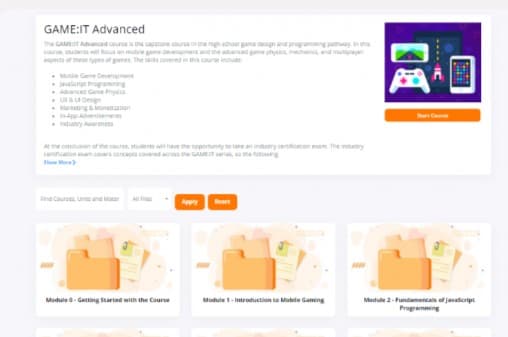
STEM Education Works teaches computer science, robotics, 3D printing, and drone operation within a career and technical education framework. Students learn block-based and text-based coding, the engineering design process, and applied mathematics. Rather than isolating these subjects, the curriculum integrates them through project-based learning, requiring students to use multiple disciplines simultaneously to solve practical, real-world problems. This prepares them for modern technical careers.
How does STEM Education Works compare to Project Lead The Way (PLTW)?
Both platforms offer comprehensive, project-based STEM curricula for K-12 schools, but STEM Education Works places a heavier emphasis on integrating specific, modern hardware like drones and 3D printers directly into the daily workflow. PLTW offers a broader range of distinct pathways, including biomedical science. Schools choosing between them must weigh hardware integration against broader subject pathways. Neither has yet undergone a full evaluation using The Learning Standard's methodology for instructional efficacy.
Has The Learning Standard evaluated STEM Education Works?
TLS has not yet completed a Learning Standard evaluation of how well STEM Education Works teaches. Its privacy policy has been reviewed for Data Transparency and does not yet document the basic protections (Level 1).
Is STEM Education Works COPPA compliant?
A COPPA reference was not found in the reviewed privacy policy. This does not determine whether the app complies with COPPA. Policy review note: The policy does not mention COPPA.
Is STEM Education Works FERPA compliant?
A FERPA reference was not found in the reviewed privacy policy. This does not determine whether the app complies with FERPA. Policy review note: The policy does not mention FERPA.
Does STEM Education Works have a children's privacy policy?
The reviewed policy includes a dedicated children's privacy section. Policy review note: The policy has a section headed Children.
Does STEM Education Works sell student data?
The reviewed policy states that the app does not sell data. This is a policy statement; actual data practices were not verified. Policy review note: The policy says the operators do not sell personal information.
Can you delete your data from STEM Education Works?
The reviewed privacy policy describes account deletion. We have not tested the deletion process. Policy review note: Users can close their account.
Follow TLS Research
Subscribe to future TLS research updates: app reviews, findings, and what the evidence shows.
Screenshots
Take Action
For STEM Education Works
If you represent SDI Innovations and have a correction or new evidence, send the relevant source so we can review and update this page.
Submit a correction