
Spelling with Emile
Product by Emile Education
Facts checked: Not yet checked
Our take (not a Learning Standard rating). This label applies to learning-science judgments throughout this overview.
Our take (not a Learning Standard rating)
While Spelling with Emile uses a game-based environment to drive high student engagement, its reliance on gamification can overshadow core phonetic instruction. It effectively leverages retrieval practice for vocabulary retention, but parents should monitor if the gameplay actually translates to independent spelling mastery outside the app.
Pros
- Applies retrieval practice through repeated exposure to spelling lists in interactive formats.
- Utilizes gamification elements to maintain high engagement during repetitive spelling drills.
- Offers a structured progression system that aligns with primary school grade levels.
- Provides an accessible entry point for early childhood and elementary students to practice basic literacy.
Cons
- The heavy focus on games often causes students to guess answers rather than apply phonetic rules.
- Provides no explicit instruction on spelling rules or morphology before testing words.
- Feedback is limited to correct or incorrect states rather than explaining the specific phonetic error.
- Extraneous cognitive load from complex game mechanics distracts from the target learning objectives.
What Do We Know About Spelling with Emile?
Spelling with Emile is an engaging drill-and-practice tool but should supplement, rather than replace, structured literacy instruction. Your child will likely enjoy the game-based interface, which motivates them to complete spelling repetitions that might otherwise feel tedious. The app relies heavily on retrieval practice, a proven learning science strategy where actively recalling information strengthens memory pathways. However, because it leans heavily into fast-paced gameplay, your child may resort to guessing or memorizing word shapes rather than learning underlying phonetic rules. The app does not provide robust explicit instruction on why words are spelled a certain way. Instead, it tests knowledge they are expected to have already acquired in the classroom. This makes it an effective practice arena but a poor primary teacher. Since the app is built primarily for school deployment, your child's teacher will likely set the word lists. You should consistently check if your child can correctly spell these same words on a blank piece of paper without the visual cues or multiple-choice options provided by the game environment. Pure recall is the ultimate test of spelling mastery.
How Does Spelling with Emile Work?
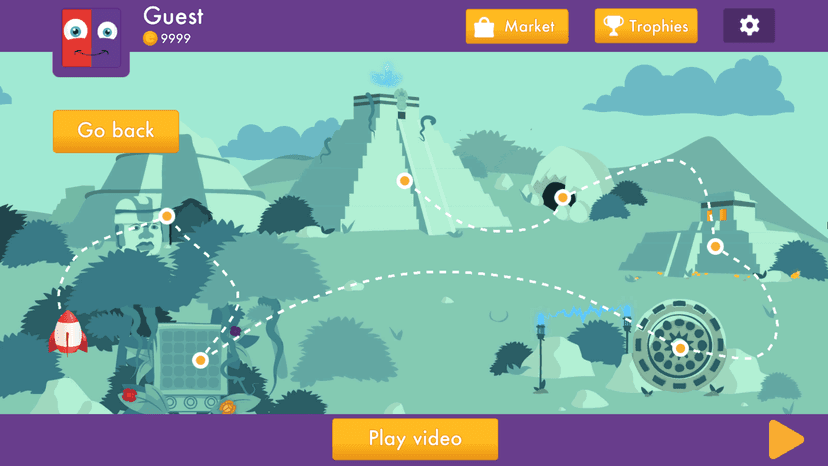
Spelling with Emile uses game-based retrieval practice to drill spelling words through interactive challenges. The app integrates word lists into various mini-games where students must correctly identify, construct, or select the right spelling to progress or earn rewards. By framing spelling drills as games, it masks the repetitive nature of vocabulary memorization. Students engage in spaced practice, encountering the same words multiple times across different play sessions, which helps transfer words into long-term memory. The mechanics typically involve multiple-choice selection or dragging and dropping letters, which requires recognition rather than pure unprompted recall. Teachers or school administrators assign specific word groups based on the curriculum, and the app tracks completion and accuracy. The system adjusts the game difficulty, but the learning path is primarily linear, focusing on mastering one list before moving to the next.
Strengths and tradeoffs of Spelling with Emile
The biggest strength of Spelling with Emile is its ability to motivate sustained practice through gamification, while its biggest weakness is the lack of explicit phonetic feedback when a student makes an error. From a learning science perspective, the app succeeds at building automaticity through repeated exposure. By requiring students to quickly recall spellings to succeed in the games, it effectively uses retrieval practice to cement vocabulary. The multi-sensory environment keeps cognitive engagement high during tasks that are traditionally dry. However, the app falls short in its corrective feedback. When your child misspells a word, the app rarely explains the morphological or phonetic rule they violated. This forces a reliance on rote memorization rather than deep understanding. Additionally, the extraneous cognitive load of managing game rules, scoring systems, and animations can sometimes distract working memory away from the actual spelling task. Students may learn how to beat the game without necessarily transferring that spelling proficiency to their independent writing.
Who Might Benefit From Spelling with Emile?
Best for elementary students who need an engaging way to practice assigned weekly spelling lists alongside traditional classroom instruction. Because the platform is designed for school-wide implementation, it serves first through seventh graders whose teachers use it to assign homework or reinforce daily lessons. It works particularly well for children who resist traditional paper-and-pencil spelling drills and need the extrinsic motivation of points and gameplay. It is not ideal for students struggling with severe decoding issues, as they require explicit, multisensory phonics instruction rather than fast-paced spelling games.
Sources and review method
TLS combines product information and editorial analysis to explain how Spelling with Emile works, its tradeoffs, and the questions to ask before choosing it. Product features, an instructional rationale and evidence of learning outcomes are different kinds of information.
Formal Learning Standard assessment: not yet completed. Data Transparency findings are reported separately and do not establish learning effectiveness. Read our methodology.
Frequently Asked Questions About Spelling with Emile
Is Spelling with Emile free?
No, Spelling with Emile is not free for individual users. It operates on a school licensing model, costing $105 per year per school. Parents can only access it if their child's school has purchased a subscription and provided login credentials.
Is Spelling with Emile good for 1st graders?
Yes, the app is suitable for 1st graders who are beginning to learn foundational spelling words. The game-based interface is highly engaging for young learners, though parents should ensure the fast-paced nature does not frustrate early readers who are still mastering basic phonics.
What does Spelling with Emile teach?
Spelling with Emile primarily teaches spelling and vocabulary retention. Despite its name, the broader Emile Education suite also covers early childhood education, humanities, and math, but the specific spelling module focuses on drilling word lists, high-frequency words, and grade-level spelling patterns.
How does Spelling with Emile compare to spelling on paper?
Spelling with Emile relies heavily on recognition and drag-and-drop mechanics, which requires less cognitive effort than unprompted recall on paper. While the app is excellent for initial practice, students must eventually transition to writing words on paper to prove true mastery.
Has The Learning Standard evaluated Spelling with Emile?
TLS has not yet completed a Learning Standard evaluation of how well Spelling with Emile teaches. TLS has not published a Data Transparency result for its privacy policy.
Follow TLS Research
Subscribe to future TLS research updates: app reviews, findings, and what the evidence shows.
Screenshots


Take Action
For Spelling with Emile
If you represent Emile Education and have a correction or new evidence, send the relevant source so we can review and update this page.
Submit a correctionDetails
- Pricing
- $105 per year per school
- Platforms
- iOS (Apple mobile), iPadOS (Apple tablet), Android (Google mobile), Windows (Microsoft), Chrome OS (Google)
- Grade Levels
- 1st Grade, 2nd Grade, 3rd Grade, 4th Grade, 5th Grade, 6th Grade, 7th Grade
- Website
- Visit site