
SocratiQ
Product by Koodup
Facts checked: Not yet checked
Our take (not a Learning Standard rating). This label applies to learning-science judgments throughout this overview.
Our take (not a Learning Standard rating)
SocratiQ offers an intriguing inquiry-based model driven by AI, but its effectiveness depends heavily on a student's prior knowledge and self-regulation skills. While collaborative features encourage social learning, the open-ended nature lacks the structured scaffolding and retrieval practice required for novices to master foundational concepts.
Pros
- Utilizes inquiry-based learning prompts to encourage deeper cognitive processing and student curiosity.
- Allows collaborative study sessions that facilitate peer-to-peer explanation, a proven technique for knowledge consolidation.
- Adapts to a vast range of subjects using AI, offering flexibility for highly varied student interests.
Cons
- Lacks structured mastery progression, leaving novices without necessary foundational scaffolding.
- Relies heavily on self-directed learning, which typically overwhelms students with low metacognitive skills.
- Does not incorporate systematic spaced repetition or retrieval practice for long-term memory retention.
- AI-generated content risks hallucinations or inaccuracies in highly specialized or complex academic subjects.
What Do We Know About SocratiQ?
SocratiQ is effective for advanced learners who possess strong self-regulation skills, but it will likely overwhelm novices who need structured guidance. Your child will enter an open-ended, AI-driven environment designed around inquiry-based learning. Instead of watching videos and answering multiple-choice questions, your child asks questions, explores topics collaboratively, and drives their own curriculum. This approach builds critical thinking when your child already understands a subject's basics. However, cognitive load theory indicates that entirely self-directed environments frustrate beginners. Without explicit instruction and step-by-step scaffolding, younger students or those tackling a new subject often experience cognitive overload. The app thrives in a collaborative setting. Your child can work with peers to untangle complex ideas, leveraging the well-documented benefits of peer teaching. Yet, parents must monitor usage closely. Because the platform relies on generative AI to facilitate learning across all grade levels and subjects, the accuracy of the information requires independent verification. SocratiQ functions better as a supplemental research and exploration tool rather than a primary curriculum replacement. Your child will get the most out of it if you use it to deepen existing interests rather than to introduce entirely unfamiliar mathematical or scientific concepts.
How Does SocratiQ Work?
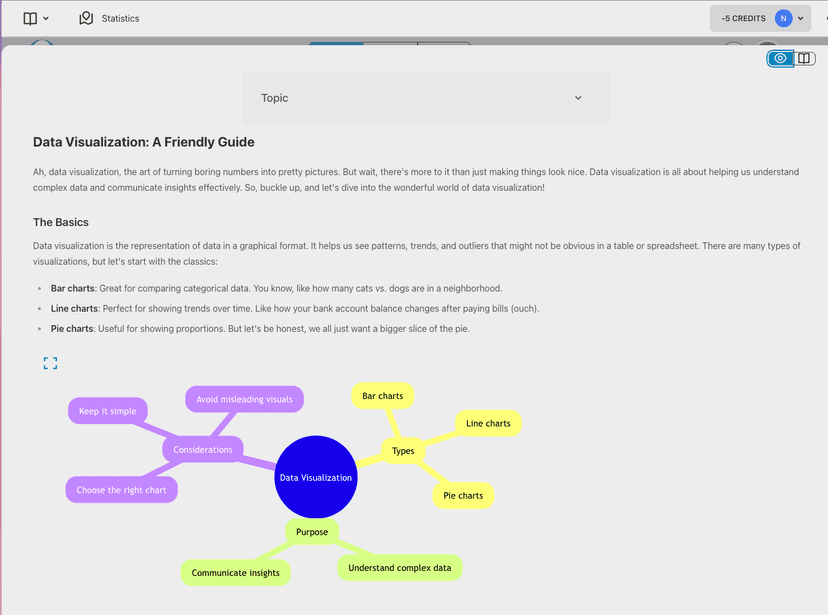
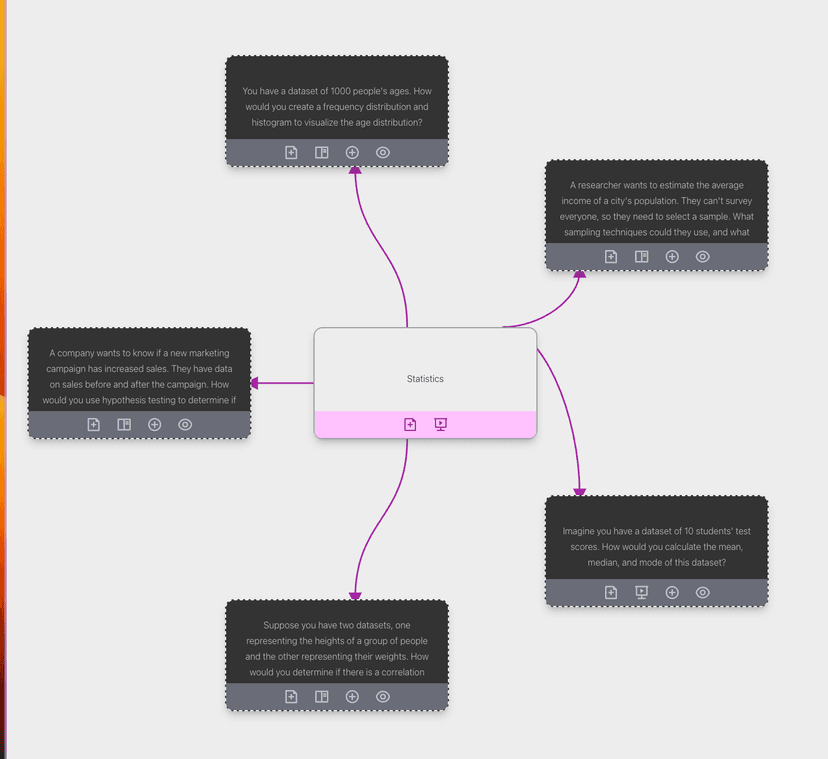
SocratiQ uses an AI-facilitated, inquiry-based pedagogical approach where students drive their own learning paths through questioning and peer collaboration. Your child starts by selecting a broad topic or asking a specific question across virtually any subject domain. The AI acts as a Socratic tutor, responding with guiding questions and supplemental information rather than simply delivering direct answers. This forces your child to engage actively with the material. The platform allows multiple students to join the same learning node, turning a solo research task into a collaborative project. Students share findings, debate answers, and synthesize information together. The interface maps out these learning journeys, showing how one question branches into subtopics. The system does not assign grades or push students through a predetermined syllabus. Instead, it relies on self-determination theory, attempting to build intrinsic motivation by giving your child complete autonomy over what and how they learn. Students spend credits to generate AI responses and expand their inquiry maps.
Strengths and tradeoffs of SocratiQ
SocratiQ's biggest strength is its ability to foster active learning through self-directed inquiry, while its biggest weakness is the absence of explicit instruction and structured retrieval practice. The platform excels at encouraging deep processing. By prompting students to formulate questions and explain concepts to peers, SocratiQ leverages the generation effect: the learning science principle that information is better remembered if it is actively generated from one's own mind rather than passively consumed. The collaborative features also support elaboration, helping students connect new information to existing knowledge. Conversely, the completely open structure ignores the limits of working memory. Novices need worked examples and tight scaffolding to build schemas. SocratiQ throws learners directly into the deep end, which often leads to wandering rather than productive struggle. Furthermore, the app lacks any mechanism for spaced repetition. Once a student explores a topic, the platform does not systematically retest that material days or weeks later to interrupt the forgetting curve. Therefore, while it is an excellent tool for exploration and building curiosity, it fails to provide the systematic practice required to cement foundational academic skills.
Who Might Benefit From SocratiQ?
SocratiQ is best for highly motivated middle school through college students who want to collaboratively research topics beyond their standard curriculum. Because the app requires strong reading comprehension and metacognitive skills to navigate unstructured AI responses, it is not recommended for early elementary students. It works well for project-based learning, debate preparation, or deep dives into niche humanities and science topics. Families homeschooling older children or educators looking for a tool to facilitate group inquiry projects will find the most value here, provided the students already possess baseline knowledge of the subjects they are exploring.
Sources and review method
TLS combines product information and editorial analysis to explain how SocratiQ works, its tradeoffs, and the questions to ask before choosing it. Product features, an instructional rationale and evidence of learning outcomes are different kinds of information.
Formal Learning Standard assessment: not yet completed. Data Transparency findings are reported separately and do not establish learning effectiveness. Read our methodology.
Frequently Asked Questions About SocratiQ
Is SocratiQ free?
No, SocratiQ is not free. It operates on a pay-as-you-go financial model using an introductory non-committal credit purchase system rather than a standard monthly subscription. Credits never expire, and students consume these credits actively as they interact with the AI tutor, generate new learning nodes, and map out their inquiry paths. Volume pricing is available upon request for schools, co-ops, or larger educational groups that need to purchase access for multiple students at a discounted rate.
Is SocratiQ good for elementary students?
SocratiQ is suitable for upper elementary students in the fourth grade and above, but it requires significant adult supervision and intervention to be effective. The self-directed, text-heavy AI interface demands strong reading comprehension, typing skills, and self-regulation. Younger students typically benefit far more from explicit instruction and structured practice rather than open-ended inquiry. If you use this with a fourth or fifth grader, expect to sit with your child to help guide their questions and manage their cognitive load.
What does SocratiQ teach?
SocratiQ does not have a set curriculum, specific syllabi, or distinct courses. Instead, it acts as a generalized AI tutor that can cover Humanities, Social Science, Science, Math, and Applied Science. Your child entirely drives the educational content by asking questions and exploring topics of interest. This makes it a general-purpose exploration tool rather than a targeted skills trainer. It functions beautifully for researching historical events or scientific theories, but poorly for sequential math instruction.
How does SocratiQ compare to Khan Academy?
While SocratiQ relies on unstructured, student-driven inquiry and AI-facilitated collaboration, Khan Academy provides highly structured, mastery-based progression with explicit video instruction and immediate feedback. Khan Academy is significantly better for learning foundational math and science skills because it utilizes spaced repetition and structured practice sets. SocratiQ, on the other hand, is better suited for open-ended research, cross-disciplinary exploration, and collaborative peer projects where students already possess the foundational knowledge required to ask high-level questions.
Has SocratiQ been evaluated by The Learning Standard?
SocratiQ is currently pending evaluation and has not yet been formally rated by The Learning Standard. The Learning Standard's methodology requires rigorous, independent testing against proven learning science principles (such as retrieval practice, spaced repetition, and cognitive load management) before a definitive verdict is issued. Parents and educators are encouraged to review the methodology page for detailed information on the strict evaluation criteria used to determine if an educational app truly facilitates long-term knowledge retention.
Has The Learning Standard evaluated SocratiQ?
TLS has not yet completed a Learning Standard evaluation of how well SocratiQ teaches. TLS has not published a Data Transparency result for its privacy policy.
Follow TLS Research
Subscribe to future TLS research updates: app reviews, findings, and what the evidence shows.
Screenshots

Take Action
For SocratiQ
If you represent Koodup and have a correction or new evidence, send the relevant source so we can review and update this page.
Submit a correctionDetails
- Pricing
- Introductory non-committal credit purchase. Credits never expire. Volume pricing available upon request.
- Platforms
- Web Browser, Windows (Microsoft), macOS (Apple), Chrome OS (Google)
- Grade Levels
- 4th Grade, 5th Grade, 6th Grade, 7th Grade, 8th Grade, 9th Grade, 10th Grade, 11th Grade, 12th Grade, Associate's degree, Bachelor's degree, Post-baccalaureate certificate, Master's Degree, Post-master's certificate, Doctoral Degree
- Website
- Visit site