
Snappet
Product by Snappet Inc.
Facts checked: Not yet checked
Our take (not a Learning Standard rating). This label applies to learning-science judgments throughout this overview.
Our take (not a Learning Standard rating)
While Snappet utilizes adaptive learning technology and provides real-time data to educators, The Learning Standard has not yet formally evaluated its curriculum against learning science standards. The platform balances digital practice with hands-on instruction, offering immediate feedback that helps teachers target interventions, but its overall efficacy requires further independent validation.
Pros
- Delivers real-time performance data to educators to enable immediate instructional interventions.
- Uses adaptive learning algorithms to adjust problem difficulty based on your child's current mastery level.
- Combines digital skill practice with traditional classroom instruction to support blended learning environments.
- Provides immediate corrective feedback to prevent students from practicing and encoding incorrect methods.
Cons
- The Learning Standard has not yet independently validated the efficacy of its curriculum against cognitive science principles.
- Pricing is opaque and requires institutional purchasing rather than direct parent subscriptions.
- Heavy reliance on digital delivery for core instruction may reduce essential peer-to-peer collaborative learning.
What Do We Know About Snappet?
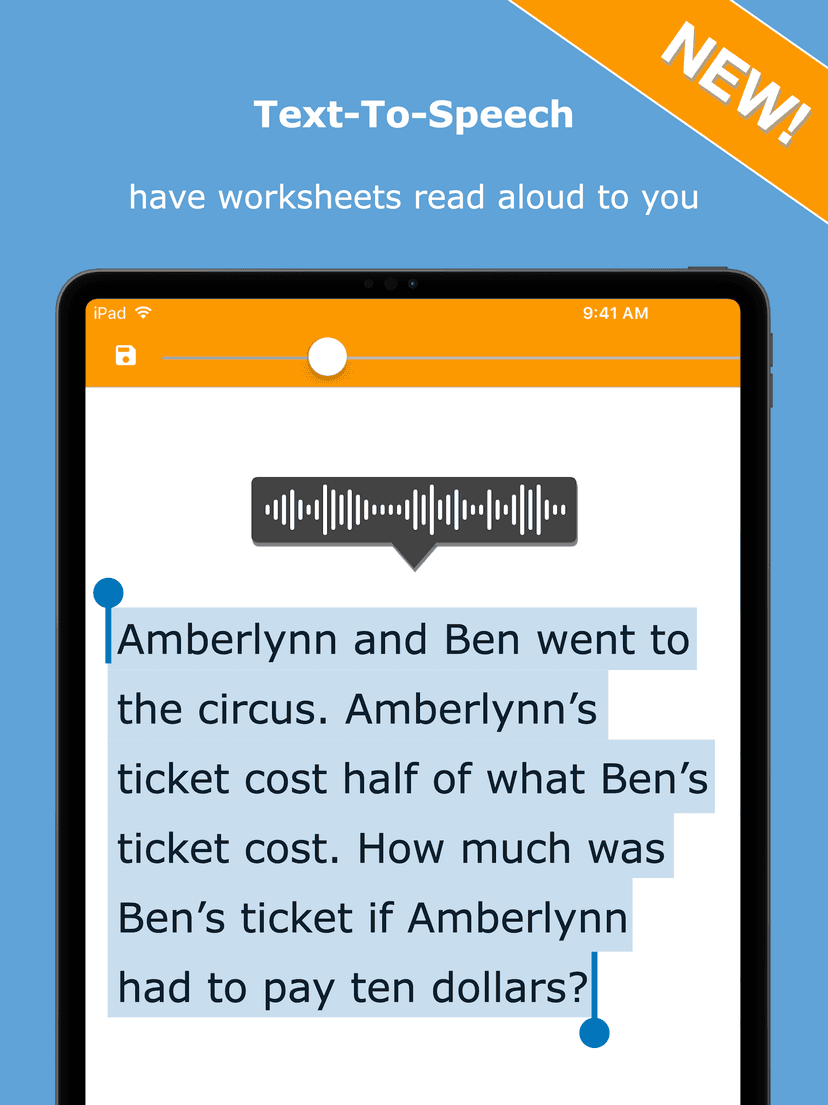
Snappet serves primarily as an institutional teaching tool that requires classroom integration to be effective, rather than a standalone app for home use. The Learning Standard has not yet evaluated this platform, so parents should rely on their school's assessment of its impact on their child's learning. Snappet replaces traditional textbooks with digital modules for math, language, and spelling. The platform is designed to give teachers real-time visibility into your child's progress. When your child answers a question, the system instantly logs the result on the teacher's dashboard. This allows educators to identify immediate misunderstandings and step in before your child reinforces bad habits. The software also uses adaptive learning technology, meaning the difficulty of questions shifts based on how accurately your child responds. While this prevents frustration and maintains a desirable difficulty level, parents cannot purchase this system independently for home practice. If your child's school uses Snappet, you should ask the teacher how they use the real-time data to support individual learning paths and whether they supplement the digital screen time with hands-on, paper-based practice to ensure deep cognitive retention.
How Does Snappet Work?
Snappet uses a blended learning approach that combines digital adaptive practice with teacher-led instruction and real-time analytics. In the classroom, a teacher typically introduces a new concept using Snappet's interactive whiteboard tools before students transition to their individual devices for guided practice. As students work through math or language problems, the platform requires active retrieval practice, forcing them to pull information from memory rather than simply recognizing correct answers. The system immediately grades each response, providing instantaneous feedback to the student and simultaneously updating the teacher's dashboard. This data loop acts as a formative assessment mechanism. If the system detects that a student is struggling, the adaptive algorithm automatically dials back the difficulty to rebuild foundational skills, while teachers receive a targeted alert to provide one-on-one intervention. Conversely, students who demonstrate quick mastery are automatically accelerated to more complex problems to maintain engagement and prevent boredom.
Strengths and tradeoffs of Snappet
Snappet's biggest strength is its real-time diagnostic dashboard for teachers, while its biggest weakness is the lack of independent efficacy data verifying its instructional design. Formative assessment is a critical component of effective teaching, and Snappet excels by making student comprehension instantly visible. Instead of waiting for a weekly quiz to grade, teachers can see exactly who is struggling with a specific math or language concept in the exact moment of instruction. This enables immediate, targeted interventions that prevent students from encoding errors. Furthermore, the platform's adaptive algorithms support individualized learning paths by adjusting difficulty on the fly, which aligns with the concept of the zone of proximal development. However, relying heavily on a digital interface for core curriculum poses challenges. Working memory can be easily overwhelmed by excessive screen-based instruction, and the platform's specific use of spaced repetition and interleaved practice remains unverified by The Learning Standard. Additionally, because the software is locked behind institutional purchasing, parents have zero visibility or control over the curriculum unless the school explicitly shares access or reports.
Who Might Benefit From Snappet?
Snappet is best for K-8 school districts and classroom teachers seeking a blended learning platform to replace traditional textbooks with data-driven digital practice. Because it requires a school-wide or classroom-level implementation, it is not designed for individual parents seeking supplemental tutoring or homeschooling software. The platform serves students across all elementary and middle school skill levels by utilizing adaptive pathways that scale up or down based on real-time performance. It is particularly effective for educators who want to minimize manual grading while maximizing their ability to deliver targeted, small-group interventions during standard math and language instruction blocks.
Data Transparency
Meets Data Transparency Standard
Snappet meets our data transparency standard at Level 2 of 3 (Parent control). Level 3 needs the policy to document an API for retrieving their own data and a named export format.
21 of 35 checks passed
Evaluated September 2026
Privacy & Cookies →Level 1 · Basic protections
Does not sell data or target ads at students, limits sharing, and lets parents see and delete their child's data.
Level 2 · Parent control (meets the standard)
Families can get their data out, know who processes it, and know how long it is kept.
Level 3 · Direct data access
Families or schools can pull their own data through an API, in a stated format.
Not documented: an API for retrieving their own data, a named export format
View all 35 checks
Parent Access5/8
Does the policy mention parents specifically?
“Parents, guardians, and students who are the applicable age of majority may request access to, correction of, deletion of, or transfer of identifiable information in Snappet’s Platform by contacting the appropriate official at the student’s school or school district”
Can parents view their child's data?
“Parents, guardians, and students who are the applicable age of majority may request access to, correction of, deletion of, or transfer of identifiable information in Snappet’s Platform by contacting the appropriate official at the student’s school or school district”
Can parents modify their child's data?
“Parents, guardians, and students who are the applicable age of majority may request access to, correction of, deletion of, or transfer of identifiable information in Snappet’s Platform by contacting the appropriate official at the student’s school or school district”
Can parents delete their child's account?
“Parents, guardians, and students who are the applicable age of majority may request access to, correction of, deletion of, or transfer of identifiable information in Snappet’s Platform by contacting the appropriate official at the student’s school or school district”
Is there a dedicated Children's Privacy section?
The policy has no section with its own heading about children's privacy or COPPA; it mentions COPPA only in the introduction.
Does it reference COPPA compliance?
“It is in accordance with the U.S. Children’s Online Privacy Protection Act (“COPPA”), and outlines Snappet’s practices in the United States.”
Does it reference FERPA compliance?
The policy does not mention FERPA.
Is parental consent required for child accounts?
The policy says the Customer (a school or teacher) obtains or provides consent under applicable law, but it does not say parental consent is required.
Data Portability2/5
Can users access their personal data?
“At any time, a Customer may request to access, review, or correct identifiable information held by Snappet in its Platform.”
Can users download/export their data?
“Snappet will transfer information when requested by a Customer. Such transfers will occur in a commercially reasonable amount of time and in compliance with applicable law.”
Is there a self-service data access tool?
The policy describes access only by request through the school or by email, not through a tool users operate themselves.
Is a specific data format mentioned for export?
The policy does not name any export format.
Is there an API for data access?
The policy does not mention an API for data access.
Data Minimization1/6
Is data collection itemized?
“The information we collect from you generally may include: contact information such as full name and email address; username and password; class rosters; course information; course results and progress; narratives input by students, including exercise responses;”
Can the app be used without a real name?
The policy says it collects full names and class rosters; even in the Supplemental Service, student names are sent to Snappet in encrypted form.
Can the app be used without an email?
The policy lists email address as information it collects.
Does it state collection is limited to what is necessary?
The policy limits what it passes to service providers but does not say collection is limited to what is necessary.
Is IP address anonymized or truncated?
The policy says it collects IP addresses and does not say they are anonymized or truncated.
Is location tracking explicitly excluded?
The policy says it may collect geolocation information.
Third-Party Protection6/7
Does it explicitly state no selling of data?
“Snappet does not, and will not, sell student data, or seek to profit from information collected from Partner Schools, teachers, students or parents.”
Are third-party providers named?
“Used as the client ID in requests sent to Google Analytics servers.”
Are providers contractually restricted?
“We require that our third-party service providers and partners comply with this Privacy Policy and we ensure that they maintain the confidentiality, security, and integrity of the data by employing reasonable and comprehensive data protection and security protocols.”
No-targeted-advertising commitment?
“There are no ads in the Services and student data isn’t used for advertising to students or anyone else.”
Is AI/ML data sharing addressed?
The policy does not address AI or machine learning.
Child-specific sharing restriction?
“Snappet does not, and will not, sell student data, or seek to profit from information collected from Partner Schools, teachers, students or parents.”
Cookies/tracking limited or opt-out?
“only your IP address is shared as personal data and only if you consent to advertising cookies. The Platform never uses advertising cookies when logged in as a Partner school that has contracted.”
Deletion & Retention3/5
Can users delete their account?
“At any time, a Customer may request the deletion of identifiable information held by Snappet in its Platform.”
Self-service deletion mechanism?
The policy describes deletion only by request through the school or by email, not through a self-service tool.
Specific data retention timeline?
“These anonymous learning results are stored for a maximum of one day per student account, every night the anonymous student accounts are deleted”
Auto-deletion of inactive accounts?
The policy describes deletion when data is no longer needed and nightly deletion of anonymous Supplemental accounts, but no deletion triggered by inactivity.
Post-deletion handling described?
“Snappet will use commercially reasonable efforts to delete, anonymize, and/or de-identify identifiable information in a commercially reasonable amount of time under applicable laws, unless we otherwise have consent to retain such information or are required to retain such information to comply with our legal obligations”
Advertising4/4
Advertising model explicitly disclosed?
“There are no ads in the Services and student data isn’t used for advertising to students or anyone else.”
Free from third-party advertisements?
“There are no ads in the Services and student data isn’t used for advertising to students or anyone else.”
Children excluded from ad targeting?
“There are no ads in the Services and student data isn’t used for advertising to students or anyone else.”
Ad-free option available?
“There are no ads in the Services and student data isn’t used for advertising to students or anyone else.”
Meets Data Transparency Standard
The reviewed policy met our data transparency standard. This result describes the policy disclosures we assessed. Actual practices and legal compliance were not verified.
About this evaluation: Based on automated analysis of Privacy & Cookies against 35 policy-disclosure questions, including questions adapted from the Common Sense Privacy Program's published evaluation questions. TLS is not affiliated with Common Sense Media, and this is not a Common Sense rating. Quoted text is copied from the policy; unquoted notes are our summary. Results describe what the policy documents, not the company's actual practices. Privacy policies can change: this review reflects the version we analyzed and does not determine legal compliance.
Sources and review method
TLS combines product information and editorial analysis to explain how Snappet works, its tradeoffs, and the questions to ask before choosing it. Product features, an instructional rationale and evidence of learning outcomes are different kinds of information.
Formal Learning Standard assessment: not yet completed. Data Transparency findings are reported separately and do not establish learning effectiveness. Read our methodology.
Frequently Asked Questions About Snappet
Is Snappet free?
No, Snappet is not free. It is an enterprise-level educational platform purchased by schools and school districts. Parents cannot buy individual subscriptions for their children, and pricing details are only available by contacting the vendor directly.
Is Snappet good for elementary students?
Yes, Snappet is designed primarily for elementary and middle school students. The interface and adaptive learning algorithms are built to support foundational math, language, and spelling skills, adjusting in real-time to match the developmental level of younger learners.
What does Snappet teach?
Snappet delivers core curriculum and supplemental materials focused heavily on math, language, and spelling. It also includes modules for reading comprehension, study skills, and citizenship, acting as a digital replacement for traditional classroom textbooks and workbooks.
How does Snappet compare to traditional textbooks?
Unlike static textbooks, Snappet uses adaptive technology to adjust problem difficulty based on real-time performance. It also gives teachers immediate data on student comprehension, allowing for instant instructional adjustments rather than waiting for an end-of-chapter test.
Has The Learning Standard evaluated Snappet?
TLS has not yet completed a Learning Standard evaluation of how well Snappet teaches. Its privacy policy has been reviewed for Data Transparency and reaches Level 2, Parent control.
Is Snappet COPPA compliant?
The reviewed privacy policy references COPPA. A policy reference alone does not establish COPPA compliance. Policy review note: The policy says it is in accordance with COPPA.
Is Snappet FERPA compliant?
A FERPA reference was not found in the reviewed privacy policy. This does not determine whether the app complies with FERPA. Policy review note: The policy does not mention FERPA.
Does Snappet have a children's privacy policy?
No dedicated children's privacy section was found in the reviewed policy. Policy review note: The policy has no section with its own heading about children's privacy or COPPA; it mentions COPPA only in the introduction.
Does Snappet sell student data?
The reviewed policy states that the app does not sell data. This is a policy statement; actual data practices were not verified. Policy review note: The policy states Snappet does not sell student data.
Can you delete your data from Snappet?
The reviewed privacy policy describes account deletion. We have not tested the deletion process. Policy review note: Customers can ask for deletion, and so can parents and adult students through the school.
Follow TLS Research
Subscribe to future TLS research updates: app reviews, findings, and what the evidence shows.
Screenshots
Take Action
For Snappet
If you represent Snappet Inc. and have a correction or new evidence, send the relevant source so we can review and update this page.
Submit a correction