
simSchool
Product by simEd Holdings, LLC
Facts checked: Not yet checked
Our take (not a Learning Standard rating). This label applies to learning-science judgments throughout this overview.
Our take (not a Learning Standard rating)
SimSchool offers a unique experiential learning environment for aspiring teachers to practice classroom management and instructional strategies. While the AI-driven simulation provides a safe space for trial and error, The Learning Standard has not yet evaluated the platform to confirm its long-term efficacy in translating virtual practice to real-world classroom success.
Pros
- Employs experiential learning by allowing educators to practice instructional strategies in a risk-free virtual environment.
- Provides immediate feedback on classroom management choices through the behavioral responses of AI students.
- Bridges theoretical pedagogy with practical application to reinforce cognitive and emotional learning models.
Cons
- Lacks independent empirical validation proving that skills acquired in the simulation transfer to actual human classrooms.
- Visuals and interface elements may feel outdated compared to modern immersive training software.
- Requires substantial initial onboarding for users to understand how to interpret the simulated students' underlying cognitive variables.
What Do We Know About simSchool?
simSchool functions as a flight simulator for education, but its effectiveness in producing better real-world teachers remains pending evaluation by The Learning Standard. As an administrator or parent guiding your child or student through a teacher preparation program, you should view this platform as a supplemental tool rather than a replacement for traditional student teaching. The application relies heavily on experiential learning, allowing users to test classroom management and instructional design strategies on AI-generated students. This safe environment encourages active trial and error without the risk of negatively impacting actual children. Your future educator can adjust teaching variables and immediately observe how virtual pupils react cognitively and emotionally. However, because human behavior is deeply complex, the simulated reactions may not perfectly mirror the unpredictability of a physical classroom. While simSchool provides excellent opportunities to practice applying educational theories, users must eventually test these skills in real-world settings to achieve true mastery. The tool is best utilized alongside structured mentorship and comprehensive field experience.
How Does simSchool Work?
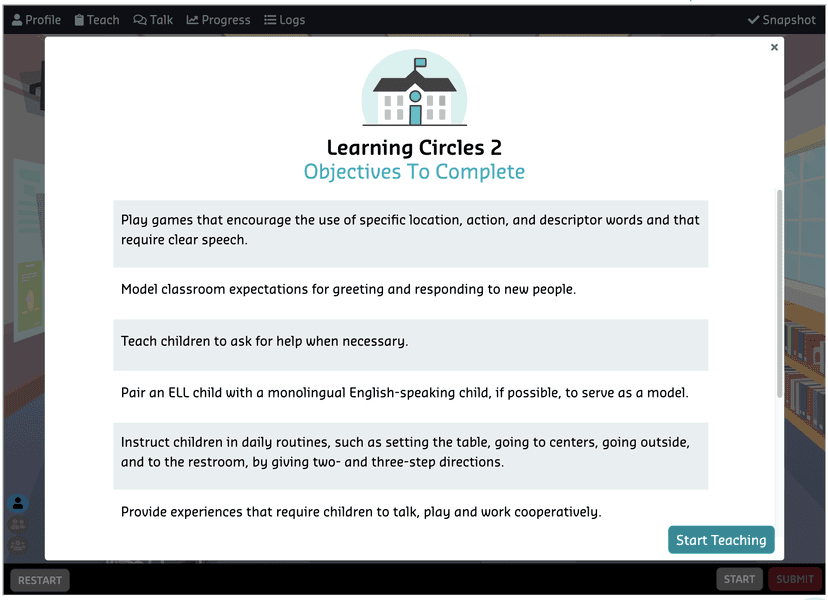
simSchool utilizes simulation-based experiential learning to help aspiring educators practice teaching strategies and classroom management techniques. The platform generates virtual classrooms populated by artificially intelligent students, each programmed with distinct cognitive, behavioral, and emotional profiles based on established psychological models. Users take on the role of the teacher, assigning tasks, modifying instructional methods, and interacting with the simulated class. As the educator makes pedagogical choices, the AI students react in real-time, displaying engagement, frustration, or academic progress. This immediate feedback loop allows users to witness the direct consequences of their instructional decisions. Following the simulation, users review data on student performance and emotional state, engaging in reflective practice to identify areas for improvement. The system effectively gamifies the teacher preparation process, turning abstract pedagogical theories into interactive variables that can be manipulated and observed.
Strengths and tradeoffs of simSchool
The biggest strength of simSchool is its ability to provide immediate, consequence-free feedback on teaching strategies, while its biggest weakness is the inherent limitation of AI in fully replicating human classroom dynamics. Experiential Learning Environment: By allowing users to test hypotheses in a virtual space, the platform leverages active learning principles, enabling aspiring teachers to internalize complex pedagogical concepts through direct application rather than passive reading. Immediate Feedback Loops: The instant behavioral reactions of the simulated students help users quickly identify the success or failure of their instructional choices, a core component of effective mastery learning. Safe Practice Space: Novice educators can make critical errors without harming actual students, reducing the cognitive load and anxiety typically associated with early field experiences. Transferability Concerns: The primary drawback lies in the transfer of learning. AI models, no matter how sophisticated, operate on predefined algorithms. Real children exhibit unpredictable behaviors shaped by highly nuanced external factors. Consequently, relying too heavily on simulation could create a false sense of security. Interface Limitations: Users often face a steep learning curve when navigating the platform's variables, which can distract from the core learning objectives if not adequately supported by an instructor.
Who Might Benefit From simSchool?
Best for higher education institutions and teacher preparation programs looking to supplement traditional student teaching with structured, safe-environment practice. It targets adult learners, specifically those pursuing degrees or professional teaching credentials in Career and Technical Education. The platform serves as an ideal bridge for student teachers who understand pedagogical theory but lack the practical experience to apply it dynamically. It is particularly useful for university faculty who want to assign standardized teaching scenarios to an entire cohort, ensuring all students encounter specific classroom challenges before stepping into a real school.
Sources and review method
TLS combines product information and editorial analysis to explain how simSchool works, its tradeoffs, and the questions to ask before choosing it. Product features, an instructional rationale and evidence of learning outcomes are different kinds of information.
Formal Learning Standard assessment: not yet completed. Data Transparency findings are reported separately and do not establish learning effectiveness. Read our methodology.
Frequently Asked Questions About simSchool
Is simSchool free?
No, simSchool is a paid platform designed primarily for institutional use. General pricing is set at $30 per user per year, though discounts are available for institutions making bulk purchases or committing to annual contracts. Individual educators seeking to use the platform independently should expect to pay this standard subscription fee to access the virtual classroom simulations.
Is simSchool good for aspiring teachers?
Yes, as a supplemental training tool for higher education programs. It provides a risk-free environment for novice educators to practice applying pedagogical theories and classroom management techniques. By interacting with AI students, users receive immediate feedback on their instructional choices without the high stakes of a real physical classroom. However, because human behavior is highly unpredictable, the skills learned in the simulation must still be tested in real-world environments. It should supplement rather than replace actual student teaching.
What does simSchool teach?
simSchool teaches classroom management, instructional design, and reflective practice to aspiring educators. Users learn how to adapt their teaching strategies to meet the diverse cognitive and emotional needs of individual students through continuous trial and error. The platform requires users to manipulate instructional variables and observe the resulting changes in student engagement and academic performance, directly reinforcing foundational learning science principles and educational psychology models.
How does simSchool compare to traditional student teaching?
simSchool serves as a precursor or controlled supplement to traditional student teaching rather than a direct replacement. While traditional student teaching involves real human interactions, complex social dynamics, and unpredictable external variables, simSchool offers a controlled, low-stakes environment for foundational practice. The simulation isolates specific pedagogical challenges so users can practice targeted interventions, whereas real classrooms demand simultaneous management of countless overlapping variables.
Has The Learning Standard evaluated simSchool?
TLS has not yet completed a Learning Standard evaluation of how well simSchool teaches. TLS has not published a Data Transparency result for its privacy policy.
Follow TLS Research
Subscribe to future TLS research updates: app reviews, findings, and what the evidence shows.
Screenshots

Take Action
For simSchool
If you represent simEd Holdings, LLC and have a correction or new evidence, send the relevant source so we can review and update this page.
Submit a correctionDetails
- Pricing
- General pricing is $30/user/year. There are discounts available based on number of users and annual commitments
- Platforms
- Web Browser, Windows (Microsoft), macOS (Apple), Chrome OS (Google)
- Grade Levels
- Associate's degree, Bachelor's degree, Master's Degree, Professional or Technical Credential
- Website
- Visit site