RISU Critical Thinking
Product by RISU USA
Facts checked: Not yet checked
Our take (not a Learning Standard rating). This label applies to learning-science judgments throughout this overview.
Our take (not a Learning Standard rating)
While RISU Critical Thinking uses mastery-based progression to build logical reasoning skills in young learners, The Learning Standard has not yet formally evaluated its effectiveness. The program structure aligns with cognitive science principles like spaced practice, but the high cost and dedicated tablet requirement demand careful consideration before committing.
Pros
- Uses mastery-based progression to ensure your child understands fundamental logic concepts before advancing.
- Provides a dedicated learning tablet to minimize digital distractions and reduce cognitive load during study time.
- Customizes the learning path based on your child's continuous performance data to keep them appropriately challenged.
- Focuses specifically on structured logical reasoning and retrieval practice rather than basic rote memorization.
Cons
- Requires a significant financial investment with strict quarterly or annual lock-in periods.
- Limits flexibility by forcing children to use a proprietary device rather than existing home hardware.
- Lacks independent empirical data confirming long-term critical thinking gains.
- Has not yet been formally evaluated by The Learning Standard to verify its pedagogical claims.
- Can cause frustration if a child gets stuck on a mastery bottleneck without adequate worked examples.
What Do We Know About RISU Critical Thinking?
RISU Critical Thinking shows potential for teaching logical reasoning through personalized learning paths, but The Learning Standard has not yet formally evaluated its long-term effectiveness. The program aims to move your child beyond rote math drills by focusing on applied science and critical thinking skills. It utilizes a mastery-based approach, meaning your child cannot advance to complex problems until they demonstrate competence in foundational tasks. This prevents knowledge gaps from forming early in their education. However, parents must weigh the pedagogical benefits against the rigid subscription model. At eighty to ninety dollars per month, it is significantly more expensive than standard educational applications. This price includes a proprietary tablet, which acts as a double-edged sword. On one hand, a dedicated device eliminates notifications and digital distractions, forcing cognitive focus. On the other hand, it adds another screen to your home and prevents you from using hardware you already own. Because this program demands a long-term financial commitment, parents should monitor their child's engagement closely. Until our formal evaluation is complete, treat this program as a supplemental tool rather than a guaranteed critical thinking solution.
How Does RISU Critical Thinking Work?
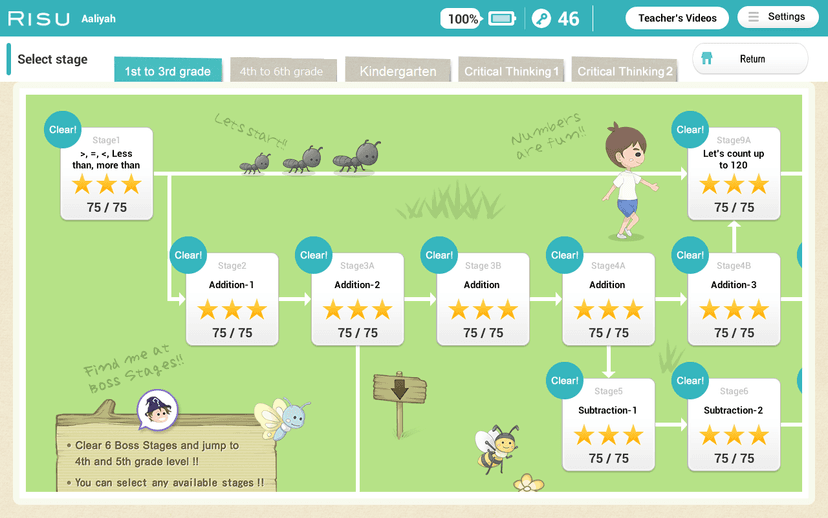
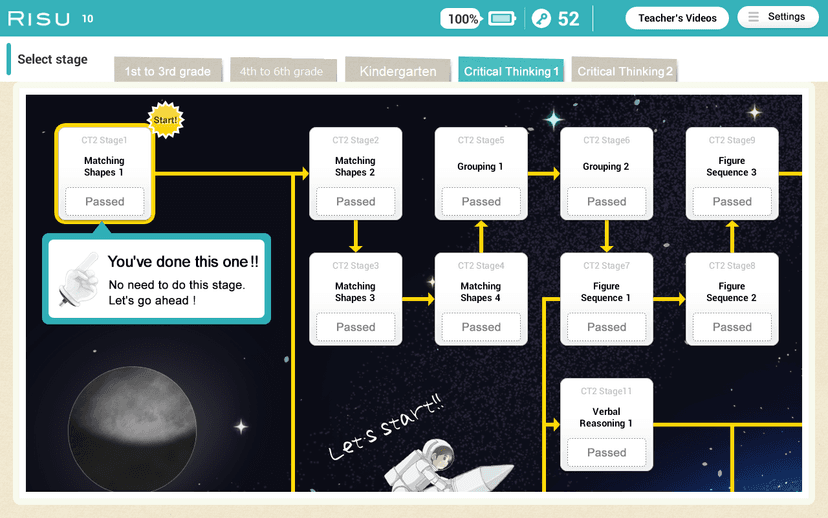
RISU Critical Thinking uses a mastery-based, personalized learning approach delivered exclusively through a proprietary tablet device. When your child logs in, the software assesses their current understanding of math and logical reasoning concepts. It then generates a customized sequence of problems tailored to their precise skill level. Instead of grouping students strictly by age or grade, the algorithm adjusts problem difficulty based on immediate performance. This mirrors the principles of adaptive scaffolding. If your child struggles with a pattern recognition task, the system provides additional practice items until they achieve mastery. Once they demonstrate competence, the algorithm introduces new variables to test knowledge transfer. The progression forces active retrieval practice, requiring your child to pull information from memory to solve increasingly complex puzzles. The included tablet restricts access to external applications, ensuring the learning environment remains focused entirely on cognitive skill development and applied science concepts.
Strengths and tradeoffs of RISU Critical Thinking
The biggest strength of RISU Critical Thinking is its distraction-free hardware environment, while its biggest weakness is the restrictive and expensive subscription model. From a learning science perspective, the program effectively leverages adaptive scaffolding. By constantly adjusting difficulty based on user input, it keeps your child in the zone of proximal development. This prevents frustration from overly difficult questions and boredom from overly simple ones. The curriculum heavily relies on retrieval practice, forcing learners to actively recall logic rules rather than passively consuming video lectures. The dedicated tablet creates a closed ecosystem, which cognitive research shows significantly reduces task-switching and cognitive load. However, the lack of independent evaluation means its claims of building lifelong logical reasoning remain unverified. Furthermore, the mastery-based progression can sometimes cause bottlenecks if a child gets stuck on a specific concept without adequate human intervention or worked examples to guide them. The steep eighty-to-ninety dollar monthly cost, tied to annual or quarterly commitments, makes it inaccessible for many families seeking supplemental math and applied science support.
Who Might Benefit From RISU Critical Thinking?
RISU Critical Thinking is best for elementary students in grades TK through six who struggle with digital distractions and need a highly structured, tablet-based logic curriculum. It serves families willing to make a significant financial investment in a dedicated educational device. The program targets children who have mastered basic arithmetic but need targeted practice in applied problem-solving and critical thinking. Because the curriculum advances entirely based on user competence, it works well for highly motivated self-directed learners who enjoy solving puzzles independently. It is less suitable for students who require rich multimedia instruction or constant adult supervision.
Sources and review method
TLS combines product information and editorial analysis to explain how RISU Critical Thinking works, its tradeoffs, and the questions to ask before choosing it. Product features, an instructional rationale and evidence of learning outcomes are different kinds of information.
Formal Learning Standard assessment: not yet completed. Data Transparency findings are reported separately and do not establish learning effectiveness. Read our methodology.
Frequently Asked Questions About RISU Critical Thinking
Is RISU Critical Thinking free?
No, RISU Critical Thinking is not free and requires a substantial paid subscription. It costs eighty dollars per month if you make an annual commitment, or ninety dollars per month with a quarterly commitment. This premium pricing structure includes the rental cost of their proprietary tablet device, which your child must use to access the curriculum. Because of the strict lock-in periods, parents should be absolutely certain about the investment before signing up.
Is RISU Critical Thinking good for early elementary students?
Yes, the program is specifically designed for young learners ranging from Transitional Kindergarten through sixth grade. The software uses a personalized learning algorithm that assesses your child's baseline knowledge and adjusts the complexity of the logical reasoning tasks accordingly. This ensures early elementary students are not overwhelmed by advanced applied science problems, keeping them in an appropriate zone of proximal development as they build foundational math skills.
What does RISU Critical Thinking teach?
RISU Critical Thinking teaches structured logical reasoning, mathematics, and applied science concepts. Unlike standard educational applications that focus heavily on rote memorization or fast-paced arithmetic drills, this program emphasizes deeper cognitive skills. It requires your child to engage in pattern recognition, problem-solving, and knowledge transfer. By working through these mastery-based problem sets, students learn how to approach complex academic challenges with a systematic and critical mindset.
RISU Critical Thinking vs. standard math apps?
Standard math applications often focus on drilling basic arithmetic using heavy gamification, flashing animations, and virtual rewards. In contrast, RISU Critical Thinking attempts to build foundational logic and reasoning skills using mastery-based progression on a dedicated, distraction-free device. While traditional apps can be used on any smartphone or tablet you already own, RISU requires a hardware commitment designed to force cognitive focus and prevent the rapid task-switching common in modern digital learning.
Has The Learning Standard evaluated RISU Critical Thinking?
TLS has not yet completed a Learning Standard evaluation of how well RISU Critical Thinking teaches. TLS has not published a Data Transparency result for its privacy policy.
Follow TLS Research
Subscribe to future TLS research updates: app reviews, findings, and what the evidence shows.
Screenshots

Take Action
For RISU Critical Thinking
If you represent RISU USA and have a correction or new evidence, send the relevant source so we can review and update this page.
Submit a correctionDetails
- Pricing
- $80 per month with an annual commitment. $90 per month with quarterly commitment. Tablet rental cost is included.
- Platforms
- Other
- Grade Levels
- Transitional Kindergarten, Kindergarten, 1st Grade, 2nd Grade, 3rd Grade, 4th Grade, 5th Grade, 6th Grade
- Website
- Visit site