
RightFind Curriculum
Product by CCC (Copyright Clearance Center)
Facts checked: Not yet checked
Our take (not a Learning Standard rating). This label applies to learning-science judgments throughout this overview.
Our take (not a Learning Standard rating)
RightFind Curriculum does not directly instruct students, but rather provides educators with legal access to high-quality, authentic texts. By integrating real-world articles into lessons, it supports knowledge-building and reading comprehension, though it relies entirely on teachers to provide the actual pedagogy and assessment.
Pros
- Provides access to authentic, real-world texts which learning science shows improves reading comprehension through background knowledge building.
- Saves educators time by resolving complex copyright and licensing issues for published materials.
- Supports project-based learning by allowing teachers to source diverse perspectives from newspapers and magazines.
Cons
- Lacks built-in instructional mechanics, assessments, or student feedback loops.
- Requires educators to build the surrounding pedagogical structure and lesson plans from scratch.
- Does not offer adaptive reading levels or scaffolding features for struggling readers.
What Do We Know About RightFind Curriculum?
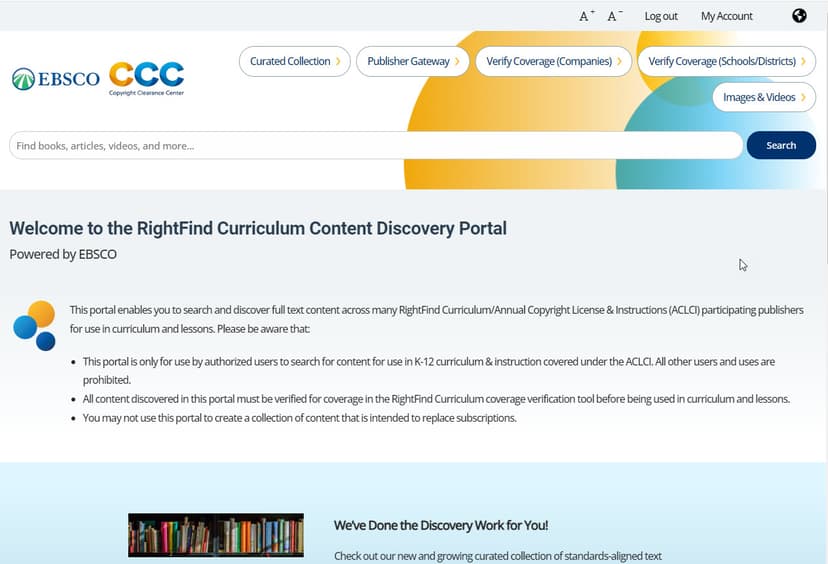
RightFind Curriculum is not a standalone learning app for your child, but rather a tool that helps their teachers and schools legally access high-quality reading materials. Unlike math or phonics apps that use algorithms to test and teach skills, this platform operates entirely behind the scenes acting as a massive, copyright-cleared library of books, newspapers, and magazines. When your child brings home a fascinating article from a recent magazine or reads a specific book excerpt for a science project, their school may have used RightFind Curriculum to source it. Learning science clearly shows that reading comprehension relies heavily on background knowledge. By giving teachers access to authentic, real-world texts instead of just generic textbook passages, this tool helps build that crucial knowledge base. However, parents should know that this system provides zero direct instruction, feedback, or assessment. It relies entirely on the classroom teacher or curriculum developer to wrap these texts in effective instructional strategies. Since The Learning Standard has not yet evaluated this specific platform, we cannot verify the exact quality of its current content library.
How Does RightFind Curriculum Work?
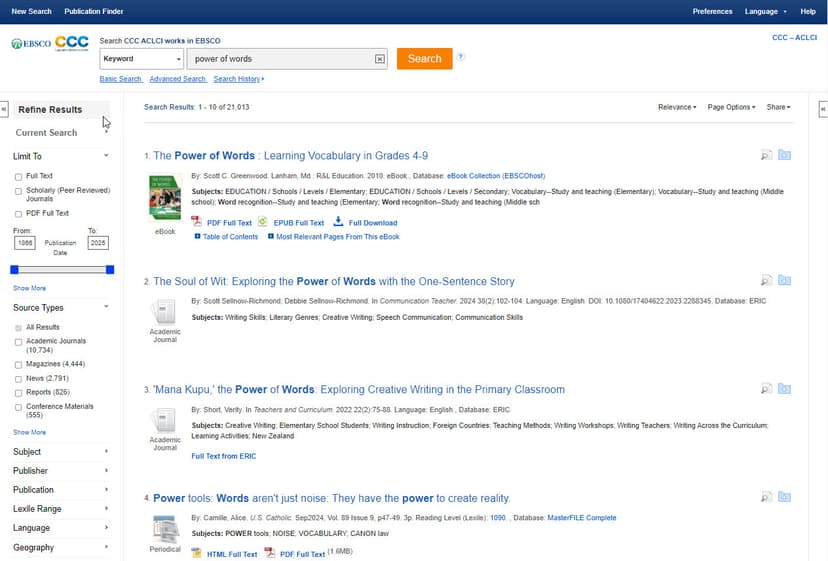
RightFind Curriculum functions as an authentic text repository rather than using a specific pedagogical approach, relying on teachers to integrate its materials into personalized or project-based learning models. Educators log into the platform to search a vast database of published content across humanities, social sciences, and science. Once they locate relevant articles, book chapters, or news clippings, the system automatically handles the digital and print licensing rights. Teachers then extract these materials to build lessons, unit plans, or classroom projects. Because the platform lacks interactive student-facing elements, the actual learning mechanics happen outside the software. Teachers must manually construct retrieval practice exercises, comprehension quizzes, or class discussions based on the provided texts. The system ensures that schools remain legally compliant when distributing copyrighted media, effectively removing a major barrier that often prevents teachers from using current events and modern literature in their daily instruction.
Strengths and tradeoffs of RightFind Curriculum
RightFind Curriculum's biggest strength is its capacity to supply authentic, knowledge-rich texts, while its biggest weakness is the complete absence of built-in instructional scaffolding. From a learning science perspective, reading comprehension is deeply tied to domain knowledge. Authentic texts like actual newspaper articles and magazine features are highly effective at building this background knowledge compared to sanitized textbook paragraphs. By unlocking a massive library of cleared content, this tool allows curriculum designers to embed rich, diverse reading materials directly into humanities and science units. This strongly supports project-based learning, where students need access to real-world data and varied perspectives to answer complex questions. However, providing a text is not the same as teaching a student how to read it. The platform lacks any mechanism for retrieval practice, spacing, or interleaved practice. Student scaffolding is entirely missing; there are no built-in vocabulary definitions, text-to-speech functions, or adjustable Lexile levels for struggling learners. Educators must do the heavy lifting to design the worked examples and formative assessments that actually solidify student learning.
Who Might Benefit From RightFind Curriculum?
Best for curriculum developers, school district administrators, and K-12 educators who need a legal, streamlined way to source authentic texts for classroom use. Because it spans Kindergarten through 12th grade across multiple subjects, it serves as a versatile district-wide resource rather than a targeted intervention tool. It is ideal for schools heavily invested in project-based learning or personalized research assignments, where students require access to diverse, high-quality media. This is a business-to-business solution, meaning it is not suitable for individual parents looking for at-home tutoring or direct-to-student instructional software.
Data Transparency
Does Not Meet Data Transparency Standard
RightFind Curriculum does not meet our data transparency standard. Its privacy policy does not document basic protections, including a statement that it does not sell data, a commitment against targeted advertising and limits on sharing children's data.
10 of 35 checks passed
Evaluated September 2026
Privacy Policy →Level 1 · Basic protections
Does not sell data or target ads at students, limits sharing, and lets parents see and delete their child's data.
Not documented: a statement that it does not sell data, a commitment against targeted advertising, limits on sharing children's data, a COPPA or FERPA commitment, parents' right to see their child's data, parents' right to delete their child's data
Level 2 · Parent control (meets the standard)
Families can get their data out, know who processes it, and know how long it is kept.
Not documented: a data retention timeline, self-service deletion
Level 3 · Direct data access
Families or schools can pull their own data through an API, in a stated format.
Not documented: an API for retrieving their own data, a named export format
View all 35 checks
Parent Access1/8
Does the policy mention parents specifically?
The policy does not mention parents.
Can parents view their child's data?
The policy does not give parents any right to view their child's data.
Can parents modify their child's data?
The policy does not give parents any right to modify their child's data.
Can parents delete their child's account?
The policy does not give parents any right to delete their child's data or account; it only says CCC will delete information it learns came from a minor.
Is there a dedicated Children's Privacy section?
“This Website is not designed for or intentionally directed at children under the age of 18, and we do not knowingly collect personal information from children under the age of 18.”
Does it reference COPPA compliance?
The policy does not reference COPPA.
Does it reference FERPA compliance?
The policy does not reference FERPA.
Is parental consent required for child accounts?
The policy does not require parental consent; it says the site is not directed at users under 18.
Data Portability2/5
Can users access their personal data?
“request access to, or a copy of, your personal information, together with details about our handling of your personal information;”
Can users download/export their data?
“receive the personal information you have provided in a structured, commonly used, and machine-readable format and request the transfer of such information to another entity, to the extent applicable; and”
Is there a self-service data access tool?
The policy handles access through written or email requests and mentions only possible self-service updating or correcting, not a self-service access tool.
Is a specific data format mentioned for export?
The policy says only "structured, commonly used, and machine-readable format" and names no specific format.
Is there an API for data access?
The policy does not describe an API for users to retrieve their data.
Data Minimization1/6
Is data collection itemized?
“we may require that you provide us with certain information, such as your name, organization name, mailing address, email address, phone number, username, and password.”
Can the app be used without a real name?
The policy says CCC collects users' names.
Can the app be used without an email?
The policy says CCC collects users' email addresses.
Does it state collection is limited to what is necessary?
The policy limits retention to what is necessary but does not say collection is limited to what is necessary.
Is IP address anonymized or truncated?
The policy says it collects IP addresses and does not say they are anonymized or truncated.
Is location tracking explicitly excluded?
The policy does not explicitly exclude location tracking.
Third-Party Protection3/7
Does it explicitly state no selling of data?
The policy does not state that CCC does not sell personal information.
Are third-party providers named?
“We use Google Analytics, a web analytics tool that may set cookies in your web browser, in order to help us understand how users engage with this Website.”
Are providers contractually restricted?
“Our third-party service providers are to use the personal information they receive from us only as necessary to provide their services to us and are prohibited from retaining, sharing, storing, or using the personal information that they receive from us for any other purposes.”
No-targeted-advertising commitment?
The policy says a third-party ad network uses cookies on the site to serve interest-based ads.
Is AI/ML data sharing addressed?
The policy does not address sharing data with AI or machine-learning systems.
Child-specific sharing restriction?
The policy has no child-specific sharing restriction; it only says CCC does not knowingly collect data from minors.
Cookies/tracking limited or opt-out?
“If you wish to not have information related to you used for the purpose of serving you interest-based ads, you can use an industry platform to opt out of interest-based advertising.”
Deletion & Retention2/5
Can users delete their account?
“request that we delete the personal information we hold about you (subject to certain exceptions prescribed by law);”
Self-service deletion mechanism?
The policy handles deletion only through written or email requests, with no self-service mechanism.
Specific data retention timeline?
The policy says data is kept only as long as necessary and gives no specific timeline.
Auto-deletion of inactive accounts?
The policy does not address automatic deletion of inactive accounts.
Post-deletion handling described?
“If you request to deactivate your account or that we delete your personal information, we will endeavor to fulfill your request, but some personal information may persist in backup copies for a certain period of time and may be retained as necessary to comply with our legal obligations, resolve disputes, and enforce our agreements.”
Advertising1/4
Advertising model explicitly disclosed?
“We partner with a third-party ad network to manage our advertising on other websites. Our ad network partner uses cookies and other similar technologies to collect information about your activities on this Website and other websites to serve you with advertisements that may be of interest to you.”
Free from third-party advertisements?
The policy does not say the product is free of third-party ads; it describes a third-party ad network tracking users.
Children excluded from ad targeting?
The policy does not exclude children from ad targeting.
Ad-free option available?
The policy offers only an opt-out from interest-based ads, not an ad-free option, and does not say the product has no advertising.
What This Means
The policy review did not meet our data transparency standard. The checks above show the documented findings and unknowns. A missing statement does not establish how the app handles data in practice.
About this evaluation: Based on automated analysis of Privacy Policy against 35 policy-disclosure questions, including questions adapted from the Common Sense Privacy Program's published evaluation questions. TLS is not affiliated with Common Sense Media, and this is not a Common Sense rating. Quoted text is copied from the policy; unquoted notes are our summary. Results describe what the policy documents, not the company's actual practices. Privacy policies can change: this review reflects the version we analyzed and does not determine legal compliance.
Sources and review method
TLS combines product information and editorial analysis to explain how RightFind Curriculum works, its tradeoffs, and the questions to ask before choosing it. Product features, an instructional rationale and evidence of learning outcomes are different kinds of information.
Formal Learning Standard assessment: not yet completed. Data Transparency findings are reported separately and do not establish learning effectiveness. Read our methodology.
Frequently Asked Questions About RightFind Curriculum
Is RightFind Curriculum free?
No. RightFind Curriculum is priced per student with volume discounts available for larger school districts or curriculum developers. It is an institutional product, meaning individual students or parents cannot purchase single licenses for personal home use.
Is RightFind Curriculum good for Kindergarten through 12th grade students?
Yes, but only as a source of material, not as an instructional tutor. The platform provides grade-appropriate texts across all K-12 levels for Humanities, Social Science, and Science. However, the effectiveness of these materials depends entirely on how the classroom teacher incorporates them into daily lessons.
What does RightFind Curriculum teach?
RightFind Curriculum does not explicitly teach any subject. Instead, it provides the reading materials and primary sources that educators use to teach subjects like history, science, and literature. It serves as a digital library rather than an interactive curriculum.
Has The Learning Standard evaluated RightFind Curriculum?
TLS has not yet completed a Learning Standard evaluation of how well RightFind Curriculum teaches. Its privacy policy has been reviewed for Data Transparency and does not yet document the basic protections (Level 1).
Is RightFind Curriculum COPPA compliant?
A COPPA reference was not found in the reviewed privacy policy. This does not determine whether the app complies with COPPA. Policy review note: The policy does not reference COPPA.
Is RightFind Curriculum FERPA compliant?
A FERPA reference was not found in the reviewed privacy policy. This does not determine whether the app complies with FERPA. Policy review note: The policy does not reference FERPA.
Does RightFind Curriculum have a children's privacy policy?
The reviewed policy includes a dedicated children's privacy section. Policy review note: The policy has a section headed "Children's Privacy".
Does RightFind Curriculum sell student data?
A statement ruling out data selling was not found in the reviewed policy. This does not establish that the app sells student data. Policy review note: The policy does not state that CCC does not sell personal information.
Can you delete your data from RightFind Curriculum?
The reviewed privacy policy describes account deletion. We have not tested the deletion process. Policy review note: Users can request deletion of their personal information.
Follow TLS Research
Subscribe to future TLS research updates: app reviews, findings, and what the evidence shows.
Screenshots
Take Action
For RightFind Curriculum
If you represent CCC (Copyright Clearance Center) and have a correction or new evidence, send the relevant source so we can review and update this page.
Submit a correctionDetails
- Pricing
- Priced per student with volume discounts.
- Platforms
- Other
- Grade Levels
- Kindergarten, 1st Grade, 2nd Grade, 3rd Grade, 4th Grade, 5th Grade, 6th Grade, 7th Grade, 8th Grade, 9th Grade, 10th Grade, 11th Grade, 12th Grade
- Website
- Visit site