
Rex K-12 Computer Science Curriculum
Product by Rex K-12
Facts checked: Not yet checked
Our take (not a Learning Standard rating). This label applies to learning-science judgments throughout this overview.
Our take (not a Learning Standard rating)
While Rex K-12 offers a comprehensive scope and sequence for computer science from kindergarten through high school, its effectiveness depends heavily on classroom implementation. The browser-based platform removes technical friction, but we are pending a full evaluation to verify its use of worked examples and spaced retrieval.
Pros
- Provides a continuous scope and sequence from transitional kindergarten through 12th grade to build on prior knowledge.
- Utilizes a browser-based platform that reduces extraneous cognitive load related to software installation and local environment setup.
- Integrates career and technical education pathways to connect abstract coding concepts with tangible industry applications.
Cons
- Requires active teacher facilitation rather than acting as a standalone, self-paced learning tool.
- Lacks transparent data on how the platform employs spaced repetition for long-term syntax retention.
- Pricing is opaque and varies by district, making accessibility difficult for individual parents or independent learners.
What Do We Know About Rex K-12 Computer Science Curriculum ?
Rex K-12 serves as an effective foundational computer science curriculum when implemented by trained educators, though its self-directed efficacy remains unverified. This platform is designed primarily for school districts rather than individual at-home use. Your child will interact with it through a web browser, moving through structured lessons that span from basic digital literacy in early elementary to advanced coding languages in high school.
Because it covers such a wide age range, the cognitive demands shift significantly depending on the grade level. Younger students focus on visual, block-based logic to grasp sequencing, while older students transition to text-based syntax. The Learning Standard has not yet fully evaluated this curriculum against our rubrics for retrieval practice and cognitive load management. However, its continuous K-12 structure theoretically prevents learning gaps by ensuring terminology and concepts build systematically year over year. Parents should know that their child's success with Rex K-12 will largely depend on their school's integration of the platform and the classroom teacher's ability to provide direct feedback on complex coding tasks.
How Does Rex K-12 Computer Science Curriculum Work?
Rex K-12 uses a structured, sequential curriculum model delivered through a browser-based learning management system. Students log into the platform to access coding environments, lesson modules, and project prompts directly within their web browser. This setup eliminates the need for schools or parents to install local software environments, minimizing the extraneous cognitive load often associated with computer science setup.
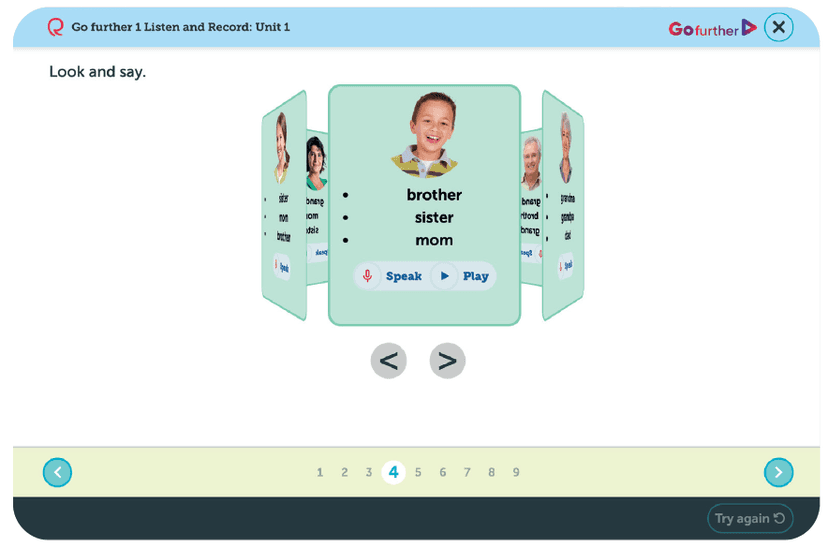
For early learners, the platform utilizes visual programming to teach computational thinking and sequencing without the frustration of syntax errors. As students progress into middle and high school, the curriculum introduces industry-standard text-based languages like Python or Java. Instruction typically involves a mix of conceptual lessons followed by applied coding tasks. Students write code, run it within the browser, and see immediate outputs. While the platform provides the infrastructure and lessons, it is built to be deployed in a classroom setting where a teacher guides the pacing and provides targeted interventions when students encounter bugs in their code.
Strengths and tradeoffs of Rex K-12 Computer Science Curriculum
Rex K-12's biggest strength is its continuous, unbroken K-12 instructional sequence, while its biggest weakness is its heavy reliance on classroom teachers to scaffold complex coding concepts.
Scope and Sequence: By providing a unified pathway from transitional kindergarten to 12th grade, the curriculum allows students to build schemas gradually. This reduces the cognitive shock often experienced when students switch from block-based to text-based coding in fragmented curriculums.
Browser-Based Environment: The platform contains all coding environments within the web browser. This effectively lowers extraneous cognitive load, allowing students to focus on computational thinking rather than troubleshooting software installations.
Feedback Mechanisms: Because The Learning Standard has not yet completed a formal evaluation, it is unclear how effectively the platform provides immediate, corrective feedback during coding exercises. Effective computer science instruction relies heavily on worked examples and step-by-step debugging support. Without strong in-platform feedback, students may experience high frustration levels if the classroom teacher is unavailable to intervene.
Retention Strategies: The curriculum's reliance on spaced repetition and retrieval practice for programming syntax remains unverified pending evaluation.
Who Might Benefit From Rex K-12 Computer Science Curriculum ?
Rex K-12 is best for school districts looking for a unified, easily deployable computer science curriculum across all grade levels. It targets educators who need a structured pathway to teach applied science and career technical education from Transitional Kindergarten through 12th grade. Because it is a comprehensive, browser-based curriculum rather than a standalone consumer app, it is not ideal for individual parents seeking an independent, self-paced coding tutor for their child. It fits best in formal classroom environments where a teacher can facilitate the lessons, monitor progress, and provide debugging support during complex projects.
Data Transparency
Does Not Meet Data Transparency Standard
Rex K-12 Computer Science Curriculum reaches Level 1 of 3 (Basic protections), below our data transparency standard. Reaching Level 2 needs the policy to document data export, a data retention timeline and named service providers.
14 of 35 checks passed
Evaluated September 2026
Privacy Policy →Level 1 · Basic protections
Does not sell data or target ads at students, limits sharing, and lets parents see and delete their child's data.
Level 2 · Parent control (meets the standard)
Families can get their data out, know who processes it, and know how long it is kept.
Not documented: data export, a data retention timeline, named service providers, self-service deletion
Level 3 · Direct data access
Families or schools can pull their own data through an API, in a stated format.
Not documented: an API for retrieving their own data, a named export format
View all 35 checks
Parent Access8/8
Does the policy mention parents specifically?
“This Privacy Policy describes how we collect, use, and protect the personal information of students, parents, educators, and other users.”
Can parents view their child's data?
“Parents can provide consent, review their child’s information, and exercise their rights under COPPA and FERPA by contacting us at \[privacy@rexk12.com\].”
Can parents modify their child's data?
“•Parents (or eligible students, if 18 years or older) have the right to: •Inspect and review their education records. •Request the correction of inaccuracies or misleading information.”
Can parents delete their child's account?
“•Request that we delete their child’s information.”
Is there a dedicated Children's Privacy section?
“1\. Compliance with COPPA Rex K-12 complies with the Children’s Online Privacy Protection Act (COPPA), which protects the online privacy of children under 13 years of age.”
Does it reference COPPA compliance?
“Rex K-12 complies with the Children’s Online Privacy Protection Act (COPPA), which protects the online privacy of children under 13 years of age.”
Does it reference FERPA compliance?
“Rex K-12 complies with the Family Educational Rights and Privacy Act (FERPA), which protects the privacy of student education records.”
Is parental consent required for child accounts?
“We do not knowingly collect personal information from children under the age of 13 without obtaining verifiable parental consent.”
Data Portability1/5
Can users access their personal data?
“•Parents (or eligible students, if 18 years or older) have the right to: •Inspect and review their education records.”
Can users download/export their data?
The policy does not address downloading or exporting data.
Is there a self-service data access tool?
The policy only describes access by contacting the company by email, not a self-service tool.
Is a specific data format mentioned for export?
The policy does not mention any export format.
Is there an API for data access?
The policy does not mention an API for data access.
Data Minimization1/6
Is data collection itemized?
“•Personal Information: Name, email address, grade level, school name, and other identifiers provided during registration.”
Can the app be used without a real name?
The policy says it collects names during registration.
Can the app be used without an email?
The policy says it collects email addresses during registration.
Does it state collection is limited to what is necessary?
The policy limits how long data is kept to what is necessary, but does not say collection is limited to what is necessary.
Is IP address anonymized or truncated?
The policy says it collects IP addresses and does not mention anonymizing or truncating them.
Is location tracking explicitly excluded?
The policy does not address location tracking.
Third-Party Protection3/7
Does it explicitly state no selling of data?
“We do not sell or share personal information with third parties for marketing purposes.”
Are third-party providers named?
The policy mentions third-party service providers but does not name any.
Are providers contractually restricted?
“These providers are bound by confidentiality agreements and cannot use the information for any other purpose.”
No-targeted-advertising commitment?
The policy does not address targeted or behavioral advertising.
Is AI/ML data sharing addressed?
The policy does not address sharing data with AI or machine learning systems.
Child-specific sharing restriction?
“•Parents (or eligible students, if 18 years or older) have the right to: •Inspect and review their education records. •Request the correction of inaccuracies or misleading information. •Provide written consent before the disclosure of personally identifiable information (PII), except in cases allowed by FERPA.”
Cookies/tracking limited or opt-out?
The policy does not address cookies, tracking limits, or opting out.
Deletion & Retention1/5
Can users delete their account?
“•Schools and districts can request data deletion at any time by contacting us at \[info@rexk12.com\].”
Self-service deletion mechanism?
The policy only describes deletion by emailing a request, not a self-service tool.
Specific data retention timeline?
The policy only says data is kept as long as necessary or as required by law, with no specific timeline.
Auto-deletion of inactive accounts?
The policy does not address automatic deletion of inactive accounts.
Post-deletion handling described?
The policy does not describe what happens to data after deletion, such as backups or de-identification.
Advertising0/4
Advertising model explicitly disclosed?
The policy does not say whether the product has advertising.
Free from third-party advertisements?
The policy does not address third-party advertisements.
Children excluded from ad targeting?
The policy does not address ad targeting of children.
Ad-free option available?
The policy does not address advertising or an ad-free option.
What This Means
The policy review did not meet our data transparency standard. The checks above show the documented findings and unknowns. A missing statement does not establish how the app handles data in practice.
About this evaluation: Based on automated analysis of Privacy Policy against 35 policy-disclosure questions, including questions adapted from the Common Sense Privacy Program's published evaluation questions. TLS is not affiliated with Common Sense Media, and this is not a Common Sense rating. Quoted text is copied from the policy; unquoted notes are our summary. Results describe what the policy documents, not the company's actual practices. Privacy policies can change: this review reflects the version we analyzed and does not determine legal compliance.
Sources and review method
TLS combines product information and editorial analysis to explain how Rex K-12 Computer Science Curriculum works, its tradeoffs, and the questions to ask before choosing it. Product features, an instructional rationale and evidence of learning outcomes are different kinds of information.
Formal Learning Standard assessment: not yet completed. Data Transparency findings are reported separately and do not establish learning effectiveness. Read our methodology.
Frequently Asked Questions About Rex K-12 Computer Science Curriculum
Is Rex K-12 Computer Science Curriculum free?
No, Rex K-12 is not free. Pricing varies depending on the school district's size, implementation needs, and the specific grade bands licensed. It is sold primarily as a B2B educational product rather than a direct-to-consumer application.
Is Rex K-12 Computer Science Curriculum good for elementary students?
Yes, it is appropriate for early learners. The curriculum begins in transitional kindergarten and uses age-appropriate, visual-based instructional methods to introduce basic computational thinking before transitioning to complex text-based syntax.
What does Rex K-12 Computer Science Curriculum teach?
Rex K-12 teaches applied computer science and career and technical education (CTE) skills. Topics range from foundational digital literacy and block-based coding in early grades to advanced programming languages, cybersecurity, and data science in high school.
How does Rex K-12 Computer Science Curriculum compare to Code.org?
Both provide K-12 computer science curricula, but Code.org is a free, widely accessible nonprofit platform, whereas Rex K-12 is a paid, proprietary curriculum designed for deep district integration and specific CTE pathway alignment.
Has The Learning Standard evaluated Rex K-12 Computer Science Curriculum?
TLS has not yet completed a Learning Standard evaluation of how well Rex K-12 Computer Science Curriculum teaches. Its privacy policy has been reviewed for Data Transparency and reaches Level 1, Basic protections.
Is Rex K-12 Computer Science Curriculum COPPA compliant?
The reviewed privacy policy references COPPA. A policy reference alone does not establish COPPA compliance. Policy review note: The policy states that it complies with COPPA.
Is Rex K-12 Computer Science Curriculum FERPA compliant?
The reviewed privacy policy references FERPA. A policy reference alone does not establish FERPA compliance. Policy review note: The policy states that it complies with FERPA.
Does Rex K-12 Computer Science Curriculum have a children's privacy policy?
The reviewed policy includes a dedicated children's privacy section. Policy review note: The policy has a section headed "Compliance with COPPA."
Does Rex K-12 Computer Science Curriculum sell student data?
The reviewed policy states that the app does not sell data. This is a policy statement; actual data practices were not verified. Policy review note: Vendor's own statement that it does not sell personal information. The 'for marketing purposes' qualifier may limit its scope.
Can you delete your data from Rex K-12 Computer Science Curriculum ?
The reviewed privacy policy describes account deletion. We have not tested the deletion process. Policy review note: Schools, and parents on behalf of their children, can request deletion of the data.
Follow TLS Research
Subscribe to future TLS research updates: app reviews, findings, and what the evidence shows.
Screenshots
Take Action
For Rex K-12 Computer Science Curriculum
If you represent Rex K-12 and have a correction or new evidence, send the relevant source so we can review and update this page.
Submit a correctionDetails
- Pricing
- Varies
- Platforms
- Web Browser, iOS (Apple mobile), iPadOS (Apple tablet), Android (Google mobile), Windows (Microsoft), macOS (Apple), Chrome OS (Google)
- Grade Levels
- Transitional Kindergarten, 1st Grade, 2nd Grade, 3rd Grade, 4th Grade, 5th Grade, 6th Grade, 7th Grade, 8th Grade, 9th Grade, 10th Grade, 11th Grade, 12th Grade
- Website
- Visit site