Reading Horizons Discovery
Product by Reading Horizons
Facts checked: Not yet checked
Our take (not a Learning Standard rating). This label applies to learning-science judgments throughout this overview.
Our take (not a Learning Standard rating)
While The Learning Standard has not yet formally evaluated Reading Horizons Discovery, its core structure relies on explicit phonics instruction, which aligns heavily with the science of reading. It provides teachers with real-time data for targeted intervention, though the heavy reliance on digital delivery for early foundational skills requires careful classroom implementation to ensure active cognitive engagement.
Pros
- Aligns with explicit phonics instruction to build automaticity in early word recognition.
- Provides educators with real-time performance data to easily group students for targeted interventions.
- Integrates on-demand coaching for teachers to support consistent delivery of evidence-based literacy practices.
- Combines digital software with consumable print materials to support multimodal learning.
Cons
- Heavy reliance on digital interfaces for kindergarteners can sometimes lead to passive clicking rather than active decoding.
- Pricing requires institutional purchasing contracts rather than accessible subscriptions for individual families.
- The exact mechanisms for spaced retrieval practice within the student software remain unverified by independent evaluation.
What Do We Know About Reading Horizons Discovery?
Reading Horizons Discovery appears to be an effective tool for building foundational literacy skills, though The Learning Standard has not yet formally evaluated it. This program focuses heavily on early reading acquisition for your child in kindergarten through third grade. It uses explicit, systematic phonics instruction to help your child decode words, moving away from guessing strategies and toward true orthographic mapping. Because it is a school-based platform, you will likely encounter it as part of your child's classroom curriculum rather than a tool you purchase for home use. The platform combines digital lessons with physical workbooks. This blended approach helps ensure your child is not just staring at a screen but is also physically practicing letter formation and word building. The software tracks your child's progress in real-time, allowing their teacher to see exactly which phonics rules they have mastered and which require further review. However, because early reading is highly developmental, you should ensure your child is receiving ample face-to-face reading practice alongside the digital components. Technology alone cannot replace the interactive feedback loop of reading aloud to an adult.
How Does Reading Horizons Discovery Work?
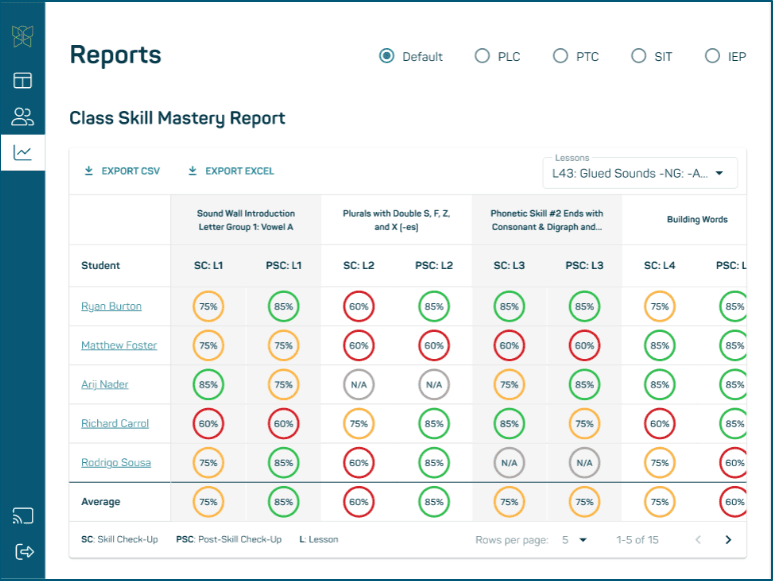
Reading Horizons Discovery uses explicit, systematic phonics instruction supported by real-time teacher data and interactive digital practice. When a student logs into the platform, they progress through a highly structured sequence of foundational reading skills. The software introduces specific phonetic rules and gives students opportunities to practice decoding words using those rules. Instead of memorizing whole words, the system requires students to map sounds to letters, which learning science shows is the most effective way to build reading automaticity. The program is specifically designed to be used in a classroom setting. While students complete tech-enhanced interactive lessons, the system feeds performance data back to the teacher's dashboard. The teacher uses this data to group students for differentiated instruction. If a student struggles with vowel teams, the teacher receives an alert and can pull that student for targeted, face-to-face intervention. The platform also provides on-demand coaching prompts for the teacher to ensure they are delivering the lesson according to established science of reading principles.
Strengths and tradeoffs of Reading Horizons Discovery
The biggest strength of Reading Horizons Discovery is its strict alignment with explicit phonics instruction, while its biggest weakness is its reliance on institutional implementation that makes it inaccessible for direct parent use. Systematic phonics is firmly grounded in the science of reading, and this program forces students to rely on sound-letter mapping rather than contextual guessing. This builds strong orthographic mapping, essential for reading fluency. The platform excels at data-driven differentiation. By collecting granular data on exactly which decoding skills a student lacks, it reduces the cognitive load on teachers and allows them to provide immediate, targeted feedback. However, screen time for early learners remains a concern. While digital practice provides immediate feedback on basic tasks, early literacy heavily relies on oral production. Software cannot perfectly correct a kindergarten student's verbal pronunciation of a phoneme. Additionally, the program's institutional pricing model means that if your child's school does not adopt the platform, you cannot independently access it to supplement their learning at home. Finally, until an official evaluation is completed by The Learning Standard, the specific efficacy of its spaced repetition algorithms within the digital practice modules remains unverified.
Who Might Benefit From Reading Horizons Discovery?
Reading Horizons Discovery is best for K-3 classrooms that need a highly structured, data-driven phonics curriculum to support explicit literacy instruction. It is primarily designed for early elementary educators who want real-time visibility into their students' decoding skills to facilitate small-group interventions. Because it aligns heavily with the science of reading, it serves students who struggle with early word recognition well, providing the clear, systematic instruction required to build fluency. It is not an independent app for parents to download, but rather a comprehensive enterprise tool for school districts looking to standardize foundational reading practices.
Data Transparency
Does Not Meet Data Transparency Standard
Reading Horizons Discovery does not meet our data transparency standard. Its privacy policy does not document basic protections, including a statement that it does not sell data and parents' right to delete their child's data.
16 of 35 checks passed
Evaluated September 2026
rhdiscovery.com →Level 1 · Basic protections
Does not sell data or target ads at students, limits sharing, and lets parents see and delete their child's data.
Not documented: a statement that it does not sell data, parents' right to delete their child's data
Level 2 · Parent control (meets the standard)
Families can get their data out, know who processes it, and know how long it is kept.
Not documented: data export, a data retention timeline, named service providers, self-service deletion
Level 3 · Direct data access
Families or schools can pull their own data through an API, in a stated format.
Not documented: an API for retrieving their own data, a named export format
View all 35 checks
Parent Access7/8
Does the policy mention parents specifically?
“If you are a Student or parent, please contact your School if you have questions about the School's use of technology service providers like Reading Horizons.”
Can parents view their child's data?
“Student Data is provided and controlled by the Schools. If you have any questions about reviewing, modifying, or deleting personal information of a student, please contact your School directly.”
Can parents modify their child's data?
“Student Data is provided and controlled by the Schools. If you have any questions about reviewing, modifying, or deleting personal information of a student, please contact your School directly.”
Can parents delete their child's account?
The policy sends deletion questions to the school and offers deletion only for data collected from under-13s without proper consent; it does not give parents a general right to delete their child's data or account.
Is there a dedicated Children's Privacy section?
“# CHILDREN'S PRIVACY”
Does it reference COPPA compliance?
“by the provision of the Family Educational Rights and Privacy Act (FERPA), the Children's Online Privacy Protection Act (COPPA), and applicable state laws which relate to the collection of Student Data.”
Does it reference FERPA compliance?
“by the provision of the Family Educational Rights and Privacy Act (FERPA), the Children's Online Privacy Protection Act (COPPA), and applicable state laws which relate to the collection of Student Data.”
Is parental consent required for child accounts?
“Reading Horizons does not knowingly collect any information from children under the age of 13 unless and until the School has obtained appropriate parental consent for the student to use the Service.”
Data Portability1/5
Can users access their personal data?
“Student Data is provided and controlled by the Schools. If you have any questions about reviewing, modifying, or deleting personal information of a student, please contact your School directly.”
Can users download/export their data?
The policy does not address downloading or exporting data.
Is there a self-service data access tool?
The policy only mentions schools updating account information in the admin account, not a self-service tool for users to access their data.
Is a specific data format mentioned for export?
The policy does not mention any export format.
Is there an API for data access?
The policy does not describe an API for users, parents or schools to retrieve their data.
Data Minimization1/6
Is data collection itemized?
“including a name, school name, school district, school email address and/or account name and password, phone number, message content, and information relating to the School's information systems.”
Can the app be used without a real name?
The policy says it receives personally identifiable Student Data from schools and does not say it avoids collecting students' real names.
Can the app be used without an email?
The policy does not say student email addresses are not collected.
Does it state collection is limited to what is necessary?
The policy limits use of Student Data to providing services for the school but does not say collection is limited to what is necessary.
Is IP address anonymized or truncated?
The policy says it collects IP addresses and does not mention anonymizing or truncating them.
Is location tracking explicitly excluded?
The policy says it may determine approximate location, for example from an IP address.
Third-Party Protection4/7
Does it explicitly state no selling of data?
The policy only says it does not sell information for marketing purposes and does not broadly state that it never sells data.
Are third-party providers named?
The policy describes service providers by type, such as web hosting and analytics, without naming any.
Are providers contractually restricted?
“Contractors and service providers who may have access to Student Data in the course of performing their services are subject to confidentiality and data security requirements.”
No-targeted-advertising commitment?
“We do not permit third party advertising networks to collect information about your use of our website and Service over time and across websites for the purpose of serving targeted advertising and we will never use Student Data for targeted advertising.”
Is AI/ML data sharing addressed?
The policy does not address AI or machine learning.
Child-specific sharing restriction?
“Horizons does not facilitate the sharing of any Student Data with third parties on the Service except on behalf of the School after the School has authorized a third party or application to access Student Data through the Service.”
Cookies/tracking limited or opt-out?
“If you would prefer not to accept cookies, most browsers will allow you to: (i) change your browser settings to notify you when you receive a cookie, which lets you choose whether or not to accept it; (ii) disable existing cookies; or (iii) set your browser to automatically reject cookies.”
Deletion & Retention2/5
Can users delete their account?
“Of course, you can always opt-out by deleting your account before the changes take effect.”
Self-service deletion mechanism?
The policy mentions deleting an account but does not describe a self-service deletion mechanism.
Specific data retention timeline?
The policy only says data is kept for a "commercially reasonable time" and deleted "promptly", with no specific timeline.
Auto-deletion of inactive accounts?
The policy does not address automatic deletion of inactive accounts.
Post-deletion handling described?
“Following termination or deactivation of a School account, Reading Horizons may retain profile information and content for a commercially reasonable time for backup, archival, or audit purposes, but any and all Student Data associated with the School will be deleted promptly.”
Advertising1/4
Advertising model explicitly disclosed?
The policy restricts targeted advertising but does not explicitly disclose its advertising model or state that the product has no ads.
Free from third-party advertisements?
The policy bars third-party ad networks from tracking for targeted ads but does not state that the product has no third-party ads.
Children excluded from ad targeting?
“we will never use Student Data for targeted advertising.”
Ad-free option available?
The policy does not state that the product has no ads and does not mention an ad-free option.
What This Means
The policy review did not meet our data transparency standard. The checks above show the documented findings and unknowns. A missing statement does not establish how the app handles data in practice.
About this evaluation: Based on automated analysis of rhdiscovery.com against 35 policy-disclosure questions, including questions adapted from the Common Sense Privacy Program's published evaluation questions. TLS is not affiliated with Common Sense Media, and this is not a Common Sense rating. Quoted text is copied from the policy; unquoted notes are our summary. Results describe what the policy documents, not the company's actual practices. Privacy policies can change: this review reflects the version we analyzed and does not determine legal compliance.
Sources and review method
TLS combines product information and editorial analysis to explain how Reading Horizons Discovery works, its tradeoffs, and the questions to ask before choosing it. Product features, an instructional rationale and evidence of learning outcomes are different kinds of information.
Formal Learning Standard assessment: not yet completed. Data Transparency findings are reported separately and do not establish learning effectiveness. Read our methodology.
Frequently Asked Questions About Reading Horizons Discovery
Is Reading Horizons Discovery free?
No, Reading Horizons Discovery is not free. It is a commercial educational product designed for school and district adoption. Purchasing requires either a per-seat license or an unlimited site license, making it an enterprise-level investment rather than a consumer app. Parents cannot purchase individual family subscriptions.
Is Reading Horizons Discovery good for kindergarteners?
Yes, Reading Horizons Discovery is specifically designed for kindergarten through third grade. It focuses heavily on early foundational literacy skills like letter-sound correspondence and basic phonics rules. However, educators must balance the digital components with active, face-to-face instruction, as excessive screen time is not developmentally ideal for five-year-olds.
What does Reading Horizons Discovery teach?
Reading Horizons Discovery teaches foundational reading skills using explicit, systematic phonics. Students learn to decode words by understanding the relationship between letters and sounds, rather than relying on pictures or context to guess words. It covers phonemic awareness, phonics rules, and early orthographic mapping to build reading automaticity.
How does Reading Horizons Discovery compare to Lexia Core5?
Both Reading Horizons Discovery and Lexia Core5 focus on foundational literacy and systematic phonics for early elementary students. Lexia offers a highly adaptive, game-like student interface that adjusts difficulty automatically. Reading Horizons places a heavier emphasis on equipping the teacher with direct coaching and lesson materials, positioning the software as a supplement to teacher-led, explicit instruction.
Has The Learning Standard evaluated Reading Horizons Discovery?
TLS has not yet completed a Learning Standard evaluation of how well Reading Horizons Discovery teaches. Its privacy policy has been reviewed for Data Transparency and does not yet document the basic protections (Level 1).
Is Reading Horizons Discovery COPPA compliant?
The reviewed privacy policy references COPPA. A policy reference alone does not establish COPPA compliance. Policy review note: The policy says COPPA governs its handling of Student Data.
Is Reading Horizons Discovery FERPA compliant?
The reviewed privacy policy references FERPA. A policy reference alone does not establish FERPA compliance. Policy review note: The policy says FERPA governs its handling of Student Data.
Does Reading Horizons Discovery have a children's privacy policy?
The reviewed policy includes a dedicated children's privacy section. Policy review note: The policy has a dedicated Children's Privacy section.
Does Reading Horizons Discovery sell student data?
A statement ruling out data selling was not found in the reviewed policy. This does not establish that the app sells student data. Policy review note: The policy only says it does not sell information for marketing purposes and does not broadly state that it never sells data.
Can you delete your data from Reading Horizons Discovery?
The reviewed privacy policy describes account deletion. We have not tested the deletion process. Policy review note: The policy says users can delete their account.
Follow TLS Research
Subscribe to future TLS research updates: app reviews, findings, and what the evidence shows.
Screenshots

Take Action
For Reading Horizons Discovery
If you represent Reading Horizons and have a correction or new evidence, send the relevant source so we can review and update this page.
Submit a correctionDetails
- Pricing
- The software can be purchased per seat or as an unlimited site license. Print materials accompanying the software are a mix of non-consumable and consumable materials.
- Platforms
- Web Browser, iPadOS (Apple tablet), Windows (Microsoft), macOS (Apple), Chrome OS (Google)
- Grade Levels
- Kindergarten, 1st Grade, 2nd Grade, 3rd Grade
- Website
- Visit site