onEVO Interactive Floor
Product by onEVO Corporation
Facts checked: Not yet checked
Our take (not a Learning Standard rating). This label applies to learning-science judgments throughout this overview.
Our take (not a Learning Standard rating)
The onEVO Interactive Floor effectively pairs physical movement with cognitive tasks, an approach shown to improve working memory and attention in children. While embodied cognition is a strong pedagogical foundation, The Learning Standard has not yet evaluated the software to verify its specific curriculum alignment, spacing of practice, or retrieval mechanics.
Pros
- Integrates embodied cognition by requiring physical movement to solve cognitive tasks and answer academic questions.
- Supports cooperative learning by allowing multiple students to interact with the floor projection simultaneously.
- Provides educators and occupational therapists with specific methodological guides to target interventions for working memory and motor planning.
Cons
- Lacks transparent pricing, requiring schools to request custom quotes for hardware and software packages.
- Requires dedicated physical space and specialized hardware installation, making it completely inaccessible for typical home use.
- Unverified instructional sequencing makes it unclear if the digital games use spaced repetition or just unstructured play.
What Do We Know About onEVO Interactive Floor?
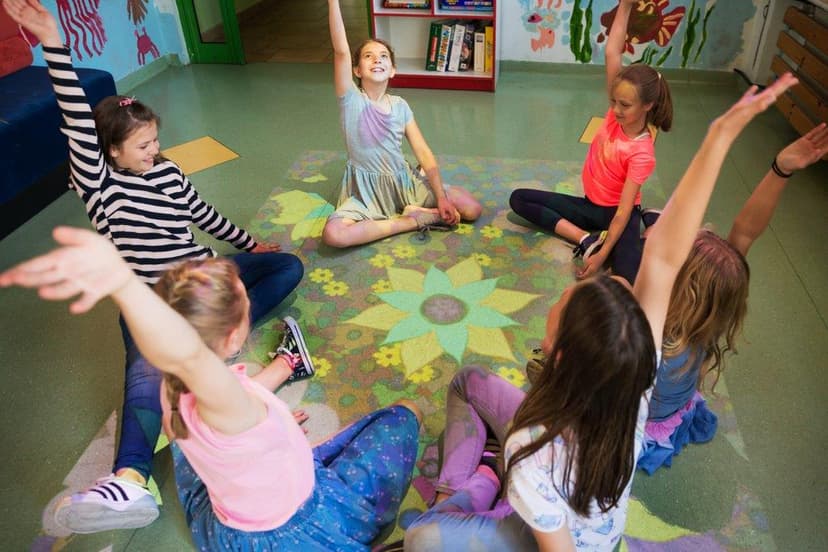
The onEVO Interactive Floor is a potentially effective tool for integrating physical activity with academic practice, though its specific instructional efficacy remains pending evaluation by The Learning Standard. Your child will use their body to interact with projections on the floor, stepping, jumping, or waving to answer questions and solve puzzles. This approach leverages embodied cognition, a learning science principle that links motor action to memory formation and cognitive processing. Because this is a hardware and software system designed primarily for schools and therapeutic settings, you will rarely use this at home. If your child's school uses it, they will likely engage in cooperative learning games that target gross motor skills, working memory, and basic curriculum recall. While physical engagement reliably increases student motivation and time-on-task, the actual learning outcomes depend heavily on the specific software modules the school has purchased. Without our full evaluation, it is unclear if the system utilizes evidence-based mechanics like retrieval practice or corrective feedback. However, for young learners and students requiring physical or occupational therapy, the physical interactivity offers a compelling alternative to traditional screen-based instruction.
How Does onEVO Interactive Floor Work?
The onEVO Interactive Floor uses game-based, embodied learning by projecting interactive academic content onto a physical surface that students navigate with their bodies. The system relies on motion sensors to track user movements, translating physical actions like stepping, running, or reaching into digital inputs. Educators select from a repository of educational and therapeutic programs spanning early childhood concepts to middle school subjects. Students then participate individually or in small groups to solve problems, sort items, or answer questions by moving to the correct physical location on the floor. This cooperative learning structure requires communication and joint problem-solving. For therapeutic applications, the mechanics shift to focus on motor planning, reaction time, and working memory. The system provides immediate visual and auditory feedback based on where a student steps. Therapists and teachers use accompanying methodological guides to align these physical games with specific learning objectives or Individualized Education Programs.
Strengths and tradeoffs of onEVO Interactive Floor
The biggest strength of the onEVO Interactive Floor is its application of embodied cognition, while its biggest weakness is the high barrier to entry for deployment and hardware access. Physical integration aids memory: By requiring children to jump or step to answer questions, the system utilizes dual-coding and motor-memory pathways. Research shows that physical movement linked to academic tasks can improve focus and retention, especially in early childhood and special education. Cooperative problem-solving: The large format allows multiple students to work together. This supports socio-emotional development and collaborative problem-based learning, as students must negotiate space and strategy to succeed in the games. Lack of evaluated instructional design: Because The Learning Standard has not yet rated this product, the depth of its instructional design is unverified. It is unknown if the games incorporate spaced repetition or meaningful retrieval practice, or if they simply rely on low-level recognition tasks. Resource intensive: Unlike a standard app, this requires permanent or semi-permanent hardware installation, clear floor space, and custom pricing, making it impractical for standard at-home use and requiring significant investment from schools.
Who Might Benefit From onEVO Interactive Floor?
The onEVO Interactive Floor is best for elementary schools and therapeutic facilities that want to integrate gross motor activity with foundational academic practice. Spanning infant to 8th-grade learning levels, the system is particularly well-suited for early childhood educators, special education teachers, and occupational therapists. It provides a highly engaging, cooperative learning environment for students who struggle with traditional desk work or need targeted intervention for attention and working memory. Because it requires specialized hardware and dedicated physical space, it is intended strictly for institutional use rather than individual consumer purchase.
Sources and review method
TLS combines product information and editorial analysis to explain how onEVO Interactive Floor works, its tradeoffs, and the questions to ask before choosing it. Product features, an instructional rationale and evidence of learning outcomes are different kinds of information.
Formal Learning Standard assessment: not yet completed. Data Transparency findings are reported separately and do not establish learning effectiveness. Read our methodology.
Frequently Asked Questions About onEVO Interactive Floor
Is onEVO Interactive Floor free?
No, the onEVO Interactive Floor is not free. It is a commercial hardware and software solution designed primarily for schools and therapy centers. Schools must purchase the physical projection and sensor equipment, along with annual or perpetual licenses for the educational game packages. Pricing is not publicly listed and requires a direct quote from the manufacturer based on the facility's specific hardware needs and the volume of software modules required.
Is onEVO Interactive Floor good for early childhood education?
Yes, the onEVO Interactive Floor is highly appropriate for early childhood education. It leverages play-based learning and physical movement, which are developmentally optimal methods for young children. By combining gross motor skills with early literacy, math, and cognitive tasks, it helps build neural pathways while keeping toddlers and preschoolers engaged. However, The Learning Standard has not yet formally evaluated the specific early childhood software modules to verify their exact instructional quality.
What does onEVO Interactive Floor teach?
The onEVO Interactive Floor teaches a broad range of subjects including early childhood fundamentals, humanities, science, and social sciences across multiple grade levels. In addition to standard academic content, it heavily targets cognitive and physical development skills such as working memory, concentration, motor planning, and reaction time. The exact curriculum and concepts covered depend entirely on which specific software packages a school or clinic chooses to install on the device.
How does onEVO Interactive Floor compare to standard educational tablets?
The onEVO Interactive Floor replaces sedentary screen time with active, embodied learning. While tablets isolate students and restrict movement, this system encourages cooperative learning and gross motor activity. Standard tablets often excel at individualized, adaptive algorithms using spaced repetition. The interactive floor prioritizes physical engagement and social interaction, making it better for group work and physical therapy, though potentially less efficient for personalized academic drill.
Has The Learning Standard evaluated onEVO Interactive Floor?
TLS has not yet completed a Learning Standard evaluation of how well onEVO Interactive Floor teaches. TLS has not published a Data Transparency result for its privacy policy.
Follow TLS Research
Subscribe to future TLS research updates: app reviews, findings, and what the evidence shows.
Screenshots

Take Action
For onEVO Interactive Floor
If you represent onEVO Corporation and have a correction or new evidence, send the relevant source so we can review and update this page.
Submit a correctionDetails
- Pricing
- Please send us a price request at office@onevofloor.com
- Platforms
- Other
- Grade Levels
- Infant/Toddler, Preschool, Prekindergarten, Transitional Kindergarten, Kindergarten, 1st Grade, 2nd Grade, 3rd Grade, 4th Grade, 5th Grade, 6th Grade, 7th Grade, 8th Grade
- Website
- Visit site