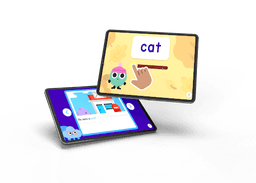
Magpie Literacy K-2 Foundations
Product by Magpie Literacy
Facts checked: Not yet checked
Our take (not a Learning Standard rating). This label applies to learning-science judgments throughout this overview.
Our take (not a Learning Standard rating)
While Magpie Literacy K-2 Foundations incorporates Stanford University's validated Rapid Online Assessment of Reading, The Learning Standard has not yet evaluated its instructional efficacy. Its design targets foundational reading skills through brief weekly sessions, suggesting a supplemental practice approach rather than a comprehensive primary curriculum.
Pros
- Integrates Stanford University's Rapid Online Assessment of Reading to establish objective baseline literacy metrics.
- Requires only 45 to 60 minutes of weekly use, supporting distributed practice principles without causing cognitive overload.
- Provides targeted digital practice designed to seamlessly fit into existing classroom literacy or intervention blocks.
Cons
- Lacks independent efficacy data from The Learning Standard regarding its specific instructional feedback loops.
- Functions strictly as a supplemental tool and cannot replace direct teacher-led reading instruction.
- May lack the necessary scaffolding or age-appropriate interface design for older students in upper elementary grades requiring intensive intervention.
What Do We Know About Magpie Literacy K-2 Foundations ?
Magpie Literacy K-2 Foundations serves as a supplemental tool to measure and practice early reading skills, though its ultimate effectiveness remains pending independent evaluation. If your child uses this program at school, they will likely spend about 45 to 60 minutes on it per week. This short duration aligns with the principles of spaced practice, meaning your child engages with literacy concepts in brief, frequent intervals rather than long, fatiguing sessions. The inclusion of Stanford University's Rapid Online Assessment of Reading means the software regularly measures your child's foundational reading abilities using a scientifically validated benchmark. However, because it is designed to fit into existing literacy or tutoring blocks, it relies heavily on the classroom teacher to provide primary instruction. Parents should view this app as a digital practice and assessment environment rather than a complete reading teacher. It diagnoses where your child struggles and provides targeted digital repetition, but direct adult intervention remains critical for overcoming severe reading difficulties.
How Does Magpie Literacy K-2 Foundations Work?
Magpie Literacy K-2 Foundations relies on an assessment-driven, supplemental practice model to reinforce early reading skills. The software integrates Stanford's Rapid Online Assessment of Reading to identify individual student deficits in foundational literacy. Once assessed, students engage in targeted digital routines designed to be completed in 45 to 60 minutes across the school week. This approach utilizes distributed practice, breaking literacy acquisition down into manageable, bite-sized sessions that prevent cognitive fatigue in young learners. Because the tool is explicitly designed to integrate into existing reading blocks, it functions primarily as a responsive drill-and-practice mechanism. It does not replace direct teacher instruction, but rather provides a feedback loop for educators. Teachers require minimal training to deploy the software, allowing them to use the generated assessment data to guide their offline, small-group interventions.
Strengths and tradeoffs of Magpie Literacy K-2 Foundations
The biggest strength of Magpie Literacy K-2 Foundations is its integration of a scientifically validated assessment tool, while its primary weakness is the lack of independent data verifying the efficacy of its actual instructional interventions. By embedding Stanford's Rapid Online Assessment of Reading, the app ensures that student baseline data is accurate and reliable. This assessment-first approach allows educators to pinpoint exact deficits in phonological awareness and decoding. Additionally, the software's design mandates only 45 to 60 minutes of weekly use, which effectively leverages spaced repetition: a well-documented learning science principle that improves long-term retention by distributing practice over time rather than massing it into a single session. On the downside, because the program is highly streamlined, it heavily depends on the teacher to translate assessment data into meaningful offline instruction. Furthermore, as an unevaluated tool, it remains unclear how effectively the app's digital exercises utilize mechanisms like worked examples or corrective feedback to actually teach concepts rather than just test them. It is best viewed as a diagnostic and basic reinforcement tool rather than an autonomous tutor.
Who Might Benefit From Magpie Literacy K-2 Foundations ?
This program is best for K-2 educators and interventionists seeking an affordable, low-friction diagnostic and practice tool to supplement their primary reading curriculum. While specifically targeting kindergarten through second-grade foundational skills, it is also applicable for older students in grades 3 through 5 who require targeted reading intervention. Because it requires minimal teacher training and integrates seamlessly into existing literacy blocks, it is ideal for schools needing a standardized assessment loop without committing to a heavy, time-consuming digital platform.
Data Transparency
Does Not Meet Data Transparency Standard
Magpie Literacy K-2 Foundations reaches Level 1 of 3 (Basic protections), below our data transparency standard. Reaching Level 2 needs the policy to document data export, named service providers and self-service deletion.
26 of 35 checks passed
Evaluated September 2026
Magpie Privacy Policy →Level 1 · Basic protections
Does not sell data or target ads at students, limits sharing, and lets parents see and delete their child's data.
Level 2 · Parent control (meets the standard)
Families can get their data out, know who processes it, and know how long it is kept.
Not documented: data export, named service providers, self-service deletion
Level 3 · Direct data access
Families or schools can pull their own data through an API, in a stated format.
Not documented: an API for retrieving their own data, a named export format
View all 35 checks
Parent Access8/8
Does the policy mention parents specifically?
“Parents or guardians of students may seek to make choices about the Personal Information we may process about their children/students.”
Can parents view their child's data?
“Please contact your child’s, or student’s, school to make requests to review Personal Information processed for the Service and/or exercise any other rights you may have.”
Can parents modify their child's data?
“Applicable federal and/or state laws may provide you, and/or students using the Service, with certain rights with respect to our processing of Personal Information which may include: requesting to understand what Personal Information is processed and to whom it is disclosed; requesting to correct inaccurate data;”
Can parents delete their child's account?
“Applicable federal and/or state laws may provide you, and/or students using the Service, with certain rights with respect to our processing of Personal Information which may include: requesting to understand what Personal Information is processed and to whom it is disclosed; requesting to correct inaccurate data; objecting to, or limiting the processing of certain Personal Information; requesting deletion of personal information.”
Is there a dedicated Children's Privacy section?
“Personal information collected from children & students under 18”
Does it reference COPPA compliance?
“Magpie provides the appropriate notice to the Educator and relies on each Educator to provide consent and authorization for Magpie to collect personal information from children, as permitted by the Children’s Online Privacy Protection Act (COPPA) and other applicable data protection laws.”
Does it reference FERPA compliance?
“Magpie has been designated as a School Official as defined by Family Educational Rights and Privacy Act (“FERPA”) and is governed accordingly.”
Is parental consent required for child accounts?
“Magpie does not knowingly collect any information from a child or student under the age of 18 unless and until we have obtained parental consent or an Educator has authorized us to collect such information through the provision of the Service to students on the school’s behalf.”
Data Portability2/5
Can users access their personal data?
“requesting to understand what Personal Information is processed and to whom it is disclosed; requesting to correct inaccurate data;”
Can users download/export their data?
The policy does not address downloading or exporting data.
Is there a self-service data access tool?
“If you are a teacher or educational institution client administrator of Magpie’s, and you have access to the Service, you may log-in to the Service to determine what data is processed, and how to correct it if inaccurate.”
Is a specific data format mentioned for export?
The policy does not name any export format.
Is there an API for data access?
The policy does not mention an API for data access.
Data Minimization3/6
Is data collection itemized?
“When a teacher or school administrator registers students to use the Service, we may ask them to provide each student’s first name and last name or last initial, current grade level, and class name. We may also ask them to create log-in information including username and password.”
Can the app be used without a real name?
The policy says the school supplies each student's first name and last name or last initial.
Can the app be used without an email?
“When a teacher or school administrator registers students to use the Service, we may ask them to provide each student’s first name and last name or last initial, current grade level, and class name. We may also ask them to create log-in information including username and password.”
Does it state collection is limited to what is necessary?
“We intentionally limit the collection of Personal Information from children to only what is needed to provide the Service.”
Is IP address anonymized or truncated?
The policy says IP addresses may be collected and does not mention anonymizing or truncating them.
Is location tracking explicitly excluded?
The policy does not rule out location tracking.
Third-Party Protection6/7
Does it explicitly state no selling of data?
“We do not sell or rent Personal Information processed to provide the Service.”
Are third-party providers named?
The policy links to an outside list of service providers but names none itself.
Are providers contractually restricted?
“these service providers who are contractually obligated to maintain confidentiality and security commensurate with our processing obligations.”
No-targeted-advertising commitment?
“We will not use or disclose student personal information (whether De-Identified, Pseudonymized, or otherwise) processed as part of the Service for the purposes of behaviorally targeted advertising to students.”
Is AI/ML data sharing addressed?
“The sound file may be retained and analyzed by humans and/or machines to evaluate the student’s progress, test and tune machine-based analysis of these sound files, improve and develop the functionality and effectiveness of the Service, and for internal research such as to determine the effectiveness and accuracy of the Service.”
Child-specific sharing restriction?
“we will never sell, rent, share or disclose a child’s Personal Information with third parties for marketing or advertising purposes.”
Cookies/tracking limited or opt-out?
“This cookie is loaded from our domain and we currently do not use third-party cookies in the Site or Service.”
Deletion & Retention3/5
Can users delete their account?
“objecting to, or limiting the processing of certain Personal Information; requesting deletion of personal information.”
Self-service deletion mechanism?
The policy describes deletion only by request or school instruction, not a self-service tool.
Specific data retention timeline?
“which for Student Data is usually not more than sixty (60) days post-termination from main processing systems”
Auto-deletion of inactive accounts?
The policy does not describe automatic deletion of inactive accounts.
Post-deletion handling described?
“Following termination of an account sound files are either deleted or De-Identified.”
Advertising4/4
Advertising model explicitly disclosed?
“We do not provide, or allow, advertising within any learning applications used by students.”
Free from third-party advertisements?
“We do not provide, or allow, advertising within any learning applications used by students.”
Children excluded from ad targeting?
“We do not use a child’s Personal Information for marketing or advertising purposes”
Ad-free option available?
“We do not provide, or allow, advertising within any learning applications used by students.”
What This Means
The policy review did not meet our data transparency standard. The checks above show the documented findings and unknowns. A missing statement does not establish how the app handles data in practice.
About this evaluation: Based on automated analysis of Magpie Privacy Policy against 35 policy-disclosure questions, including questions adapted from the Common Sense Privacy Program's published evaluation questions. TLS is not affiliated with Common Sense Media, and this is not a Common Sense rating. Quoted text is copied from the policy; unquoted notes are our summary. Results describe what the policy documents, not the company's actual practices. Privacy policies can change: this review reflects the version we analyzed and does not determine legal compliance.
Sources and review method
TLS combines product information and editorial analysis to explain how Magpie Literacy K-2 Foundations works, its tradeoffs, and the questions to ask before choosing it. Product features, an instructional rationale and evidence of learning outcomes are different kinds of information.
Formal Learning Standard assessment: not yet completed. Data Transparency findings are reported separately and do not establish learning effectiveness. Read our methodology.
Frequently Asked Questions About Magpie Literacy K-2 Foundations
Is Magpie Literacy K-2 Foundations free?
No. Magpie Literacy K-2 Foundations is not free, as it operates on an institutional licensing model priced at $17 per student. This structure is aimed primarily at schools, districts, and tutoring centers rather than individual families purchasing for home use. The per-student cost includes full access to the digital platform, the integrated Stanford assessment tools, and initial onboarding for educators. Compared to comprehensive digital curricula, this lower price point reflects its design as a streamlined, supplemental diagnostic and practice tool rather than a standalone literacy program.
Is Magpie Literacy K-2 Foundations good for early elementary students?
Yes, it is specifically designed for kindergarten through second-grade students, though it can be utilized for older students needing targeted intervention. The platform relies on short, 45-to-60-minute weekly sessions, which helps prevent screen fatigue and cognitive overload in young learners. By keeping digital engagement brief, it ensures that children remain focused on the foundational reading tasks without losing attention. However, its effectiveness for your specific child will heavily depend on how their classroom teacher utilizes the generated assessment data to guide offline reading instruction.
What does Magpie Literacy K-2 Foundations teach?
The program focuses strictly on early foundational literacy skills required for fluent reading. It measures and provides practice for core reading fundamentals, utilizing Stanford's Rapid Online Assessment of Reading to identify individual gaps in a student's phonics knowledge, decoding abilities, and general reading fluency. Rather than teaching broad humanities topics or reading comprehension strategies, the software drills the mechanical building blocks of reading. This targeted approach ensures students automate their letter-sound correspondences before moving on to more complex, text-heavy reading assignments in later grades.
Has The Learning Standard evaluated Magpie Literacy K-2 Foundations?
TLS has not yet completed a Learning Standard evaluation of how well Magpie Literacy K-2 Foundations teaches. Its privacy policy has been reviewed for Data Transparency and reaches Level 1, Basic protections.
Is Magpie Literacy K-2 Foundations COPPA compliant?
The reviewed privacy policy references COPPA. A policy reference alone does not establish COPPA compliance. Policy review note: The policy references COPPA.
Is Magpie Literacy K-2 Foundations FERPA compliant?
The reviewed privacy policy references FERPA. A policy reference alone does not establish FERPA compliance. Policy review note: The policy references FERPA.
Does Magpie Literacy K-2 Foundations have a children's privacy policy?
The reviewed policy includes a dedicated children's privacy section. Policy review note: There is a dedicated section headed "Additional Information Regarding Child and Student Data" with a children's sub-heading.
Does Magpie Literacy K-2 Foundations sell student data?
The reviewed policy states that the app does not sell data. This is a policy statement; actual data practices were not verified. Policy review note: The vendor states it does not sell personal information.
Can you delete your data from Magpie Literacy K-2 Foundations ?
The reviewed privacy policy describes account deletion. We have not tested the deletion process. Policy review note: Users can request deletion of their personal information.
Follow TLS Research
Subscribe to future TLS research updates: app reviews, findings, and what the evidence shows.
Screenshots
Take Action
For Magpie Literacy K-2 Foundations
If you represent Magpie Literacy and have a correction or new evidence, send the relevant source so we can review and update this page.
Submit a correctionDetails
- Pricing
- Priced at $17 per student, which is less than half the cost of comparable tools. This includes onboarding.
- Platforms
- iPadOS (Apple tablet), Chrome OS (Google)
- Grade Levels
- Kindergarten, 1st Grade, 2nd Grade, 3rd Grade, 4th Grade, 5th Grade
- Website
- Visit site