LittleLit Kids AI Literacy Platform
Product by LittleLit Kids AI Education
Facts checked: Not yet checked
Our take (not a Learning Standard rating). This label applies to learning-science judgments throughout this overview.
Our take (not a Learning Standard rating)
While The Learning Standard has not yet fully evaluated LittleLit Kids AI Literacy Platform, its mastery-based approach shows promise for teaching foundational AI concepts. It uses gamification to engage K-8 students in applied science. However, without independent efficacy data, we cannot confirm if its hands-on projects produce long-term knowledge retention.
Pros
- Breaks down complex artificial intelligence concepts into mastery-based progressions suitable for younger learners.
- Incorporates hands-on projects that encourage active learning rather than passive consumption.
- Includes structured teacher training to ensure educators can properly facilitate the curriculum.
- Emphasizes critical thinking and digital safety alongside technical skill building.
Cons
- Gamification elements may distract from core learning objectives if not carefully balanced.
- Spanning kindergarten through eighth grade risks diluting the depth of content for older students.
- Requires school-level adoption, making it inaccessible for individual parents or independent learners.
- Lack of independent evaluation means its long-term impact on knowledge retention remains unverified.
What Do We Know About LittleLit Kids AI Literacy Platform?
LittleLit Kids AI Literacy Platform shows potential for teaching your child basic artificial intelligence concepts, though independent efficacy data is still pending. This school-based platform introduces K-8 students to AI through a mix of interactive applications and hands-on classroom projects. Rather than just teaching coding, it focuses on applied science and career readiness, asking your child to think critically about how AI works and how to use it safely. Because it relies on a mastery-based learning model, your child must demonstrate understanding of a concept before moving on to the next. This prevents students from rushing through the curriculum with gaps in their foundational knowledge. The platform also uses gamification to maintain engagement. However, you should monitor whether the game mechanics genuinely reinforce learning or simply serve as a distraction from the core material. Since the program requires school-level purchasing and teacher facilitation, your child's experience will depend heavily on how well their specific classroom implements the provided teacher training and project guidelines.
How Does LittleLit Kids AI Literacy Platform Work?
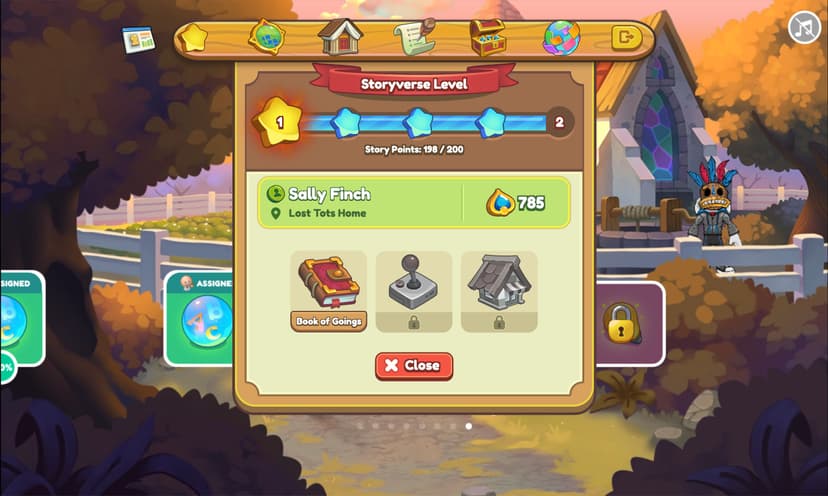
LittleLit Kids AI Literacy Platform uses a competency-based progression combined with gamified practice to teach digital literacy. Students log into an interactive application where they complete modules on artificial intelligence mechanics, safety, and critical thinking. They must pass assessments demonstrating mastery of one topic before the system unlocks the next level. Alongside the digital app, the platform requires physical, hands-on classroom projects. Teachers use provided lesson plans to guide students through real-world applications of AI. This hybrid approach leverages active learning, requiring students to apply digital concepts in physical environments. The gamification layer rewards students for completing modules, but the core instructional load is shared between the software's interactive tutorials and direct teacher instruction.
Strengths and tradeoffs of LittleLit Kids AI Literacy Platform
The biggest strength of LittleLit Kids AI Literacy Platform is its mastery-based progression, while its biggest weakness is the unproven balance between its gamification and actual cognitive engagement. Mastery-based learning is highly effective because it ensures students build a solid schema before encountering more complex material. By requiring students to prove competence in basic AI safety and mechanics, the platform avoids the common pitfall of pushing learners forward when they are confused. The inclusion of active learning through hands-on projects is another significant strength. Having students apply abstract AI concepts to real-world scenarios promotes deeper encoding and better knowledge transfer. However, the heavy reliance on gamification introduces risks. Learning science shows that extraneous rewards can sometimes decrease intrinsic motivation or cause students to focus on the game mechanics rather than the educational content. Additionally, because the curriculum spans a massive developmental range from kindergarten to eighth grade, maintaining appropriate cognitive load and scaffolding for all ages is a significant challenge. The platform's true effectiveness remains unverified until independent evaluation confirms these mechanics translate to long-term retention.
Who Might Benefit From LittleLit Kids AI Literacy Platform?
This platform is best for K-8 schools looking for a structured, out-of-the-box curriculum to introduce foundational artificial intelligence concepts. It serves early childhood through middle school students who benefit from a mix of screen-based gamified learning and teacher-led classroom projects. Because it requires institutional purchasing and educator facilitation, it is not suitable for individual parents seeking an independent study tool for home use. It works best in classrooms where teachers are given time to complete the included training and can actively monitor student progress through the mastery-based modules.
Data Transparency
Does Not Meet Data Transparency Standard
LittleLit Kids AI Literacy Platform reaches Level 1 of 3 (Basic protections), below our data transparency standard. Reaching Level 2 needs the policy to document a data retention timeline and self-service deletion.
26 of 35 checks passed
Evaluated September 2026
Privacy Policy of LittleLit →Level 1 · Basic protections
Does not sell data or target ads at students, limits sharing, and lets parents see and delete their child's data.
Level 2 · Parent control (meets the standard)
Families can get their data out, know who processes it, and know how long it is kept.
Not documented: a data retention timeline, self-service deletion
Level 3 · Direct data access
Families or schools can pull their own data through an API, in a stated format.
Not documented: an API for retrieving their own data, a named export format
View all 35 checks
Parent Access7/8
Does the policy mention parents specifically?
“This Privacy Policy applies to all individuals who use LittleLit’s Services, including educators, students, parents/guardians, administrators, and institutions.”
Can parents view their child's data?
“Parents/guardians can review, correct, or delete their child’s data at any time.”
Can parents modify their child's data?
“Parents/guardians can review, correct, or delete their child’s data at any time.”
Can parents delete their child's account?
“Parents/guardians can review, correct, or delete their child’s data at any time.”
Is there a dedicated Children's Privacy section?
“10\. Children’s Privacy”
Does it reference COPPA compliance?
“LittleLit complies with laws such as COPPA (U.S.) and GDPR for minors.”
Does it reference FERPA compliance?
The policy does not mention FERPA.
Is parental consent required for child accounts?
“Consent comes first. A parent or guardian creates every student account and gives consent before a child uses any AI feature.”
Data Portability3/5
Can users access their personal data?
“You can review, download, correct, or delete your child's information at any time by contacting us at”
Can users download/export their data?
“You can review, download, correct, or delete your child's information at any time by contacting us at”
Is there a self-service data access tool?
“Full visibility. From the parent dashboard you can view lessons, scores, and your child's AI conversations.”
Is a specific data format mentioned for export?
The policy mentions receiving data in a "portable format" but names no specific file format.
Is there an API for data access?
The policy does not describe an API for getting data.
Data Minimization3/6
Is data collection itemized?
“What we collect: parent account details, and for each student an aliase, grade level, lesson progress, answers, and AI conversation history.”
Can the app be used without a real name?
The policy says student data may include student names, and account registration collects a name.
Can the app be used without an email?
The policy lists email among the data collected at account registration and never says students are exempt.
Does it state collection is limited to what is necessary?
“Collected only as required to deliver educational functionality.”
Is IP address anonymized or truncated?
The policy says it collects IP addresses but does not say they are anonymized or truncated.
Is location tracking explicitly excluded?
“What we don't collect: precise location, biometric data, contact lists, or social media information.”
Third-Party Protection7/7
Does it explicitly state no selling of data?
“We do not sell or rent your personal information.”
Are third-party providers named?
“Trusted providers. We use AI models from vetted providers such as Anthropic. They are contractually prohibited from using student data to train their models.”
Are providers contractually restricted?
“Trusted providers. We use AI models from vetted providers such as Anthropic. They are contractually prohibited from using student data to train their models.”
No-targeted-advertising commitment?
“Student Data is used only for educational purposes and never for advertising or profiling outside the learning context.”
Is AI/ML data sharing addressed?
“Trusted providers. We use AI models from vetted providers such as Anthropic. They are contractually prohibited from using student data to train their models.”
Child-specific sharing restriction?
“We never share Student Data for advertising or cross-context behavioral profiling.”
Cookies/tracking limited or opt-out?
“You can adjust browser settings to reject non-essential cookies, though some features may not function properly.”
Deletion & Retention2/5
Can users delete their account?
“Parents, guardians, or institutions may request deletion of Student Data at any time, subject to legal or contractual obligations.”
Self-service deletion mechanism?
The policy says deletion is done by contacting privacy@littlelit.ai and describes no self-service deletion tool.
Specific data retention timeline?
The policy says data is kept only as long as necessary and gives no specific timeline.
Auto-deletion of inactive accounts?
The policy does not address deleting inactive accounts automatically.
Post-deletion handling described?
“When an account is deleted, data is removed from active systems; some may remain temporarily in backups or archives.”
Advertising4/4
Advertising model explicitly disclosed?
“Show advertising to students or sell student data”
Free from third-party advertisements?
“Show advertising to students or sell student data”
Children excluded from ad targeting?
“We never share Student Data for advertising or cross-context behavioral profiling.”
Ad-free option available?
“Show advertising to students or sell student data”
What This Means
The policy review did not meet our data transparency standard. The checks above show the documented findings and unknowns. A missing statement does not establish how the app handles data in practice.
About this evaluation: Based on automated analysis of Privacy Policy of LittleLit against 35 policy-disclosure questions, including questions adapted from the Common Sense Privacy Program's published evaluation questions. TLS is not affiliated with Common Sense Media, and this is not a Common Sense rating. Quoted text is copied from the policy; unquoted notes are our summary. Results describe what the policy documents, not the company's actual practices. Privacy policies can change: this review reflects the version we analyzed and does not determine legal compliance.
Sources and review method
TLS combines product information and editorial analysis to explain how LittleLit Kids AI Literacy Platform works, its tradeoffs, and the questions to ask before choosing it. Product features, an instructional rationale and evidence of learning outcomes are different kinds of information.
Formal Learning Standard assessment: not yet completed. Data Transparency findings are reported separately and do not establish learning effectiveness. Read our methodology.
Frequently Asked Questions About LittleLit Kids AI Literacy Platform
Is LittleLit Kids AI Literacy Platform free?
No, it is not free. The developer charges custom pricing based on the number of schools and classrooms utilizing the platform. Because it is designed as an institutional tool rather than a consumer application, pricing tiers depend heavily on the scale of deployment. Schools must contact the developer directly to negotiate a contract, which typically includes the software licenses, physical project materials, and mandatory teacher training modules required for implementation.
Is LittleLit Kids AI Literacy Platform good for elementary students?
Yes, it is designed specifically for early childhood through middle school. It breaks down complex computer science topics into manageable, mastery-based steps suitable for younger learners. By incorporating gamification and hands-on physical projects, it caters to the shorter attention spans and concrete thinking stages typical of elementary students. However, teachers must actively guide these younger learners to ensure the game mechanics do not distract from the foundational concepts of digital literacy and safety being taught.
What does LittleLit Kids AI Literacy Platform teach?
It teaches artificial intelligence literacy, applied science, and career and technical education concepts. Lessons focus on safe AI practices, critical thinking, and real-world applications of machine learning. Rather than teaching students how to write raw code, the curriculum emphasizes how artificial intelligence systems process information and make decisions. Students learn to identify AI in their daily lives, evaluate the ethical implications of automated systems, and practice safe digital habits when interacting with emerging technologies.
How does LittleLit Kids AI Literacy Platform compare to standard coding apps?
It focuses on broad artificial intelligence literacy rather than teaching specific programming syntax. While standard coding apps require students to write code line by line to build programs, this platform emphasizes understanding the broader mechanics of how artificial intelligence operates, makes decisions, and impacts society. It acts more as a digital citizenship and applied science curriculum, using hands-on projects and competency-based learning to teach the underlying logic of automated systems without requiring students to memorize coding languages.
Has The Learning Standard evaluated LittleLit Kids AI Literacy Platform?
TLS has not yet completed a Learning Standard evaluation of how well LittleLit Kids AI Literacy Platform teaches. Its privacy policy has been reviewed for Data Transparency and reaches Level 1, Basic protections.
Is LittleLit Kids AI Literacy Platform COPPA compliant?
The reviewed privacy policy references COPPA. A policy reference alone does not establish COPPA compliance. Policy review note: The policy says it complies with COPPA.
Is LittleLit Kids AI Literacy Platform FERPA compliant?
A FERPA reference was not found in the reviewed privacy policy. This does not determine whether the app complies with FERPA. Policy review note: The policy does not mention FERPA.
Does LittleLit Kids AI Literacy Platform have a children's privacy policy?
The reviewed policy includes a dedicated children's privacy section. Policy review note: Section 10 has the heading Children's Privacy.
Does LittleLit Kids AI Literacy Platform sell student data?
The reviewed policy states that the app does not sell data. This is a policy statement; actual data practices were not verified. Policy review note: The policy says the company does not sell personal information.
Can you delete your data from LittleLit Kids AI Literacy Platform?
The reviewed privacy policy describes account deletion. We have not tested the deletion process. Policy review note: Deletion of student data can be requested at any time.
Follow TLS Research
Subscribe to future TLS research updates: app reviews, findings, and what the evidence shows.
Screenshots
Take Action
For LittleLit Kids AI Literacy Platform
If you represent LittleLit Kids AI Education and have a correction or new evidence, send the relevant source so we can review and update this page.
Submit a correctionDetails
- Pricing
- Custom pricing per school per classroom.
- Platforms
- Web Browser, iOS (Apple mobile), iPadOS (Apple tablet), Android (Google mobile), macOS (Apple), Chrome OS (Google)
- Grade Levels
- Kindergarten, 1st Grade, 2nd Grade, 3rd Grade, 4th Grade, 5th Grade, 6th Grade, 7th Grade, 8th Grade
- Website
- Visit site