Lingokids
Product by Lingokids (Monkimun Inc.)
Facts checked: Not yet checked
Our take (not a Learning Standard rating). This label applies to learning-science judgments throughout this overview.
Our take (not a Learning Standard rating)
While Lingokids offers a massive library of engaging game-based content for early learners, its reliance on passive video consumption and gamification often distracts from actual skill acquisition. It introduces vocabulary and foundational math concepts effectively but lacks the rigorous retrieval practice necessary for long-term retention.
Pros
- Exposes early learners to a broad range of vocabulary through multimodal inputs like songs and interactive tracing.
- Uses immediate visual feedback during puzzle and tracing activities to help children correct mistakes in real time.
- Covers diverse subject matter, integrating social-emotional learning with traditional math and literacy foundations.
Cons
- Heavy reliance on highly stimulating animations often overshadows the core learning objectives, leading to cognitive overload.
- Lacks structured spaced repetition, meaning children may not revisit concepts enough to transfer them to long-term memory.
- The freemium model restricts daily access, which limits the consistent practice required for early childhood skill mastery.
What Do We Know About Lingokids?
Lingokids is a partially effective tool for exposing young children to foundational academic concepts, but it functions more as educational entertainment than a comprehensive curriculum. The app uses a highly gamified environment to introduce toddlers and early elementary students to literacy, math, and social-emotional skills. Your child will interact with colorful characters, sing along to vocabulary-rich songs, and complete basic drag-and-drop puzzles. From a learning science perspective, this multimodal approach helps build initial schema for new topics. However, the app leans heavily on passive consumption, particularly in its video content. Active learning requires children to retrieve information from memory, but many of the games prompt users too quickly or allow them to guess until they succeed without understanding the underlying concept. Parents should view this app as a supplementary exposure tool rather than a primary teaching mechanism. To maximize its value, you must sit with your child, ask them to explain what they are doing, and connect the app's vocabulary to real-world objects. The free version strictly limits daily activities, so a paid subscription is necessary if you want your child to have uninterrupted, self-paced exploration.
How Does Lingokids Work?
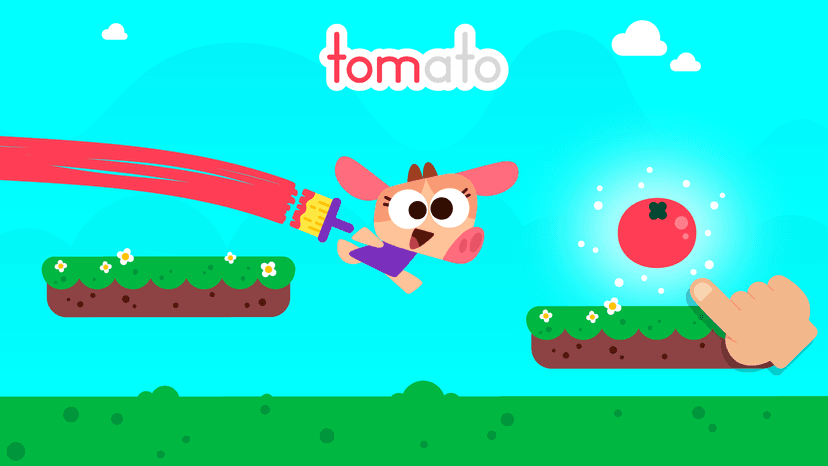
Lingokids uses a game-based, exploratory pedagogy where children navigate a virtual world filled with standalone mini-games, videos, and digital books. Rather than forcing a linear progression, the app allows users to select activities across various disciplines, including math, science, and humanities. When your child selects an activity, they are typically presented with a brief tutorial or animated song introducing a concept, followed by an interactive task. These tasks rely heavily on recognition rather than recall. For example, a child might be asked to tap the correct letter that matches a sound, utilizing immediate visual and auditory feedback. Correct answers are rewarded with digital stickers and celebratory animations. The app adapts the content slightly based on the age entered during setup, but the difficulty curve within individual games is relatively flat. Because it does not heavily utilize spaced repetition or forced mastery checkpoints, children can easily skip around without ever demonstrating true competence in a specific skill area.
Strengths and tradeoffs of Lingokids
The biggest strength of Lingokids is its multimodal vocabulary exposure, while its biggest weakness is the lack of structured retrieval practice needed for actual skill mastery. Grounded in the multimedia learning principle, the app effectively pairs spoken words with visual animations, helping early learners build basic associations. The inclusion of social-emotional learning alongside traditional academics is also a notable strength, as it introduces concepts like empathy and daily routines through engaging narratives. However, the app frequently falls into the trap of prioritizing entertainment over education. The games often rely on recognition rather than recall, meaning children can succeed by simply tapping the screen until something works, bypassing the cognitive effort required for actual learning. Furthermore, there is no evidence of spaced repetition in its design. Without systematically revisiting older material at increasing intervals, children are unlikely to move these new concepts from working memory into long-term storage. The high level of gamification and extrinsic rewards (like stickers) can also cause cognitive overload, distracting your child from the core learning objectives.
Who Might Benefit From Lingokids?
Best for toddlers and preschoolers who need engaging, broad exposure to early academic and social-emotional concepts alongside active parental guidance. Lingokids targets children ages two to eight, but its mechanics are most appropriate for the younger end of that spectrum (pre-kindergarten to kindergarten). It serves well as a supplemental tool for parents seeking productive screen time rather than an intensive teaching program. Families looking for a primary curriculum or rigorous phonics and math drill will find it lacking. It is ideal for casual use during travel or downtime, provided parents reinforce the app's vocabulary in the real world.
Data Transparency
Meets Data Transparency Standard
Lingokids meets our data transparency standard at Level 2 of 3 (Parent control). Level 3 needs the policy to document an API for retrieving their own data and a named export format.
26 of 35 checks passed
Evaluated September 2026
Privacy Policy →Level 1 · Basic protections
Does not sell data or target ads at students, limits sharing, and lets parents see and delete their child's data.
Level 2 · Parent control (meets the standard)
Families can get their data out, know who processes it, and know how long it is kept.
Level 3 · Direct data access
Families or schools can pull their own data through an API, in a stated format.
Not documented: an API for retrieving their own data, a named export format
View all 35 checks
Parent Access7/8
Does the policy mention parents specifically?
“We want you, as a parent and/or legal guardian (collectively “ **Parent(s)**”) to feel safe and have full confidence in our handling of your data”
Can parents view their child's data?
“At any time, you may review the child’s Personal Information maintained by us, require us to correct or delete the Personal Information, and/or refuse to permit us to further collect or use the child’s Personal Information.”
Can parents modify their child's data?
“At any time, you may review the child’s Personal Information maintained by us, require us to correct or delete the Personal Information, and/or refuse to permit us to further collect or use the child’s Personal Information.”
Can parents delete their child's account?
“At any time, a verified parent may request the deletion of their child’s personal information by contacting dpo@lingokids.com.”
Is there a dedicated Children's Privacy section?
“## **4\. Children’s Privacy**”
Does it reference COPPA compliance?
“COPPA-compliant configuration active for all child event streams; child and adult data held in separate projects.”
Does it reference FERPA compliance?
The policy does not mention FERPA.
Is parental consent required for child accounts?
“We require an adult to register their child and provide the child’s information to establish an account”
Data Portability2/5
Can users access their personal data?
“**Access Personal Information about you,** including: (i) confirming whether we are processing your personal information; (ii) obtaining access to or a copy of your personal information;”
Can users download/export their data?
“**Request data portability** and **receive an electronic copy of the personal information that you have provided to us;**”
Is there a self-service data access tool?
The policy has users request access by email or web form; it describes no self-service tool for accessing data.
Is a specific data format mentioned for export?
The policy mentions only an 'electronic copy' and names no specific format.
Is there an API for data access?
The policy does not describe an API that users can use to get their data.
Data Minimization4/6
Is data collection itemized?
“- Child’s first name or nickname (optional) - Child’s age (optional) - Child’s learning focus preferences (optional)”
Can the app be used without a real name?
The policy collects the child's first name, although it is optional.
Can the app be used without an email?
“Adult’s e-mail address. **Player information** - Child’s first name or nickname (optional) - Child’s age (optional) - Child’s learning focus preferences (optional)”
Does it state collection is limited to what is necessary?
“Once the parent has created the child’s account, then we strive to collect only as much information about a child player as is reasonably necessary for the child to participate in the educational activities in our Services.”
Is IP address anonymized or truncated?
“Not passed to advertising partners from child sessions. Truncated before storage. Not used to contact or profile any individual.”
Is location tracking explicitly excluded?
The policy says the App will not ask for physical location but collects general device location derived from IP address.
Third-Party Protection6/7
Does it explicitly state no selling of data?
“Lingokids does not “sell” personal information as the term “sell” is commonly understood.”
Are third-party providers named?
“We do not directly collect or store any payment card information entered through our Services, and instead rely on third-party payment processors (such as Apple or Google) to handle these payments.”
Are providers contractually restricted?
“To vendors we use to support the internal operations of our App, or data processors, and who are bound by contractual or other obligations to use the information only for such purpose and to keep the information confidential.”
No-targeted-advertising commitment?
“We do not market or advertise to children in the Services or otherwise use information collected from children or within child-directed properties of our Services for advertising purposes.”
Is AI/ML data sharing addressed?
The policy says AI is used to generate progress reports but does not say whether data is shared with AI providers or used for model training.
Child-specific sharing restriction?
“We do not share, sell, rent, or transfer children’s personal information other than as described in this section:”
Cookies/tracking limited or opt-out?
“As an adult, you can control this tracking by managing your cookie settings (for instance by using the cookie banner that appears on our promotional website)”
Deletion & Retention3/5
Can users delete their account?
“**Request Deletion, Anonymization or Blocking** of your personal information;”
Self-service deletion mechanism?
The policy requires deletion by request to Lingokids; the only self-service tools mentioned are for removing posted content.
Specific data retention timeline?
“Sentry error logs: 90 days rolling.<br>Datadog APM traces: rolling retention after 30 days.<br>All deleted after retention period.”
Auto-deletion of inactive accounts?
The policy defines an inactive account but does not say inactive accounts are automatically deleted.
Post-deletion handling described?
“Data in backups will be overwritten in accordance with the backup rotation schedule, ensuring final deletion.”
Advertising4/4
Advertising model explicitly disclosed?
“**No ads.** We do not display any advertising within our Services.”
Free from third-party advertisements?
“**No ads.** We do not display any advertising within our Services.”
Children excluded from ad targeting?
“We do not market or advertise to children in the Services or otherwise use information collected from children or within child-directed properties of our Services for advertising purposes.”
Ad-free option available?
“**No ads.** We do not display any advertising within our Services.”
Meets Data Transparency Standard
The reviewed policy met our data transparency standard. This result describes the policy disclosures we assessed. Actual practices and legal compliance were not verified.
About this evaluation: Based on automated analysis of Privacy Policy against 35 policy-disclosure questions, including questions adapted from the Common Sense Privacy Program's published evaluation questions. TLS is not affiliated with Common Sense Media, and this is not a Common Sense rating. Quoted text is copied from the policy; unquoted notes are our summary. Results describe what the policy documents, not the company's actual practices. Privacy policies can change: this review reflects the version we analyzed and does not determine legal compliance.
Sources and review method
TLS combines product information and editorial analysis to explain how Lingokids works, its tradeoffs, and the questions to ask before choosing it. Product features, an instructional rationale and evidence of learning outcomes are different kinds of information.
Formal Learning Standard assessment: not yet completed. Data Transparency findings are reported separately and do not establish learning effectiveness. Read our methodology.
Frequently Asked Questions About Lingokids
Is Lingokids free?
Yes, Lingokids offers a freemium version, but it is highly restricted. The free tier limits your child to a small number of daily activities. For unlimited access to the full library of 1,600+ games and offline play, a paid subscription is required, which costs 15 USD per month or 90 USD annually.
Is Lingokids good for 7-year-olds?
No, Lingokids is generally too simplistic for most 7-year-olds. While the developer states the app is for ages 2 to 8, the game mechanics and highly animated characters are best suited for toddlers and preschoolers. Older children typically require more complex problem-solving and deeper reading instruction than this app provides.
What does Lingokids teach?
Lingokids teaches early foundational skills across a wide variety of subjects. This includes basic math, early literacy, science, and social-emotional concepts like hygiene and empathy. It introduces these topics primarily through vocabulary building, interactive songs, and basic drag-and-drop mechanics.
Lingokids vs ABCmouse: Which is better?
It depends on your child's learning goals. ABCmouse offers a more structured, linear curriculum with explicit learning paths, making it better for comprehensive academic preparation. Lingokids relies on open-ended exploration and excels in modern skills and social-emotional learning, but provides less rigorous academic tracking.
Has The Learning Standard evaluated Lingokids?
TLS has not yet completed a Learning Standard evaluation of how well Lingokids teaches. Its privacy policy has been reviewed for Data Transparency and reaches Level 2, Parent control.
Is Lingokids COPPA compliant?
The reviewed privacy policy references COPPA. A policy reference alone does not establish COPPA compliance. Policy review note: The policy references a COPPA-compliant configuration for child data.
Is Lingokids FERPA compliant?
A FERPA reference was not found in the reviewed privacy policy. This does not determine whether the app complies with FERPA. Policy review note: The policy does not mention FERPA.
Does Lingokids have a children's privacy policy?
The reviewed policy includes a dedicated children's privacy section. Policy review note: There is a dedicated Children's Privacy section.
Does Lingokids sell student data?
The reviewed policy states that the app does not sell data. This is a policy statement; actual data practices were not verified. Policy review note: The policy states Lingokids does not sell personal information.
Can you delete your data from Lingokids?
The reviewed privacy policy describes account deletion. We have not tested the deletion process. Policy review note: Users may request deletion of their personal information.
Follow TLS Research
Subscribe to future TLS research updates: app reviews, findings, and what the evidence shows.
Screenshots


Latest News
All Lingokids NewsLingokids Adds Spanish and Portuguese as Dual-Language Demand Rises
Lingokids has launched Spanish and Portuguese features. Discover how localized educational apps support dual-language development according to research.
What Does Google's 'Teacher Approved' App Badge Really Mean?
Google Play's "Teacher Approved" badge highlights apps for kids, but researchers warn the label is misleading. Learn how to spot truly educational apps.
Take Action
For Lingokids
If you represent Lingokids (Monkimun Inc.) and have a correction or new evidence, send the relevant source so we can review and update this page.
Submit a correctionDetails
- Pricing
- Freemium version available.15 USD / month. 90 USD / year. 199 USD Lifetime. Substantial discounts are available depending on the volume of licenses.
- Platforms
- iOS (Apple mobile), iPadOS (Apple tablet), Android (Google mobile), macOS (Apple), Other
- Grade Levels
- Infant/Toddler, Preschool, Prekindergarten, Transitional Kindergarten, Kindergarten, 1st Grade, 2nd Grade
- Website
- Visit site