
Lifelong Learning Competencies
Product by IBEC LATAM
Facts checked: Not yet checked
Our take (not a Learning Standard rating). This label applies to learning-science judgments throughout this overview.
Our take (not a Learning Standard rating)
While Lifelong Learning Competencies offers a structured path toward digital and soft skill certification, its reliance on blended learning requires strong institutional support to be effective. The competency-based progression ensures students master foundational concepts before advancing, but the efficacy of teaching complex human skills via digital modules remains pending a full evaluation.
Pros
- Utilizes competency-based progression to ensure students demonstrate mastery before advancing to new material.
- Incorporates blended learning models that allow for personalized pacing alongside traditional instruction.
- Culminates in a formal certification exam that provides measurable proof of acquired digital and professional skills.
Cons
- Teaching soft skills like leadership and group work heavily relies on off-platform interactions that the software cannot accurately assess.
- The pricing structure is designed for large institutional adoption rather than individual home learners.
- Requires high self-regulation from learners, which often hinders completion rates in adult education software.
What Do We Know About Lifelong Learning Competencies?
Lifelong Learning Competencies is an effective tool for high schoolers and adults looking to earn verifiable certifications in digital and professional skills, provided they have strong institutional support. Your child or adult learner will interact with a competency-based platform designed to build proficiency in areas like leadership, critical thinking, and business management. Because the program uses a mastery learning approach, your child cannot simply click through the material; they must demonstrate understanding of one concept before the system unlocks the next. This platform is built primarily for schools and businesses, meaning you cannot easily purchase a single license for home use. The curriculum blends online modules with practical applications, which is grounded in the science of transfer learning: taking skills learned in a digital environment and applying them to real-world scenarios. However, parents and educators should note that soft skills like group work are notoriously difficult to teach and assess purely through software. The platform relies heavily on the blended learning environment, meaning the presence of a live teacher or facilitator is critical for actual skill acquisition. The Learning Standard has not yet fully evaluated the specific instructional design of these modules, but the overarching competency-based framework is a well-supported educational model.
How Does Lifelong Learning Competencies Work?
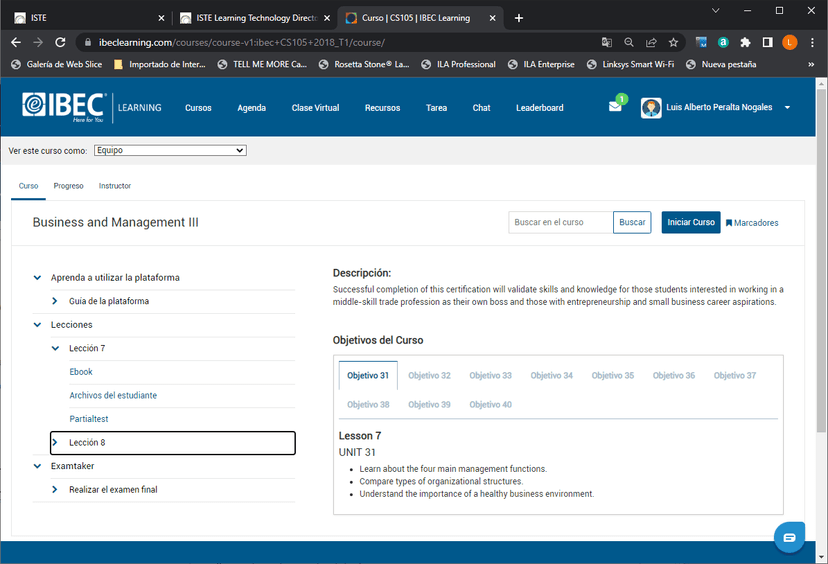
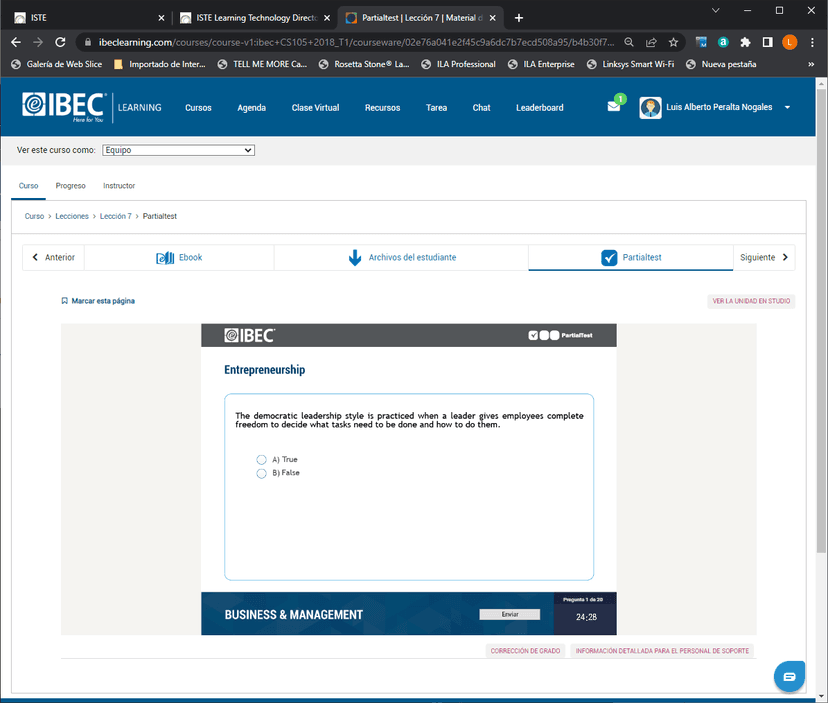
Lifelong Learning Competencies uses a competency-based learning framework combined with blended instruction to teach digital and professional skills. Students log into a centralized platform where they navigate through targeted modules focused on specific career readiness topics. Instead of progressing based on time spent on a task, learners advance only after successfully completing assessments that prove their mastery of the current topic. The system personalizes the learning path based on initial performance, adapting the instructional material to fill specific knowledge gaps. For subjects like critical thinking and business skills, the platform presents scenarios and requires learners to apply theoretical knowledge to practical problems. This approach leverages active learning principles, moving the student from passive consumption to active problem-solving. At the end of the instructional sequence, users must pass a comprehensive international certification exam. A diploma is awarded only when students successfully complete at least 75% of the platform's rigorous activities, ensuring a high threshold for engagement.
Strengths and tradeoffs of Lifelong Learning Competencies
The biggest strength of Lifelong Learning Competencies is its strict adherence to mastery-based progression, while its biggest weakness is the inherent difficulty of authentically assessing soft skills through a digital interface. The platform excels in its structural design for digital skills training. By requiring learners to pass threshold assessments before moving forward, the software utilizes formative assessment effectively. This prevents the accumulation of knowledge gaps, a common failure point in self-paced adult education. Furthermore, the inclusion of a final certification exam incentivizes retrieval practice, as students know they must recall information from earlier modules to succeed at the end of the course. Conversely, the platform attempts to teach highly nuanced human skills, such as leadership and group work. Cognitive science indicates that interpersonal skills require social learning and immediate behavioral feedback, which a software platform struggles to provide without a live instructor. Therefore, the success of this program relies heavily on its blended learning implementation. If schools or businesses merely assign the modules without facilitating real-world practice and discussion, the transfer of these soft skills to actual workplace environments will likely be minimal.
Who Might Benefit From Lifelong Learning Competencies?
Lifelong Learning Competencies is best for high school upperclassmen, college students, and adult learners enrolled in formal career and technical education programs. Because the platform targets advanced digital and soft skills necessary for the global labor market, it is not suitable for young children. The ideal use case is within a high school or corporate training environment that purchases bulk licenses to prepare its cohort for international certification. It serves best as a structured curriculum for educators who want a reliable, competency-based framework to supplement their in-person instruction on career readiness and business administration.
Data Transparency
Does Not Meet Data Transparency Standard
Lifelong Learning Competencies does not meet our data transparency standard. Its privacy policy does not document basic protections, including a commitment against targeted advertising, limits on sharing children's data and a COPPA or FERPA commitment.
5 of 35 checks passed
Evaluated September 2026
IBEC Latam →Level 1 · Basic protections
Does not sell data or target ads at students, limits sharing, and lets parents see and delete their child's data.
Not documented: a commitment against targeted advertising, limits on sharing children's data, a COPPA or FERPA commitment, parents' right to see their child's data, parents' right to delete their child's data, account deletion
Level 2 · Parent control (meets the standard)
Families can get their data out, know who processes it, and know how long it is kept.
Not documented: users' right to access their data, data export, a data retention timeline, named service providers, self-service deletion
Level 3 · Direct data access
Families or schools can pull their own data through an API, in a stated format.
Not documented: an API for retrieving their own data, a named export format
View all 35 checks
Parent Access0/8
Does the policy mention parents specifically?
The policy does not mention parents.
Can parents view their child's data?
The policy does not say parents can view their child's data.
Can parents modify their child's data?
The policy does not say parents can change their child's data.
Can parents delete their child's account?
The policy does not say parents can delete their child's data or account.
Is there a dedicated Children's Privacy section?
The policy has no section on children's privacy.
Does it reference COPPA compliance?
The policy does not mention COPPA.
Does it reference FERPA compliance?
The policy does not mention FERPA.
Is parental consent required for child accounts?
The policy does not address parental consent.
Data Portability0/5
Can users access their personal data?
The policy does not give users a right to access their personal data.
Can users download/export their data?
The policy does not address downloading or exporting data.
Is there a self-service data access tool?
The policy does not describe a self-service data access tool.
Is a specific data format mentioned for export?
The policy does not mention an export format.
Is there an API for data access?
The policy does not mention an API for data access.
Data Minimization1/6
Is data collection itemized?
“IBEC Latam collects personally identifiable information, such as your email address, name, home or work address or telephone number. IBEC Latam also collects anonymous demographic information, which is not unique to you, such as your ZIP code, age, gender, preferences, interests and favorites.”
Can the app be used without a real name?
The policy says it collects users' names.
Can the app be used without an email?
The policy says it collects users' email addresses.
Does it state collection is limited to what is necessary?
The policy does not say collection is limited to what is necessary.
Is IP address anonymized or truncated?
The policy says it collects IP addresses but does not say they are anonymized or truncated.
Is location tracking explicitly excluded?
The policy does not rule out location tracking.
Third-Party Protection3/7
Does it explicitly state no selling of data?
“IBEC Latam does not sell, rent or lease its customer lists to third parties.”
Are third-party providers named?
The policy refers to "trusted partners" but does not name any third-party providers.
Are providers contractually restricted?
“All such third parties are prohibited from using your personal information except to provide these services to IBEC Latam, and they are required to maintain the confidentiality of your information.”
No-targeted-advertising commitment?
The policy says browsing behavior is used to deliver customized advertising, which is the opposite of a no-targeted-ads commitment.
Is AI/ML data sharing addressed?
The policy does not address AI or machine-learning data sharing.
Child-specific sharing restriction?
The policy has no sharing restrictions specific to children.
Cookies/tracking limited or opt-out?
“You have the ability to accept or decline cookies. Most Web browsers automatically accept cookies, but you can usually modify your browser setting to decline cookies if you prefer.”
Deletion & Retention0/5
Can users delete their account?
The policy does not address deleting an account or data.
Self-service deletion mechanism?
The policy does not describe a self-service deletion tool.
Specific data retention timeline?
The policy does not give a data retention timeline.
Auto-deletion of inactive accounts?
The policy does not address automatic deletion of inactive accounts.
Post-deletion handling described?
The policy does not describe what happens to data after deletion.
Advertising1/4
Advertising model explicitly disclosed?
“This data is used to deliver customized content and advertising within IBEC Latam to customers whose behavior indicates that they are interested in a particular subject area.”
Free from third-party advertisements?
The policy says the site shows advertising and does not say it is free of third-party ads.
Children excluded from ad targeting?
The policy does not exclude children from ad targeting.
Ad-free option available?
The policy says the site shows advertising and offers no ad-free option.
What This Means
The policy review did not meet our data transparency standard. The checks above show the documented findings and unknowns. A missing statement does not establish how the app handles data in practice.
About this evaluation: Based on automated analysis of IBEC Latam against 35 policy-disclosure questions, including questions adapted from the Common Sense Privacy Program's published evaluation questions. TLS is not affiliated with Common Sense Media, and this is not a Common Sense rating. Quoted text is copied from the policy; unquoted notes are our summary. Results describe what the policy documents, not the company's actual practices. Privacy policies can change: this review reflects the version we analyzed and does not determine legal compliance.
Sources and review method
TLS combines product information and editorial analysis to explain how Lifelong Learning Competencies works, its tradeoffs, and the questions to ask before choosing it. Product features, an instructional rationale and evidence of learning outcomes are different kinds of information.
Formal Learning Standard assessment: not yet completed. Data Transparency findings are reported separately and do not establish learning effectiveness. Read our methodology.
Frequently Asked Questions About Lifelong Learning Competencies
Is Lifelong Learning Competencies free?
No, Lifelong Learning Competencies is not free. It is an enterprise-level solution sold primarily to institutions. Pricing scales based on volume, costing approximately 60 USD per user per year for a group of 500 users, which includes the final certification diploma.
Is Lifelong Learning Competencies good for high school students?
Yes, the platform is appropriate for 10th through 12th graders. The curriculum specifically targets career and technical education, making it highly relevant for older teenagers preparing to enter the workforce or transition into higher education.
What does Lifelong Learning Competencies teach?
The program teaches a mix of hard digital skills and soft human skills. Specific focus areas include leadership, group work, critical thinking, business acumen, and creative problem-solving. The goal is to prepare learners for the global labor market through internationally recognized certification.
How does Lifelong Learning Competencies compare to Coursera for Business?
While Coursera aggregates video-based courses from universities, Lifelong Learning Competencies provides a proprietary, competency-based track specifically culminating in its own international certification. Lifelong Learning Competencies focuses heavily on blended learning environments rather than purely self-guided online video consumption.
Has The Learning Standard evaluated Lifelong Learning Competencies?
TLS has not yet completed a Learning Standard evaluation of how well Lifelong Learning Competencies teaches. Its privacy policy has been reviewed for Data Transparency and does not yet document the basic protections (Level 1).
Is Lifelong Learning Competencies COPPA compliant?
A COPPA reference was not found in the reviewed privacy policy. This does not determine whether the app complies with COPPA. Policy review note: The policy does not mention COPPA.
Is Lifelong Learning Competencies FERPA compliant?
A FERPA reference was not found in the reviewed privacy policy. This does not determine whether the app complies with FERPA. Policy review note: The policy does not mention FERPA.
Does Lifelong Learning Competencies have a children's privacy policy?
No dedicated children's privacy section was found in the reviewed policy. Policy review note: The policy has no section on children's privacy.
Does Lifelong Learning Competencies sell student data?
The reviewed policy states that the app does not sell data. This is a policy statement; actual data practices were not verified. Policy review note: The policy says the vendor does not sell, rent or lease its customer lists.
Can you delete your data from Lifelong Learning Competencies?
Account deletion was not documented in the reviewed privacy policy. This does not establish whether deletion is available. Policy review note: The policy does not address deleting an account or data.
Follow TLS Research
Subscribe to future TLS research updates: app reviews, findings, and what the evidence shows.
Screenshots
Take Action
For Lifelong Learning Competencies
If you represent IBEC LATAM and have a correction or new evidence, send the relevant source so we can review and update this page.
Submit a correctionDetails
- Pricing
- The price depends on the volume of users. For 500 users the price is 60 USD per user per year. The price includes the approval diploma with 75% of activities on the platform.
- Platforms
- Web Browser, Android (Google mobile), Windows (Microsoft), Chrome OS (Google)
- Grade Levels
- 10th Grade, 11th Grade, 12th Grade, Associate's degree, Bachelor's degree, Master's Degree, Post-master's certificate, Adult Education, Professional or Technical Credential
- Website
- Visit site