Learning Tree
Product by Focalpoint Education
Facts checked: Not yet checked
Our take (not a Learning Standard rating). This label applies to learning-science judgments throughout this overview.
Our take (not a Learning Standard rating)
Pending full evaluation by The Learning Standard. Learning Tree offers a broad platform for school districts to deploy adaptive pathways and practice across multiple grade levels. While its focus on personalized pacing aligns with mastery-learning principles, the quality of instruction depends heavily on the specific content libraries schools choose to license.
Pros
- Adjusts problem difficulty in real-time based on student accuracy, supporting individualized learning paces.
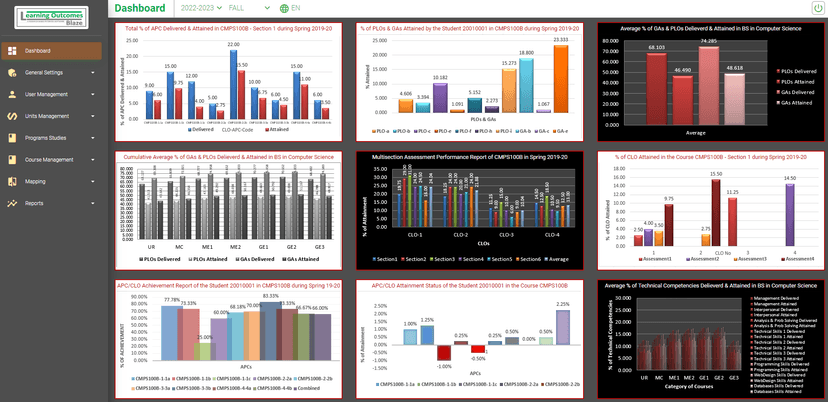
- Provides educators with detailed data dashboards to identify specific knowledge gaps and target interventions.
- Utilizes mastery-based progression to ensure core concepts are understood before a student advances.
Cons
- The massive scope from middle school to post-doctoral levels suggests the platform is a delivery shell rather than a specialized curriculum.
- Effectiveness relies entirely on the quality of the premium content libraries a school purchases.
- Lacks independent verification of its AI-driven recommendation engine and its impact on long-term retention.
What Do We Know About Learning Tree?
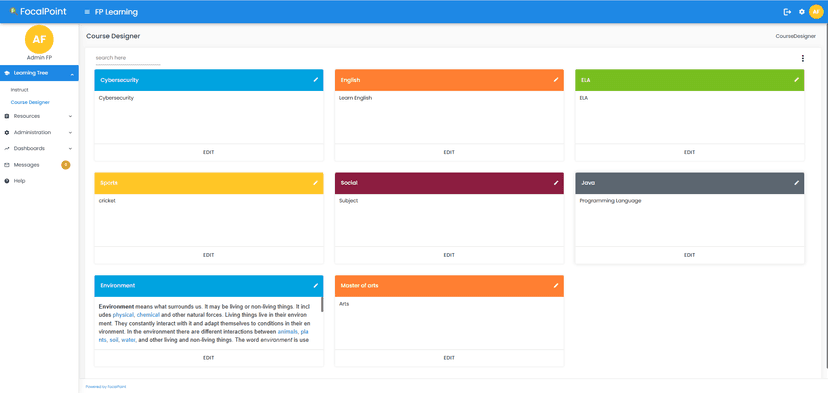
Learning Tree operates primarily as a school-deployed delivery system for adaptive practice rather than a standalone app your child will use independently at home. Because it relies on license-based subscriptions for schools, your child will only interact with this platform if their district mandates it. The system uses adaptive pathways, meaning the software tracks your child's right and wrong answers and adjusts the difficulty of subsequent questions. This approach aligns with the learning science principle of finding the zone of proximal development, keeping practice challenging but not frustrating. However, since the platform covers everything from 5th-grade math to post-doctoral certificates, Learning Tree itself does not guarantee high-quality instruction. It is essentially an empty container that schools fill with optional premium content libraries. You should ask your child's teacher exactly which curriculum modules are loaded into the system. If the underlying content utilizes evidence-based strategies like retrieval practice and spaced repetition, the adaptive shell will enhance those benefits. Without strong content, the adaptive features simply deliver mediocre material at a customized pace. The Learning Standard has not yet formally evaluated the specific instructional modules within Learning Tree.
How Does Learning Tree Work?
Learning Tree uses an algorithmic adaptive testing model to deliver personalized problem sets and instructional content based on real-time performance data. When students log into the platform, they are presented with tasks aligned to their current syllabus or learning path. As they answer questions, the system's software evaluates their accuracy and speed, automatically routing them to easier remedial content or more advanced enrichment material. This mimics mastery-based progression, ensuring students do not move forward until they demonstrate competence in fundamental skills. The platform also heavily emphasizes analytics, feeding this performance data back to the teacher's dashboard. Teachers use these insights to pull small groups for targeted intervention. The AI-supported content recommendations attempt to predict which modules a student should tackle next to optimize their learning trajectory. Because the platform serves grades five through higher education, the actual interface and problem types vary significantly depending on the licensed content libraries.
Strengths and tradeoffs of Learning Tree
Learning Tree's biggest strength is its data-driven adaptability for classroom deployment, while its biggest weakness is its complete reliance on third-party or premium content libraries for actual instructional quality. Adaptive Pathways: The platform excels at tracking student performance and adjusting difficulty. This aligns with learning science research on desirable difficulties, ensuring students are stretched just beyond their current comfort level without experiencing cognitive overload. Teacher Insights: By aggregating performance metrics, it reduces the friction for teachers to identify struggling students, facilitating targeted human intervention. Content Dependency: Because the system spans subjects as diverse as early childhood education and doctoral studies, the platform itself is curriculum-agnostic. This means the presence of critical learning mechanisms like worked examples, elaborative interrogation, or spaced retrieval practice depends entirely on what the school licenses. If a district buys a poorly designed content library, Learning Tree's algorithm will merely deliver that flawed content efficiently. Pending Evaluation: The Learning Standard has not yet verified whether the proprietary AI recommendations genuinely improve learning outcomes compared to standard mastery-based progression models.
Who Might Benefit From Learning Tree?
Learning Tree is best for school districts and higher-education institutions seeking a centralized, adaptive platform to deliver varied curricula and track student analytics. It is not designed for individual parents seeking supplementary tutoring at home. Because the grade levels range from 5th grade through professional credentialing, its ideal use case is institutional adoption where administrators need a unified dashboard across entirely different departments or schools. Teachers who want granular data to guide their small-group instruction will benefit most from its real-time tracking features, provided the institution has invested in high-quality content libraries.
Data Transparency
Meets Data Transparency Standard
Learning Tree meets our data transparency standard at Level 2 of 3 (Parent control). Level 3 needs the policy to document an API for retrieving their own data and a named export format.
25 of 35 checks passed
Evaluated September 2026
Privacy Policy →Level 1 · Basic protections
Does not sell data or target ads at students, limits sharing, and lets parents see and delete their child's data.
Level 2 · Parent control (meets the standard)
Families can get their data out, know who processes it, and know how long it is kept.
Level 3 · Direct data access
Families or schools can pull their own data through an API, in a stated format.
Not documented: an API for retrieving their own data, a named export format
View all 35 checks
Parent Access8/8
Does the policy mention parents specifically?
“Parents and eligible students retain all rights under FERPA, including the right to inspect, review, and request amendment of student education records. Such requests should be directed to the student’s school or district.”
Can parents view their child's data?
“Parents and eligible students retain all rights under FERPA, including the right to inspect, review, and request amendment of student education records. Such requests should be directed to the student’s school or district.”
Can parents modify their child's data?
“Parents and eligible students retain all rights under FERPA, including the right to inspect, review, and request amendment of student education records. Such requests should be directed to the student’s school or district.”
Can parents delete their child's account?
“For student education records, rights are exercised through the contracting school district in accordance with FERPA. Parents, guardians, and eligible students should contact their school district directly.”
Is there a dedicated Children's Privacy section?
“8.2 COPPA (Children’s Online Privacy Protection Act)”
Does it reference COPPA compliance?
“we are especially committed to compliance with the Family Educational Rights and Privacy Act (FERPA), the Children’s Online Privacy Protection Act (COPPA), and applicable state student privacy laws.”
Does it reference FERPA compliance?
“we are especially committed to compliance with the Family Educational Rights and Privacy Act (FERPA), the Children’s Online Privacy Protection Act (COPPA), and applicable state student privacy laws.”
Is parental consent required for child accounts?
“We do not knowingly collect personal information directly from children under 13 without the consent of, and authorization by, their school or district. Schools and districts act as the agent of the parent for COPPA consent purposes when directing students to use our platform.”
Data Portability2/5
Can users access their personal data?
“Access: Request a copy of the personal data we hold about you.”
Can users download/export their data?
“Data Portability: Request your data in a structured, machine-readable format.”
Is there a self-service data access tool?
The policy says users access their data by request and does not describe a tool they can use themselves.
Is a specific data format mentioned for export?
The policy says only 'structured, machine-readable format' and does not name a specific format.
Is there an API for data access?
The policy does not mention an API for data access.
Data Minimization1/6
Is data collection itemized?
“• Full name • Email address • Phone number • Mailing address • Organization/school name and role”
Can the app be used without a real name?
The policy says it collects users' full names.
Can the app be used without an email?
The policy says it collects email addresses.
Does it state collection is limited to what is necessary?
The policy limits how long data is kept to what is necessary but does not say collection is limited to what is necessary.
Is IP address anonymized or truncated?
The policy says it collects IP addresses and does not say they are anonymized or truncated.
Is location tracking explicitly excluded?
The policy does not explicitly rule out location tracking.
Third-Party Protection7/7
Does it explicitly state no selling of data?
“We do not sell, rent, or trade personal data.”
Are third-party providers named?
“• Microsoft Azure: Cloud infrastructure including compute, storage, and database services hosted in the United States.”
Are providers contractually restricted?
“These sub-processors are contractually bound to process data only on our behalf and in accordance with this Privacy Policy.”
No-targeted-advertising commitment?
“We do not use third-party advertising cookies, behavioral tracking for ad targeting, or cross-site tracking technologies. We do not permit third-party ad networks on our platform.”
Is AI/ML data sharing addressed?
“Azure OpenAI Service: AI-powered analytics features. Data sent to Azure OpenAI is processed within our Azure tenant boundary and is not used by Microsoft to train foundation models.”
Child-specific sharing restriction?
“We do _**not**_ use student education records for advertising, marketing, or any purpose other than providing the contracted educational services. We do not sell personal data to third parties.”
Cookies/tracking limited or opt-out?
“Users can control cookies through browser settings, including blocking or deleting cookies.”
Deletion & Retention3/5
Can users delete their account?
“Deletion: Request deletion of your personal data, subject to legal retention requirements.”
Self-service deletion mechanism?
The policy says deletion happens by request and does not describe a tool users can operate themselves.
Specific data retention timeline?
“Upon termination or expiration of the agreement, student data is deleted or returned to the district within 60 days, unless a longer retention period is required by law or contractual obligation.”
Auto-deletion of inactive accounts?
The policy does not describe automatically deleting inactive accounts.
Post-deletion handling described?
“Data is deleted or anonymized when no longer required. If deletion is not immediately possible (e.g., data in backup archives), we securely isolate the data from further processing until deletion is completed.”
Advertising4/4
Advertising model explicitly disclosed?
“We do not use third-party advertising cookies, behavioral tracking for ad targeting, or cross-site tracking technologies. We do not permit third-party ad networks on our platform.”
Free from third-party advertisements?
“We do not use third-party advertising cookies, behavioral tracking for ad targeting, or cross-site tracking technologies. We do not permit third-party ad networks on our platform.”
Children excluded from ad targeting?
“We do not use student data to target advertising to students of any age.”
Ad-free option available?
“We do not use third-party advertising cookies, behavioral tracking for ad targeting, or cross-site tracking technologies. We do not permit third-party ad networks on our platform.”
Meets Data Transparency Standard
The reviewed policy met our data transparency standard. This result describes the policy disclosures we assessed. Actual practices and legal compliance were not verified.
About this evaluation: Based on automated analysis of Privacy Policy against 35 policy-disclosure questions, including questions adapted from the Common Sense Privacy Program's published evaluation questions. TLS is not affiliated with Common Sense Media, and this is not a Common Sense rating. Quoted text is copied from the policy; unquoted notes are our summary. Results describe what the policy documents, not the company's actual practices. Privacy policies can change: this review reflects the version we analyzed and does not determine legal compliance.
Sources and review method
TLS combines product information and editorial analysis to explain how Learning Tree works, its tradeoffs, and the questions to ask before choosing it. Product features, an instructional rationale and evidence of learning outcomes are different kinds of information.
Formal Learning Standard assessment: not yet completed. Data Transparency findings are reported separately and do not establish learning effectiveness. Read our methodology.
Frequently Asked Questions About Learning Tree
Is Learning Tree free?
No, Learning Tree is not free for individual users. It operates on a license-based subscription model sold directly to schools, school districts, and universities. Individual parents cannot typically purchase a standalone subscription for home use. Schools often pay additional fees to unlock premium content libraries within the platform. If your child's school uses it, the cost is covered by district technology budgets rather than out-of-pocket parent expenses.
Is Learning Tree good for elementary students?
Learning Tree targets 5th grade and above, though its developer lists early childhood subjects. Its complex analytics and mastery-driven adaptive pathways are generally better suited for middle school, high school, and higher education environments where older students manage independent learning modules. For younger children, the interface and heavy reliance on independent data-driven pathways lack the necessary scaffolding and direct instruction required for foundational early literacy and numeracy skills.
What does Learning Tree teach?
Learning Tree does not inherently teach a specific subject out of the box. It functions as an empty delivery platform that hosts content across humanities, science, math, and career technical education. The actual subjects available to your child depend entirely on the specific premium content libraries and modules their school has licensed and assigned. It can deliver everything from middle school history quizzes to advanced technical credentialing exams.
Has The Learning Standard evaluated Learning Tree?
TLS has not yet completed a Learning Standard evaluation of how well Learning Tree teaches. Its privacy policy has been reviewed for Data Transparency and reaches Level 2, Parent control.
Is Learning Tree COPPA compliant?
The reviewed privacy policy references COPPA. A policy reference alone does not establish COPPA compliance. Policy review note: The policy states it is committed to COPPA compliance.
Is Learning Tree FERPA compliant?
The reviewed privacy policy references FERPA. A policy reference alone does not establish FERPA compliance. Policy review note: The policy states it is committed to FERPA compliance.
Does Learning Tree have a children's privacy policy?
The reviewed policy includes a dedicated children's privacy section. Policy review note: The policy has a COPPA section with its own heading.
Does Learning Tree sell student data?
The reviewed policy states that the app does not sell data. This is a policy statement; actual data practices were not verified. Policy review note: The policy states the company does not sell personal data.
Can you delete your data from Learning Tree?
The reviewed privacy policy describes account deletion. We have not tested the deletion process. Policy review note: Users can ask for their personal data to be deleted.
Follow TLS Research
Subscribe to future TLS research updates: app reviews, findings, and what the evidence shows.
Screenshots
Take Action
For Learning Tree
If you represent Focalpoint Education and have a correction or new evidence, send the relevant source so we can review and update this page.
Submit a correctionDetails
- Pricing
- License-based subscription per student or school with optional premium content libraries.
- Platforms
- Web Browser, iOS (Apple mobile), iPadOS (Apple tablet), Android (Google mobile), Windows (Microsoft), macOS (Apple), Chrome OS (Google)
- Grade Levels
- 5th Grade, 6th Grade, 7th Grade, 8th Grade, 9th Grade, 10th Grade, 11th Grade, 12th Grade, Associate's degree, Bachelor's degree, Master's Degree, Post-master's certificate, Doctoral Degree, Post-doctoral certificate, Professional or Technical Credential
- Website
- Visit site