
Kids Discover Online
Product by Kids Discover
Facts checked: Not yet checked
Our take (not a Learning Standard rating). This label applies to learning-science judgments throughout this overview.
Our take (not a Learning Standard rating)
Kids Discover Online delivers high-interest nonfiction reading with adjustable Lexile levels, supporting differentiated instruction. While its text-to-speech and translation tools lower barriers for struggling readers, the platform relies heavily on basic reading comprehension quizzes rather than deep inquiry. It serves as a strong supplemental text resource, but deeper engagement requires active teacher facilitation.
Pros
- Offers three distinct Lexile ranges for each article to support differentiated instruction without altering core concepts.
- Includes text-to-speech functionality to reduce cognitive load for emerging or struggling readers.
- Provides built-in comprehension quizzes that allow for immediate retrieval practice after reading.
- Supports multi-language learners with translation options in ten different languages.
Cons
- Assessment tools focus primarily on basic recall rather than higher-order thinking or synthesis.
- Lacks built-in spaced repetition features to ensure long-term retention of historical and scientific facts.
- Requires significant teacher orchestration to elevate the material from passive reading to true inquiry-based learning.
- Classroom-focused pricing structure makes it inaccessible for individual parent use at home.
What Do We Know About Kids Discover Online?
Kids Discover Online is an effective supplemental reading tool for building background knowledge in science and social studies, though it functions best in a classroom setting rather than at home. Your child will interact with a digital library of nonfiction texts that adjust to their reading level. This differentiation allows students of varying abilities to access the same historical or scientific concepts without frustration. The platform incorporates text-to-speech features and translations, which learning science shows can significantly reduce cognitive load for struggling readers and English language learners. While the content is engaging, the platform relies on standard multiple-choice quizzes to measure understanding. These quizzes provide basic retrieval practice but do not prompt the deep synthesis required for robust, long-term learning. Parents should note that this platform is priced and designed primarily for educators. If your child's school uses Kids Discover Online, it provides excellent, accessible informational text. However, it is not a standalone tutoring program and lacks the adaptive algorithms needed to independently close severe reading gaps.
How Does Kids Discover Online Work?
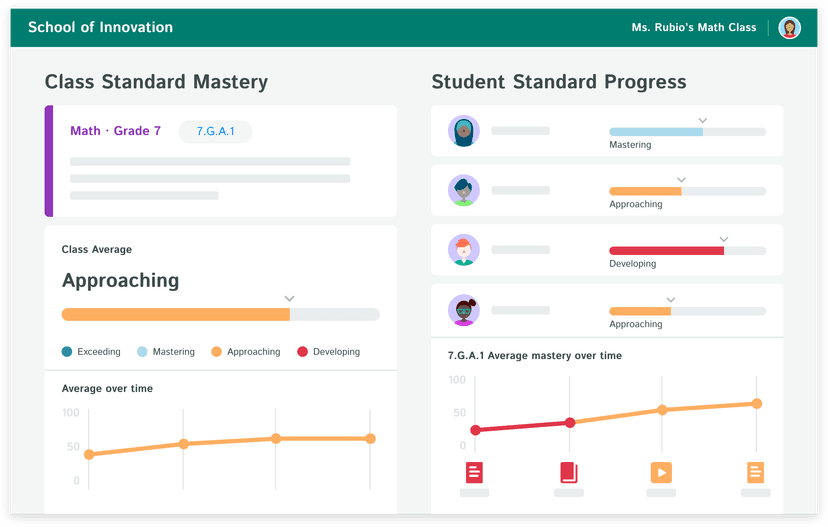
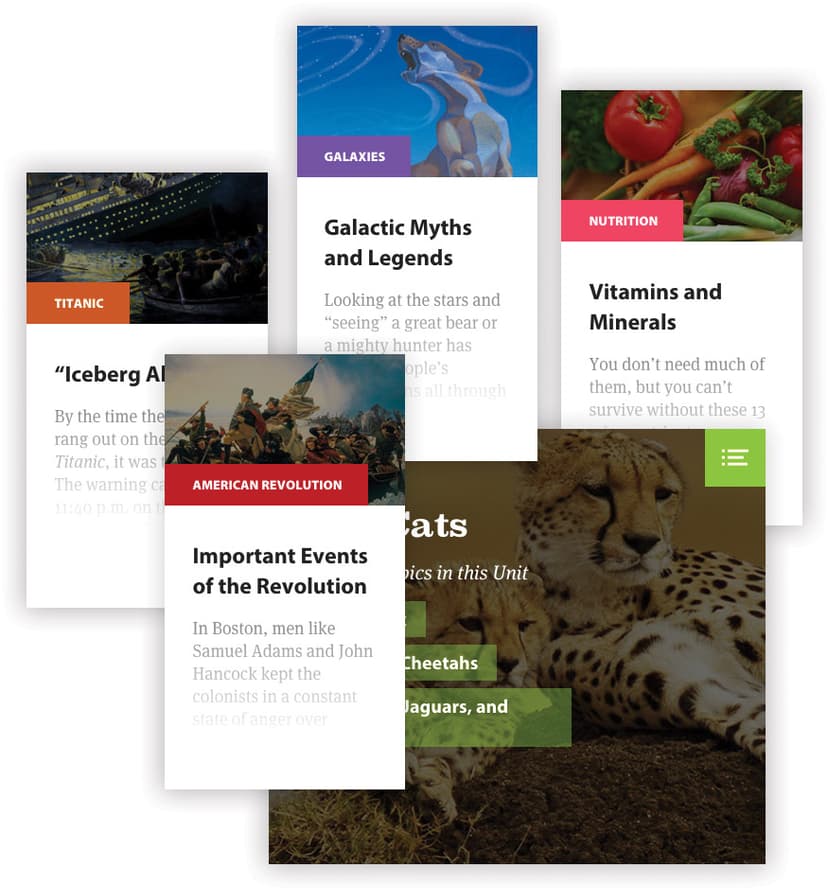
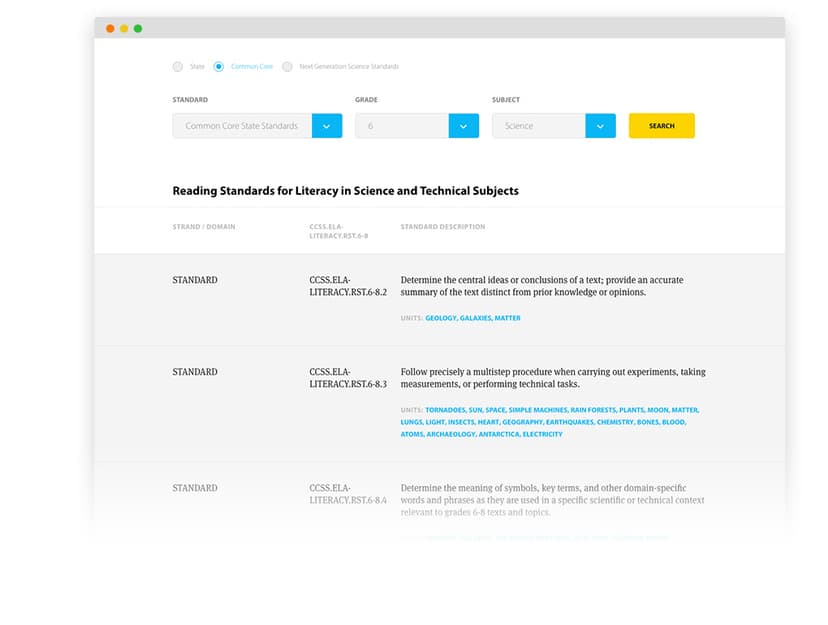
Kids Discover Online uses differentiated, cross-curricular reading instruction to build background knowledge in science and the humanities. Students log into a visual, interconnected map of topics ranging from ancient civilizations to space exploration. When your child selects a topic, the platform presents informational text that can be toggled between three different Lexile reading levels. This ensures the vocabulary and sentence complexity match their current reading ability while preserving the core facts. Students read the assigned articles and can use built-in tools like text-to-speech read-aloud or language translation to support their comprehension. After completing a text, students take pre-made quizzes assigned by their teacher. Teachers monitor performance through a centralized dashboard, tracking quiz scores and reading progress. Educators can also build custom assessments to better align the reading material with their specific classroom standards and learning objectives.
Strengths and tradeoffs of Kids Discover Online
The biggest strength of Kids Discover Online is its seamless text differentiation across Lexile levels, while its biggest weakness is an over-reliance on basic recall assessments. Differentiated reading is highly effective because it keeps students within their zone of proximal development. By offering the same subject matter at three complexity levels, the platform ensures that struggling readers are not penalized by complex syntax when trying to learn science or social studies concepts. The addition of text-to-speech and translation tools further lowers the intrinsic cognitive load, freeing up working memory for actual comprehension rather than decoding. However, the platform's assessment strategy falls short of modern learning science ideals. The built-in quizzes focus heavily on recognizing facts immediately after reading. While this offers basic retrieval practice, the platform lacks spaced repetition or interleaving features to ensure students retain this information weeks or months later. Furthermore, the questions rarely demand deep synthesis or higher-order inquiry. To maximize the platform's value, educators must design activities that force students to apply the knowledge they read, rather than just clicking through the provided multiple-choice quizzes.
Who Might Benefit From Kids Discover Online?
Kids Discover Online is best for upper elementary and middle school teachers who need differentiated nonfiction texts to support their science and social studies curricula. Because it targets 3rd through 8th grades with adjustable Lexile levels, it perfectly serves inclusive classrooms where reading abilities vary widely. It is highly effective for educators teaching cross-curricular units who want students to practice nonfiction reading comprehension while absorbing historical or scientific facts. Due to the classroom-focused pricing and lack of independent adaptive progression, it is not recommended for parents seeking a standalone, at-home reading tutor for their child.
Data Transparency
Does Not Meet Data Transparency Standard
Kids Discover Online reaches Level 1 of 3 (Basic protections), below our data transparency standard. Reaching Level 2 needs the policy to document a data retention timeline and self-service deletion.
24 of 35 checks passed
Evaluated September 2026
Privacy Policy →Level 1 · Basic protections
Does not sell data or target ads at students, limits sharing, and lets parents see and delete their child's data.
Level 2 · Parent control (meets the standard)
Families can get their data out, know who processes it, and know how long it is kept.
Not documented: a data retention timeline, self-service deletion
Level 3 · Direct data access
Families or schools can pull their own data through an API, in a stated format.
Not documented: an API for retrieving their own data, a named export format
View all 35 checks
Parent Access6/8
Does the policy mention parents specifically?
“Parents and guardians of children under 13 who use any of our Services have certain rights under COPPA.”
Can parents view their child's data?
“At any time, parents/guardians using our Services may request to review the personal data we collected from their child, request that we make no further use of that information, or request that we delete it.”
Can parents modify their child's data?
The policy's children's section lets parents review, stop use of, or delete their child's data but not correct it; correction on a child's behalf appears only in the rights of certain states' residents.
Can parents delete their child's account?
“At any time, parents/guardians using our Services may request to review the personal data we collected from their child, request that we make no further use of that information, or request that we delete it.”
Is there a dedicated Children's Privacy section?
“When a child creates an account, we collect their information in compliance with applicable laws (such as the Children’s Online Privacy Protection Act (COPPA)), including by seeking the consent of a parent or legal guardian for creation of that account.”
Does it reference COPPA compliance?
“When a child creates an account, we collect their information in compliance with applicable laws (such as the Children’s Online Privacy Protection Act (COPPA)), including by seeking the consent of a parent or legal guardian for creation of that account.”
Does it reference FERPA compliance?
The policy does not mention FERPA.
Is parental consent required for child accounts?
“When a child creates an account, we collect their information in compliance with applicable laws (such as the Children’s Online Privacy Protection Act (COPPA)), including by seeking the consent of a parent or legal guardian for creation of that account.”
Data Portability3/5
Can users access their personal data?
“Otherwise, to review, correct, or delete your personal data, please contact us at questions@kidsdiscover.com.”
Can users download/export their data?
“You may ask us to provide you a portable copy of this information up to two times in a rolling twelve-month period.”
Is there a self-service data access tool?
“For more information about your choices, or to review or correct your Personally Identifiable Information, please use the Settings menu within the App or the Website and follow the prompts, or **Contact Us**.”
Is a specific data format mentioned for export?
The policy mentions a portable copy but does not name a file format.
Is there an API for data access?
The policy does not mention an API for getting data.
Data Minimization3/6
Is data collection itemized?
“The only personal data collected about students is their first name, last name, username, password, and classroom code. We do NOT collect students’ email or physical addresses.”
Can the app be used without a real name?
The policy says it collects students' first and last names.
Can the app be used without an email?
“The only personal data collected about students is their first name, last name, username, password, and classroom code. We do NOT collect students’ email or physical addresses.”
Does it state collection is limited to what is necessary?
“Note that a child’s participation or access to our Services cannot be conditioned on the child providing more personal data than is reasonably necessary for that activity.”
Is IP address anonymized or truncated?
The policy says it collects IP addresses and does not mention anonymizing or truncating them.
Is location tracking explicitly excluded?
The policy says it may collect geolocation data, including from children.
Third-Party Protection6/7
Does it explicitly state no selling of data?
“We do not rent or sell any personal information we collect from our users to any third parties for monetary purposes.”
Are third-party providers named?
“For example, Google Analytics is a web analytics service provided by Google that uses first-party cookies to track how visitors use and interact with our Sites.”
Are providers contractually restricted?
“These third parties are well-known, established service providers, who are bound contractually to practice adequate security measures and only use your information for the sole purpose of providing the Services.”
No-targeted-advertising commitment?
“Outside of these uses, student data is not shared, tracked, or analyzed by Kids Discover, nor is it rented, sold, or used by any third-party service providers or marketers. It is saved in our system to deliver a more optimal reading experience for the students and teachers using the service. It is not used in any other way.”
Is AI/ML data sharing addressed?
The policy does not address AI or machine learning.
Child-specific sharing restriction?
“Outside of these uses, student data is not shared, tracked, or analyzed by Kids Discover, nor is it rented, sold, or used by any third-party service providers or marketers.”
Cookies/tracking limited or opt-out?
“You can opt out of Google Analytics without affecting how you visit our Sites.”
Deletion & Retention2/5
Can users delete their account?
“Otherwise, to review, correct, or delete your personal data, please contact us at questions@kidsdiscover.com.”
Self-service deletion mechanism?
The policy says deletion requires contacting the company; the self-service settings are only for updating, reviewing or correcting information.
Specific data retention timeline?
The policy says data is kept as long as necessary and gives no specific time limit.
Auto-deletion of inactive accounts?
The policy does not address automatic deletion of inactive accounts.
Post-deletion handling described?
“For example, we may retain certain information as necessary to prevent fraud or future abuse, for recordkeeping or other legitimate business purposes, or if required by law. Retained personal data will remain subject to the terms of this Privacy Policy and our Children’s Privacy Notice.”
Advertising4/4
Advertising model explicitly disclosed?
“You’ll notice that there is no advertising on, or in, any of Kids Discover’s products, apps or websites. We do not believe in advertising to children.”
Free from third-party advertisements?
“You’ll notice that there is no advertising on, or in, any of Kids Discover’s products, apps or websites. We do not believe in advertising to children.”
Children excluded from ad targeting?
“We will not sell or market directly to minors and always seek authorization from either a parent, legal guardian, or school whenever we identify that a minor attempts to purchase a Kids Discover product or service.”
Ad-free option available?
“You’ll notice that there is no advertising on, or in, any of Kids Discover’s products, apps or websites. We do not believe in advertising to children.”
What This Means
The policy review did not meet our data transparency standard. The checks above show the documented findings and unknowns. A missing statement does not establish how the app handles data in practice.
About this evaluation: Based on automated analysis of Privacy Policy against 35 policy-disclosure questions, including questions adapted from the Common Sense Privacy Program's published evaluation questions. TLS is not affiliated with Common Sense Media, and this is not a Common Sense rating. Quoted text is copied from the policy; unquoted notes are our summary. Results describe what the policy documents, not the company's actual practices. Privacy policies can change: this review reflects the version we analyzed and does not determine legal compliance.
Sources and review method
TLS combines product information and editorial analysis to explain how Kids Discover Online works, its tradeoffs, and the questions to ask before choosing it. Product features, an instructional rationale and evidence of learning outcomes are different kinds of information.
Formal Learning Standard assessment: not yet completed. Data Transparency findings are reported separately and do not establish learning effectiveness. Read our methodology.
Frequently Asked Questions About Kids Discover Online
Is Kids Discover Online free?
No, but it offers a 30-day free trial for educators. After the trial, an individual teacher license costs $144 per year, which includes access for up to 34 students. Larger building-wide library plans start at $1,499 per year.
Is Kids Discover Online good for elementary students?
Yes, specifically for students in 3rd grade and up. The platform is designed for grades 3 through 8. The ability to adjust Lexile levels and use text-to-speech makes the rigorous nonfiction content accessible to younger or struggling readers.
What does Kids Discover Online teach?
It teaches reading comprehension through nonfiction texts focused on science, social studies, humanities, and applied sciences. It is designed to build background knowledge in specific historical and scientific topics rather than teaching foundational phonics.
Does Kids Discover Online adapt to a student's reading level automatically?
No. While the platform offers three distinct Lexile levels for its articles, the student or teacher must manually toggle between these levels. It does not use an adaptive algorithm to automatically increase or decrease difficulty based on quiz performance.
Has The Learning Standard evaluated Kids Discover Online?
TLS has not yet completed a Learning Standard evaluation of how well Kids Discover Online teaches. Its privacy policy has been reviewed for Data Transparency and reaches Level 1, Basic protections.
Is Kids Discover Online COPPA compliant?
The reviewed privacy policy references COPPA. A policy reference alone does not establish COPPA compliance. Policy review note: The policy says it collects children's information in compliance with COPPA.
Is Kids Discover Online FERPA compliant?
A FERPA reference was not found in the reviewed privacy policy. This does not determine whether the app complies with FERPA. Policy review note: The policy does not mention FERPA.
Does Kids Discover Online have a children's privacy policy?
The reviewed policy includes a dedicated children's privacy section. Policy review note: This passage opens the policy's dedicated "Children's Data" section.
Does Kids Discover Online sell student data?
The reviewed policy states that the app does not sell data. This is a policy statement; actual data practices were not verified. Policy review note: The company says it does not sell user data for money, though a state-law section says it may "sell" adult data to ad networks.
Can you delete your data from Kids Discover Online?
The reviewed privacy policy describes account deletion. We have not tested the deletion process. Policy review note: Users can ask to have their personal data deleted.
Follow TLS Research
Subscribe to future TLS research updates: app reviews, findings, and what the evidence shows.
Screenshots

Take Action
For Kids Discover Online
If you represent Kids Discover and have a correction or new evidence, send the relevant source so we can review and update this page.
Submit a correctionDetails
- Pricing
- Individual Educators can sign up for a free 30-day trial, no billing information required. Kids Discover Online is $144/year per teacher, which includes 1 virtual classroom and up to 34 student accounts. Additional classrooms can be purchased for middle school educators. School and district pricing is based on the number of educators license seats needed. Discounts available for district-level licenses. Kids Discover Online's Library Media Plan offers building-wide access with a single username/password or authenticated URL (No student accounts, no PII). The Library Media Plan starts at $1,499/yr per building.
- Platforms
- Web Browser
- Grade Levels
- 3rd Grade, 4th Grade, 5th Grade, 6th Grade, 7th Grade, 8th Grade
- Website
- Visit site