
Kamkalima
Product by Kamkalima
Facts checked: Not yet checked
Our take (not a Learning Standard rating). This label applies to learning-science judgments throughout this overview.
Our take (not a Learning Standard rating)
While Kamkalima has not yet been formally evaluated by The Learning Standard, its blended learning approach shows potential for building Arabic literacy. It aims to bridge the gap between classical and colloquial Arabic, but until we assess its personalized learning algorithms, we cannot verify its effectiveness in driving long-term retention.
Pros
- Connects classical Arabic texts to modern contexts to improve student engagement and relevance.
- Uses a cross-curricular approach to embed language practice within broader humanities subjects.
- Eliminates distracting in-app purchases and advertisements through a straightforward school-based subscription model.
Cons
- Lacks independent access for families since the platform requires a school-wide or district-wide subscription.
- Specific retrieval practice mechanics and feedback loops remain unverified pending a full pedagogical evaluation.
- The exact nature of its personalized learning algorithms is unclear without hands-on testing data.
What Do We Know About Kamkalima?
We cannot yet definitively state whether Kamkalima is effective for learning because it is pending a full evaluation by The Learning Standard. However, its core design focuses on improving Arabic literacy for students in grades 4 through 12. If your child's school uses this platform, they will likely experience a blended learning environment where digital assignments supplement classroom instruction. The program specifically targets the well-documented distance between colloquial, spoken Arabic and the formal, classical Arabic required for academic success. By integrating language practice across different humanities subjects, the platform attempts to give your child more contextual exposure to the language. Because Kamkalima operates exclusively on a business-to-business model, you cannot purchase a standalone subscription for home use. Your child will only access this tool if their school or district adopts it. Once our team conducts a formal assessment, we will update this profile with specific data on how well the software utilizes evidence-based practices like spaced repetition and formative feedback to build your child's digital and linguistic skills.
How Does Kamkalima Work?
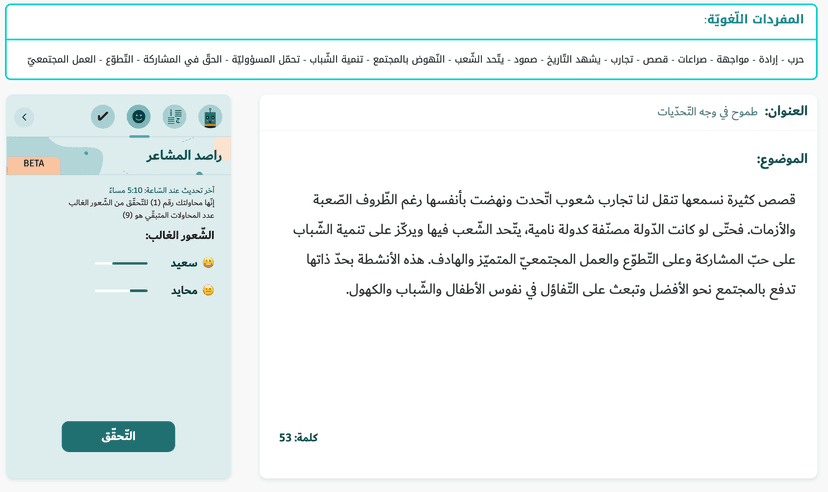
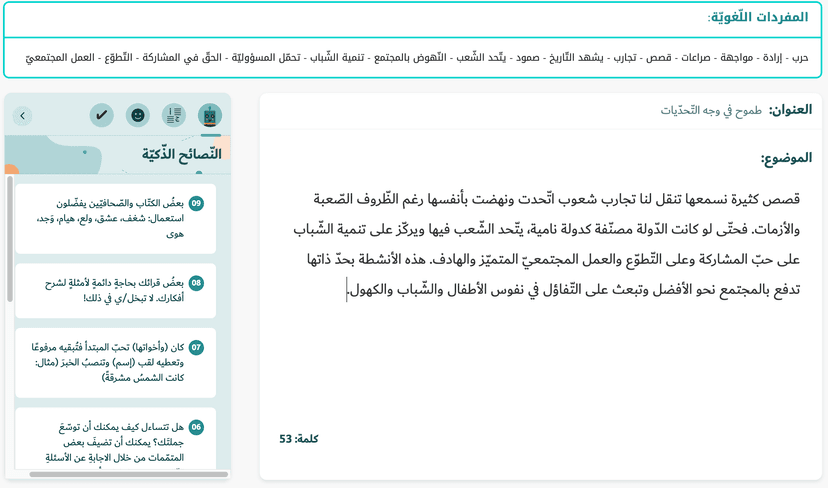
Kamkalima utilizes a blended and cross-curricular learning approach to deliver personalized Arabic instruction. The platform integrates digital literacy exercises directly into standard classroom workflows. Teachers assign reading and writing tasks through the system, which students complete on their own devices. As students interact with the humanities content, the software tracks their progress and adjusts assignments. The curriculum bridges formal academic Arabic and everyday spoken dialects by using relevant, modern texts alongside traditional literature. This contextual learning strategy helps students anchor new vocabulary to familiar concepts. Because it operates within a blended model, the software does not replace teacher instruction. Instead, it acts as a digital workbook and assessment tool. The platform collects student performance data to help educators identify knowledge gaps and deliver targeted interventions. Note: The specific mechanics of its adaptive algorithms are currently pending evaluation by The Learning Standard.
Strengths and tradeoffs of Kamkalima
Kamkalima's biggest strength is its cross-curricular approach to Arabic literacy, while its biggest weakness is its lack of accessibility for individual, at-home learners. The platform theoretically excels at contextual learning, embedding language mechanics within broader humanities topics. This approach gives students a cognitive framework to attach new vocabulary to, which is far more effective than isolated memorization. By explicitly addressing the gap between classical and colloquial Arabic, it helps reduce the cognitive load students face when navigating two distinct forms of the language. However, the platform relies heavily on a school-based deployment. It requires teacher facilitation to function as intended, meaning its success depends entirely on how well an educator integrates the software into their daily lessons. Furthermore, because it is pending formal evaluation, we cannot verify if the platform employs crucial learning science mechanics like spaced retrieval practice or interleaving. Without analyzing the software's feedback mechanisms, it is unclear if students receive immediate, explanatory corrections when they make errors, which is a vital component for correcting misconceptions. We will provide a complete analysis of its instructional efficacy once testing is complete.
Who Might Benefit From Kamkalima?
Kamkalima is best for middle and high school students whose schools want to integrate digital Arabic literacy into their standard humanities curriculum. It specifically targets learners in grades 4 through 12 who struggle to transition from spoken dialects to formal academic Arabic. The platform serves as a supplemental tool for educators moving toward a blended learning environment. It is not designed for individual homeschoolers, independent adult learners, or younger primary students. Because it requires a district or school subscription, it is strictly an institutional tool aimed at modernizing traditional language instruction.
Sources and review method
TLS combines product information and editorial analysis to explain how Kamkalima works, its tradeoffs, and the questions to ask before choosing it. Product features, an instructional rationale and evidence of learning outcomes are different kinds of information.
Formal Learning Standard assessment: not yet completed. Data Transparency findings are reported separately and do not establish learning effectiveness. Read our methodology.
Frequently Asked Questions About Kamkalima
Is Kamkalima free?
No, Kamkalima is not free. The platform operates on a business-to-business and business-to-government model. Schools or districts pay a yearly subscription fee per student to access the software. There are no individual consumer subscriptions available for purchase, but students do not encounter any in-app purchases or advertisements while using the program.
Is Kamkalima good for elementary students?
Kamkalima is appropriate for upper elementary students starting in the 4th grade. It is not designed for early childhood education or students in grades K-3. The content focuses heavily on reading comprehension, writing skills, and bridging the gap between colloquial and classical Arabic, which requires a foundational level of literacy before beginning the program.
What does Kamkalima teach?
Kamkalima teaches Arabic language arts and digital literacy through a humanities lens. It focuses on modernizing traditional Arabic instruction by teaching formal, classical academic Arabic alongside colloquial contexts. Students practice reading comprehension, writing, and critical thinking skills using texts that span historical and modern subjects.
Kamkalima vs. traditional Arabic textbooks?
Kamkalima offers a more dynamic, contextual approach than traditional textbooks. While textbooks often isolate grammar rules and classical vocabulary, Kamkalima uses cross-curricular digital assignments to bridge spoken dialects and formal text. However, its effectiveness still relies heavily on the teacher's ability to facilitate the blended learning environment.
Has The Learning Standard evaluated Kamkalima?
TLS has not yet completed a Learning Standard evaluation of how well Kamkalima teaches. TLS has not published a Data Transparency result for its privacy policy.
Follow TLS Research
Subscribe to future TLS research updates: app reviews, findings, and what the evidence shows.
Screenshots
Take Action
For Kamkalima
If you represent Kamkalima and have a correction or new evidence, send the relevant source so we can review and update this page.
Submit a correctionDetails
- Pricing
- Our B2B and B2G pricing model charges a yearly subscription fee per student, with no in-app purchases. This ensures transparent and straightforward pricing for institutions.
- Platforms
- Web Browser, iOS (Apple mobile), iPadOS (Apple tablet), Android (Google mobile), Tizen (Samsung mobile), macOS (Apple), Chrome OS (Google)
- Grade Levels
- 4th Grade, 5th Grade, 6th Grade, 7th Grade, 8th Grade, 9th Grade, 10th Grade, 11th Grade, 12th Grade
- Website
- Visit site