
Inquisitive
Product by Inquisitive
Facts checked: Not yet checked
Our take (not a Learning Standard rating). This label applies to learning-science judgments throughout this overview.
Our take (not a Learning Standard rating)
Inquisitive provides a strong foundation for inquiry-based science learning through real-world phenomena, but The Learning Standard has not yet fully evaluated its efficacy. It anchors lessons in observable events to stimulate cognitive engagement, though its reliance on teacher-led instruction means individual student mastery depends heavily on adult facilitation rather than automated retrieval practice.
Pros
- Anchors lessons in real-world phenomena to activate prior knowledge and stimulate cognitive engagement.
- Aligns directly with Next Generation Science Standards to ensure structured progression of scientific concepts.
- Uses focus questions to guide inquiry-based learning and prompt active problem-solving.
- Provides educators with structured lesson plans that reduce cognitive load during preparation.
Cons
- Lacks automated retrieval practice or spaced repetition systems to ensure long-term retention of scientific facts.
- Relies heavily on teacher facilitation, offering little independent learning value for individual students.
- Does not provide adaptive feedback mechanisms to correct individual student misconceptions in real-time.
- Requires external physical materials for hands-on investigations, which may limit accessibility in under-resourced environments.
What Do We Know About Inquisitive?
Inquisitive is an effective classroom tool for teaching science through guided inquiry, though it requires an educator to facilitate the learning. Your child will not use this as an independent app to drill science facts. Instead, this platform provides teachers with structured lesson plans anchored in real-world phenomena. By presenting students with an observable event, like a shadow moving across a playground, the curriculum forces learners to ask questions and build hypotheses. This approach aligns with the cognitive science principle of active learning, where students construct knowledge rather than passively receiving it. Because Inquisitive is designed primarily for classroom use, parents cannot simply hand a tablet to their child and expect them to learn independently. The platform lacks built-in assessments, spaced repetition, or automated feedback loops. Efficacy depends entirely on how well the teacher executes the lesson, guides the hands-on investigations, and corrects misconceptions. If your child's school uses Inquisitive, they will likely benefit from engaging, hands-on science instruction, but you will need to rely on classroom assessments to gauge their actual mastery of the material.
How Does Inquisitive Work?
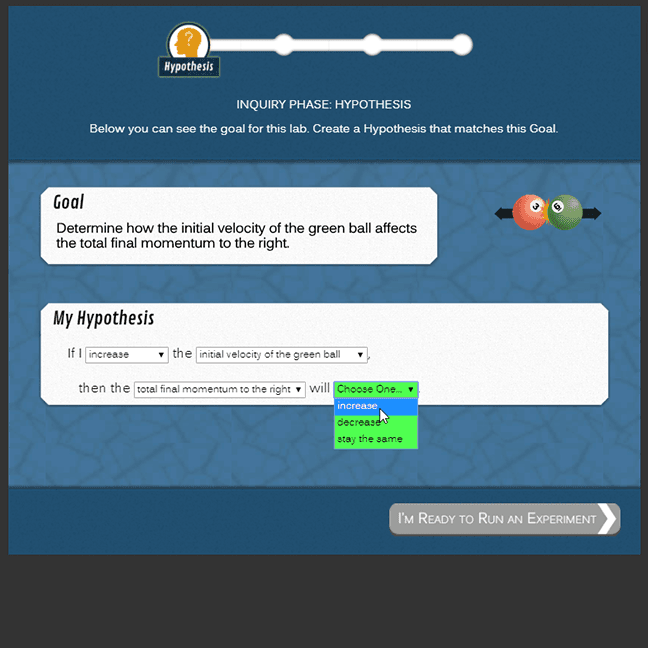
Inquisitive uses an inquiry-based pedagogical approach where instruction is driven by observable phenomena and guided focus questions. The platform functions as a digital curriculum hub for teachers rather than a student-facing application. Educators select a lesson aligned with Next Generation Science Standards and project the core phenomenon, often a video or image, to the class. This serves as the cognitive hook. Teachers then lead students through a series of structured discussions and hands-on investigations to solve the problem presented by the phenomenon. Students apply the scientific method by observing, hypothesizing, testing, and concluding. The platform provides teachers with all necessary presentation materials, discussion prompts, and activity instructions. Because learning happens physically in the classroom rather than digitally on a screen, the digital component acts purely as a content delivery mechanism for the instructor.
Strengths and tradeoffs of Inquisitive
Inquisitive's biggest strength is its strong alignment with phenomena-based learning, while its biggest weakness is the complete lack of independent retrieval practice for students. The curriculum excels at cognitive activation. By grounding abstract scientific concepts in real-world phenomena, the platform helps students build mental schemas that make new information easier to encode. Inquiry-based learning forces your child to engage in active problem-solving, which is proven to yield deeper conceptual understanding than rote memorization. Furthermore, the open-and-go design significantly reduces preparation time for educators, ensuring that lessons remain consistent. However, the platform falls short in independent knowledge consolidation. Because it functions as a teacher presentation tool, it lacks spaced repetition and automated feedback. Students do not interact directly with the software to test their knowledge. If a student holds a misconception, the software cannot detect or correct it; this burden falls entirely on the teacher. Without built-in retrieval practice, students may struggle with long-term retention of specific scientific vocabulary and facts unless the teacher supplements the curriculum with regular quizzing.
Who Might Benefit From Inquisitive?
Best for elementary school teachers who need a structured, easy-to-implement science curriculum that aligns with modern inquiry-based standards. The platform serves Pre-K through 5th-grade classrooms by providing educators with comprehensive lesson plans and presentation materials. It is not designed for individual student use or at-home independent study. School districts looking to standardize their Next Generation Science Standards instruction will find the open-and-go format highly efficient, while parents homeschooling their children can also utilize it if they are prepared to act as the primary instructor and source physical materials for investigations.
Data Transparency
Does Not Meet Data Transparency Standard
Inquisitive does not meet our data transparency standard. Its privacy policy does not document basic protections, including a statement that it does not sell data, contractual limits on service providers and parents' right to see their child's data.
13 of 35 checks passed
Evaluated September 2026
Privacy Policy →Level 1 · Basic protections
Does not sell data or target ads at students, limits sharing, and lets parents see and delete their child's data.
Not documented: a statement that it does not sell data, contractual limits on service providers, parents' right to see their child's data, parents' right to delete their child's data, account deletion
Level 2 · Parent control (meets the standard)
Families can get their data out, know who processes it, and know how long it is kept.
Not documented: data export, a data retention timeline, self-service deletion
Level 3 · Direct data access
Families or schools can pull their own data through an API, in a stated format.
Not documented: an API for retrieving their own data, a named export format
View all 35 checks
Parent Access4/8
Does the policy mention parents specifically?
“If you are using Our Services on behalf of a School with responsibilities for students, or as a parent or guardian of a student under 13 years of age, we note the conditions in the Terms of Use for your consent for your children or students to use Our Services”
Can parents view their child's data?
The policy does not say parents can view their child's data.
Can parents modify their child's data?
The policy refers student data editing to the Terms of Use and does not say parents can change their child's data.
Can parents delete their child's account?
The policy does not say parents can delete their child's data or account.
Is there a dedicated Children's Privacy section?
“AI. Reminder About Users Under 13 Years”
Does it reference COPPA compliance?
“Some examples of legislation relevant to this general area are the Family Educational Rights and Privacy Act (“ **FERPA**”), Children’s Online Privacy Protection Act (“ **COPPA**”)”
Does it reference FERPA compliance?
“Some examples of legislation relevant to this general area are the Family Educational Rights and Privacy Act (“ **FERPA**”), Children’s Online Privacy Protection Act (“ **COPPA**”)”
Is parental consent required for child accounts?
The policy says users under 13 need consent from parents, guardians or teachers, so teacher consent alone is enough and parental consent is not required.
Data Portability1/5
Can users access their personal data?
“For registered members of Our Services, you have Account settings where you can edit your Identifying Data and set your display name and other details.”
Can users download/export their data?
The policy does not offer a way to download or export data.
Is there a self-service data access tool?
The policy describes account settings only for editing identifying data, not a tool for accessing all personal data.
Is a specific data format mentioned for export?
The policy does not name any export format.
Is there an API for data access?
The policy mentions Google's API only in connection with sign-in and offers no API for users to access their data.
Data Minimization1/6
Is data collection itemized?
“| Student | name, email address, school, classes provided directly by teacher or school administrator, or under clause **(iv)** above for single sign on by authentication providers and by inference from the above information, the year group and school location and classwork, assessments and assignments |”
Can the app be used without a real name?
The policy says it collects student names.
Can the app be used without an email?
The policy says it collects student email addresses.
Does it state collection is limited to what is necessary?
The policy limits data to what is needed only for AI processing, not for data collection in general.
Is IP address anonymized or truncated?
The policy says it collects IP addresses and does not say they are anonymized or shortened.
Is location tracking explicitly excluded?
The policy lists location data as data it collects.
Third-Party Protection5/7
Does it explicitly state no selling of data?
The policy says it does not sell Student Data except as otherwise disclosed or where de-identified, which is a limited promise, not a flat no-selling statement.
Are third-party providers named?
“We use Amazon Web Services (“ **AWS**”) and Salesforce for hosting and storing data including Personal Data and Student Data.”
Are providers contractually restricted?
The policy requires providers to have a security rating and adequate jurisdictions or data processing agreements, but does not describe contract limits on how they may use the data.
No-targeted-advertising commitment?
“Do not use or share Student Data or a student’s User Generated Content for targeted advertising purposes;”
Is AI/ML data sharing addressed?
“Do not permit Personal Data or Student Data to be used for training third-party AI models or LLMs;”
Child-specific sharing restriction?
“Collect, store, process, and share Student Data only for the purposes of Our Services, or as authorised by a School, parent or caregiver or this Privacy Policy or the Terms of Use;”
Cookies/tracking limited or opt-out?
“You may decide not to use Cookies when accessing Our Services, and you understand and accept that your experience may not be ideal as a result, and that you will in no way be compensated.”
Deletion & Retention0/5
Can users delete their account?
The policy does not offer account or data deletion.
Self-service deletion mechanism?
The policy does not describe a self-service way to delete data.
Specific data retention timeline?
The policy does not give a data retention timeline.
Auto-deletion of inactive accounts?
The policy does not address automatic deletion of inactive accounts.
Post-deletion handling described?
The policy does not describe what happens to data after deletion.
Advertising2/4
Advertising model explicitly disclosed?
“**(iv)** for all users other than students, to present you with relevant advertising and understand its effectiveness;”
Free from third-party advertisements?
The policy says it shows relevant advertising to users who are not students and never says the product is free of third-party ads.
Children excluded from ad targeting?
“**(iv)** for all users other than students, to present you with relevant advertising and understand its effectiveness;”
Ad-free option available?
The policy does not say the product has no ads or offer an ad-free option.
What This Means
The policy review did not meet our data transparency standard. The checks above show the documented findings and unknowns. A missing statement does not establish how the app handles data in practice.
About this evaluation: Based on automated analysis of Privacy Policy against 35 policy-disclosure questions, including questions adapted from the Common Sense Privacy Program's published evaluation questions. TLS is not affiliated with Common Sense Media, and this is not a Common Sense rating. Quoted text is copied from the policy; unquoted notes are our summary. Results describe what the policy documents, not the company's actual practices. Privacy policies can change: this review reflects the version we analyzed and does not determine legal compliance.
Sources and review method
TLS combines product information and editorial analysis to explain how Inquisitive works, its tradeoffs, and the questions to ask before choosing it. Product features, an instructional rationale and evidence of learning outcomes are different kinds of information.
Formal Learning Standard assessment: not yet completed. Data Transparency findings are reported separately and do not establish learning effectiveness. Read our methodology.
Frequently Asked Questions About Inquisitive
Is Inquisitive free?
No, Inquisitive is not free. The platform charges an annual subscription fee starting at $39.00 per teacher for a 12-month membership. This flat rate provides educators with unlimited access to all grades of content, lesson plans, and presentation materials. Schools or districts typically purchase these licenses for their educators, though homeschooling parents can also buy individual access to teach their children.
Is Inquisitive good for elementary students?
Yes, Inquisitive is highly effective for Pre-K through 5th-grade students when facilitated by a teacher. The curriculum uses age-appropriate, real-world phenomena and hands-on investigations to introduce young learners to foundational science and engineering concepts. By avoiding text-heavy digital modules and focusing instead on physical classroom experiments, it successfully matches the cognitive developmental stages of early childhood learners. It keeps attention spans focused through interactive problem-solving.
What does Inquisitive teach?
Inquisitive teaches elementary science, engineering, and early Career & Technical Education concepts. The comprehensive curriculum covers core domains including life science, earth science, and physical science. All lessons are strictly aligned with the Next Generation Science Standards. Rather than just memorizing facts, students learn how to apply the scientific method, analyze physical data, test hypotheses, and develop critical thinking skills through structured inquiry.
How does Inquisitive compare vs Mystery Science?
Both Inquisitive and Mystery Science utilize phenomena-based, open-and-go lessons designed specifically for elementary classrooms. Mystery Science relies heavily on highly produced, narrative-driven videos featuring a recurring host to capture attention. In contrast, Inquisitive focuses more broadly on diverse real-world phenomena and structured inquiry prompts. Both platforms require strong teacher facilitation to be effective, and neither provides independent digital student assessments or automated spaced repetition.
Has The Learning Standard evaluated Inquisitive?
TLS has not yet completed a Learning Standard evaluation of how well Inquisitive teaches. Its privacy policy has been reviewed for Data Transparency and does not yet document the basic protections (Level 1).
Is Inquisitive COPPA compliant?
The reviewed privacy policy references COPPA. A policy reference alone does not establish COPPA compliance. Policy review note: COPPA named as relevant legislation.
Is Inquisitive FERPA compliant?
The reviewed privacy policy references FERPA. A policy reference alone does not establish FERPA compliance. Policy review note: FERPA named as relevant legislation.
Does Inquisitive have a children's privacy policy?
The reviewed policy includes a dedicated children's privacy section. Policy review note: The policy has its own section headed for users under 13.
Does Inquisitive sell student data?
A statement ruling out data selling was not found in the reviewed policy. This does not establish that the app sells student data. Policy review note: The policy says it does not sell Student Data except as otherwise disclosed or where de-identified, which is a limited promise, not a flat no-selling statement.
Can you delete your data from Inquisitive?
Account deletion was not documented in the reviewed privacy policy. This does not establish whether deletion is available. Policy review note: The policy does not offer account or data deletion.
Follow TLS Research
Subscribe to future TLS research updates: app reviews, findings, and what the evidence shows.
Screenshots

Take Action
For Inquisitive
If you represent Inquisitive and have a correction or new evidence, send the relevant source so we can review and update this page.
Submit a correctionDetails
- Pricing
- From $39.00 per teacher for 12 months membership. Provides unlimited access and use across of grades of content and lessons.
- Platforms
- Web Browser, iOS (Apple mobile), iPadOS (Apple tablet), Android (Google mobile), Tizen (Samsung mobile), Windows (Microsoft), macOS (Apple), Chrome OS (Google)
- Website
- Visit site