
InnevAto EDU Student Courses
Product by InnevAto EDU
Facts checked: Not yet checked
Our take (not a Learning Standard rating). This label applies to learning-science judgments throughout this overview.
Our take (not a Learning Standard rating)
While InnevAto EDU Student Courses provide structured, mastery-based instruction aligned to Ohio standards, The Learning Standard has not yet fully evaluated its efficacy. The platform emphasizes student choice and self-paced progression, which supports autonomy, but requires significant self-regulation from high schoolers to ensure consistent engagement and knowledge retention without direct teacher oversight.
Pros
- Integrates mastery-based learning principles that require students to demonstrate understanding before advancing.
- Provides multiple modalities for students to demonstrate comprehension, supporting universal design for learning.
- Aligns directly with state curriculum standards to ensure content validity across core high school subjects.
- Embeds accessibility features to support students with varying sensory and cognitive processing needs.
Cons
- Lacks independent efficacy data to verify long-term knowledge retention and skill transfer.
- Relies heavily on high school students' executive function and self-regulation skills to maintain pacing.
- May isolate learners without regular, structured peer-to-peer or teacher-to-student synchronous interaction.
- Focuses specifically on Ohio standards, potentially limiting curriculum relevance for out-of-state users.
What Do We Know About InnevAto EDU Student Courses?
InnevAto EDU Student Courses offer a structured, standards-aligned curriculum, but its ultimate effectiveness for learning depends heavily on your child's ability to self-manage an independent schedule. Because the platform relies on a mastery-based learning approach, your child must prove they understand a core concept before the system allows them to move forward. This directly prevents learning gaps from forming in foundational subjects like mathematics and the sciences. However, self-paced online courses demand consistently high levels of executive function and focus. If your teen struggles with procrastination or attention, they will likely need your active monitoring to succeed on this platform. The curriculum provides distinct pathways tailored for different academic needs, whether your child is accelerating ahead of their peers or recovering lost credits. Content covers everything from core humanities to career and technical education. While the developer emphasizes accessibility and student choice in how daily assignments are completed, The Learning Standard has not yet evaluated the platform's independent efficacy. You should expect to act as a frequent accountability partner, ensuring your high schooler engages in active retrieval practice rather than passively clicking through the provided instructional materials.
How Does InnevAto EDU Student Courses Work?
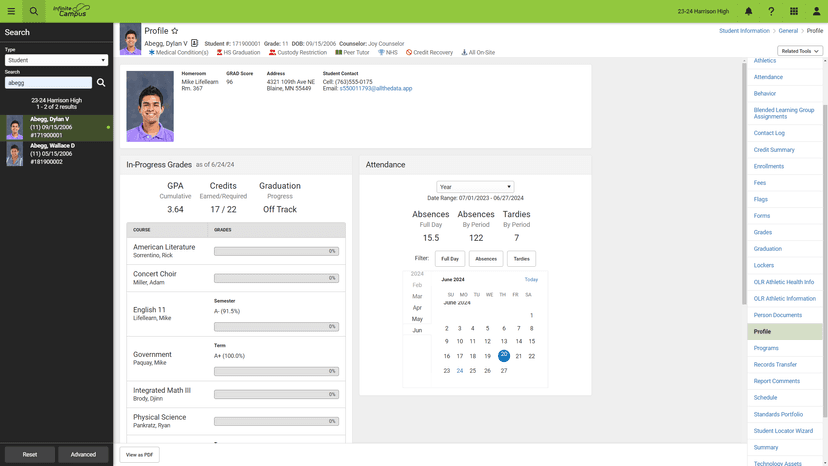
InnevAto EDU uses a mastery-based, personalized learning approach where high school students navigate modular curriculum at their own pace. Students log into the platform to access digital lessons in core subjects, career education, and applied sciences. The system presents instructional material, often blending text and multimedia, followed by opportunities for students to demonstrate comprehension. Because the curriculum is built on universal design principles, students frequently choose how they want to show mastery, such as taking a traditional quiz, submitting a project, or recording an audio response. If a student fails to demonstrate mastery on an assessment, they must review the material and try again. This competency-based loop ensures learners do not advance past foundational concepts they do not fully grasp. The platform integrates accessibility tools directly into the interface, allowing students to adjust content presentation to suit their learning needs.
Strengths and tradeoffs of InnevAto EDU Student Courses
The biggest strength of InnevAto EDU is its mastery-based progression, while its biggest weakness is the heavy reliance on student self-regulation inherent to asynchronous online learning. By requiring students to achieve a specific competency threshold before unlocking the next module, the platform prevents the accumulation of critical learning deficits. This approach aligns with learning science principles regarding formative assessment and corrective feedback. Students benefit from multiple means of action and expression, allowing them to bypass traditional multiple-choice testing in favor of robust, project-based knowledge checks. However, without forced spacing or built-in interleaved retrieval practice, students may mass their studying to pass a specific module and promptly forget the material weeks later. The asynchronous nature of the curriculum means there is limited immediate, corrective feedback from a live instructor during the initial learning phase. Consequently, students with strong executive function will thrive in this highly autonomous environment, while those who need external scaffolding may struggle to maintain consistent pacing and deep cognitive engagement.
Who Might Benefit From InnevAto EDU Student Courses?
Best for high school students who require flexible, self-paced instruction for credit recovery or accelerated learning. InnevAto EDU targets 9th through 12th graders across a wide spectrum of academic needs, from gifted learners seeking advanced progression to credit-deficient students needing to retake specific courses. Because the curriculum is heavily aligned with Ohio learning standards, it is particularly suited for school districts and families within that state. The platform serves as a viable core curriculum for independent study, provided the student possesses the self-discipline necessary to navigate asynchronous modules without daily, direct teacher supervision.
Data Transparency
Does Not Meet Data Transparency Standard
InnevAto EDU Student Courses does not meet our data transparency standard. Its privacy policy does not document basic protections, including a commitment against targeted advertising, limits on sharing children's data and contractual limits on service providers.
11 of 35 checks passed
Evaluated September 2026
Agilix Labs →Level 1 · Basic protections
Does not sell data or target ads at students, limits sharing, and lets parents see and delete their child's data.
Not documented: a commitment against targeted advertising, limits on sharing children's data, contractual limits on service providers, parents' right to see their child's data, parents' right to delete their child's data
Level 2 · Parent control (meets the standard)
Families can get their data out, know who processes it, and know how long it is kept.
Not documented: a data retention timeline
Level 3 · Direct data access
Families or schools can pull their own data through an API, in a stated format.
Not documented: an API for retrieving their own data, a named export format
View all 35 checks
Parent Access1/8
Does the policy mention parents specifically?
The policy does not mention parents anywhere.
Can parents view their child's data?
The policy does not address parents viewing their child's data.
Can parents modify their child's data?
The policy does not address parents modifying their child's data.
Can parents delete their child's account?
The policy does not address parents deleting their child's data or account.
Is there a dedicated Children's Privacy section?
The policy has no dedicated children's privacy or COPPA section.
Does it reference COPPA compliance?
The policy does not reference COPPA.
Does it reference FERPA compliance?
“In addition, we protect records in compliance with the Family Educational Rights and Privacy Act (FERPA) and similar state laws.”
Is parental consent required for child accounts?
The policy does not address parental consent for child accounts.
Data Portability3/5
Can users access their personal data?
“Control over _Right to Access_, _Right to Rectification_, _Right to Erasure_, _Right to Restriction of Processing_, _Data Portability_, _Right to Object_, and _Informed Consent_--in addition to any other provisions of the law--are handled by the _Data Controller_. Agilix products all support the _Data Controller_ in managing these functions.”
Can users download/export their data?
“In Agilix Dawn, users are able to download and delete their data in the app.”
Is there a self-service data access tool?
“In Agilix Dawn, users are able to download and delete their data in the app.”
Is a specific data format mentioned for export?
The policy does not name any export format.
Is there an API for data access?
The policy mentions APIs only as security enforcement, not as a way for users to access their data.
Data Minimization1/6
Is data collection itemized?
“The personal information we store generally includes your: - Name - Username - One or more email addresses - Information about your password”
Can the app be used without a real name?
The policy states that users' names are collected.
Can the app be used without an email?
The policy states that one or more email addresses are collected.
Does it state collection is limited to what is necessary?
The policy says Agilix does not restrict the type of information schools gather.
Is IP address anonymized or truncated?
The policy does not address anonymizing or truncating IP addresses.
Is location tracking explicitly excluded?
The policy does not exclude location tracking.
Third-Party Protection3/7
Does it explicitly state no selling of data?
“Agilix will not sell the personal information of users, except as part of a sale of the business or a business unit, transfer of the services holding that information, or bankruptcy or other legal proceeding.”
Are third-party providers named?
“We use the information we get from Google Analytics only to improve our products and websites.”
Are providers contractually restricted?
The policy does not describe contractual restrictions on providers.
No-targeted-advertising commitment?
The policy does not address targeted advertising.
Is AI/ML data sharing addressed?
The policy does not address AI or machine learning data sharing.
Child-specific sharing restriction?
The policy has no sharing restriction specific to children.
Cookies/tracking limited or opt-out?
“We use the information we get from Google Analytics only to improve our products and websites. For more information, please see [Google Privacy & Terms](https://policies.google.com/) and [Google Analytics Terms of Service](https://www.google.com/analytics/terms/). Agilix does not tie the information gathered using third party analytics to your personally identifiable information.”
Deletion & Retention3/5
Can users delete their account?
“We have aligned our process with the requirements of the **Global Data Protection Regulation (EU GDPR)** which outlines the responsibility to delete all _Personally Identifiable Information (PII)_ upon end user request to comply with the user's "right to be forgotten."”
Self-service deletion mechanism?
“In Agilix Dawn, users are able to download and delete their data in the app.”
Specific data retention timeline?
The policy gives a 30-day response time for deletion requests but no data retention timeline.
Auto-deletion of inactive accounts?
The policy does not address automatic deletion of inactive accounts.
Post-deletion handling described?
“Some of your information may be stored temporarily or persistently in cookies or local storage on systems you use to access the websites, or on proxy or caching servers between your school or institutions systems and ours, and there may be some delay in altering or removing that data after the master copy is updated.”
Advertising0/4
Advertising model explicitly disclosed?
The policy does not address advertising.
Free from third-party advertisements?
The policy does not address third-party advertisements.
Children excluded from ad targeting?
The policy does not address ad targeting of children.
Ad-free option available?
The policy does not address advertising or an ad-free option.
What This Means
The policy review did not meet our data transparency standard. The checks above show the documented findings and unknowns. A missing statement does not establish how the app handles data in practice.
About this evaluation: Based on automated analysis of Agilix Labs against 35 policy-disclosure questions, including questions adapted from the Common Sense Privacy Program's published evaluation questions. TLS is not affiliated with Common Sense Media, and this is not a Common Sense rating. Quoted text is copied from the policy; unquoted notes are our summary. Results describe what the policy documents, not the company's actual practices. Privacy policies can change: this review reflects the version we analyzed and does not determine legal compliance.
Sources and review method
TLS combines product information and editorial analysis to explain how InnevAto EDU Student Courses works, its tradeoffs, and the questions to ask before choosing it. Product features, an instructional rationale and evidence of learning outcomes are different kinds of information.
Formal Learning Standard assessment: not yet completed. Data Transparency findings are reported separately and do not establish learning effectiveness. Read our methodology.
Frequently Asked Questions About InnevAto EDU Student Courses
Is InnevAto EDU Student Courses free?
No, InnevAto EDU Student Courses is not free for individual consumer purchase. It is typically purchased by public schools, school districts, or Educational Service Centers at a competitive rate and then provided directly to enrolled high school students. If your child attends a participating Ohio school district, the school covers the cost of the curriculum for credit recovery or flexible learning programs. Parents interested in accessing these courses should contact their local school counselor or district administrator to see if the platform is an available option.
Is InnevAto EDU Student Courses good for high schoolers?
Yes, the platform is exclusively designed for 9th through 12th graders. It works best for older teens who have developed the necessary executive function to handle self-paced, blended learning environments without constant adult supervision. Because the curriculum requires high levels of self-regulation, younger students or teens who struggle with task initiation may find the asynchronous format highly challenging. High schoolers who are highly motivated, gifted, or in need of non-traditional scheduling will extract the most value from this personalized learning structure.
What does InnevAto EDU Student Courses teach?
The curriculum covers a comprehensive range of standard high school subjects including humanities, social science, science, mathematics, applied science, and career and technical education. All course content is strictly aligned with Ohio's state learning standards and is designed by experienced educators. Rather than just offering basic electives, the platform provides the rigorous core classes required for high school graduation. It also embeds social-emotional learning principles directly into the academic coursework to support holistic adolescent development.
How does InnevAto EDU Student Courses compare to Edgenuity?
Both platforms offer asynchronous, mastery-based video and text instruction primarily utilized for high school credit recovery and original credit. InnevAto EDU explicitly differentiates itself by embedding high levels of student choice in how mastery is actually demonstrated, whereas Edgenuity typically relies more heavily on standardized, multiple-choice assessments. Furthermore, InnevAto EDU is explicitly tailored to Ohio state learning standards, making it highly specific for regional districts, while Edgenuity provides a broader, generalized national curriculum that schools must map to their own state requirements.
Has The Learning Standard evaluated InnevAto EDU Student Courses?
TLS has not yet completed a Learning Standard evaluation of how well InnevAto EDU Student Courses teaches. Its privacy policy has been reviewed for Data Transparency and does not yet document the basic protections (Level 1).
Is InnevAto EDU Student Courses COPPA compliant?
A COPPA reference was not found in the reviewed privacy policy. This does not determine whether the app complies with COPPA. Policy review note: The policy does not reference COPPA.
Is InnevAto EDU Student Courses FERPA compliant?
The reviewed privacy policy references FERPA. A policy reference alone does not establish FERPA compliance. Policy review note: The policy states records are protected in compliance with FERPA.
Does InnevAto EDU Student Courses have a children's privacy policy?
No dedicated children's privacy section was found in the reviewed policy. Policy review note: The policy has no dedicated children's privacy or COPPA section.
Does InnevAto EDU Student Courses sell student data?
The reviewed policy states that the app does not sell data. This is a policy statement; actual data practices were not verified. Policy review note: Agilix states it will not sell users' personal information, except in business transfers or legal proceedings.
Can you delete your data from InnevAto EDU Student Courses?
The reviewed privacy policy describes account deletion. We have not tested the deletion process. Policy review note: All personal information is deleted on end-user request, through the data controller.
Follow TLS Research
Subscribe to future TLS research updates: app reviews, findings, and what the evidence shows.
Screenshots
Take Action
For InnevAto EDU Student Courses
If you represent InnevAto EDU and have a correction or new evidence, send the relevant source so we can review and update this page.
Submit a correctionDetails
- Pricing
- As an Educational Service Center (ESC), we are able to provide the courses at a very competitive cost.
- Platforms
- Web Browser, iOS (Apple mobile), iPadOS (Apple tablet), Android (Google mobile), Tizen (Samsung mobile), Windows (Microsoft), macOS (Apple), Chrome OS (Google), Other
- Grade Levels
- 9th Grade, 10th Grade, 11th Grade, 12th Grade
- Website
- Visit site