
Inanimate Alice: Born Digital
Product by BradField Narrative Designs
Facts checked: Not yet checked
Our take (not a Learning Standard rating). This label applies to learning-science judgments throughout this overview.
Our take (not a Learning Standard rating)
While The Learning Standard has not yet formally evaluated Inanimate Alice: Born Digital, its transmedia design grounds reading comprehension in multimodal learning theory. By seamlessly combining text, sound, and interactivity, it supports active engagement, though it lacks explicit retrieval practice mechanisms to test foundational literacy.
Pros
- Uses a multimodal presentation of text, audio, and visual elements to support dual-coding theory and enhance narrative comprehension.
- Integrates cross-curricular themes to systematically build prior knowledge across humanities and applied sciences.
- Requires active user interaction to advance the plot, preventing passive consumption of the material.
Cons
- Lacks built-in retrieval practice or formative assessments to explicitly measure reading comprehension.
- Provides no adaptive scaffolding or feedback if a student struggles with complex vocabulary.
- Presents a high cognitive demand regarding digital navigation, which distracts from reading for students with lower tech fluency.
What Do We Know About Inanimate Alice: Born Digital?
Inanimate Alice: Born Digital serves as an effective tool for boosting reading engagement through digital storytelling, though it remains pending formal evaluation by The Learning Standard. Your child will read a story that is not just static text on a screen. The program requires clicking, listening, and watching visual elements to move the narrative forward. This active involvement prevents the passive reading habits often seen with traditional e-books. However, because the software relies entirely on immersive storytelling, it does not prompt your child to recall definitions or test their understanding of the plot. To ensure your child is actually learning and not just playing a game, you must actively discuss the material with them. Ask your child to summarize the chapters and define new vocabulary words they encounter. This provides the retrieval practice that the application lacks. It bridges the gap between video games and novels, making it highly engaging, but it requires adult involvement to translate that engagement into measurable literacy gains.
How Does Inanimate Alice: Born Digital Work?
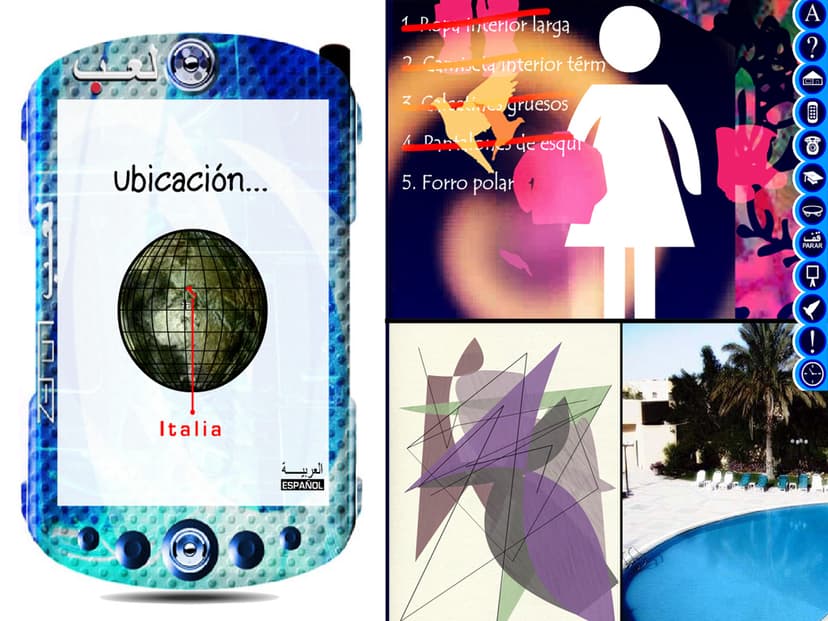
Inanimate Alice: Born Digital utilizes a transmedia pedagogical approach, blending text, sound, images, and interactive game elements into a continuous narrative progression. The interface presents story episodes from the perspective of the protagonist, Alice. Students read text on the screen, but they must also interact with embedded multimedia, such as decoding visual clues or listening to audio cues, to unlock the next section of the story. This requires constant active participation from the user. The learning mechanics rely heavily on immersive environments and dual-coding theory, where verbal and visual information are processed simultaneously to deepen the memory trace. There are no traditional worksheets, spaced repetition flashcards, or multiple-choice tests built into the software. Instead, learning occurs incidentally through exposure to cross-curricular concepts embedded directly within the context of the story. The narrative naturally introduces applied science and humanities concepts as the plot progresses, requiring students to synthesize information from multiple modalities to understand the complete picture.
Strengths and tradeoffs of Inanimate Alice: Born Digital
The biggest strength of Inanimate Alice: Born Digital is its multimodal engagement that naturally sustains student attention, while its biggest weakness is the complete absence of explicit retrieval practice to solidify reading comprehension. Multimodal Learning: The application excels at applying dual-coding theory. By delivering information through both visual and auditory channels alongside text, it helps students build stronger, more interconnected mental models of the narrative. Active Engagement: Rather than passive reading, the interactive elements force the reader to interact with the text to proceed, ensuring continuous attention. Lack of Assessment: The major drawback is the lack of formative assessment. Learning science demonstrates that retrieval practice, which forces the brain to recall information, is critical for long-term retention. Because the application does not quiz students or use spaced repetition for vocabulary, educators and parents must build and provide external assessments. No Adaptive Feedback: The program does not offer worked examples or dynamically adapt its reading level. If a student misunderstands a concept, the application provides no corrective feedback to guide them back on track.
Who Might Benefit From Inanimate Alice: Born Digital?
Inanimate Alice: Born Digital is best for upper elementary and middle school students in grades 3 through 8 who are reluctant readers but highly motivated by digital and gaming environments. It fits exceptionally well in humanities or career and technical education classrooms where teachers want to introduce cross-curricular learning through a unified storyline. Because the program lacks direct phonics instruction or targeted vocabulary drills, it is not suitable for early readers or students requiring explicit literacy intervention. It works best when paired with guided classroom discussion, making it ideal for educators utilizing a blended learning model or parents willing to read actively alongside their child.
Data Transparency
Does Not Meet Data Transparency Standard
Inanimate Alice: Born Digital does not meet our data transparency standard. Its privacy policy does not document basic protections, including a commitment against targeted advertising, limits on sharing children's data and contractual limits on service providers.
6 of 35 checks passed
Evaluated September 2026
Privacy Policy →Level 1 · Basic protections
Does not sell data or target ads at students, limits sharing, and lets parents see and delete their child's data.
Not documented: a commitment against targeted advertising, limits on sharing children's data, contractual limits on service providers, a COPPA or FERPA commitment, parents' right to see their child's data, parents' right to delete their child's data
Level 2 · Parent control (meets the standard)
Families can get their data out, know who processes it, and know how long it is kept.
Not documented: data export, a data retention timeline, self-service deletion
Level 3 · Direct data access
Families or schools can pull their own data through an API, in a stated format.
Not documented: an API for retrieving their own data, a named export format
View all 35 checks
Parent Access0/8
Does the policy mention parents specifically?
The policy does not mention parents.
Can parents view their child's data?
The policy does not address parental access to a child's data.
Can parents modify their child's data?
The policy does not address parents modifying a child's data.
Can parents delete their child's account?
The policy does not address parents deleting a child's data or account.
Is there a dedicated Children's Privacy section?
The policy has no section on children's privacy.
Does it reference COPPA compliance?
The policy does not reference COPPA.
Does it reference FERPA compliance?
The policy does not reference FERPA.
Is parental consent required for child accounts?
The policy does not address parental consent.
Data Portability1/5
Can users access their personal data?
“You are entitled to view, amend, or delete the personal information that we hold about you. Email your request to BradField Narrative Designs Inc. at [info@inanimatealice.com](mailto:info@inanimatealice.com)”
Can users download/export their data?
The policy covers viewing, amending and deleting data but not downloading or exporting it.
Is there a self-service data access tool?
The policy only describes access requests made by email, not a self-service tool.
Is a specific data format mentioned for export?
The policy does not mention any export format.
Is there an API for data access?
The policy does not mention an API for data access.
Data Minimization1/6
Is data collection itemized?
“If you contact us through our online contact form we request your name and email address.”
Can the app be used without a real name?
The policy says names are collected through the contact form and does not say the product can be used without a real name.
Can the app be used without an email?
The policy says email addresses are collected through the contact form and does not say the product can be used without an email.
Does it state collection is limited to what is necessary?
The policy limits how contact data is used but does not say collection is limited to what is necessary.
Is IP address anonymized or truncated?
The policy calls its analytics tracking data anonymised but does not say IP addresses are anonymized or truncated.
Is location tracking explicitly excluded?
The policy does not address location tracking.
Third-Party Protection3/7
Does it explicitly state no selling of data?
“We do not pass on or sell user data to any other company for marketing purposes.”
Are third-party providers named?
“The newsletter service is provided by [MailChimp](http://mailchimp.com/).”
Are providers contractually restricted?
The policy does not describe any contractual restrictions on providers.
No-targeted-advertising commitment?
The policy makes no commitment against targeted advertising, and the site's cookie banner lists advertisement cookies.
Is AI/ML data sharing addressed?
The policy does not address AI or machine learning.
Child-specific sharing restriction?
The policy has no sharing restriction specific to children.
Cookies/tracking limited or opt-out?
“You may prefer to disable cookies on this website and on others. The most effective way to do this is to disable cookies in your browser.”
Deletion & Retention1/5
Can users delete their account?
“You are entitled to view, amend, or delete the personal information that we hold about you. Email your request to BradField Narrative Designs Inc. at [info@inanimatealice.com](mailto:info@inanimatealice.com)”
Self-service deletion mechanism?
The policy only describes deletion requests made by email, not a self-service mechanism.
Specific data retention timeline?
The policy gives no retention timeline for personal data; the only durations shown are cookie lifetimes.
Auto-deletion of inactive accounts?
The policy does not address deleting inactive accounts.
Post-deletion handling described?
The policy does not describe what happens to data after deletion.
Advertising0/4
Advertising model explicitly disclosed?
The policy does not disclose an advertising model.
Free from third-party advertisements?
The policy does not say the product is free of third-party ads, and the cookie banner lists advertisement cookies.
Children excluded from ad targeting?
The policy does not address excluding children from ad targeting.
Ad-free option available?
The policy does not mention an ad-free option or say the product has no advertising.
What This Means
The policy review did not meet our data transparency standard. The checks above show the documented findings and unknowns. A missing statement does not establish how the app handles data in practice.
About this evaluation: Based on automated analysis of Privacy Policy against 35 policy-disclosure questions, including questions adapted from the Common Sense Privacy Program's published evaluation questions. TLS is not affiliated with Common Sense Media, and this is not a Common Sense rating. Quoted text is copied from the policy; unquoted notes are our summary. Results describe what the policy documents, not the company's actual practices. Privacy policies can change: this review reflects the version we analyzed and does not determine legal compliance.
Sources and review method
TLS combines product information and editorial analysis to explain how Inanimate Alice: Born Digital works, its tradeoffs, and the questions to ask before choosing it. Product features, an instructional rationale and evidence of learning outcomes are different kinds of information.
Formal Learning Standard assessment: not yet completed. Data Transparency findings are reported separately and do not establish learning effectiveness. Read our methodology.
Frequently Asked Questions About Inanimate Alice: Born Digital
Is Inanimate Alice: Born Digital free?
No. Inanimate Alice: Born Digital requires a one-time purchase. A single-user license costs $19.99, while a classroom license covering one teacher and up to 35 students costs $199.00. There are no recurring subscription fees, and the purchase includes a complete download without the need for future paid upgrades. This makes it a predictable investment for schools and parents compared to subscription-based educational models.
Is Inanimate Alice: Born Digital good for 3rd graders?
Yes, but it requires adult support to be fully effective. While targeted at students in grades 3 through 8, the transmedia elements, complex themes, and digital navigation demands may overwhelm an independent third grader. The cognitive load required to read the text while solving interactive puzzles is high. It functions best for this younger age group when a parent or teacher scaffolds the reading experience and helps process the narrative.
What does Inanimate Alice: Born Digital teach?
Inanimate Alice: Born Digital teaches cross-curricular themes spanning the humanities, applied science, and career and technical education. Rather than isolating subjects, it focuses heavily on digital literacy, narrative reading comprehension, and cultural awareness by embedding these subjects into an interactive storyline. Students learn to navigate multimedia environments, synthesize information from text and audio, and understand global perspectives as the protagonist travels through different global settings.
How does Inanimate Alice: Born Digital compare to traditional e-books?
Unlike traditional e-books that simply digitize printed text, Inanimate Alice: Born Digital requires active user input to advance the narrative. This transmedia approach leverages dual-coding theory, mixing text, sound, and gameplay, rather than relying solely on passive text consumption. Traditional e-books rely heavily on rote reading, whereas this application forces the student to engage with multimedia puzzles, creating a more immersive but cognitively demanding experience.
Has The Learning Standard evaluated Inanimate Alice: Born Digital?
TLS has not yet completed a Learning Standard evaluation of how well Inanimate Alice: Born Digital teaches. Its privacy policy has been reviewed for Data Transparency and does not yet document the basic protections (Level 1).
Is Inanimate Alice: Born Digital COPPA compliant?
A COPPA reference was not found in the reviewed privacy policy. This does not determine whether the app complies with COPPA. Policy review note: The policy does not reference COPPA.
Is Inanimate Alice: Born Digital FERPA compliant?
A FERPA reference was not found in the reviewed privacy policy. This does not determine whether the app complies with FERPA. Policy review note: The policy does not reference FERPA.
Does Inanimate Alice: Born Digital have a children's privacy policy?
No dedicated children's privacy section was found in the reviewed policy. Policy review note: The policy has no section on children's privacy.
Does Inanimate Alice: Born Digital sell student data?
The reviewed policy states that the app does not sell data. This is a policy statement; actual data practices were not verified. Policy review note: The vendor says it does not sell user data to other companies for marketing purposes.
Can you delete your data from Inanimate Alice: Born Digital?
The reviewed privacy policy describes account deletion. We have not tested the deletion process. Policy review note: Users can ask by email to have their personal information deleted.
Follow TLS Research
Subscribe to future TLS research updates: app reviews, findings, and what the evidence shows.
Screenshots
Take Action
For Inanimate Alice: Born Digital
If you represent BradField Narrative Designs and have a correction or new evidence, send the relevant source so we can review and update this page.
Submit a correctionDetails
- Pricing
- $19.99 - Single user licence, $199.00 - classroom licence (teacher + up to 35 students). One time purchase and download. No renewals, no upgrades.
- Platforms
- Windows (Microsoft), macOS (Apple)
- Grade Levels
- 3rd Grade, 4th Grade, 5th Grade, 6th Grade, 7th Grade, 8th Grade
- Website
- Visit site