
I Know It
Product by TPW Websites
Facts checked: Not yet checked
Our take (not a Learning Standard rating). This label applies to learning-science judgments throughout this overview.
Our take (not a Learning Standard rating)
Because The Learning Standard has not yet evaluated I Know It, definitive claims about its efficacy are pending. Based on its design, it employs gamification and mastery-based progression to support math retrieval practice. It functions best as an engaging supplement for fluency building alongside direct classroom instruction.
Pros
- Employs gamified mechanics to increase student motivation and time-on-task during repetitive math drills.
- Uses mastery-based progression to ensure foundational math skills are secured before a student can advance.
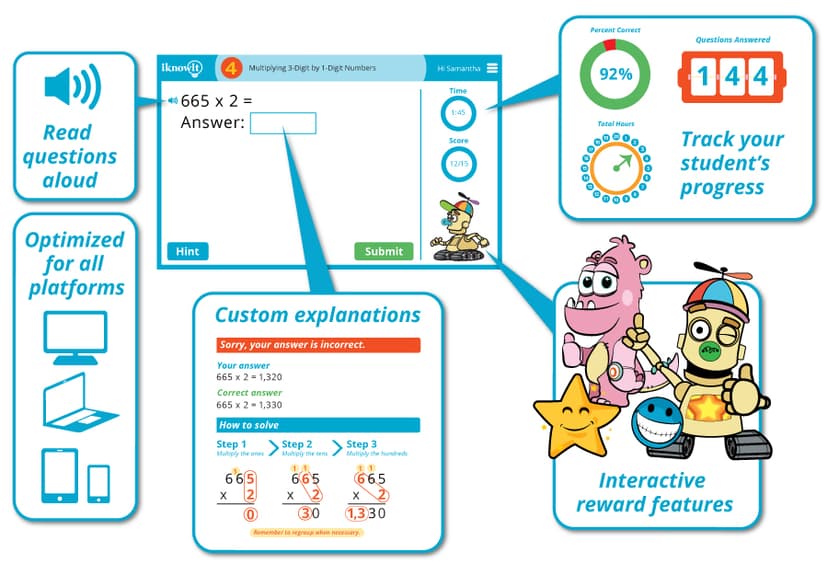
- Provides immediate corrective feedback on problem-based tasks, allowing students to correct misconceptions quickly.
Cons
- Relies heavily on extrinsic animated rewards which can diminish intrinsic motivation for mathematics over time.
- Functions primarily as a practice tool rather than a primary instructional platform for introducing new concepts.
- Lacks formal evaluation data from independent learning science authorities to confirm long-term knowledge retention.
What Do We Know About I Know It?
I Know It serves as a supplementary math practice tool rather than a standalone teacher, making it effective for reinforcing skills your child has already learned. Because the platform relies heavily on gamified drills and problem-based activities, it leverages retrieval practice to build math fluency from kindergarten through sixth grade. Your child will work through standard-aligned questions, earning animated rewards that increase time-on-task. However, because The Learning Standard has not yet formally evaluated this program, we cannot definitively certify its instructional efficacy. What parents must understand is that this tool is built for classrooms. If you purchase or use this at home, you will need to provide the primary instruction. The mastery-based progression ensures your child answers a set number of questions correctly before moving on, which prevents them from advancing with gaps in their foundational knowledge. While the immediate feedback helps correct minor errors in real-time, the program does not offer the deep, step-by-step worked examples required to teach a completely new math concept. Use this platform to help your child automate their math facts and solidify classroom lessons, not to replace traditional instruction.
How Does I Know It Work?
I Know It uses competency-based learning combined with gamification to guide students through elementary math practice. The platform organizes content by grade level (TK through 6th grade) and specific math domains. Students select or are assigned specific problem sets corresponding to their current classroom curriculum. As students answer questions, the system provides immediate feedback, allowing them to see whether their response is correct or incorrect right away. This rapid feedback loop is a core component of effective retrieval practice, helping to correct misconceptions before they encode into long-term memory. To keep students engaged, the platform employs gamified elements like animated characters and visual progress bars. The mastery-based mechanics require students to demonstrate a certain level of accuracy before the system considers the skill mastered. This prevents students from rushing through assignments without genuinely grasping the underlying mathematical operations. Teachers or parents can monitor this progression through backend dashboards to identify areas where a student might need direct intervention.
Strengths and tradeoffs of I Know It
The biggest strength of I Know It is its ability to generate high volumes of targeted retrieval practice through engaging formats, while its biggest weakness is the lack of robust instructional scaffolding for new concepts. Strengths in Retrieval and Motivation: The platform excels at basic skill reinforcement. By using gamification, specifically animated feedback and visual progress indicators, the app increases student motivation to complete repetitive math drills. This high volume of practice supports retrieval practice, a well-documented cognitive science principle that strengthens memory recall. Furthermore, the mastery-based progression ensures that a student cannot simply click through a lesson; they must demonstrate actual competency before advancing, which helps prevent compounding gaps in foundational math skills. Weaknesses in Initial Instruction: Conversely, the platform functions almost entirely as an assessment and practice tool. It lacks the deep, explicit instruction and worked examples necessary to introduce a student to a novel mathematical concept. If a student repeatedly fails a problem set, the immediate feedback informs them they are wrong, but the system relies on an external teacher or parent to provide the actual pedagogical intervention.
Who Might Benefit From I Know It?
I Know It is best for elementary students who need structured, gamified math drill practice alongside direct classroom instruction. The platform covers transitional kindergarten through sixth grade, making it highly suitable for early childhood and primary educators looking to reinforce standard-aligned math concepts. It is an ideal fit for classrooms utilizing a station-rotation model, where students can independently practice previously taught skills while the teacher works with small groups. Because it requires a baseline understanding of the math concepts to be effective, it is not recommended for self-directed homeschooling without heavy parental instruction.
Data Transparency
Does Not Meet Data Transparency Standard
I Know It reaches Level 1 of 3 (Basic protections), below our data transparency standard. Reaching Level 2 needs the policy to document a data retention timeline and self-service deletion.
16 of 35 checks passed
Evaluated September 2026
I Know It →Level 1 · Basic protections
Does not sell data or target ads at students, limits sharing, and lets parents see and delete their child's data.
Level 2 · Parent control (meets the standard)
Families can get their data out, know who processes it, and know how long it is kept.
Not documented: a data retention timeline, self-service deletion
Level 3 · Direct data access
Families or schools can pull their own data through an API, in a stated format.
Not documented: an API for retrieving their own data, a named export format
View all 35 checks
Parent Access6/8
Does the policy mention parents specifically?
“A Family Account is an account for a parent or guardian to administer for their child or children.”
Can parents view their child's data?
“A parent or legal guardian can at any time review, request deletion of, or withdraw their consent to our further collection or use of Personal Information collected from their child by [Contact Us](https://www.iknowit.com/contact-us.html "Contact Us") at [helpdesk@iknowit.com](mailto:helpdesk@iknowit.com "Email Helpdesk").”
Can parents modify their child's data?
The policy lets parents review, delete or withdraw consent for their child's data, but does not say parents can correct or modify it.
Can parents delete their child's account?
“A parent or legal guardian can at any time review, request deletion of, or withdraw their consent to our further collection or use of Personal Information collected from their child by [Contact Us](https://www.iknowit.com/contact-us.html "Contact Us") at [helpdesk@iknowit.com](mailto:helpdesk@iknowit.com "Email Helpdesk").”
Is there a dedicated Children's Privacy section?
“X. CHILDREN IKI uses reasonable efforts not to collect, use or disclose the Personal Information from children under the age of thirteen (13).”
Does it reference COPPA compliance?
“Our collection, use, and disclosure of Student Data is governed by our Terms of Service, the Children's Online Privacy Protection Act ("COPPA"), and applicable state laws which relate to the collection of Student Data.”
Does it reference FERPA compliance?
The policy cites FERPA only to define "Student Data" and does not claim to comply with FERPA.
Is parental consent required for child accounts?
“In the event we wish to collect Information from a child, we will first seek a parent or guardian's consent.”
Data Portability2/5
Can users access their personal data?
“Right to Know/Access: The right to request that we disclose to you the Personal Information we have collected about you.”
Can users download/export their data?
“Right to Data Portability: The right to receive the Personal Information collected in a format easily understandable and in a usable format.”
Is there a self-service data access tool?
The policy provides access only by request to the helpdesk; the account page is described only for updating information, not as a data access tool.
Is a specific data format mentioned for export?
The policy only promises a "usable format" and names no specific export format.
Is there an API for data access?
The policy does not address any API for data access.
Data Minimization1/6
Is data collection itemized?
“Identifiers - First and last name, email address, name, home, or work address, and/or telephone number”
Can the app be used without a real name?
The policy lists first and last name among the identifiers it collects.
Can the app be used without an email?
The policy lists email address among the identifiers it collects.
Does it state collection is limited to what is necessary?
The policy does not state that collection is limited to what is necessary; it describes broad collection.
Is IP address anonymized or truncated?
The policy says IP addresses are automatically logged and does not say they are anonymized or truncated.
Is location tracking explicitly excluded?
The policy states it may collect location data, including precise GPS location with consent.
Third-Party Protection5/7
Does it explicitly state no selling of data?
“IKI does not sell or share your Personal Information to third parties for monetary or other valuable consideration as defined under the California Consumer Privacy Act.”
Are third-party providers named?
“Our Services may use retargeting pixels from Google, Facebook, and other ad networks.”
Are providers contractually restricted?
“These third-party service providers will process this data only for purposes specified by us and will be bound by contract to meeting our obligations under applicable law.”
No-targeted-advertising commitment?
The policy describes targeting cookies and retargeting pixels and only says it "restricts" targeting cookies on student and child accounts, which is not a no-targeted-ads commitment.
Is AI/ML data sharing addressed?
The policy does not address AI or machine-learning data sharing.
Child-specific sharing restriction?
“We do not sell Student Data or Personal Information or use or disclose it for any marketing or commercial purpose, in accordance with applicable state education laws.”
Cookies/tracking limited or opt-out?
“You can opt out of having your activity on our Services made available to Google Analytics by installing the Google Analytics opt-out add-on for your web browser”
Deletion & Retention1/5
Can users delete their account?
“Right to Request Deletion/Erasure: The right to request that we delete your Personal Information that we have collected from or about you.”
Self-service deletion mechanism?
The policy offers deletion only by contacting the company, not through a self-service tool.
Specific data retention timeline?
The policy says data is kept as long as needed and gives no specific timeline.
Auto-deletion of inactive accounts?
The policy does not address automatic deletion of inactive accounts.
Post-deletion handling described?
The policy lists reasons it may refuse to delete data but does not describe what happens to data after deletion.
Advertising1/4
Advertising model explicitly disclosed?
“Targeting cookies may be used for delivering themed advertising and marketing of relevant products to you.”
Free from third-party advertisements?
The policy describes advertising networks and targeting cookies and does not state the product is free of third-party ads.
Children excluded from ad targeting?
The policy only says it "restricts" targeting cookies on student and child accounts and does not exclude children from ad targeting.
Ad-free option available?
The policy does not mention an ad-free option or state that the product has no advertising.
What This Means
The policy review did not meet our data transparency standard. The checks above show the documented findings and unknowns. A missing statement does not establish how the app handles data in practice.
About this evaluation: Based on automated analysis of I Know It against 35 policy-disclosure questions, including questions adapted from the Common Sense Privacy Program's published evaluation questions. TLS is not affiliated with Common Sense Media, and this is not a Common Sense rating. Quoted text is copied from the policy; unquoted notes are our summary. Results describe what the policy documents, not the company's actual practices. Privacy policies can change: this review reflects the version we analyzed and does not determine legal compliance.
Sources and review method
TLS combines product information and editorial analysis to explain how I Know It works, its tradeoffs, and the questions to ask before choosing it. Product features, an instructional rationale and evidence of learning outcomes are different kinds of information.
Formal Learning Standard assessment: not yet completed. Data Transparency findings are reported separately and do not establish learning effectiveness. Read our methodology.
Frequently Asked Questions About I Know It
Is I Know It free?
No, I Know It is a paid subscription service. A Teacher plan costs $150 annually and includes access for up to 25 students, with additional students costing $7.50 each. Schools and districts can also purchase site licenses starting at $7.50 per student, with volume discounts available.
Is I Know It good for elementary students?
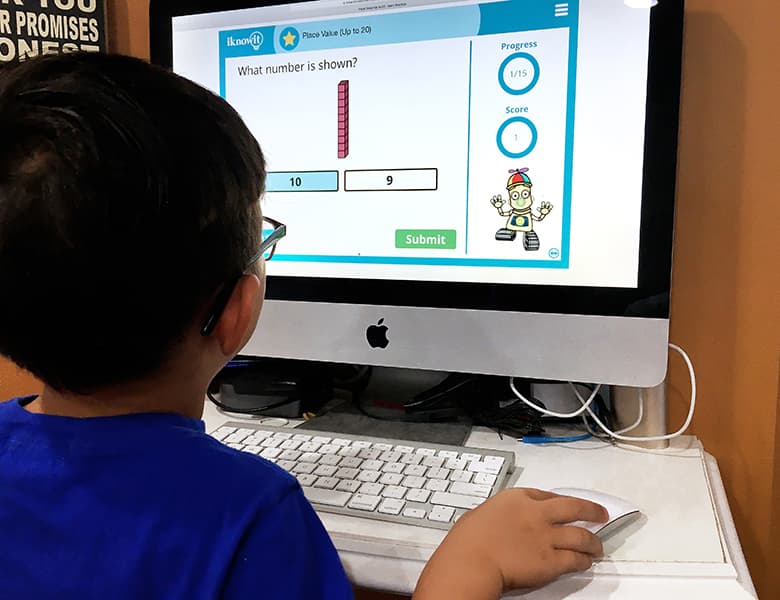
Yes, it is specifically designed for students in transitional kindergarten through sixth grade. The interface relies heavily on visual cues, animated characters, and gamification, which are developmentally appropriate and highly engaging for early childhood and elementary learners building foundational math fluency.
What does I Know It teach?
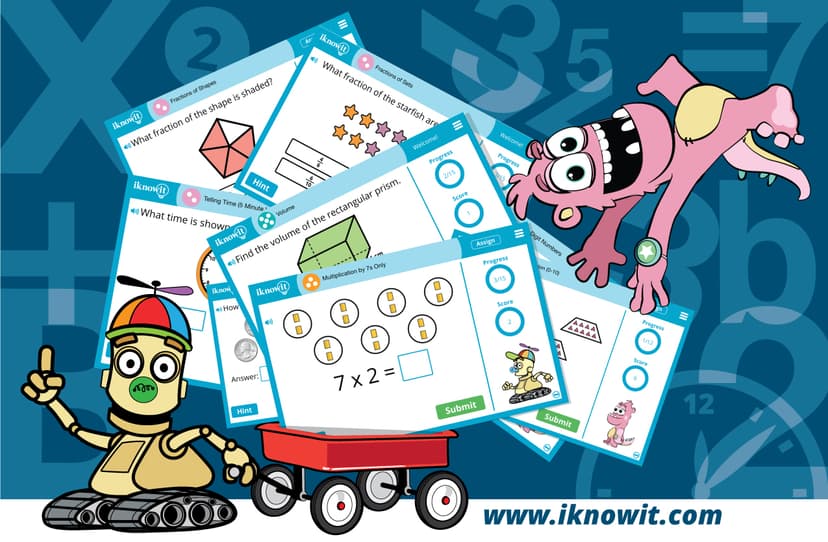
I Know It teaches comprehensive elementary mathematics. The platform covers standard-aligned topics ranging from basic counting, addition, and subtraction in the early grades to more advanced concepts like fractions, decimals, basic geometry, and early algebra for fifth and sixth graders.
Has The Learning Standard evaluated I Know It?
TLS has not yet completed a Learning Standard evaluation of how well I Know It teaches. Its privacy policy has been reviewed for Data Transparency and reaches Level 1, Basic protections.
Is I Know It COPPA compliant?
The reviewed privacy policy references COPPA. A policy reference alone does not establish COPPA compliance. Policy review note: The policy states its handling of Student Data is governed by COPPA.
Is I Know It FERPA compliant?
A FERPA reference was not found in the reviewed privacy policy. This does not determine whether the app complies with FERPA. Policy review note: The policy cites FERPA only to define "Student Data" and does not claim to comply with FERPA.
Does I Know It have a children's privacy policy?
The reviewed policy includes a dedicated children's privacy section. Policy review note: The policy has a dedicated section headed "Children".
Does I Know It sell student data?
The reviewed policy states that the app does not sell data. This is a policy statement; actual data practices were not verified. Policy review note: The policy states the company does not sell personal information.
Can you delete your data from I Know It?
The reviewed privacy policy describes account deletion. We have not tested the deletion process. Policy review note: Users can ask for their personal information to be deleted.
Follow TLS Research
Subscribe to future TLS research updates: app reviews, findings, and what the evidence shows.
Screenshots

Take Action
For I Know It
If you represent TPW Websites and have a correction or new evidence, send the relevant source so we can review and update this page.
Submit a correctionDetails
- Pricing
- A Teacher plan is $150 for the year, where they can add 25 students to their roster. Each additional student is $7.50. A school or district can sign up for a site license that charges $7.50 per student for the first 200, with a decrease in price as more students are added.
- Platforms
- Web Browser, iOS (Apple mobile), iPadOS (Apple tablet), Android (Google mobile), Windows (Microsoft), macOS (Apple), Chrome OS (Google)
- Grade Levels
- Transitional Kindergarten, Kindergarten, 1st Grade, 2nd Grade, 3rd Grade, 4th Grade, 5th Grade, 6th Grade
- Website
- Visit site