
FlexBooks® 2.0
Product by CK-12 Foundation
Facts checked: Not yet checked
Our take (not a Learning Standard rating). This label applies to learning-science judgments throughout this overview.
Our take (not a Learning Standard rating)
FlexBooks 2.0 effectively uses multimedia worked examples and adaptive retrieval practice to build mastery in secondary math and science. However, because The Learning Standard has not yet formally evaluated the platform, we cannot definitively verify its long-term impact on knowledge retention. Its reliance on self-directed reading may also challenge struggling learners.
Pros
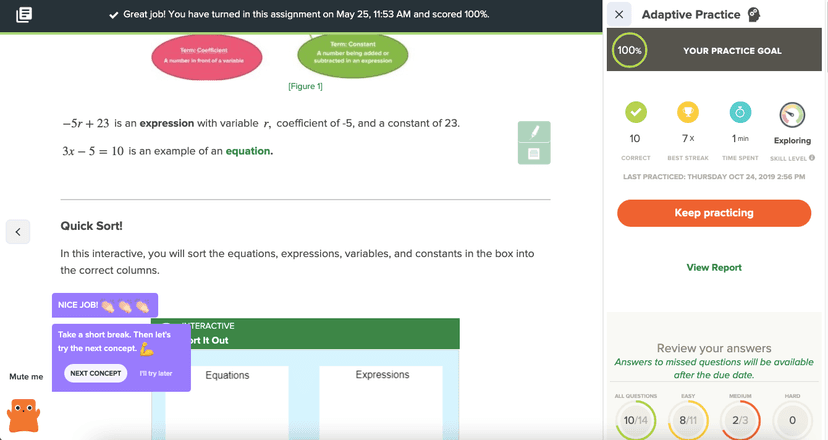
- Integrates retrieval practice directly into reading assignments through adaptive quizzing.
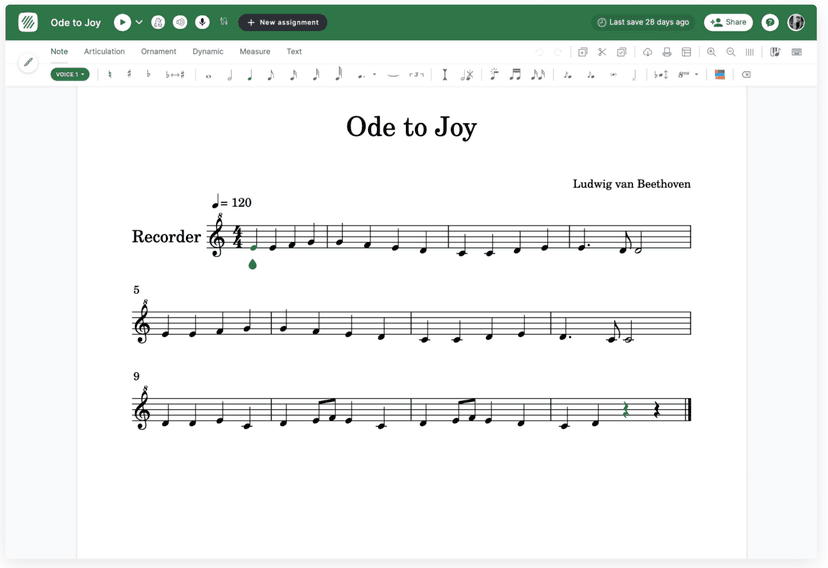
- Provides interactive worked examples that allow students to manipulate variables in math and science concepts.
- Uses mastery-based progression to ensure foundational skills are built before advancing to complex topics.
- Features an AI assistant that offers immediate corrective feedback on practice questions.
Cons
- Heavy reliance on text-based instruction can overwhelm students with low reading comprehension.
- Lacks offline functionality, requiring a persistent internet connection for adaptive practice and AI feedback.
- Open-ended customization allows educators to accidentally remove crucial scaffolding or structured reviews.
What Do We Know About FlexBooks® 2.0?
FlexBooks 2.0 is a highly effective digital textbook replacement for middle and high school students who can manage self-directed learning. Your child will use this platform to read instructional text, watch embedded videos, and complete adaptive practice questions in math and science. Unlike a traditional static textbook, this platform uses continuous retrieval practice to test your child's understanding immediately after introducing a new concept. If your child struggles with a question, the system adjusts the difficulty and provides corrective feedback. This approach aligns with cognitive science principles for building long-term memory. Parents should know that the platform relies heavily on reading comprehension. If your child struggles with reading, they may find the core instructional delivery frustrating, even with the built-in translation tools. The inclusion of an interactive AI tutor helps clarify misconceptions in real-time, acting as a basic scaffold when you are not available to help with homework. Because The Learning Standard has not yet formally evaluated this app, our analysis relies on the platform's demonstrated learning mechanics rather than empirical efficacy data. Overall, it serves as an excellent, cost-free resource for focused academic practice, provided your child stays on task and completes the adaptive quizzes.
How Does FlexBooks® 2.0 Work?
FlexBooks 2.0 uses a mastery-based blended learning approach combining multimodal instruction with adaptive digital practice. Students begin by reading a digital lesson or watching a short instructional video on a specific standard, such as algebra or biology. Embedded within these lessons are interactive simulations that function as worked examples, allowing learners to manipulate variables and observe the outcomes immediately. After consuming the content, students engage in adaptive practice sessions. The system generates questions that test the newly introduced material using retrieval practice mechanics. If a student answers correctly, the system gradually increases the complexity of the questions. If a student makes an error, the platform provides immediate explanatory feedback and routes them to foundational review materials or easier questions. An integrated AI assistant is available to answer direct questions about the text or provide hints during practice. Teachers can track this progression through a dashboard that highlights knowledge gaps, enabling targeted classroom interventions.
Strengths and tradeoffs of FlexBooks® 2.0
The biggest strength of FlexBooks 2.0 is its seamless integration of adaptive retrieval practice, while its biggest weakness is an over-reliance on text-heavy instruction that lacks adequate scaffolding for struggling readers. Strengths: The platform excels at applying mastery-based progression. By forcing students to demonstrate competence through adaptive quizzes before moving forward, it prevents the accumulation of foundational knowledge gaps. Furthermore, the inclusion of interactive simulations provides excellent worked examples, which cognitive science shows reduces cognitive load when learning complex STEM concepts. The immediate, corrective feedback provided by the AI assistant ensures that misconceptions are addressed instantly rather than internalizing errors. Weaknesses: Despite these strong mechanics, the primary mode of content delivery is dense digital reading. This creates a high barrier to entry. Students with lower working memory or reading difficulties may experience cognitive overload before they even reach the practice modules. Additionally, because the system is highly customizable by individual teachers, the actual sequencing of lessons can vary wildly. This means the spacing effect, revisiting concepts over time to build durable memory, is entirely dependent on how the educator designs the curriculum, rather than being algorithmically guaranteed by the platform itself.
Who Might Benefit From FlexBooks® 2.0?
Best for middle and high school students who need structured, self-paced instruction in core math and science subjects. FlexBooks 2.0 is particularly valuable for self-directed learners, homeschoolers, and students in blended learning classrooms who benefit from immediate feedback on practice problems. The platform targets 6th through 12th grade, alongside adult education and introductory higher education. Because it requires strong reading comprehension and independent study skills, it is less suited for elementary students or learners requiring heavy instructional scaffolding. It serves excellently as a free, dynamic replacement for traditional textbooks, offering interactive STEM practice that adapts to individual student performance.
Data Transparency
Does Not Meet Data Transparency Standard
FlexBooks® 2.0 does not meet our data transparency standard. Its privacy policy does not document basic protections, including a statement that it does not sell data, a commitment against targeted advertising and a COPPA or FERPA commitment.
16 of 35 checks passed
Evaluated September 2026
Privacy Policy →Level 1 · Basic protections
Does not sell data or target ads at students, limits sharing, and lets parents see and delete their child's data.
Not documented: a statement that it does not sell data, a commitment against targeted advertising, a COPPA or FERPA commitment
Level 2 · Parent control (meets the standard)
Families can get their data out, know who processes it, and know how long it is kept.
Not documented: a data retention timeline, self-service deletion
Level 3 · Direct data access
Families or schools can pull their own data through an API, in a stated format.
Not documented: an API for retrieving their own data, a named export format
View all 35 checks
Parent Access5/8
Does the policy mention parents specifically?
“Younger visitors should always check with their parents or guardians before entering information online.”
Can parents view their child's data?
“Review the personal information we maintain about your child;”
Can parents modify their child's data?
The policy lets parents review, delete, or stop the collection of their child's information, but it does not give parents a right to modify or correct it.
Can parents delete their child's account?
“Direct us to delete the personal information we maintain about your child; and”
Is there a dedicated Children's Privacy section?
“**2\. CHILDREN’S PRIVACY**”
Does it reference COPPA compliance?
The policy does not mention COPPA.
Does it reference FERPA compliance?
The policy mentions student records but does not mention FERPA.
Is parental consent required for child accounts?
“If we become aware that a child user wants to access the Platform, we will take steps to obtain consent from their parent or guardian.”
Data Portability3/5
Can users access their personal data?
“If you are registered with us, you may log into your account to access and correct your account information.”
Can users download/export their data?
“You can ask us for a copy of your personal information and can ask for a copy of personal information to be provided in machine readable form.”
Is there a self-service data access tool?
“If you are registered with us, you may log into your account to access and correct your account information.”
Is a specific data format mentioned for export?
The policy says only "machine readable form" and names no specific file format.
Is there an API for data access?
The policy does not mention an API for accessing data.
Data Minimization1/6
Is data collection itemized?
“If you are a student or teacher, we may collect information such as your name, telephone number, email address, mailing address, birth date, profile photo, demographic data, and account login information (i.e., username and password).”
Can the app be used without a real name?
The policy says it collects students' names.
Can the app be used without an email?
The policy says it collects students' email addresses.
Does it state collection is limited to what is necessary?
The policy does not say that collection is limited to what is necessary, except for the limited information it takes from parents to verify consent.
Is IP address anonymized or truncated?
The policy says it collects IP addresses and does not say they are anonymized or truncated.
Is location tracking explicitly excluded?
The policy says it collects the device's IP address and city, and it does not rule out location tracking.
Third-Party Protection5/7
Does it explicitly state no selling of data?
The policy does not state that the vendor does not sell personal information.
Are third-party providers named?
“If you donate to us, we may collect from PayPal (our service provider) your name, contact information, and donation amount.”
Are providers contractually restricted?
“We take steps to prohibit our service providers from using your personal information for purposes outside of providing services to us.”
No-targeted-advertising commitment?
The policy makes no commitment that user data will not be used for targeted advertising.
Is AI/ML data sharing addressed?
“We may also aggregate or deidentify information about users of our Platform to train AI models, understand usage trends, and gather opinions, comments, and suggestions about our Platform.”
Child-specific sharing restriction?
“To protect the privacy of children (see the definition above), certain functionality associated with a child’s account will be disabled to ensure that the child’s profile information (including profile photo) will not be visible to others on our Platform.”
Cookies/tracking limited or opt-out?
“For more information about Google Analytics and how to opt out, please visit [https://tools.google.com/dlpage/gaoptout/](https://tools.google.com/dlpage/gaoptout/).”
Deletion & Retention2/5
Can users delete their account?
“You may request to cancel your membership and have your account removed from our Platform. Please make all cancellation requests via email to [support@ck12.org](mailto:support@ck12.org).”
Self-service deletion mechanism?
The policy says account deletion is requested by email, not done with a self-service tool.
Specific data retention timeline?
The policy says data is kept for as long as the user has an account or as necessary, and gives no specific timeline.
Auto-deletion of inactive accounts?
The policy does not address automatic deletion of inactive accounts.
Post-deletion handling described?
“We may anonymize your personal information after you have deactivated or deleted your account so that we can use this anonymized information for our internal business purposes.”
Advertising0/4
Advertising model explicitly disclosed?
The policy mentions only ads the vendor places on third-party websites and does not describe the product's own advertising model.
Free from third-party advertisements?
The policy does not state that the product is free of third-party advertisements.
Children excluded from ad targeting?
The policy does not address whether children are excluded from ad targeting.
Ad-free option available?
The policy does not state that the product has no ads or offers an ad-free option.
What This Means
The policy review did not meet our data transparency standard. The checks above show the documented findings and unknowns. A missing statement does not establish how the app handles data in practice.
About this evaluation: Based on automated analysis of Privacy Policy against 35 policy-disclosure questions, including questions adapted from the Common Sense Privacy Program's published evaluation questions. TLS is not affiliated with Common Sense Media, and this is not a Common Sense rating. Quoted text is copied from the policy; unquoted notes are our summary. Results describe what the policy documents, not the company's actual practices. Privacy policies can change: this review reflects the version we analyzed and does not determine legal compliance.
Sources and review method
TLS combines product information and editorial analysis to explain how FlexBooks® 2.0 works, its tradeoffs, and the questions to ask before choosing it. Product features, an instructional rationale and evidence of learning outcomes are different kinds of information.
Formal Learning Standard assessment: not yet completed. Data Transparency findings are reported separately and do not establish learning effectiveness. Read our methodology.
Frequently Asked Questions About FlexBooks® 2.0
Is FlexBooks 2.0 free?
Yes, FlexBooks 2.0 is entirely free for all educational purposes. The CK-12 Foundation operates as a non-profit organization and provides full access to its digital textbooks, adaptive practice modules, and AI tutoring features without subscription fees or paywalls. This makes it a highly accessible resource for school districts, homeschooling parents, and independent learners seeking quality STEM materials without the financial burden of traditional textbook costs.
Is FlexBooks 2.0 good for high school students?
Yes, the platform is specifically designed for secondary education, covering grades 6 through 12. The content aligns with middle and high school standards, offering appropriately rigorous material for teenagers. The self-directed nature of the reading assignments and adaptive practice modules requires a level of independence and reading comprehension that is typical of high school learners, making it an effective tool for this age group.
What does FlexBooks 2.0 teach?
FlexBooks 2.0 primarily teaches middle and high school math and science. The curriculum covers a wide range of STEM subjects including algebra, geometry, calculus, biology, chemistry, and physics. It also includes select materials for Career and Technical Education (CTE). The lessons focus on building core academic competencies and preparing students for advanced coursework through targeted retrieval practice, interactive simulations, and structured reading assignments designed to reinforce mastery.
FlexBooks 2.0 vs Khan Academy: Which is better?
Both platforms offer excellent, free STEM instruction, but they serve different primary functions. FlexBooks 2.0 functions more like an interactive digital textbook, prioritizing reading, integrated simulations, and customizable curriculum for teachers. Khan Academy relies heavily on video-based instruction and algorithmic mastery tracks. If your child learns best through reading and manipulating interactive models, FlexBooks 2.0 is superior. If they prefer step-by-step video explanations, Khan Academy is the better choice.
Has The Learning Standard evaluated FlexBooks® 2.0?
TLS has not yet completed a Learning Standard evaluation of how well FlexBooks® 2.0 teaches. Its privacy policy has been reviewed for Data Transparency and does not yet document the basic protections (Level 1).
Is FlexBooks® 2.0 COPPA compliant?
A COPPA reference was not found in the reviewed privacy policy. This does not determine whether the app complies with COPPA. Policy review note: The policy does not mention COPPA.
Is FlexBooks® 2.0 FERPA compliant?
A FERPA reference was not found in the reviewed privacy policy. This does not determine whether the app complies with FERPA. Policy review note: The policy mentions student records but does not mention FERPA.
Does FlexBooks® 2.0 have a children's privacy policy?
The reviewed policy includes a dedicated children's privacy section. Policy review note: The policy has a section headed Children's Privacy.
Does FlexBooks® 2.0 sell student data?
A statement ruling out data selling was not found in the reviewed policy. This does not establish that the app sells student data. Policy review note: The policy does not state that the vendor does not sell personal information.
Can you delete your data from FlexBooks® 2.0?
The reviewed privacy policy describes account deletion. We have not tested the deletion process. Policy review note: Users can ask for their account to be removed.
Follow TLS Research
Subscribe to future TLS research updates: app reviews, findings, and what the evidence shows.
Screenshots

Take Action
For FlexBooks® 2.0
If you represent CK-12 Foundation and have a correction or new evidence, send the relevant source so we can review and update this page.
Submit a correctionDetails
- Pricing
- Free for educational purposes
- Platforms
- Web Browser, iOS (Apple mobile), iPadOS (Apple tablet), Android (Google mobile), Windows (Microsoft), macOS (Apple), Chrome OS (Google)
- Grade Levels
- 6th Grade, 7th Grade, 8th Grade, 9th Grade, 10th Grade, 11th Grade, 12th Grade, Associate's degree, Adult Education
- Website
- Visit site